
When a restaurant supplies manufacturer can offer custom runs
When a restaurant supplies manufacturer can offer custom runs, buyers gain more than flexibility—they secure commercial restaurant supplies tailored to real operational needs. From stainless steel restaurant supplies and restaurant supplies bulk order programs to custom kitchen design for hotels, schools, hospitals, cafes, and food processing sites, tailored solutions improve workflow, cost control, and efficiency. This guide explains when custom production makes sense and how restaurant supplies wholesale partners create long-term value.
For researchers, operators, procurement teams, and decision-makers, the key question is not simply whether customization is available. The real issue is when a custom run delivers measurable value over standard catalog products. In commercial kitchens, even a small mismatch in size, material, storage logic, or heat resistance can slow service, increase labor, or create cleaning and safety problems.
In the kitchen equipment industry, custom production typically becomes relevant when order volume, workflow complexity, regulatory requirements, or brand-specific design needs exceed what off-the-shelf items can handle. That may involve modified stainless steel restaurant supplies, special batch quantities, equipment-compatible accessories, or integrated solutions for chain expansion and central kitchen systems.
When Custom Runs Make Business Sense
A restaurant supplies manufacturer usually offers custom runs when a buyer needs more than minor product variation. Typical triggers include repeat ordering of the same item, space constraints, operational standardization across multiple sites, or the need to meet specific sanitation and durability requirements. In many B2B purchasing cases, the custom threshold starts to make sense at a moderate MOQ, such as 100–500 units for utensils and containers, or lower quantities for fabricated stainless steel components.
Custom runs are especially valuable in high-frequency environments such as quick-service kitchens, hotel breakfast operations, hospital meal distribution, school cafeterias, and food processing support areas. In these settings, saving 5–10 seconds per task can matter because the workflow repeats hundreds of times per shift. A tray rack with adjusted spacing, a prep table with modified shelf height, or GN pans with reinforced edges may reduce handling errors and improve turnaround time.
Another common scenario is procurement standardization. Multi-location operators often want identical restaurant appliances, storage tools, and serving accessories across 3, 10, or even 50 sites. Standard catalog items may vary by batch or availability. A manufacturer that can offer custom runs helps maintain consistency in dimensions, finish, packaging, labeling, and replenishment planning, which simplifies training and maintenance.
Operational signs that standard products are no longer enough
- Equipment or furniture dimensions leave less than 20–30 mm of installation clearance, making standard sizes risky.
- Cleaning cycles exceed required frequency because materials stain, corrode, or trap residue.
- Staff regularly adapt products on site, such as adding pads, cutting liners, or changing storage arrangements.
- Reorder frequency is high enough that bulk planning over 3–6 months becomes financially practical.
The table below shows practical decision points buyers often use when comparing standard sourcing with custom runs for commercial restaurant supplies.
The main takeaway is that customization is not only about unique design. It is often a practical supply-chain tool for operations that need repeatability, precision, and lower process waste. When the cost of poor fit is recurring, custom runs usually deserve serious evaluation.
Which Products Are Commonly Customized in Commercial Kitchens
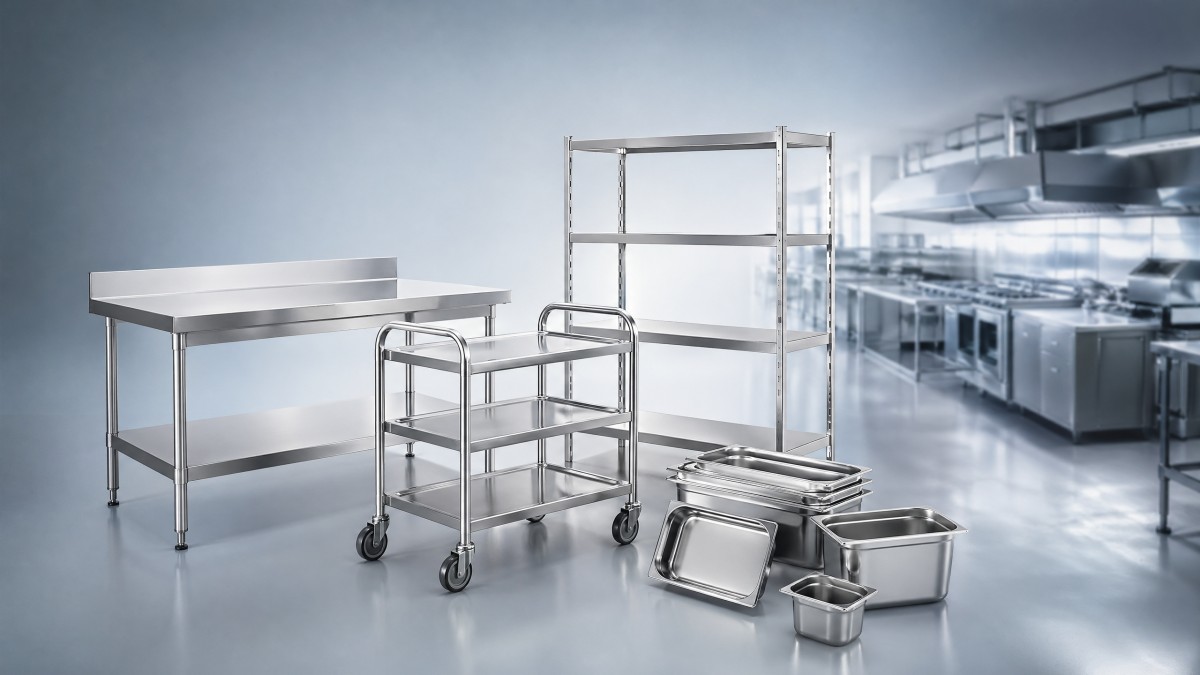
Not every item needs a custom production line, but several categories are frequently adapted by a restaurant supplies manufacturer. Stainless steel restaurant supplies lead the list because they are easier to fabricate, durable in wet or hot environments, and widely used across prep, cooking, storage, and service areas. Common examples include worktables, sinks, trolleys, racks, shelves, splash backs, counters, and tray systems.
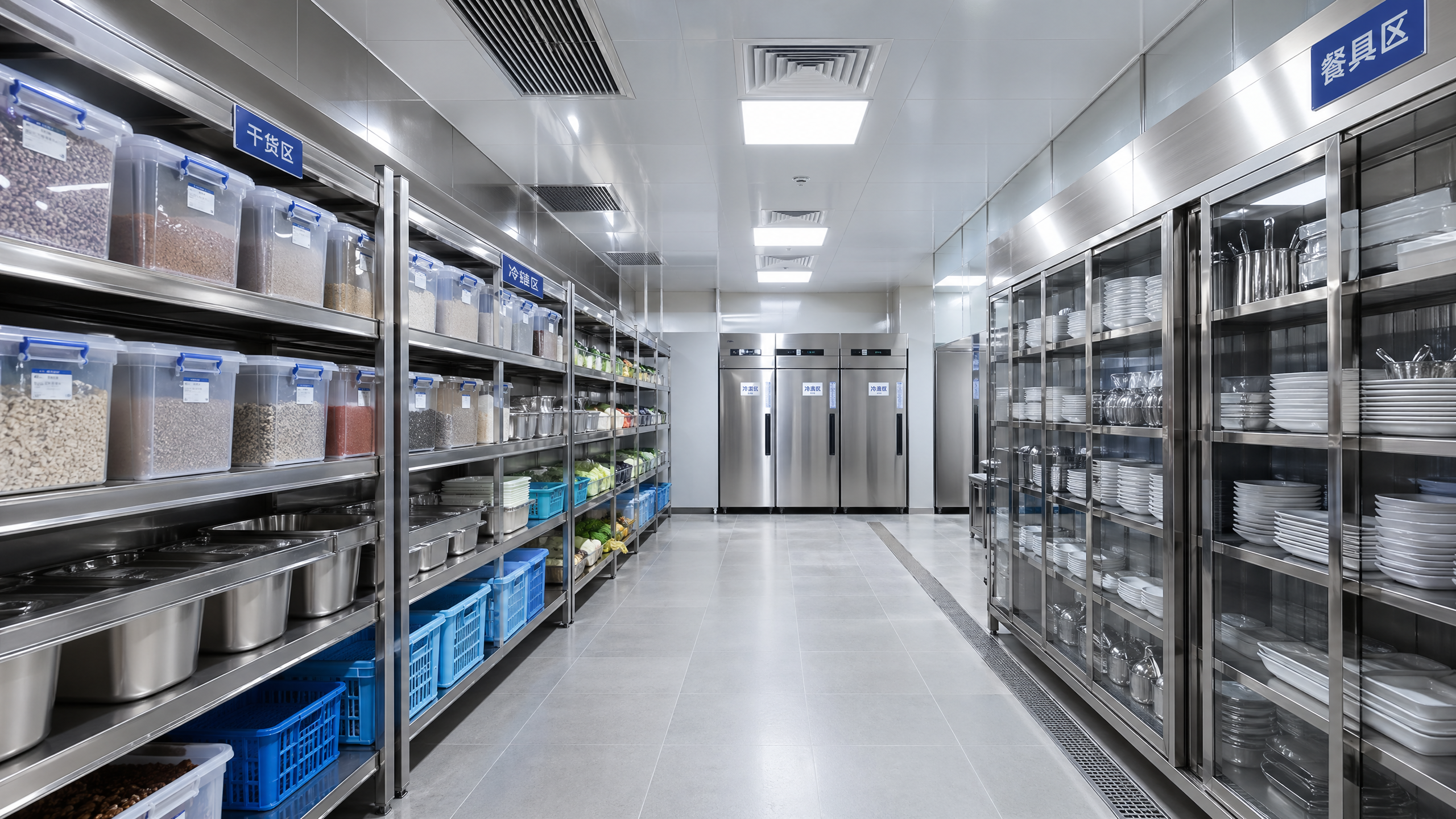
Custom runs also apply to support products that directly affect workflow. These include ingredient bins, gastronorm-compatible inserts, serving stations, transport carts, dishwashing accessories, and branded serviceware. In bulk order programs, buyers may request reinforced handles, anti-slip surfaces, drain positioning, edge radius changes, or packaging adjustments for easier warehousing and site distribution.
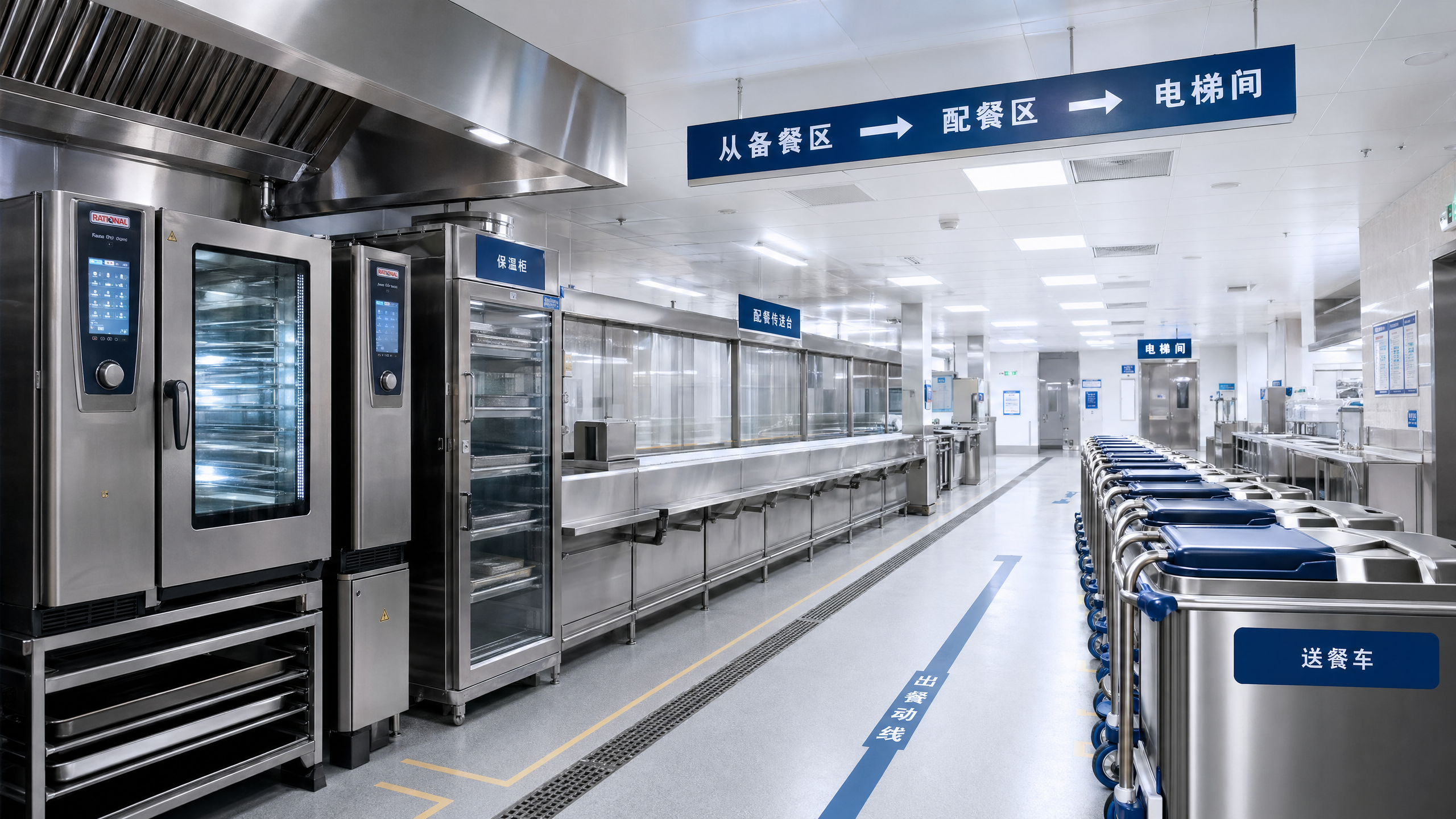
In hospitality and institutional settings, custom kitchen design often requires coordinated dimensions across several product groups. A hotel breakfast line may need warming units, shelving, trays, and waste sorting stations aligned within a 2.4–4.8 meter service zone. A hospital kitchen may require easier wheel access, sealed joints, and material choices suited to frequent sanitation cycles. A school dining program may prioritize rounded edges and simplified maintenance.
Typical customization dimensions
Material and finish
Commercial buyers often choose stainless steel grades based on environment and budget. 201-grade may be used in some dry applications, while 304-grade is widely preferred for wet areas, food contact surfaces, and long-term corrosion resistance. Finish options such as brushed, polished, or anti-fingerprint surfaces can also affect maintenance time and appearance.
Dimensions and load-bearing
A rack may need a shelf pitch of 75–120 mm, a trolley may require 80–150 kg load capacity, and a table may need a custom backsplash height of 100–150 mm. These are not cosmetic decisions. They affect ergonomics, transport safety, cleaning clearance, and compatibility with existing restaurant appliances or food processing workflows.
The following table outlines product categories where restaurant supplies wholesale buyers most often request custom runs and the business reasons behind those requests.
The product mix matters because the economics of customization vary by manufacturing method. Fabricated metal items often support dimensional changes more easily than injection-molded items, while packaging, branding, and accessory kits can be efficient ways to customize without redesigning the core product.
How Buyers Should Evaluate a Manufacturer Before Requesting a Custom Run
A custom run only creates value if the supplier can execute it consistently. Buyers should assess four areas before moving forward: engineering communication, material control, production flexibility, and delivery reliability. In many projects, the initial quotation is not the hardest part. The bigger challenge is whether the manufacturer can translate an operational need into a repeatable product specification without causing delays or quality variation.
Start with technical clarity. A capable restaurant supplies manufacturer should ask for drawings, application photos, site constraints, target quantities, and expected usage frequency. If a supplier quotes custom kitchen equipment after only a brief message and no dimensional confirmation, the risk of mismatch rises quickly. Even for relatively simple products, tolerances, weld quality expectations, finishing method, and carton labeling should be discussed in advance.
Lead time is another essential factor. A sample may take 7–15 days depending on complexity. Mass production may require 20–45 days, especially if raw material procurement, fixture setup, or export packaging is involved. For chain openings and institutional tenders, buyers should also confirm production capacity by batch, not just by month. A supplier that can make 1,000 units over 6 weeks may still struggle if you need phased delivery across 3 warehouses in 10 days.
A practical supplier review checklist
- Confirm material options such as stainless steel grade, thickness range, and surface finish details.
- Request a sample, prototype drawing, or pre-production approval step for any item with dimensional risk.
- Check packaging logic, carton markings, barcode needs, and palletization if distribution involves multiple sites.
- Define inspection points, such as dimensional tolerance, weld finishing, rolling performance, or edge treatment.
- Verify after-sales support for missing parts, replacement units, or future repeat orders.
The table below helps procurement teams compare manufacturers beyond unit price. This is especially useful when restaurant supplies bulk order decisions affect several departments, including operations, finance, and facility planning.
In many purchasing cycles, the best supplier is not the one with the lowest first quote. It is the one that reduces uncertainty across specification, production, packaging, and replenishment. For custom runs, execution quality is often a bigger cost driver than the starting price.
Custom Runs, Cost Control, and Long-Term Procurement Value
A common concern is that custom production always costs more. In reality, cost should be measured across the full operating cycle. A custom item may carry a higher unit price, but if it cuts replacement frequency, reduces labor steps, increases storage density, or lowers shipping inefficiency, the total cost can become more favorable over 6–24 months.
For example, a standard trolley that fails under daily heavy use may need replacement twice as often as a reinforced version built for a 120 kg working load. A shelf layout that wastes 10% of vertical storage can force earlier expansion of dry or cold storage areas. Custom packaging can also help, especially when restaurant supplies wholesale orders are distributed across chain stores or franchise networks. Labeling by site, carton count, or SKU family reduces handling mistakes during receiving.
There is also strategic value in supply continuity. Buyers that place regular custom runs gain better forecasting, more stable product consistency, and fewer last-minute substitutions. This matters in sectors with strict process requirements, such as healthcare foodservice, school feeding programs, central kitchens, airline catering support, and food processing support operations.
Ways custom runs improve procurement performance
- They reduce mismatch between equipment, furniture, and accessories, lowering installation or adaptation costs.
- They support batch purchasing plans over 1 quarter, 2 quarters, or annual framework agreements.
- They simplify training because operators work with the same layout and tools in every location.
- They improve lifecycle planning by standardizing replacement parts, replenishment quantities, and warehousing logic.
From a decision-maker’s perspective, custom runs become most valuable when operational repetition is high and process variation is expensive. If an item is used 50 times per day, by 20 staff, across 12 months, even small design improvements can create real purchasing and labor benefits. That is why more buyers now evaluate custom kitchen design and custom production as a cost-control method, not only as a design service.
Implementation Steps, Risks, and Common Buyer Questions
Once a buyer decides to explore customization, implementation should follow a structured process. This lowers the risk of drawing mistakes, unclear expectations, and delivery delays. In most kitchen equipment projects, a 5-step workflow is practical: define use case, confirm technical data, approve sample, lock production plan, and inspect before shipment. Skipping one of these steps usually increases the chance of rework.
Recommended implementation sequence
- Document the application: site type, daily volume, user group, cleaning frequency, and dimensional limits.
- Share reference drawings or photos with key measurements such as length, depth, clearance, and load needs.
- Review sample details including finish, edge treatment, welding, hardware, and packaging.
- Approve the mass-production standard and confirm order split, lead time, and shipping method.
- Set incoming inspection criteria for dimensions, appearance, structural stability, and quantity.
The most common risks are not always manufacturing defects. They often come from incomplete briefs. For example, buyers may provide outer dimensions but omit wheel requirements, stacking direction, or compatibility with dishwashing, hot holding, or cold storage. A well-managed custom run should define both the product and the operating environment, including temperature, moisture exposure, and cleaning chemicals where relevant.
FAQ
How do I know if my order volume is large enough for a custom run?
There is no single threshold, but repeat demand is usually more important than one-time volume. For simple utensils or accessories, custom MOQ may begin around 100–500 units. For fabricated stainless steel restaurant supplies, smaller quantities may still be viable if the design is straightforward and the operational need is clear.
How long does custom production usually take?
A realistic planning range is often 1–2 weeks for sampling and 3–6 weeks for production, excluding international shipping. More complex projects involving multiple product types, brand packaging, or phased distribution may take longer. Buyers should confirm timeline by batch, not only by total order.
What should procurement teams focus on besides price?
Focus on dimensional accuracy, material suitability, packaging logic, repeat-order consistency, and communication speed. These five factors often determine whether commercial restaurant supplies support operations smoothly or create hidden costs after delivery.
When a restaurant supplies manufacturer can offer custom runs with clear engineering support, disciplined production planning, and practical communication, buyers gain more than a non-standard product. They gain a supply solution aligned with workflow, durability, hygiene, and long-term procurement control. Whether the need is stainless steel restaurant supplies, restaurant supplies bulk order planning, or custom kitchen design for institutional and hospitality use, tailored sourcing can strengthen both operations and purchasing outcomes. If you are evaluating custom commercial restaurant supplies for your next project, contact us to discuss specifications, request a tailored proposal, and explore the right solution for your site or distribution program.
Popular Tags
Kitchen Industry Research Team
Dedicated to analyzing emerging trends and technological shifts in the global hospitality and foodservice infrastructure sector.
Industry Insights
Join 15,000+ industry professionals. Get the latest market trends and tech news delivered weekly.
No spam. Unsubscribe anytime.
Contact With us
Contact:
Anne Yin (Ceramics Dinnerware/Glassware)
Lucky Zhai(Flatware)