
Catering kitchen design that speeds up loading and cleanup
A catering kitchen that truly speeds up loading and cleanup is not just “well equipped”; it is laid out to reduce backtracking, separate clean and dirty flows, shorten handoff distances, and support fast reset between service periods. For operators, that means less congestion and fewer delays. For buyers and managers, it means better labor efficiency, more consistent output, and a kitchen that can handle peak demand without chaos. Whether you are planning a smart kitchen design for a hotel, school, bakery, café, central kitchen, or food processing site, the best results come from combining the right workflow layout with durable commercial restaurant supplies, stainless steel restaurant supplies, and dependable restaurant supplies wholesale sourcing.
What kind of kitchen design actually speeds up loading and cleanup?
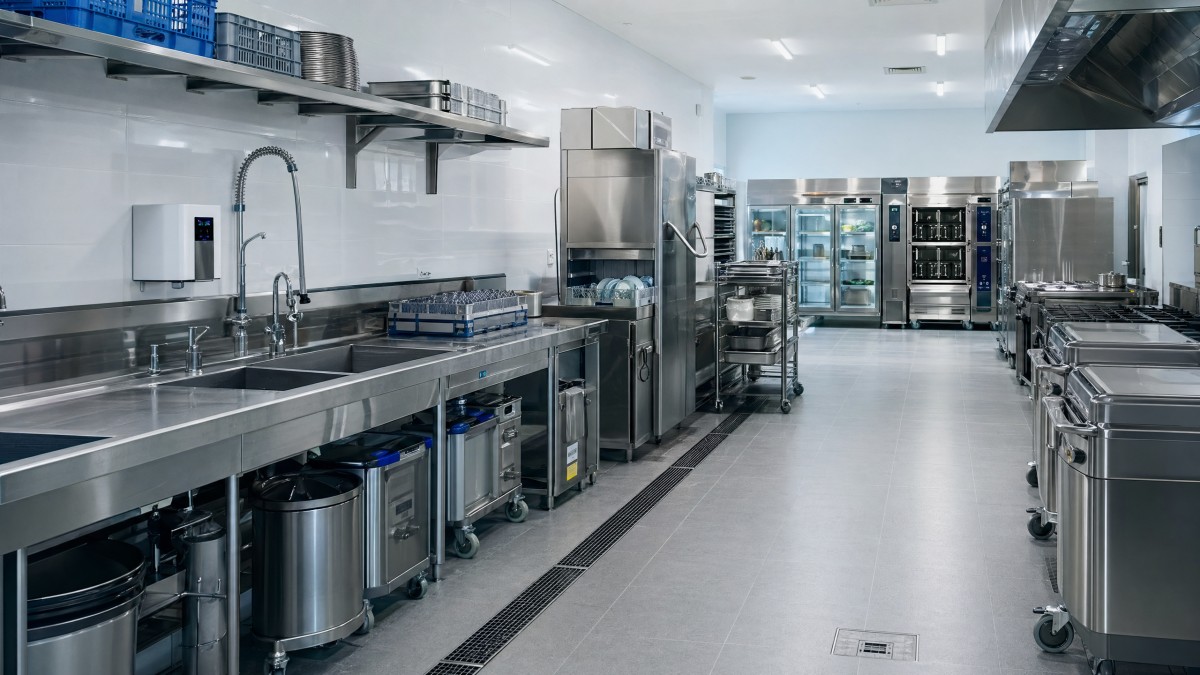
The core answer is simple: a fast catering kitchen is designed around workflow, not just equipment placement. In practical terms, that means loading, prep, cooking, holding, dispatch, dish return, washing, drying, and waste handling should follow a logical sequence with minimal cross-traffic.
The biggest performance gains usually come from four design choices:
- Shorter travel paths: Staff should not need to zigzag across the kitchen to pick up trays, utensils, ingredients, or packaging.
- Clear separation of clean and dirty zones: This improves food safety and speeds cleanup by preventing bottlenecks around dishwashing and waste areas.
- Dedicated loading and staging space: Incoming goods, prepared orders, hot holding, and outbound transport all need defined positions.
- Easy-to-clean surfaces and equipment: Stainless steel restaurant supplies, coved corners, drain-friendly flooring, and accessible equipment bases can significantly reduce cleaning time.
If a kitchen is handling high-volume catering, event production, school meals, hotel banquets, or institutional service, these layout fundamentals usually matter more than simply adding more machines.
Where do catering kitchens lose the most time during loading and cleanup?
Most delays come from layout friction rather than staff effort. Teams often work hard, but the design forces wasted movement. The most common time-loss points include:
- Receiving and storage are too far apart: Deliveries take longer to unload, inspect, label, and store.
- Prep stations are disconnected from cold and dry storage: Staff repeatedly walk back for ingredients and containers.
- Packaging and dispatch areas are undersized: Finished orders pile up, causing loading errors and delays.
- Dish return crosses service flow: Dirty trays, pans, and utensils interfere with outgoing food traffic.
- Waste removal is inconvenient: Overflow and extra handling slow end-of-shift cleanup.
- Equipment is hard to access for sanitation: Cleaning crews spend extra time reaching under, behind, or around poorly placed units.
For procurement teams and decision-makers, this is important because many kitchen inefficiencies are incorrectly blamed on labor shortages or staff training, when the root cause is the physical layout.
What layout zones should a high-efficiency catering kitchen include?
A productive kitchen design for catering typically works best when organized into clearly defined zones. The exact size and sequence vary by operation, but most efficient kitchens include the following:
- Receiving and inspection zone: A space for unloading, checking, weighing, and documenting incoming goods.
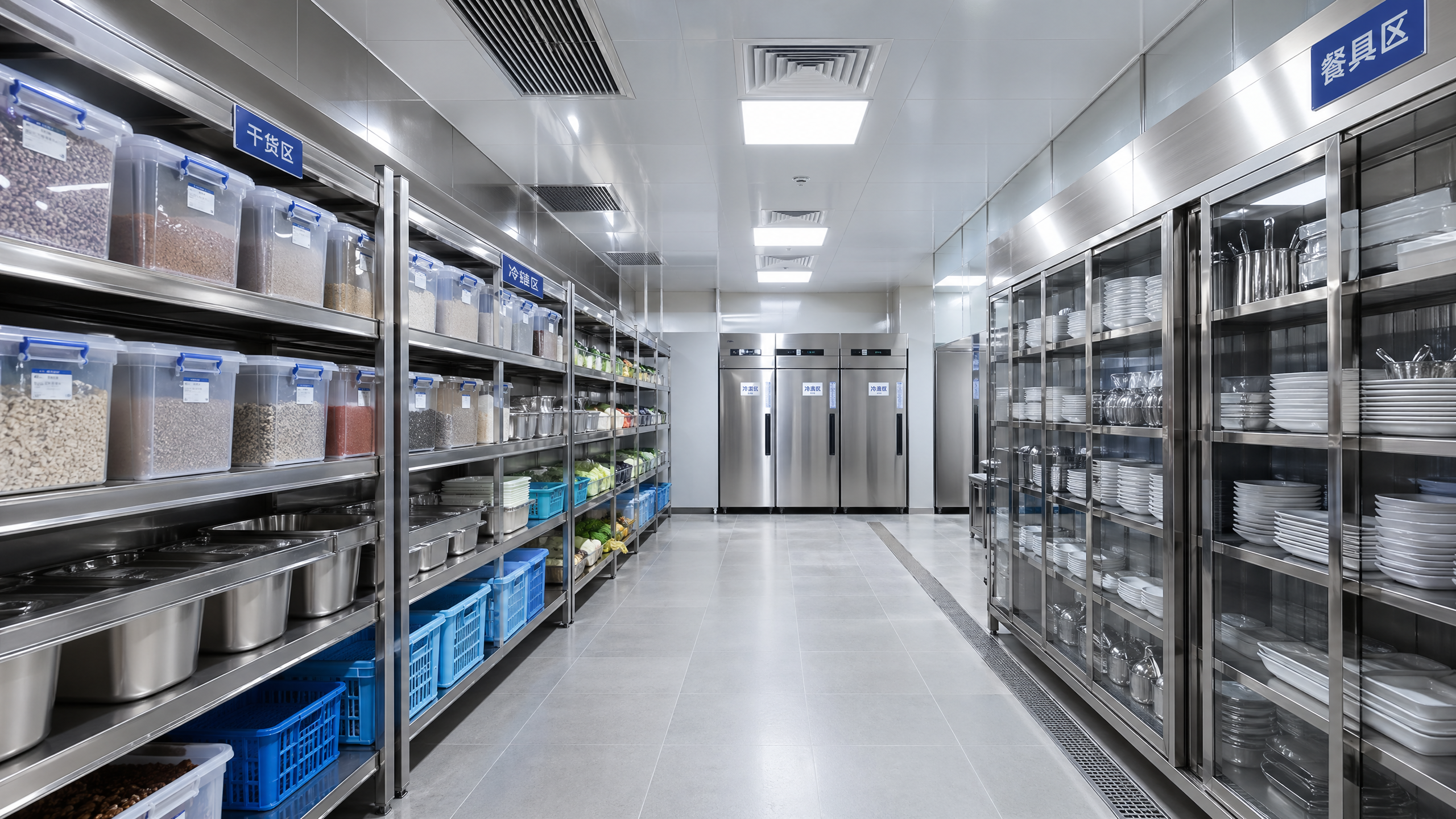
- Cold, frozen, and dry storage: Positioned close to receiving and prep to reduce handling time.
- Preparation zone: Separate areas for vegetables, proteins, bakery work, or allergen-sensitive items when needed.
- Cooking line: Arranged based on menu volume, batch size, and energy use.
- Holding and staging zone: For hot boxes, cold holding, tray assembly, order verification, and dispatch preparation.
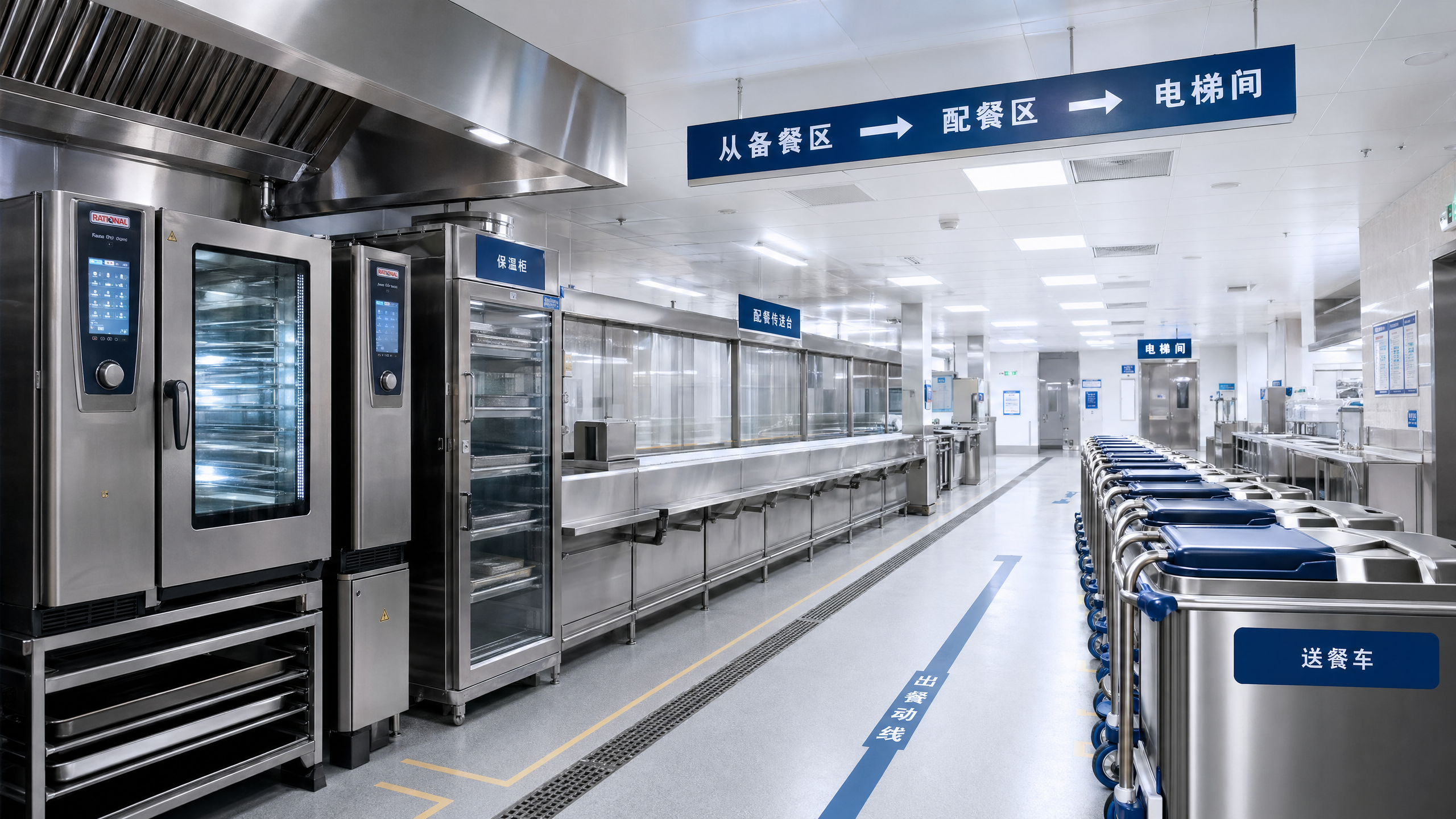
- Loading zone: A dedicated outbound area for carts, insulated carriers, banquet transport, or delivery vehicles.
- Return and wash-up zone: Dirty items should enter a separate stream that leads efficiently to scraping, washing, rinsing, drying, and storage.
- Waste and recycling zone: Located to support fast disposal without contaminating clean work areas.
This zoning approach is especially effective in custom kitchen design for industrial kitchens, institutional foodservice, central production units, and hotels with banquet operations.
How should the loading area be designed for faster service flow?
Loading speed depends on staging logic. A common mistake is treating loading as an afterthought instead of a production-critical zone. In catering operations, loading is where timing mistakes become customer-facing problems.
To improve outbound speed, the loading area should include:
- Staging tables or mobile racks near dispatch for sorting orders by route, event, or service time
- Direct access to hot and cold holding so temperature-sensitive items are not left waiting
- Space for carts, insulated boxes, and transport containers without blocking circulation
- Clear labeling and order-check points to reduce loading errors
- A one-way movement pattern from finishing to staging to vehicle or service exit
For schools, hospitals, hotels, and corporate catering, this can dramatically cut dispatch confusion during peak windows. For event caterers, it reduces the chance of missing components, duplicate handling, or temperature loss.
What design features make cleanup faster at the end of service?
Cleanup speed is strongly influenced by the materials, spacing, drainage, and accessibility built into the kitchen. Even highly skilled staff lose time if they have to move equipment, work around narrow gaps, or manually deal with hard-to-clean surfaces.
The most useful cleanup-focused features include:
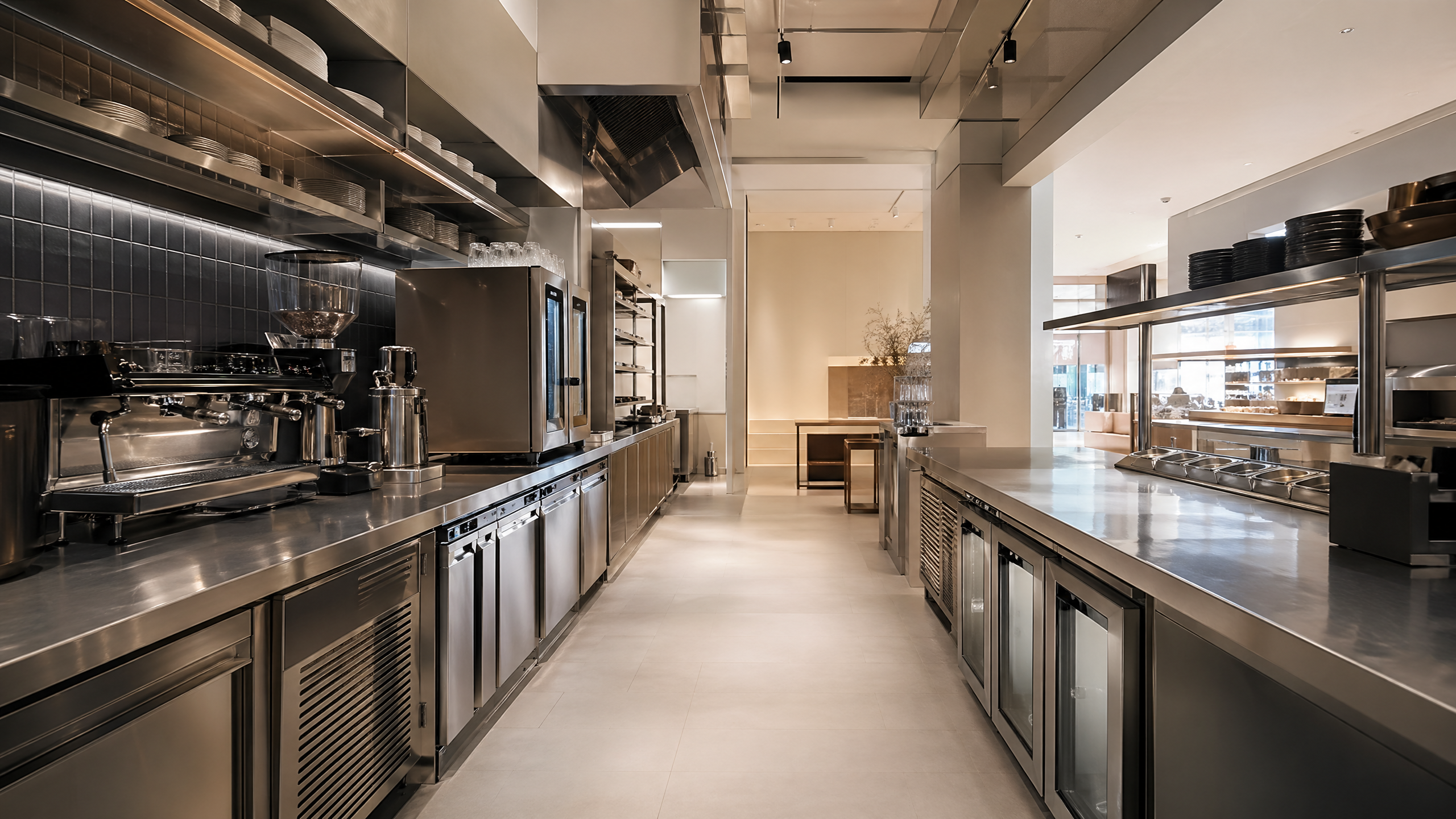
- Stainless steel worktables, sinks, racks, and shelving: Durable, hygienic, and easier to sanitize
- Wall-mounted or raised equipment where practical: Makes floor cleaning faster
- Proper floor drainage and slip-resistant finishes: Helps washdown and improves safety
- Coved wall-floor transitions: Reduces dirt buildup in corners
- Dedicated landing space at dishwashing stations: Prevents dirty item pileups
- Waste sorting near the point of use: Reduces repeated handling of trash and recyclables
- Accessible utility connections: Simplifies maintenance and deep cleaning
When selecting restaurant supplies wholesale, buyers should evaluate not only purchase price, but also how each item affects sanitation time, durability, and replacement frequency.
How do smart kitchen design and energy efficient kitchen design improve daily operations?
Smart kitchen design is no longer limited to advanced automation. Even moderate digital integration can improve speed, visibility, and consistency. For example, temperature monitoring, equipment status alerts, production tracking, and digital task management can help teams respond faster and reduce avoidable delays.
Energy efficient kitchen design also supports smoother operations, especially in high-volume kitchens where heat load and utility costs affect both comfort and profitability. Benefits may include:
- Lower operating costs through efficient cooking, refrigeration, and ventilation systems
- Reduced ambient heat that improves staff comfort and productivity
- More stable equipment performance under peak demand
- Better scheduling and maintenance planning through connected systems
For decision-makers, these upgrades should be judged by measurable outcomes: labor saved, energy reduction, downtime avoided, throughput gained, and hygiene compliance improved.
What should buyers and project managers look for before investing in a new kitchen layout?
Before purchasing equipment or approving a redesign, it is worth asking a few operational questions:
- How many meals, trays, or event orders must the kitchen handle per hour?
- Where do staff currently queue, wait, or double-handle items?
- Which tasks slow down shift change, dispatch, or end-of-day cleaning?
- Does the kitchen need to support multiple service models, such as dine-in, takeaway, banquet, and delivery?
- Are sanitation and food safety controls built into the layout, not added later?
- Can the design adapt to future automation or production growth?
Procurement teams should also assess supplier reliability, after-sales support, spare parts access, and compatibility across commercial kitchen equipment categories. A lower-cost item is rarely the best choice if it creates maintenance delays or slows cleaning every day.
Which operations benefit most from custom kitchen design?
Custom kitchen design is especially valuable when the operation has specialized volume, service timing, menu complexity, or compliance needs. This includes:
- Hotels and banquet kitchens managing large event peaks
- Schools and institutional kitchens with strict serving windows
- Bakeries and cafés balancing production and front-of-house support
- Central kitchens coordinating batch production and route dispatch
- Food processing sites requiring structured hygiene zoning
- Industrial kitchens where durability, flow control, and safety are critical
In these settings, a generic layout often leads to hidden costs: excess labor, slower turnover, cleaning inefficiency, and reduced output during peak periods.
Conclusion: the fastest catering kitchens are designed around movement, sanitation, and control
If your goal is to speed up loading and cleanup, the best kitchen design is one that reduces unnecessary movement, separates clean and dirty processes, supports staging and dispatch, and makes sanitation easier every day. For users and operators, that means less stress and smoother service. For buyers and business leaders, it means better throughput, lower labor waste, stronger hygiene performance, and a kitchen that scales more effectively.
In practice, the highest-value investments often come from combining workflow-based planning with durable commercial restaurant supplies, stainless steel restaurant supplies, smart kitchen design features, and energy efficient kitchen design principles. A catering kitchen should not only cook well; it should move well, clean fast, and stay reliable under pressure.
- commercial kitchen equipment
- smart kitchen
- industrial kitchen
- central kitchen
- kitchen design
- restaurant supplies
- Stainless Steel Worktable
- kitchen equipment
- energy efficient kitchen design
- smart kitchen design
- custom kitchen design
- kitchen design for catering
- kitchen design for industrial kitchens
- restaurant supplies wholesale
- commercial restaurant supplies
- stainless steel restaurant supplies
Popular Tags
Kitchen Industry Research Team
Dedicated to analyzing emerging trends and technological shifts in the global hospitality and foodservice infrastructure sector.
Industry Insights
Join 15,000+ industry professionals. Get the latest market trends and tech news delivered weekly.
No spam. Unsubscribe anytime.
Contact With us
Contact:
Anne Yin (Ceramics Dinnerware/Glassware)
Lucky Zhai(Flatware)