
Restaurant kitchen equipment setup mistakes that slow service
Many service delays start long before the first ticket prints—they begin with poor restaurant kitchen equipment setup. In a foodservice environment shaped by faster table turns, delivery pressure, labor shortages, and stricter food safety expectations, the physical arrangement of equipment has become a strategic issue rather than a simple installation task. When prep tables, refrigeration, cooking lines, washing zones, and pass counters are placed without a flow-based plan, even modern kitchens lose speed. A better restaurant kitchen equipment setup helps reduce wasted motion, prevent bottlenecks, improve consistency, and support a safer back-of-house operation.
Why restaurant kitchen equipment setup is now a service-speed issue, not just a layout decision
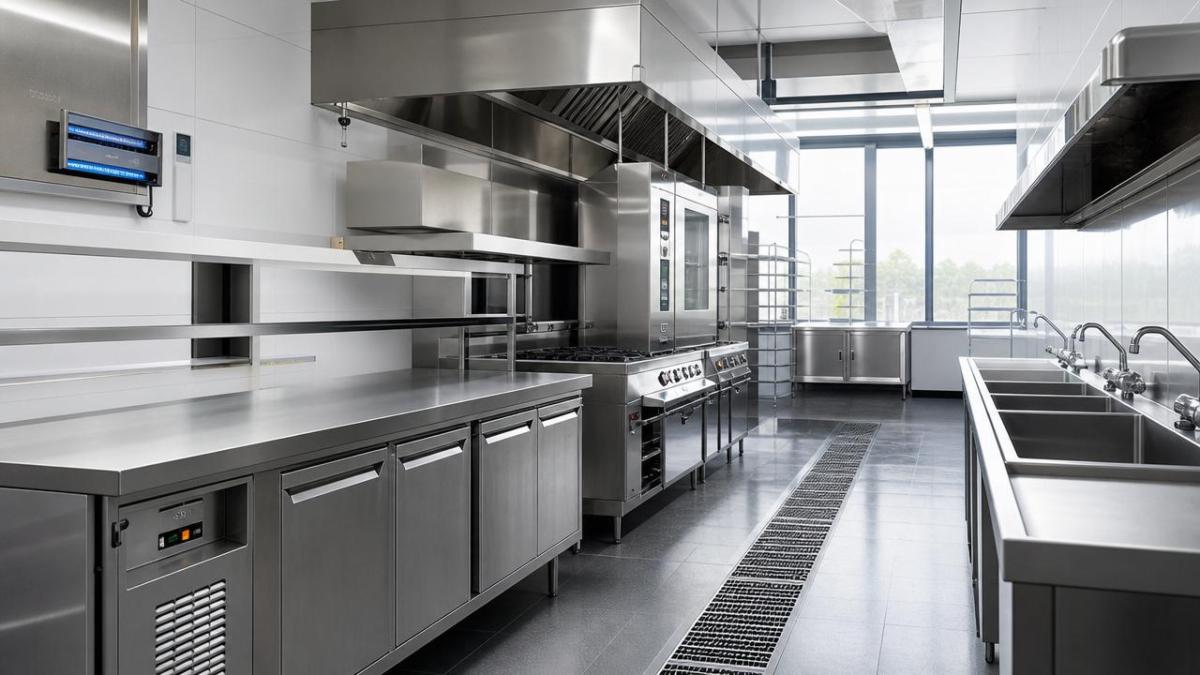
The global kitchen equipment industry is moving toward automation, intelligent controls, energy efficiency, and integrated systems. That shift is changing what a practical restaurant kitchen equipment setup looks like. Equipment is no longer installed as isolated units. Ovens connect with holding cabinets, prep stations depend on cold storage access, and dishwashing zones must support fast turnaround without interfering with production. As restaurants expand dine-in, takeout, and delivery at the same time, a setup that worked a few years ago may now create friction at peak hours.
Another trend signal is the growing need for consistency with fewer labor resources. Kitchens cannot rely on experienced staff alone to compensate for poor placement of fryers, ranges, undercounter refrigeration, mixers, sinks, or shelving. A weak restaurant kitchen equipment setup increases travel distance, creates waiting between stations, and raises the chance of cross-traffic. In contrast, a well-planned setup supports predictable output, easier training, and better use of smart kitchen technology.
The mistakes that slow service are becoming more visible as kitchen operations get more complex
The most common problems in restaurant kitchen equipment setup are not always dramatic. Often they appear as small, repeated delays that multiply during busy periods. A prep cook takes four extra steps to reach cold ingredients. A grill operator waits because plating tools are stored behind the sauté station. Clean dish return crosses the line used for cooked food exit. These details create a chain reaction that slows the entire service cycle.
Frequent setup mistakes that reduce kitchen efficiency
- Misplacing high-use equipment far from the related task zone, such as locating refrigeration too far from prep or line service.
- Ignoring workflow direction, causing raw storage, preparation, cooking, plating, and washing paths to overlap.
- Overloading one section of the line while leaving another underused, which creates bottlenecks during rush periods.
- Selecting equipment size without checking clearance, door swing, ventilation needs, or operator space.
- Placing smallwares, utensils, and ingredients outside the natural reach range of the main user.
- Separating hot holding, pass, and dispatch points in a way that delays order assembly for dine-in and delivery.
- Treating dishwashing as a back-end issue instead of a service-speed factor that affects plate availability and sanitation flow.
These issues matter more today because service models are layered. One kitchen may prepare plated meals, delivery packs, and batch items at the same time. Without a flexible restaurant kitchen equipment setup, equipment becomes a source of congestion rather than output.
What is driving better restaurant kitchen equipment setup decisions across the industry
Improved restaurant kitchen equipment setup is being driven by several practical forces in the broader kitchen equipment market. The following table shows why setup quality now affects competitiveness, safety, and operating cost.
The impact of poor restaurant kitchen equipment setup reaches beyond the cooking line
A flawed restaurant kitchen equipment setup affects more than service speed. It influences food quality, operating cost, maintenance frequency, and staff endurance. When cooking equipment is crowded or ventilation planning is weak, heat builds up and equipment may run less efficiently. When refrigeration is installed in high-traffic or high-heat areas, temperature stability can suffer. When warewashing is disconnected from storage and line replenishment, clean tools and plates return too slowly to support peak service.
The effects also spread across business functions. Delayed ticket times can reduce guest satisfaction. Repeated workflow interruptions may increase labor hours. Poor zoning may complicate cleaning routines and increase sanitation risk. In operations using advanced commercial kitchen equipment, a weak setup can even reduce the value of intelligent or automated systems because the equipment works well individually but fails within the overall kitchen flow.
Where the damage is often felt first
- Ticket times become inconsistent during peak periods.
- Staff collide or interrupt one another at key transition points.
- Food waits too long between cooking, holding, and handoff.
- Cleaning and resetting take longer than expected.
- Equipment maintenance issues increase because units are hard to access or poorly ventilated.
What deserves attention before changing a restaurant kitchen equipment setup
Before relocating or adding equipment, it is useful to review the kitchen as a sequence of movements rather than a list of appliances. A stronger restaurant kitchen equipment setup starts with task mapping: where ingredients enter, where they are stored, where prep begins, where cooking happens, how orders are assembled, and how used tools return for cleaning. This reveals whether the setup supports one-way flow or forces unnecessary backtracking.
Core points to evaluate
- Adjacency: place linked tasks close together, such as prep near refrigerated storage and plating near the pass.
- Reach and frequency: the more often an item is used, the closer it should be to the operator’s primary position.
- Zoning: separate raw handling, hot production, finishing, packing, and warewashing to avoid overlap.
- Flexibility: leave room for menu changes, seasonal demand, and future smart kitchen upgrades.
- Utilities and maintenance access: ensure power, gas, water, drainage, ventilation, and service clearance are practical.
- Safety and compliance: keep aisles clear, maintain sanitation flow, and reduce splash, slip, and burn risks.
A practical way to judge whether the current setup is helping or hurting
Not every kitchen needs a complete redesign. In many cases, the best response is a structured review of the current restaurant kitchen equipment setup. Observe a busy service and record where delays appear repeatedly. Count steps between major stations. Note where staff wait, turn, cross, or search for tools. Compare those observations with order type volume, menu complexity, and equipment utilization. This approach turns layout decisions into measurable performance improvements.
The next step is to treat restaurant kitchen equipment setup as an ongoing performance system
As the kitchen equipment industry advances toward intelligent, energy-efficient, and integrated solutions, the value of good restaurant kitchen equipment setup will continue to grow. The kitchens that move fastest are not always the ones with the most equipment; they are the ones where equipment placement supports a clear sequence of work. Reviewing setup decisions through the lens of service speed, safety, flexibility, and maintenance can reveal hidden inefficiencies that technology alone cannot solve.
A practical starting point is to walk the kitchen during peak service, identify three repeated delays, and trace each one back to equipment position, zoning, or access. Then adjust one area at a time and measure the change in ticket flow, movement, and reset time. A more effective restaurant kitchen equipment setup does not just improve today’s shift—it creates a stronger foundation for future menu changes, smart equipment adoption, and sustainable growth.
Popular Tags
Kitchen Industry Research Team
Dedicated to analyzing emerging trends and technological shifts in the global hospitality and foodservice infrastructure sector.
Industry Insights
Join 15,000+ industry professionals. Get the latest market trends and tech news delivered weekly.
No spam. Unsubscribe anytime.
Contact With us
Contact:
Anne Yin (Ceramics Dinnerware/Glassware)
Lucky Zhai(Flatware)