
Restaurant kitchen equipment design choices that age badly
Many restaurant kitchen equipment design decisions look efficient on paper but age badly under real operational pressure. For project managers and engineering leads, understanding which restaurant kitchen equipment design choices create long-term maintenance, workflow, energy, and compliance problems is critical before construction or renovation begins. This article highlights common pitfalls and smarter ways to plan kitchens that stay efficient, scalable, and cost-effective over time.
In commercial projects, the wrong decision rarely fails in month one. It usually becomes expensive in year two, disruptive in year three, and difficult to correct once walls, drains, hoods, and utility lines are fixed. That is why restaurant kitchen equipment design must be judged not only by installation cost, but also by cleaning labor, service access, throughput flexibility, and future code adaptation.
For restaurants, hotels, central kitchens, and foodservice groups, durable planning now also needs to account for automation, energy efficiency, and digital monitoring. A layout that works for a 60-seat operation may break down when volume increases by 25% to 40%, menu complexity doubles, or labor availability becomes less predictable. Project leaders need design choices that remain useful under changing conditions.
Why Some Restaurant Kitchen Equipment Design Choices Age So Poorly
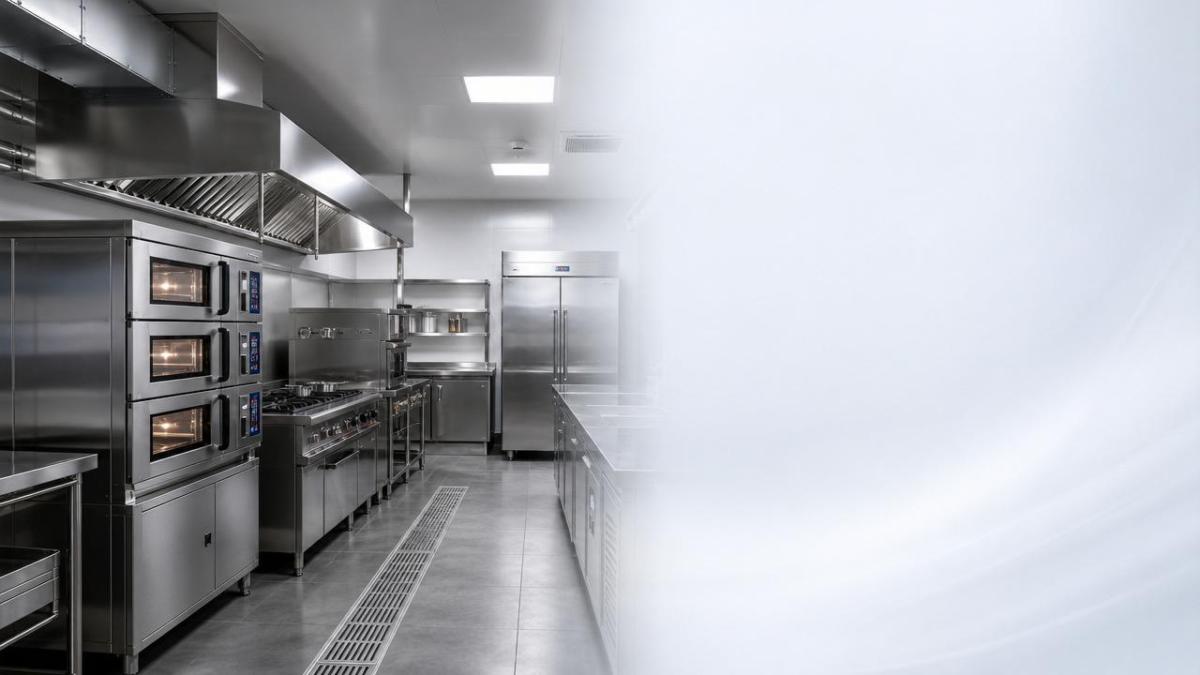
Aging badly does not always mean equipment stops functioning. More often, it means the original restaurant kitchen equipment design creates hidden friction: extra staff steps, delayed cleaning, uneven production, or repeated maintenance shutdowns. In a high-output kitchen, even 10 to 20 wasted seconds per task can add up to hours of lost labor each week.
The most common cause is designing for opening day instead of designing for years 1 to 5. When project teams optimize only around initial fit-out cost, they may overlook service clearances, grease extraction loads, refrigeration heat rejection, or replacement access paths. Those omissions become recurring operating costs.
Short-term efficiency versus long-term operability
A compact line can look efficient in CAD drawings, but if staff cannot move safely during peak service, productivity declines. In many kitchens, a circulation path narrower than 900 mm begins to create conflict between hot line staff, dish return, and runners. At 2 peak periods per day, those conflicts can affect speed, food quality, and safety at the same time.
Another issue is equipment selection without service logic. Installing heavy-duty cooking blocks tightly against walls or adjacent units may save floor area, but it can turn a 30-minute inspection into a 3-hour disassembly task. For engineering leads, poor access is one of the clearest signs of a design that will age badly.
The recurring cost categories project teams underestimate
Teams often focus on capital expenditure and underweight 4 operating categories: cleaning labor, energy draw, maintenance downtime, and compliance risk. A lower-cost appliance may consume 10% to 15% more energy, require more frequent filter cleaning, and shorten adjacent equipment life by adding excess heat to the room.
- Cleaning time increases when there are sealed corners, floor-mounted obstacles, or inaccessible undersides.
- Maintenance cost rises when service panels require equipment relocation or hood disassembly.
- Energy waste grows when hot and cold zones are placed too close together.
- Compliance exposure increases when drainage, ventilation, or sanitation details are difficult to inspect.
Design Mistakes That Commonly Create Long-Term Problems
The following issues appear in many restaurant kitchen equipment design reviews. They are not always obvious during concept planning, but they become measurable after 6 to 18 months of operation. For project managers, these are the decisions worth challenging early.
Overspecialized equipment with low menu flexibility
Single-purpose equipment can be justified in high-volume chains or central production models, but it often ages poorly in independent restaurants or mixed-service hospitality sites. When menu rotation changes every 6 to 12 months, fixed-function equipment may become underused while still consuming utility capacity, floor space, and maintenance attention.
A better approach is to balance 70% core production needs with 30% adaptable capacity. Combination ovens, modular prep systems, and mobile support tables often provide stronger long-term value than highly specialized appliances that only support one menu format.
Ignoring workflow separation between dirty and clean streams
One of the most damaging layout errors is crossing raw prep, finished plating, waste return, and warewashing circulation. This raises contamination risk, slows teams during rush periods, and complicates HACCP-style process control. In medium-size operations, keeping at least 3 clearly separated routes for product, staff, and waste can significantly improve consistency.
If dish drop and cold prep are too close, or if waste bins sit in main production aisles, the kitchen will require constant behavioral correction to remain safe. Good design should reduce dependence on perfect staff discipline.
Underestimating ventilation and heat loads
Cooking equipment does not operate in isolation. A restaurant kitchen equipment design that adds fryers, charbroilers, or high-output ranges without rebalancing exhaust and make-up air will create temperature drift, odor leakage, and worker discomfort. Even a 2°C to 4°C rise in line temperature can affect staff fatigue and refrigeration efficiency.
This problem becomes worse when refrigeration units are installed next to heat-producing equipment. Compressors work harder, maintenance intervals shorten, and energy use rises. Heat mapping should be part of front-end engineering, not a reactive fix after opening.
Fixed utilities that block future reconfiguration
Restaurants rarely operate the same way for 5 straight years. A rigid arrangement of drains, gas drops, floor sinks, and power feeds can make future upgrades disproportionately expensive. When one production area needs to expand by 15% to 20%, fixed utilities may force demolition instead of simple replacement.
Flexible service planning, quick-disconnect connections where allowed, and utility zoning are more resilient options. They may add modest front-end coordination, but they reduce renovation disruption later.
The table below shows design choices that often look attractive initially but create different cost patterns over time.
The key pattern is simple: designs that minimize first-cost often transfer complexity into cleaning, servicing, and labor management. For a project leader, the better question is not “Can this fit?” but “Can this still perform after 1,000 service hours and several menu revisions?”
What Better Restaurant Kitchen Equipment Design Looks Like
A durable restaurant kitchen equipment design is scalable, serviceable, and operationally legible. It gives staff enough room to work, gives technicians enough room to maintain, and gives ownership enough flexibility to adapt production. The strongest layouts usually prioritize 5 things: flow, hygiene, utility planning, modularity, and energy balance.
Build around task flow, not just equipment lists
A kitchen should be planned as a sequence of actions: receive, store, prep, cook, hold, plate, clean, and dispose. If a station forces repeated backtracking, the problem is structural, not behavioral. Mapping 8 to 12 core tasks before final equipment placement often reveals better adjacencies than a procurement-led approach alone.
Practical layout checks
- Provide enough access space for doors, drawers, and cleaning tools without blocking aisles.
- Separate high-heat production from cold storage and sensitive prep zones.
- Keep receiving-to-storage movement short, ideally within 1 transfer path instead of 2 or 3.
- Place the most frequently used tools within immediate reach zones to cut repetitive motion.
Specify maintenance access at the design stage
Maintenance planning should be treated as part of capacity planning. Equipment that requires quarterly inspection, monthly filter care, or annual calibration needs predictable access. If service access is impossible without removing adjacent units, downtime becomes longer and more expensive than expected.
For engineering teams, a useful rule is to review 6 maintenance points for every major appliance: front access, rear access, utility isolation, drainage, filter removal, and replacement path. This review is especially important for combi ovens, refrigeration banks, ventilation systems, and dishwashing lines.
Use modularity to protect future upgrades
Modularity is one of the best defenses against design aging. Mobile prep tables, modular cooking suites, and zoned utility distribution allow phased improvement instead of full shutdown renovation. In many sites, the ability to swap 1 section in 1 day is far more valuable than a perfectly fixed installation that takes 1 to 2 weeks to alter.
This matters even more in international supply chains. Replacement lead times for selected kitchen equipment can range from 2 weeks to 12 weeks depending on origin, customization, and electrical or gas configuration. Designs that allow temporary substitution reduce business risk.
The table below outlines practical specification priorities for project managers evaluating restaurant kitchen equipment design during planning and procurement.
This framework helps teams avoid a common mistake: evaluating equipment item by item instead of as an integrated system. The strongest kitchens are rarely the ones with the most equipment. They are the ones where each component supports flow, sanitation, and maintainability.
A Practical Review Process for Project Managers and Engineering Leads
Before approving a new build or renovation, use a structured review process. A 5-step evaluation can prevent expensive revisions after utilities are installed. This is especially valuable in projects involving imported commercial kitchen equipment, custom stainless fabrication, or integrated digital kitchen systems.
Step 1: Validate volume assumptions
Check average and peak output, menu mix, batch sizes, and storage turnover. If the concept assumes one demand level but the business plan targets a 30% sales increase within 12 months, the kitchen should be designed with expansion tolerance from the start.
Step 2: Review movement paths on site plans
Trace how ingredients, people, waste, and clean wares move during a busy hour. Count crossing points and bottlenecks. If more than 3 critical paths intersect at one station, redesign is usually justified. This step often reveals layout flaws hidden by attractive 2D plans.
Step 3: Stress-test cleaning and service routines
Ask how daily, weekly, and quarterly cleaning will be done. Can staff reach under, behind, and above the equipment? Can parts be removed without tools or with standard tools only? A design that adds 20 minutes of cleaning per day adds over 120 hours of labor per year.
Step 4: Confirm utility reserves and compatibility
Allow reasonable reserve capacity in power, exhaust, and drainage. A design with zero spare capacity may look efficient, but it prevents easy upgrades. In practical terms, many operators benefit from a modest utility margin instead of designing every circuit and extraction point at full saturation on day one.
Step 5: Evaluate supplier support and replacement logic
The kitchen equipment industry is increasingly global, which expands sourcing options but also affects spare parts and service timelines. Ask about parts availability, standard maintenance intervals, commissioning requirements, and recommended backup plans for critical appliances. A good restaurant kitchen equipment design is strengthened by realistic support planning.
Common Questions During Planning and Renovation
Is it better to maximize equipment density in small kitchens?
Not always. High density helps only when circulation, heat control, and service access remain functional. In small kitchens, compact modular systems usually perform better than tightly packed independent units that create cleaning and maintenance blind spots.
How much flexibility should be planned into a new kitchen?
As a practical principle, plan for current demand plus a realistic growth margin. That may mean reserved utility points, modular stations, or adaptable holding and prep capacity. Flexibility is especially important for restaurant groups testing seasonal menus, delivery formats, or semi-automated production workflows.
When does smart equipment help, and when does it complicate design?
Smart kitchen equipment can improve monitoring, energy control, and consistency, but only if it aligns with staff capability and maintenance support. If digital features require complex training or hard-to-source parts, the technology may age badly despite strong initial appeal. Choose intelligence that solves a measurable operating problem, not technology for its own sake.
Restaurant kitchen equipment design should be treated as a long-term operating system, not a short-term installation exercise. The choices that age badly usually share the same pattern: low initial friction on paper, high recurring friction in real use. By planning for service access, workflow separation, modularity, utility flexibility, and energy interaction, project managers and engineering leads can reduce lifecycle cost while improving reliability and hygiene.
If you are evaluating a new commercial kitchen, renovating a hospitality site, or comparing integrated kitchen equipment solutions across suppliers, now is the right time to review your layout assumptions before procurement is locked in. Contact us to discuss your project, get a tailored restaurant kitchen equipment design recommendation, or learn more about scalable, energy-conscious kitchen solutions for long-term performance.
Popular Tags
Kitchen Industry Research Team
Dedicated to analyzing emerging trends and technological shifts in the global hospitality and foodservice infrastructure sector.
Industry Insights
Join 15,000+ industry professionals. Get the latest market trends and tech news delivered weekly.
No spam. Unsubscribe anytime.
Contact With us
Contact:
Anne Yin (Ceramics Dinnerware/Glassware)
Lucky Zhai(Flatware)