Restaurant Kitchen Planning: Where New Projects Usually Go Wrong
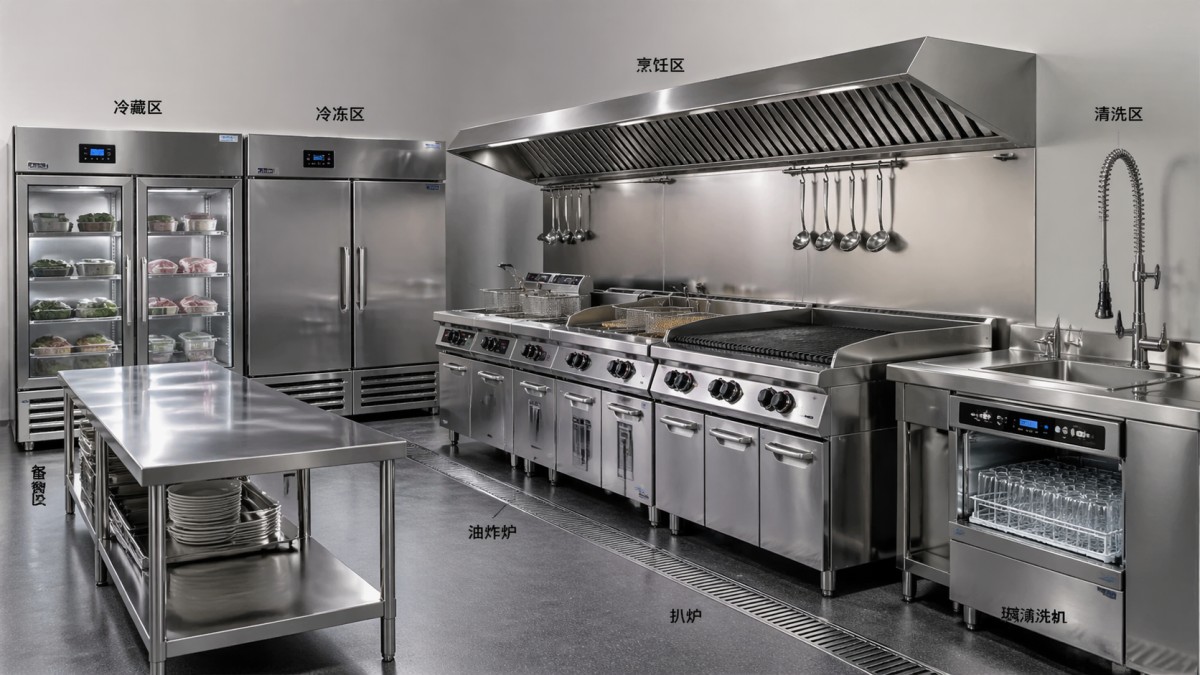
Restaurant kitchen planning often fails long before opening day, when layout, workflow, and equipment choices are made without a clear operational strategy. From commercial refrigeration equipment and a commercial kitchen hood to a commercial deep fryer, commercial griddle, and Glass Washer, every detail affects safety, speed, and profitability. This article explores where commercial kitchen design for new projects usually goes wrong and how to avoid costly mistakes.
For restaurant investors, chefs, consultants, facility engineers, and procurement teams, the early planning stage determines far more than the visual layout. It influences labor efficiency, food safety, maintenance frequency, utility consumption, and the speed of service during peak hours. A kitchen that looks complete on paper can still underperform if prep, cooking, washing, storage, and ventilation are not connected through a realistic workflow.
In new projects, the most expensive mistakes usually do not come from one bad machine. They come from a chain of small planning errors: undersized cold storage, poor hood placement, an overloaded electrical design, insufficient aisle width, or equipment selected before the menu and production volume are fully defined. Correcting these issues after installation can add 10%–25% to fit-out costs and delay opening by 2–6 weeks.
A better approach is to treat restaurant kitchen planning as an operational system. That means aligning equipment capacity, staff movement, hygiene zones, service format, and future scalability before purchase orders are issued. The sections below break down where commercial kitchen design for new projects usually goes wrong and how to build a more reliable, efficient, and profitable kitchen from the start.
Operations Are Defined Too Late in the Planning Process
One of the most common failures in restaurant kitchen planning is starting with equipment catalogs and floor plans before defining the operating model. A kitchen for 80 dine-in covers per service is not planned the same way as a kitchen supporting 300 delivery orders, a hotel breakfast line, or a central prep model. When the menu, batch size, service rhythm, and staffing structure are unclear, even premium commercial kitchen equipment can be poorly matched to the real workload.
In practical terms, operators should define at least 5 planning inputs before finalizing layout: menu complexity, expected meals per hour, prep-to-finish workflow, cleaning cycle, and storage turnover. If a concept serves 120 meals in a 90-minute lunch peak, the line must be designed for speed and recovery time, not only total daily volume. Without this step, teams often overspend on underused equipment while missing critical bottlenecks in cold storage, holding, or warewashing.
This problem is especially visible in open-kitchen and multi-station formats. A project may install a commercial griddle, charbroiler, fryer battery, and combi equipment, yet still suffer service delays because ingredient replenishment paths cross with plate-up traffic. In many new builds, the issue is not insufficient cooking power. It is that the kitchen was planned as a room full of machines rather than a coordinated production line.
Why early operational definition matters
A well-planned commercial kitchen design begins by converting business assumptions into technical requirements. That includes station count, refrigeration volume, extraction load, waste flow, and utility demand. A small change in service style can significantly affect equipment selection. For example, moving from made-to-order plating to partial batch cooking may reduce line congestion but increase hot holding demand and hood load.
Teams that define workflow early can also reduce rework during construction. Typical changes made after equipment approval include drain relocation, gas point repositioning, additional handwash stations, and revised hood dimensions. Each late change may seem minor, but 6–10 such corrections in one project can create scheduling conflicts across MEP, stainless fabrication, and fire safety approvals.
Minimum planning checklist before equipment selection
- Define target meal volume by daypart, such as breakfast, lunch, dinner, and delivery peak.
- Identify the top 10 menu items by production frequency and cooking method.
- Set receiving, prep, cooking, pass, wash, and waste routes with no major crossover points.
- Estimate chilled, frozen, and dry storage days on hand, often 2–7 days depending on concept.
- Confirm staffing by station, including backup positions during peak periods and cleaning shifts.
The table below shows how different operating models change planning priorities in new restaurant projects.
The key takeaway is simple: equipment should follow the operation, not the other way around. When planning starts with workflow, kitchen teams make better decisions on hood size, refrigeration capacity, cooking battery configuration, and warewashing support. That improves both daily performance and long-term return on investment.
Layout and Workflow Errors Create Hidden Bottlenecks
A second major reason new restaurant kitchens go wrong is poor spatial logic. On a drawing, the room may appear efficient because every wall is used and every square meter is filled. In actual service, however, tight circulation, bad zoning, and conflicting movement paths slow production, increase accident risk, and make sanitation harder. A kitchen can lose valuable seconds on every order if staff must turn, cross, or backtrack repeatedly between refrigeration, prep, and cooking stations.
Workflow problems often begin with aisle dimensions and station adjacency. In many projects, planners leave 700–800 mm between active work zones, which may be workable for one person but not for two staff carrying trays, baskets, or hotel pans. For busy lines, practical circulation widths often need to be closer to 900–1200 mm depending on equipment door swing, trolley use, and whether the route is single-direction or shared.
The same applies to storage and wash areas. If a Glass Washer is placed too far from the bar return route, glassware accumulates faster than it can be processed. If a commercial deep fryer sits beside a refrigerated prep counter without heat shielding or enough landing space, staff are forced into unsafe and inefficient movements. These are not cosmetic issues. They directly affect service time, breakage rates, cleaning labor, and staff fatigue over 8–12 hour shifts.
Typical layout mistakes in new projects
- Receiving doors open into prep flow, causing raw goods and ready-to-serve items to cross paths.
- Walk-in or reach-in refrigeration is undersized or placed too far from high-frequency stations.
- Cooking line lacks landing surfaces of at least 300–450 mm near fryers, griddles, or ovens.
- Warewashing is located without a clear dirty-to-clean direction, increasing hygiene risk.
- Waste holding is too close to prep or pass areas, affecting sanitation and staff movement.
A more reliable planning method is to divide the kitchen into functional zones and test them against real service scenarios. Teams should simulate 3 workflows: receiving and storage, prep to cook, and cook to service to wash-up. If any route crosses more than 2 critical zones or requires repeated reverse movement, the layout likely needs revision before fabrication begins.
Recommended workflow zoning priorities
The ideal sequence is usually linear or semi-linear: receiving, dry and cold storage, preparation, cooking, pass or dispatch, return, warewashing, and waste. In compact sites this sequence may bend, but it should still preserve separation between raw, cooked, and soiled items. Even in smaller projects under 100 square meters, clear zoning reduces congestion and makes training easier for new staff.
The table below gives a practical reference for layout checkpoints that affect daily output and safety.
These ranges are not fixed rules for every project, but they are strong benchmarks for technical review. If a proposed kitchen plan falls outside them, the team should verify whether service style, staffing, trolley use, and local code still allow safe and efficient operation.
Equipment Is Chosen by Price or Brand Instead of Production Fit
Another frequent mistake is selecting equipment mainly by purchase price, brand familiarity, or showroom appeal. In commercial kitchen design, the better question is whether each unit matches the production method, service volume, and maintenance conditions of the site. A lower-cost unit may become more expensive over 3 years if it creates slower throughput, inconsistent cooking results, frequent service calls, or higher energy use.
Take the example of a commercial deep fryer. Capacity, recovery time, oil management, filtration, and basket configuration matter more than nominal appearance. A fryer that is adequate for 20 kilograms of output per hour may fail in a concept pushing double that during a 60-minute peak. The same logic applies to a commercial griddle. Plate thickness, heat distribution, control responsiveness, and grease management all affect actual kitchen performance, especially where menu speed and consistency are critical.
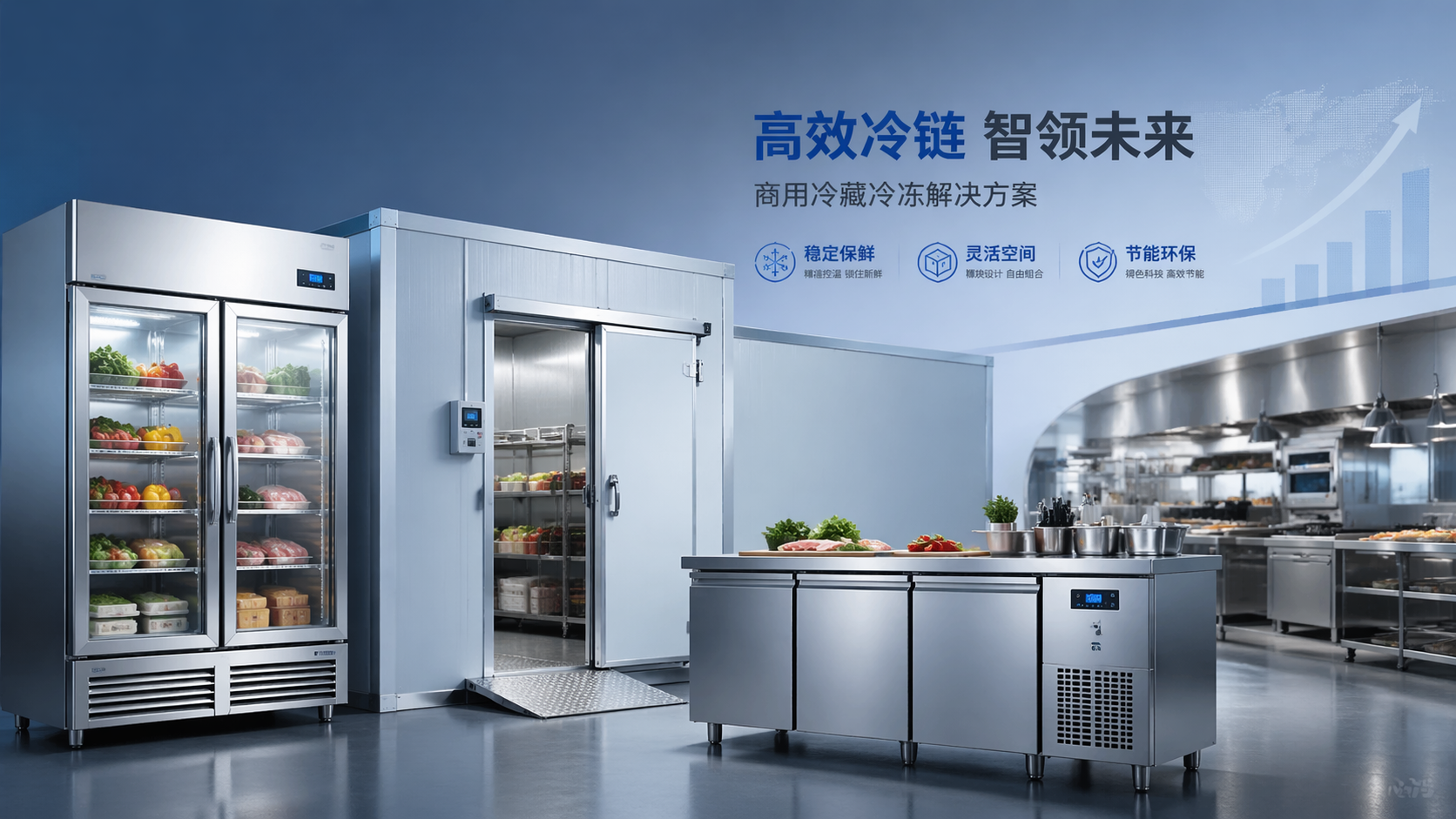
Commercial refrigeration equipment is often misjudged in a similar way. Buyers may focus on cabinet dimensions or compressor location while overlooking ambient operating conditions, door opening frequency, storage density, and recovery capability. In hot kitchens, poorly matched refrigeration can struggle to maintain target temperatures, increasing both food safety risk and compressor wear. For line-side use, practical storage access can matter as much as total liter capacity.
Key equipment questions before purchase approval
- What is the expected peak-hour output, not just daily output?
- How many menu items depend on this unit, and what happens if it fails?
- Does the unit fit the available utility load, hood coverage, and cleaning routine?
- Can staff operate it consistently with current training levels in a busy environment?
- Are spare parts and service support realistically available within 24–72 hours?
When technical evaluators compare equipment, they should look beyond headline specifications. The table below highlights practical selection criteria that often separate a suitable unit from a risky one.
A strong purchasing decision should balance 4 dimensions: output fit, installation fit, serviceability, and operating cost. When these are reviewed together, the result is usually a more resilient kitchen with fewer surprises after launch. This is especially important in B2B projects where downtime, failed inspections, or poor labor efficiency can damage the economics of the whole site.
Ventilation, Utilities, and Compliance Are Underestimated
Many restaurant projects focus heavily on visible cooking equipment but leave ventilation, drainage, power load, gas routing, and code compliance to a late-stage coordination process. That is a costly error. A commercial kitchen hood is not a decorative top layer added after equipment selection. It is part of an integrated system that must correspond to appliance type, heat output, grease generation, make-up air balance, and fire protection requirements.
If the hood is undersized, badly positioned, or paired with incorrect airflow balance, the kitchen may suffer heat buildup, smoke escape, grease accumulation, and an uncomfortable working environment. Operators then face slower production, staff complaints, and more frequent cleaning. In severe cases, poor extraction can affect nearby dining areas or trigger compliance issues before the site fully opens. Correcting a ventilation design after ducting is installed is far more expensive than validating it at concept stage.
Utilities cause similar problems. An all-electric line may exceed available site load if multiple high-demand appliances start simultaneously. Gas equipment may fit the menu better but require specific routing, shut-off access, and ventilation coordination. Drain points for combi equipment, ice machines, prep sinks, and warewashing units must also be placed with maintenance and cleaning access in mind. When these details are missed, teams end up using temporary fixes that compromise hygiene or serviceability.
Critical technical checks before construction sign-off
- Confirm total connected electrical load and diversity assumptions across cooking, refrigeration, and wash equipment.
- Check that the commercial kitchen hood fully covers appliances producing grease, steam, or combustion products.
- Verify make-up air strategy so extraction does not create severe negative pressure in the kitchen.
- Review drainage slopes, trap access, and cleaning points for all wet areas.
- Coordinate local fire, sanitation, and ventilation requirements before fabrication release.
A practical approval sequence
A useful method is to run approvals in 4 stages: concept layout, equipment schedule, utility matrix, and coordinated shop drawings. Each stage should be signed off by operations, technical, and procurement stakeholders. This reduces the chance that a low-cost procurement decision later creates a ventilation or compliance issue that delays opening by 3–4 weeks.
For many new projects, the missing document is a utility matrix linking every major appliance to its power, gas, water, drain, and exhaust needs. That single document improves coordination between kitchen consultants, MEP teams, fabricators, and contractors, while also helping buyers compare installation cost, not just equipment price.
No Allowance Is Made for Maintenance, Training, and Future Change
A kitchen can be technically correct on opening day and still become inefficient within months if maintenance access, staff training, and future menu changes were not considered. This is a common blind spot in new projects. Planning teams focus on installation footprint but not on how equipment will be cleaned, serviced, adjusted, and used under real operating pressure. As a result, minor issues become recurring downtime events.
For example, if commercial refrigeration equipment is installed too tightly against walls or neighboring units, condenser cleaning and service access become difficult. If a Glass Washer is selected without regard to local water hardness, cycle performance may degrade quickly and maintenance frequency may rise. If a commercial griddle is chosen for today’s menu only, there may be no capacity or flexibility when the operator adds breakfast, late-night service, or limited-time promotions 6–12 months later.
Training is equally important. A technically advanced kitchen can still fail if operators do not understand start-up routines, shutdown procedures, cleaning sequences, and load limits. In many sites, 1 day of rushed handover is expected to replace proper commissioning and user familiarization. That rarely works. A more realistic process includes installation checks, test runs, operator training, and a support window after opening.
What scalable planning looks like
Scalable planning means reserving room for growth in 3 areas: production volume, menu adaptation, and support access. This does not mean overbuilding everything. It means identifying which 20% of the kitchen is most likely to become a future bottleneck. In many restaurants that is cold storage, ventilation capacity, or the pass and dispatch area, not necessarily the headline cooking equipment.
Procurement teams should also ask suppliers about maintenance intervals, consumables, expected service response, and spare parts availability. A low downtime target is more realistic when basic support conditions are clear from the start. For critical units, a response expectation within 24–48 hours is often preferable to chasing a lower purchase price without after-sales structure.
Post-installation priorities for smoother launch
- Run test production for at least 1 full peak cycle before public opening.
- Train operators by station, not only by equipment category.
- Create a cleaning and inspection schedule with daily, weekly, and monthly tasks.
- Record utility readings and temperature performance in the first 14–30 days.
- Review early bottlenecks and adjust station setup before habits become fixed.
The projects that perform best over time are usually not the ones with the most expensive equipment package. They are the ones where the kitchen layout, equipment choices, ventilation plan, and operational training were treated as one integrated system. That reduces unplanned maintenance, protects food safety, and gives management better control over labor and output.
FAQ: Questions buyers and operators ask before opening
How early should restaurant kitchen planning begin?
For most new projects, operational planning should start at least 8–16 weeks before equipment installation and earlier for larger sites. This allows enough time for menu definition, layout review, utility coordination, approvals, and procurement adjustments without compressing the build schedule.
What equipment is most often under-specified?
Common gaps appear in commercial refrigeration equipment, ventilation, warewashing, and landing space around hot line equipment. Buyers often size cooking equipment for output but forget that storage, extraction, and wash capacity must support the same service peak.
How can a project reduce change orders after approval?
Use a coordinated review process with an equipment schedule, utility matrix, workflow test, and final shop drawing check. If layout, utilities, and operational routes are verified before fabrication, many avoidable changes can be eliminated.
Is it better to buy all equipment from one supplier?
Not always. A single-source package may simplify coordination, but technical fit should come first. The best solution often combines project coordination efficiency with careful evaluation of critical equipment categories such as refrigeration, ventilation, frying, griddling, and washing.
New restaurant kitchens usually go wrong when planning decisions are made in isolation: layout without workflow, equipment without production analysis, and installation without maintenance or compliance review. The most reliable projects define the operating model early, test movement paths, verify utility demands, and select equipment based on real service conditions rather than headline price alone.
If you are evaluating a new restaurant project, upgrading a foodservice facility, or comparing commercial kitchen equipment for a new concept, a structured planning process will save both time and cost. From commercial refrigeration equipment and a commercial kitchen hood to a commercial deep fryer, commercial griddle, and Glass Washer, every component should support a clear production strategy. Contact us today to discuss your project, request a customized kitchen solution, or learn more about practical equipment planning for efficient and scalable foodservice operations.
- commercial kitchen equipment
- cooking equipment
- refrigeration equipment
- central kitchen
- kitchen design
- restaurant kitchen
- Griddle
- Deep Fryer
- Charbroiler
- Glass Washer
- kitchen equipment
- commercial refrigeration equipment
- commercial deep fryer
- commercial griddle
- commercial kitchen design
- restaurant kitchen planning
- commercial kitchen hood
Popular Tags
Kitchen Industry Research Team
Dedicated to analyzing emerging trends and technological shifts in the global hospitality and foodservice infrastructure sector.
Industry Insights
Join 15,000+ industry professionals. Get the latest market trends and tech news delivered weekly.
No spam. Unsubscribe anytime.
Contact With us
Contact:
Anne Yin (Ceramics Dinnerware/Glassware)
Lucky Zhai(Flatware)