Glass Party Vase Orders: What Buyers Ask First
When sourcing a glass party vase, buyers usually ask about minimum order quantities, customization, packaging safety, and lead times before anything else. Whether you also compare options like a glass home vase or glass wedding decor vase, understanding these early questions helps procurement teams, operators, and decision-makers reduce risk, control costs, and choose suppliers with more confidence.
For most buyers, the first priority is not style alone. It is supply reliability. Before placing an order, they want to know whether the supplier can meet volume targets, protect fragile products during transit, support branding or event-specific customization, and deliver on time without quality surprises. If these basics are unclear, even an attractive vase design can become a costly sourcing mistake.
What do buyers ask first when ordering a glass party vase?
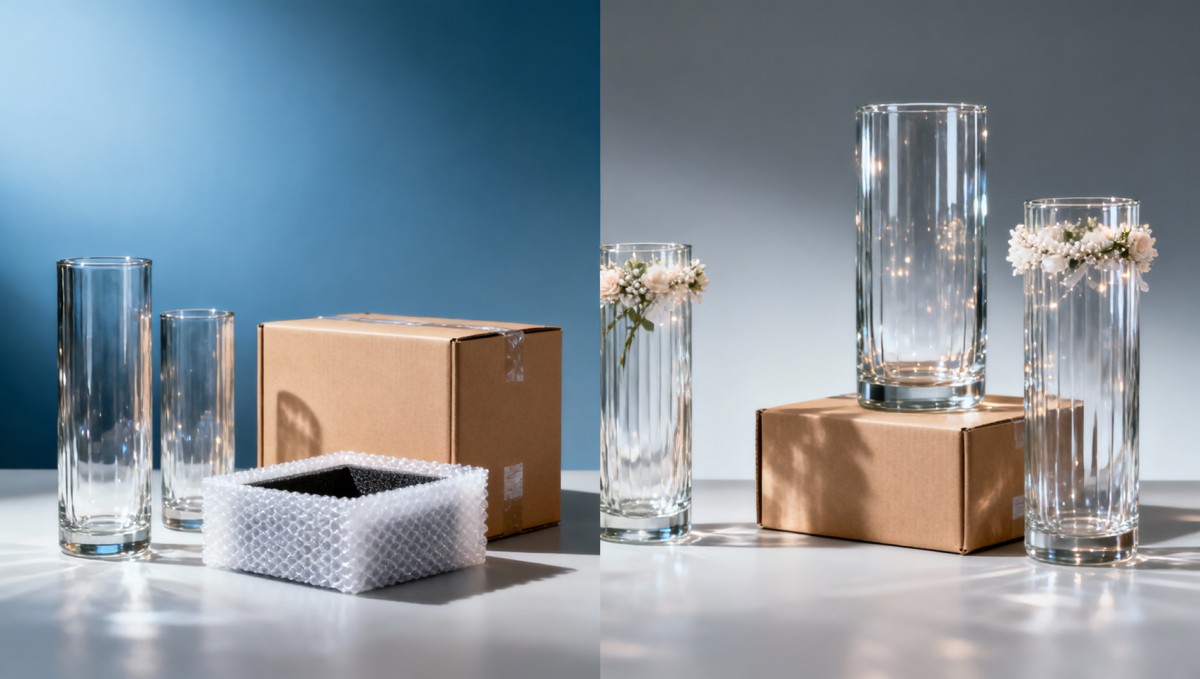
The most common early-stage questions are practical and risk-focused. Buyers typically want answers to the following before they move into design approval or price negotiation:
- What is the minimum order quantity (MOQ)? This affects budget planning, storage, and whether the supplier fits small trial orders or large-volume procurement.
- Can the vase be customized? Buyers often ask about shape, size, color, logo printing, surface finishing, gift-box packaging, or event-themed decoration.
- How is the product packed to reduce breakage? For fragile items like glass party vases, packaging standards are often as important as the product itself.
- What is the lead time? Event buyers, wholesalers, and seasonal retailers need production and shipping schedules they can trust.
- What quality standards are followed? Buyers may ask about consistency, edge finishing, clarity, thickness, base stability, and defect inspection.
- What are the shipping terms and replacement policies? This is especially important for international orders.
These questions reveal the real search intent behind a query like Glass Party Vase Orders: What Buyers Ask First: buyers are trying to reduce uncertainty at the start of the sourcing process. They want a shortlist of evaluation factors that helps them compare suppliers quickly and avoid preventable problems.
How MOQ affects cost, flexibility, and purchasing decisions
MOQ is often the first commercial issue discussed because it directly affects unit cost and order feasibility. A supplier offering a low MOQ may be suitable for boutique retailers, event planners, or market testing. A higher MOQ may work better for importers, chain stores, and distributors seeking better economies of scale.
Buyers should not look at MOQ in isolation. Instead, they should ask:
- Does the MOQ apply per design, per color, or per full order?
- Does customization increase the MOQ?
- Is there a sample order option before mass production?
- How does pricing change at different quantity tiers?
For procurement teams, the best supplier is not always the one with the lowest MOQ. It is the one whose MOQ structure matches sales forecasts, warehouse capacity, and cash-flow expectations. For example, if you are ordering both a glass party vase and a glass wedding decor vase collection, a supplier that allows mixed models in one container may offer more practical value than a supplier with a lower headline price but rigid volume rules.
What customization options matter most to commercial buyers?
Customization is one of the biggest reasons buyers contact suppliers instead of purchasing off-the-shelf products. In this category, customization often affects both sales appeal and brand positioning.
The most requested options include:
- Shape and dimensions: Tall cylinder, trumpet, geometric, bud vase, or themed decorative forms
- Glass color and finish: Clear, frosted, tinted, sprayed, embossed, or textured surfaces
- Decoration: Decals, screen printing, gold rim, engraving, or seasonal motifs
- Packaging: Individual gift boxes, retail-ready cartons, barcode labeling, and custom master carton marks
- Private label support: Logo, insert cards, and branded packaging
However, buyers should also ask how customization affects mold cost, production lead time, and defect risk. A visually impressive design may be harder to produce consistently or more vulnerable during transport. That is why experienced buyers compare not only design capability, but also production control and packaging engineering.
If your end use includes home decoration, weddings, hospitality settings, or event rental operations, it is worth confirming whether the same supplier can support multiple product lines such as a glass home vase series alongside party-oriented designs. This can simplify vendor management and improve purchasing efficiency.
Why packaging safety is a top concern for glass vase orders
Because glass is fragile, packaging is one of the main factors separating a reliable supplier from a risky one. A low ex-factory price can quickly lose value if breakage rates are high or replacements are difficult to process.
Buyers should ask for specific packaging details instead of accepting general assurances. Useful questions include:
- Is each vase packed individually?
- Are dividers, foam, molded pulp, or bubble protection used?
- Has the packaging passed drop testing or transit simulation?
- What is the expected breakage rate in export shipments?
- Can the packaging be optimized for e-commerce, retail, or pallet shipping?
For importers and distributors, packaging quality affects more than product safety. It also impacts labor cost, warehouse efficiency, return rates, and customer satisfaction. Strong packaging may slightly increase upfront cost, but it often lowers total landed risk. This is especially important when ordering high-volume party decor products for peak seasons, where delays and damage can disrupt downstream sales.
How lead times should be evaluated beyond the production promise
Lead time is not just the factory production schedule. Buyers should separate the timeline into clear stages:
- Sample preparation and approval
- Mold development, if needed
- Mass production
- Quality inspection
- Packaging completion
- Booking and international shipment
This is where many sourcing plans fail. A supplier may quote a competitive production lead time but leave unclear how long customization approval, export packing, or shipping arrangements will take. For seasonal products like party vases, that gap can cause missed selling windows.
Decision-makers should ask for a realistic delivery schedule with milestones, not a single estimated number. It is also helpful to ask:
- What factors commonly delay production?
- Are raw materials kept in stock?
- How are urgent orders handled?
- Can the supplier support phased shipments?
Reliable lead-time planning matters even more when the order includes multiple SKUs, custom packaging, or coordinated launches across retail and event channels.
What quality checks help buyers avoid complaints and returns?
Quality evaluation should begin before the order is confirmed. Buyers should define measurable standards for the glass party vase rather than relying on general statements like “good quality.”
Key checkpoints include:
- Glass clarity and bubble control
- Uniform wall thickness
- Smooth rim and safe edge finishing
- Stable base and balanced standing performance
- Color consistency across batches
- Accuracy of printed or decorative elements
- Carton strength and labeling accuracy
Requesting pre-production samples, approval samples, and inspection photos can help reduce misunderstandings. For larger orders, third-party inspection may be a good investment, especially when the products are intended for resale, hospitality use, or premium gift positioning.
Operators and end users also care about practical performance. A vase may look attractive in a catalog but prove hard to clean, too light for stable table use, or inconsistent in opening diameter. These real-use details matter for restaurants, banquet venues, decorators, and retail buyers alike.
How buyers can compare suppliers with more confidence
When several suppliers appear similar on price, buyers should compare them using a broader sourcing framework. A useful checklist includes:
- Commercial fit: MOQ, payment terms, pricing tiers
- Product fit: design range, customization depth, sample quality
- Operational fit: lead-time reliability, communication speed, production capacity
- Risk control: packaging standards, inspection process, after-sales policy
- Scalability: ability to support repeat orders and multi-style collections
This approach is more useful than focusing on unit price alone. A supplier who can provide stable quality, responsive communication, and strong packaging may deliver better long-term value than one offering a lower initial quote. For companies managing recurring event inventory or retail decor programs, consistency is often more valuable than saving a small amount per piece.
Final takeaway for sourcing a glass party vase
Buyers usually ask about MOQ, customization, packaging safety, and lead times first because these factors determine whether an order is commercially workable and operationally safe. Price matters, but it is rarely the only deciding factor. The smarter approach is to evaluate the total sourcing picture: order flexibility, product quality, transit protection, schedule reliability, and supplier responsiveness.
If you are comparing a glass party vase with related categories such as a glass home vase or glass wedding decor vase, use the same buyer-first logic. Focus on fit for purpose, not just appearance. The best supplier is the one that can meet your design needs while reducing breakage risk, keeping timelines realistic, and supporting repeatable quality at the right scale.
In short, strong vase sourcing starts with asking the right early questions. When buyers get clear answers up front, they make better decisions, avoid hidden costs, and build more reliable purchasing results.
Popular Tags
Kitchen Industry Research Team
Dedicated to analyzing emerging trends and technological shifts in the global hospitality and foodservice infrastructure sector.
Industry Insights
Join 15,000+ industry professionals. Get the latest market trends and tech news delivered weekly.
No spam. Unsubscribe anytime.

Contact With us
Contact:
Anne Yin (Ceramics Dinnerware/Glassware)
Lucky Zhai(Flatware)