
What matters most in restaurant supplies sourcing today?
Restaurant supplies sourcing today is no longer just about finding the lowest price. Buyers must balance product quality, food safety standards, supplier reliability, energy efficiency, and smart kitchen trends while responding to changing market demand. For restaurants, hotels, and foodservice operators, understanding what truly matters in sourcing decisions can improve performance, control costs, and support long-term business growth.
For information-focused buyers, the challenge is not simply choosing products. It is building a sourcing strategy that supports daily operations, protects food safety, reduces downtime, and fits future expansion. In the kitchen equipment and restaurant operations space, a poor decision can affect service speed within 1 week, labor efficiency within 30 days, and total operating cost over 3 to 5 years.
That is why restaurant supplies sourcing now includes a wider evaluation framework: compliance, product lifespan, maintenance access, digital compatibility, supplier responsiveness, and logistics reliability. Whether a business is opening one outlet or equipping 20 locations, better sourcing decisions usually start with clear priorities and measurable criteria.
What buyers value most in restaurant supplies sourcing
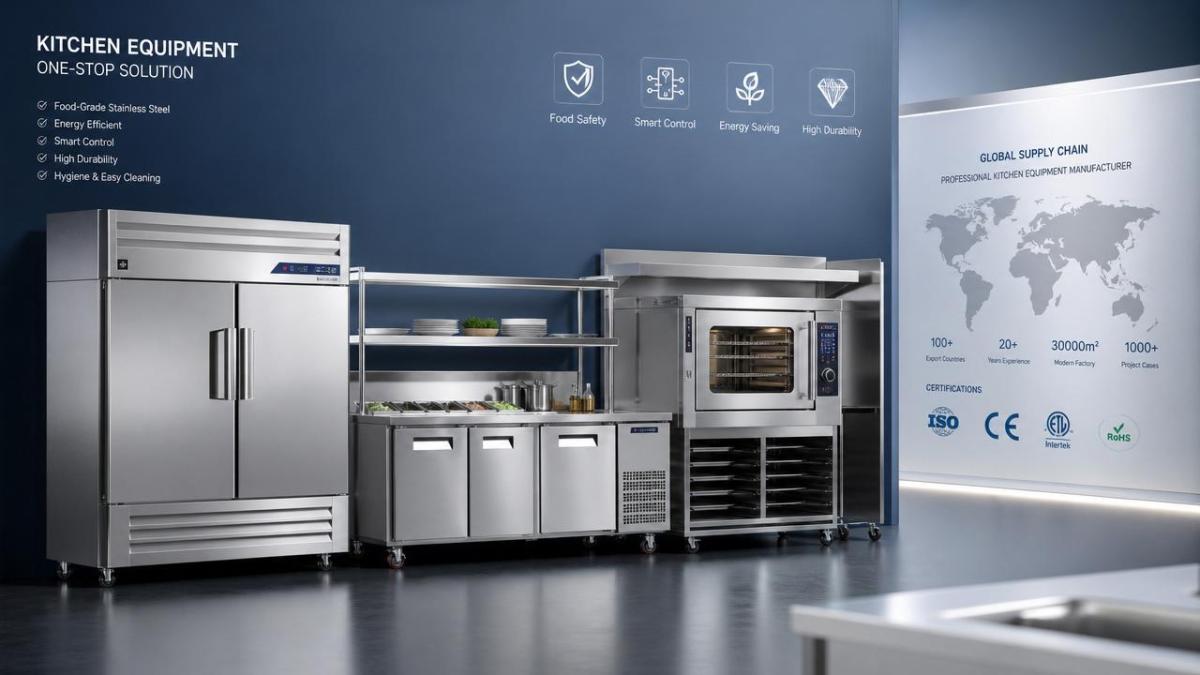
In today’s market, restaurant supplies sourcing covers much more than cookware, refrigeration, storage, and preparation tools. It often includes a full operational system made up of commercial kitchen equipment, food handling accessories, smallwares, sanitation products, and replacement parts. Buyers increasingly compare not just unit price, but 6 core dimensions: safety, durability, efficiency, compatibility, lead time, and after-sales support.
1. Product quality and consistency across batches
A restaurant may purchase 50 to 500 supply items during opening or renovation. If quality varies between batches, operators face uneven performance, faster wear, and avoidable replacement costs. Stainless steel thickness, insulation performance, seal durability, motor stability, and temperature control accuracy all matter more than a small price difference.
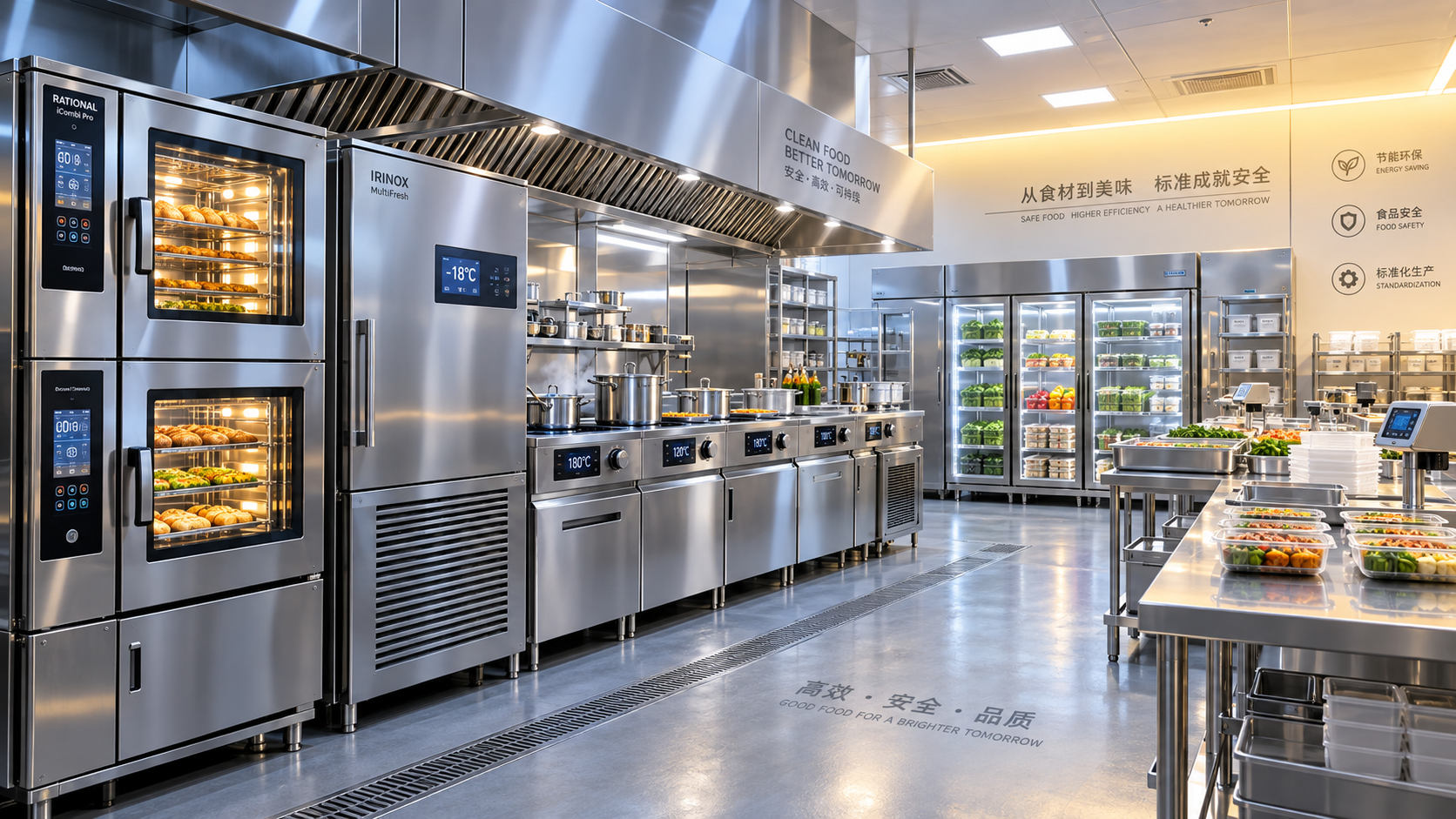
For example, refrigeration units with stable cooling ranges such as 0°C to 5°C for chilled storage or -18°C for frozen storage help protect food quality. In cooking and holding equipment, temperature variation, recovery speed, and daily cleaning requirements should be reviewed before purchase.
2. Food safety and regulatory fit
Restaurant supplies sourcing must support hygienic workflows. Surfaces that are difficult to clean, joints that trap residue, or materials that corrode after 6 to 12 months can create operational risks. Buyers should prioritize food-contact materials, easy-clean construction, and equipment layouts that reduce cross-contamination between raw and cooked zones.
This is especially important for restaurants, hotel kitchens, central kitchens, and food processing environments operating multiple shifts per day. A sourcing decision that improves cleanability by even 10 to 15 minutes per station per shift can create meaningful labor savings over a full year.
3. Reliability of supply and fulfillment
A strong sourcing partner is not defined only by catalog size. Buyers should ask practical questions: Can the supplier maintain stable lead times of 7 to 15 days for standard items? Can spare parts be supplied within 48 to 72 hours? Is there a clear process for replacement, inspection, and warranty handling?
This matters because foodservice operators often run with tight opening schedules. A delayed prep table, missing shelf component, or incompatible electrical appliance can disrupt installation sequencing and postpone launch dates by several days.
The table below shows how buyers typically compare key factors during restaurant supplies sourcing across different business priorities.
The key takeaway is that restaurant supplies sourcing works best when buyers evaluate total operational effect, not just upfront price. A lower-cost item may become more expensive if it fails early, uses more energy, or requires more frequent replacement.
How kitchen equipment trends are changing sourcing decisions
The kitchen equipment industry is moving toward automation, smarter controls, and better energy efficiency. This shift is changing restaurant supplies sourcing because buyers now need products that fit modern workflows, not only traditional kitchen layouts. In many projects, digital compatibility and labor-saving design have become top-5 decision criteria.
Smart and connected equipment
Smart kitchen systems can improve monitoring, consistency, and maintenance planning. For example, equipment with digital temperature display, alert functions, or operating status monitoring helps staff detect issues before food safety or service speed is affected. Even a small chain with 3 to 10 outlets can benefit from better visibility across locations.
When reviewing connected solutions, buyers should confirm power specifications, software language support, compatibility with existing kitchen processes, and training needs. Technology only adds value when it reduces manual checks or shortens response time.
Questions to ask before buying smart kitchen products
- Does the system provide alerts for temperature deviation, fault status, or cleaning intervals?
- Can staff learn the interface within 1 to 2 training sessions?
- Are replacement parts and technical support available locally or regionally?
- Will digital functions still be useful if the site expands from 1 unit to 5 units?
Energy efficiency and long-term operating cost
Energy is a major sourcing factor because refrigeration, cooking, washing, and holding equipment can run 8 to 18 hours per day. A product with better insulation, faster heat recovery, or lower standby consumption may cost more initially but improve monthly operating control. This is especially important for hotels, central kitchens, and high-volume restaurants.
Buyers should compare power consumption, expected duty cycle, ventilation requirements, and cleaning time. A compact solution that reduces heat load in the kitchen can also improve staff comfort and support more stable service output during peak hours.
Automation and labor pressure
In many markets, labor availability remains tight. That makes restaurant supplies sourcing more strategic. Equipment that shortens repetitive preparation steps, improves portion consistency, or reduces manual monitoring may support better labor allocation. Examples include automated food processing units, programmable cooking systems, and batch preparation tools.
For operations handling 100 to 300 meals per service period, saving 20 to 30 seconds per preparation cycle can create a meaningful difference across a full shift. Buyers should match automation level to menu complexity, staff skill, and service volume.
A practical framework for evaluating suppliers and product fit
Restaurant supplies sourcing becomes more reliable when buyers use a structured review process. Instead of reacting to quotations alone, procurement teams can move through 4 stages: requirement mapping, technical screening, commercial review, and supply validation. This method helps reduce mismatch between what is ordered and what operations actually need.
Stage 1: Map the real operating requirement
Start with menu type, daily meal volume, installation space, utility access, and cleaning workflow. A bakery, quick-service restaurant, hotel buffet, and central kitchen will all define “best fit” differently. Equipment dimensions, voltage, water connection, ventilation needs, and holding capacity should be checked before any order is finalized.
A simple requirement sheet should include at least 8 items: application, output volume, temperature range, power supply, material preference, cleaning frequency, spare parts expectation, and target delivery date.
Stage 2: Compare suppliers on execution, not promises
During restaurant supplies sourcing, supplier reliability often becomes clear through process details. Ask for packaging standards, inspection steps, documentation support, and communication frequency. Buyers should also confirm who handles claims, whether replacement lead time is defined, and how technical issues are escalated.
The table below can be used as a practical supplier review checklist during sourcing discussions.
This framework helps buyers separate serious suppliers from those that compete only on price. Reliable restaurant supplies sourcing depends on repeatable execution, transparent communication, and realistic lead time control.
Stage 3: Check lifecycle value
Total value includes purchase price, installation readiness, expected maintenance frequency, replacement cycle, and operating efficiency. A piece of equipment used 12 hours per day should be judged differently from an item used twice per week. Buyers should estimate cost over at least 24 to 36 months for frequently used assets.
Common sourcing mistakes to avoid
- Choosing based only on unit price without checking operating cost.
- Ignoring spare parts availability for imported or customized products.
- Ordering equipment before confirming electrical, drainage, or ventilation conditions.
- Buying oversized capacity that increases energy use but does not improve output.
- Mixing too many suppliers, which can complicate service and replacement planning.
What different buyers should prioritize
Not every business should use the same sourcing model. Restaurant supplies sourcing changes depending on facility type, service format, and procurement scale. A single independent restaurant may focus on budget control and flexibility, while a hotel group may emphasize standardization across multiple sites.
Independent restaurants and new openings
Smaller buyers usually benefit from practical, durable products with simple maintenance requirements. The priority is often fast setup within 2 to 4 weeks, dependable everyday performance, and clear installation support. A new outlet should avoid overcomplicated systems that require extensive training unless output volume clearly justifies them.
Hotels, chains, and central kitchens
Larger operations need consistency across sites, coordinated replenishment, and better control of maintenance schedules. For these buyers, restaurant supplies sourcing should include standard product lists, approved alternatives, service response targets, and rollout planning. In multi-site programs, even a 5% difference in replacement compatibility can create avoidable complexity.
Food processing and hybrid foodservice facilities
Facilities that combine preparation, packaging, and foodservice need stronger attention to workflow, sanitation zones, and machine coordination. Here, sourcing decisions should consider throughput per hour, washdown suitability, and whether equipment can support repetitive production with stable output quality.
How to make sourcing decisions with less risk
The best restaurant supplies sourcing outcomes usually come from disciplined preparation. Buyers should document requirements, ask technical questions early, and compare suppliers using the same checklist. This reduces hidden cost, delivery surprises, and equipment mismatch.
A practical sourcing process may include 5 steps: define need, shortlist suppliers, review technical fit, confirm delivery and service terms, and inspect before acceptance. Each step lowers risk and improves procurement transparency.
As kitchen equipment continues to move toward intelligent control, automation, and energy-efficient design, buyers who think beyond price will be better positioned to improve kitchen performance and long-term cost control. If you are evaluating restaurant supplies sourcing for a restaurant, hotel, central kitchen, or food processing project, now is the right time to review your requirements in detail, compare solution paths, and select suppliers that can support both present operations and future growth.
To explore suitable equipment categories, sourcing options, or a more tailored procurement plan, contact us today to discuss your application, request product details, or get a customized solution for your kitchen project.
Popular Tags
Kitchen Industry Research Team
Dedicated to analyzing emerging trends and technological shifts in the global hospitality and foodservice infrastructure sector.
Industry Insights
Join 15,000+ industry professionals. Get the latest market trends and tech news delivered weekly.
No spam. Unsubscribe anytime.
Hot Articles
 How to Size a Commercial Kitchen Hood for Cooking Equipment and Heat Loads
- How to Size a Planetary Mixer Machine for High-Viscosity Batch Production
- How to Choose Ceramic Rice Plates for Restaurants: Size, Glaze, and Chip Resistance
- Kitchen Innovation Trends in Emerging Markets: Where Growth Will Come From in 2026
Contact With us
Contact:
Anne Yin (Ceramics Dinnerware/Glassware)
Lucky Zhai(Flatware)