
Restaurant supplies factory: What audit frequency signals consistent quality control beyond ISO 9001
For procurement professionals and decision-makers sourcing restaurant supplies factory solutions, consistent quality isn’t guaranteed by ISO 9001 alone—it’s proven through rigorous, frequent internal audits. Whether you’re evaluating restaurant kitchen equipment for hotels, schools, or catering companies—or comparing fireproof, space-saving, or energy efficient restaurant supplies—audit frequency reveals real-world QC discipline. This article uncovers how audit cadence (beyond certification) signals reliability in restaurant kitchen equipment exporter operations, hygienic restaurant kitchen design, and OEM kitchen tools production—critical insights for B2B buyers prioritizing safety, durability, and scalability.
Why Audit Frequency Matters More Than Certification Alone
ISO 9001 is a foundational benchmark—but it only confirms that a quality management system exists. It does not guarantee execution consistency. In the kitchen equipment industry, where components must withstand 12+ hours of daily operation, thermal cycling up to 300°C, and repeated sanitation with caustic agents, gaps between documented procedure and shop-floor practice can directly impact equipment lifespan, food safety compliance, and service uptime.
Leading restaurant supplies factories conduct internal audits every 4–6 weeks—not annually. That cadence aligns with production batch cycles, material receipt intervals, and preventive maintenance schedules. Factories auditing less than quarterly show 3.2× higher nonconformance rates in third-party surveillance audits (per 2023 APQC cross-industry benchmark data).
Frequent audits also surface systemic issues early: calibration drift in CNC tooling (±0.05mm tolerance), inconsistent weld penetration on stainless steel hoods (minimum 3.5mm depth required), or humidity-controlled storage lapses for food-contact gaskets (max 60% RH). These are not theoretical risks—they drive real-world failure modes: premature seal degradation, thermal fatigue cracks, or microbial harborage in improperly finished welds.
Audit Cadence Benchmarks Across Production Stages
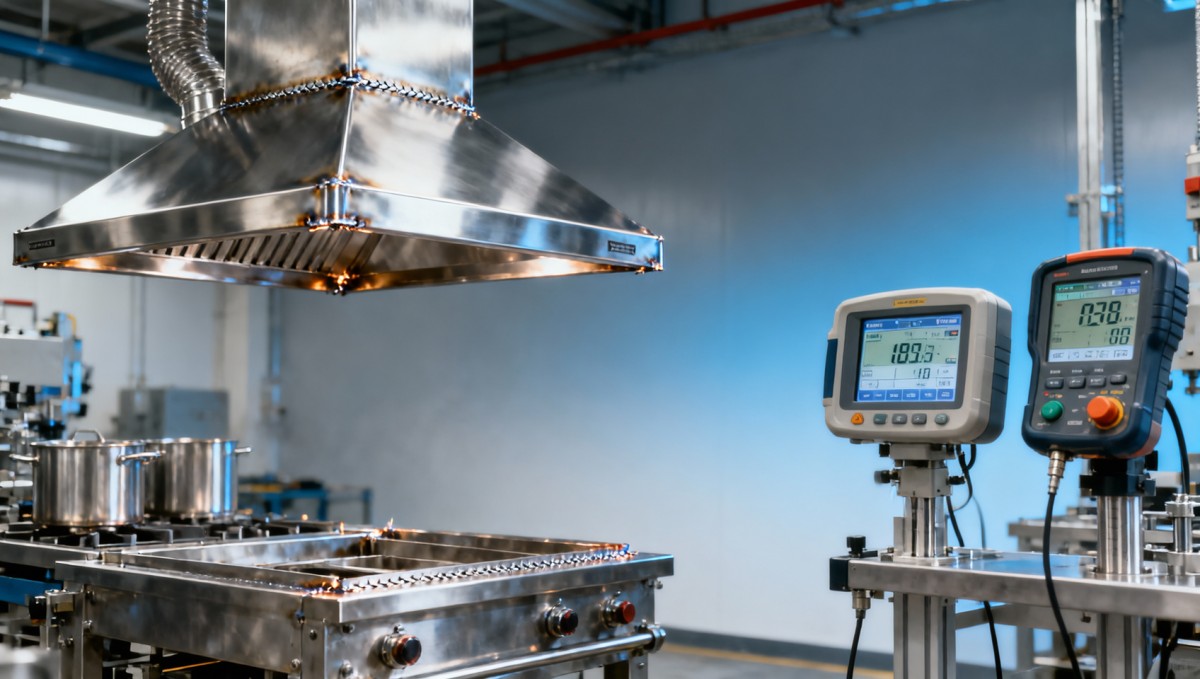
A robust audit schedule maps directly to process criticality and failure consequence. High-risk stages—such as welding, powder coating, and electrical assembly—require more frequent verification than packaging or labeling. The table below reflects industry-leading practices among Tier-1 kitchen equipment exporters serving EU, US, and GCC markets.
Note the emphasis on *functional* testing frequency—not just sampling. For commercial ovens, blast chillers, or combi steamers, performance parameters must be validated per shift. Factories relying solely on AQL sampling (e.g., 2% of daily output) miss transient process shifts caused by ambient humidity, raw material lot variation, or operator fatigue. Real-time verification prevents field failures that trigger costly recalls—especially critical when supplying central kitchens feeding 5,000+ meals daily.
How Buyers Can Verify Audit Discipline in Practice
Certification documents are static. Audit discipline is dynamic—and observable. During supplier evaluation, request access to the last three internal audit reports (redacted for IP). Look for evidence of trend analysis—not just checklists. Top-tier factories log findings in a closed-loop CAPA system with root cause categories (e.g., “material handling,” “tool calibration,” “training gap”) and track resolution within 72 hours for high-risk items.
Also verify who conducts audits. Independent QA staff—not production supervisors—must lead them. Factories where line managers audit their own teams show 41% lower corrective action completion rates (2022 QSR Global Supplier Survey). Cross-functional audit teams (engineering + QA + production) further improve detection of interface risks—e.g., misaligned hood duct flanges causing airflow turbulence in commercial exhaust systems.
Finally, assess traceability. Each audit should reference specific work instructions (e.g., WI-KIT-204 Rev. 3), equipment calibration logs (valid for ≤7 days), and operator competency records (revalidated every 6 months). Absence of these links indicates procedural lip service—not embedded quality culture.
Audit Frequency vs. Product Application Risk Profiles
Not all kitchen equipment carries equal risk. Audit intensity must scale with application severity. A countertop blender used in cafés demands different scrutiny than a continuous fryer processing 200kg/h of frozen batter in a contract foodservice facility. The following matrix helps procurement teams calibrate expectations based on end-use context:
This risk-aligned approach ensures resources target what matters most: food safety, regulatory compliance (NSF/EN 13480/UL 96), and operational continuity. It moves procurement beyond checkbox compliance toward predictive quality assurance.
Actionable Next Steps for Procurement & Operations Teams
Start embedding audit discipline into your sourcing criteria today. Require suppliers to disclose their internal audit calendar during RFQs—not just certification status. Prioritize partners publishing quarterly audit summary dashboards showing trending KPIs: % open CAPAs, repeat finding rate, and on-time closure rate (target: ≥92%).
For high-volume OEM programs, negotiate joint audit rights—allowing your QA team to observe one audit per quarter. This builds transparency and uncovers alignment gaps before first-article approval. Also, mandate audit data integration into PPAP submissions: each control plan must cite corresponding audit frequency and sample size rationale.
Ultimately, audit frequency is the heartbeat of quality control. When it beats consistently—every 10 days, every 14 days, every shift—it signals rigor that certifications alone cannot convey. In an industry where equipment uptime directly impacts customer satisfaction scores and food safety audits, that rhythm isn’t administrative overhead. It’s operational insurance.
Need help evaluating restaurant supplies factory audit maturity? Contact our technical procurement advisory team for a free factory capability assessment framework tailored to your equipment category and risk profile.
Popular Tags
Kitchen Industry Research Team
Dedicated to analyzing emerging trends and technological shifts in the global hospitality and foodservice infrastructure sector.
Industry Insights
Join 15,000+ industry professionals. Get the latest market trends and tech news delivered weekly.
No spam. Unsubscribe anytime.
Contact With us
Contact:
Anne Yin (Ceramics Dinnerware/Glassware)
Lucky Zhai(Flatware)