
How to read a restaurant supplies price list without missing fees
A restaurant supplies price list can look straightforward at first glance, but hidden charges such as freight, installation, compliance fees, and warranty add-ons can quickly change the true cost. For finance approvers, knowing how to read each line item carefully is essential to avoid budget surprises, compare suppliers accurately, and make smarter purchasing decisions that support both operational efficiency and long-term value.
What should finance approvers look for first in a restaurant supplies price list?
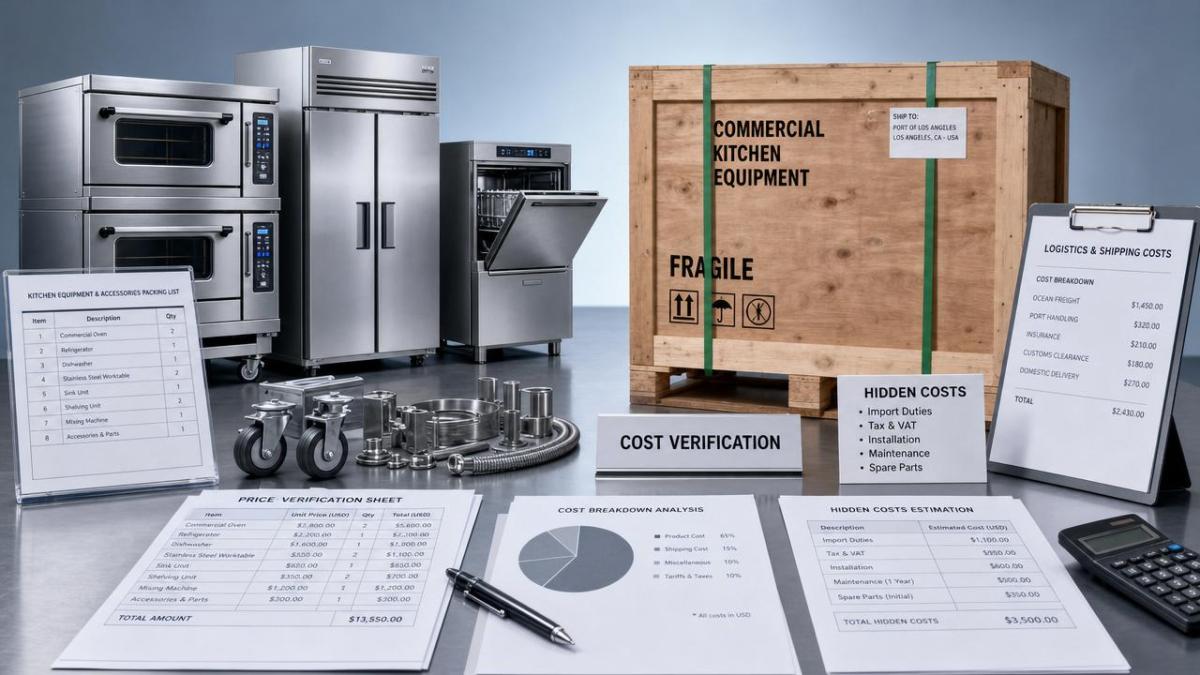
In kitchen equipment procurement, the visible unit price is only the starting point. A restaurant supplies price list often combines equipment cost, accessory charges, delivery terms, installation scope, after-sales conditions, and local compliance requirements. If these items are not separated clearly, the approval process becomes risky because the final payable amount may exceed the submitted budget.
This matters even more in a market shaped by automation, energy efficiency, and cross-border sourcing. Commercial ovens, refrigeration units, food processors, dishwashers, prep tables, and ventilation-related items may come from different manufacturing centers and follow different standards. As a result, finance teams must review the full landed cost, not only the quoted product amount.
A useful first-pass review should answer four questions:
- Does the price list show what is included with each item, such as trays, racks, hoses, controllers, or mounting parts?
- Are logistics terms stated clearly, including shipping method, unloading responsibility, customs exposure, and delivery address limitations?
- Does the quote separate one-time costs from recurring costs, such as maintenance contracts, software subscriptions, or filter replacements?
- Are taxes, certification charges, commissioning fees, and warranty extensions shown as separate line items rather than hidden in general notes?
If a supplier cannot answer these points in writing, the restaurant supplies price list is not yet suitable for approval. For finance decision-makers, ambiguity is not a small issue. It is a direct cost risk.
Which hidden fees are most commonly missed?
Many budget overruns come from charges that appear operational rather than financial. In kitchen equipment projects, these charges are common because restaurant sites, hotel kitchens, central kitchens, and food processing spaces all have different installation and compliance conditions.
Before approving any restaurant supplies price list, finance teams should map the fee categories below to each equipment type.
The biggest lesson is simple: hidden fees are rarely truly hidden. They are usually disclosed in notes, terms, exclusions, or abbreviations that do not receive enough attention during approval. A disciplined reading of the restaurant supplies price list reduces this risk significantly.
How to compare suppliers when formats are inconsistent
Supplier A may show a low equipment price with shipping excluded. Supplier B may show a higher total but include delivery, startup support, and spare parts. Supplier C may bundle several accessories without stating their replacement cost. That is why finance approvers should never compare restaurant supplies price list documents line by line without normalization.
Build a normalized comparison sheet
A practical comparison method is to convert every offer into the same cost structure. This is especially useful for mixed procurement involving cooking equipment, refrigeration, stainless steel fabrication, and smallwares.
- Separate core equipment from accessories and consumables.
- Add logistics based on the same delivery destination and unloading assumptions.
- Include installation, startup, testing, and operator training if required by the site.
- Adjust for warranty scope, response time, and spare parts availability.
- Add compliance cost for the specific market, especially for imported products.
The table below helps turn a restaurant supplies price list into an approval-ready supplier comparison.
When finance teams use a normalized framework, a seemingly expensive supplier may actually present the lower-risk option. This is especially true in international kitchen equipment sourcing, where documentation quality and service scope can be as important as the product price itself.
Which line items deserve deeper scrutiny for commercial kitchen equipment?
Not all items in a restaurant supplies price list carry the same risk. Small utensils and tabletop supplies usually have limited cost variability. Larger equipment categories often create the biggest budget movement because they interact with utilities, layout, labor, and compliance.
High-attention equipment categories
- Refrigeration equipment: Check voltage, refrigerant type, ambient temperature limits, shelf count, and delivery method. Some quotes exclude door handle installation or startup verification.
- Cooking equipment: Confirm gas or electric configuration, exhaust requirements, fire-safety compatibility, and whether conversion kits are priced separately.
- Dishwashing systems: Verify water treatment needs, drainage accessories, detergent dosing units, and whether commissioning is mandatory for warranty validity.
- Food processing machinery: Review blade sets, output capacity, operator safety features, and spare wear parts that may not appear in the base quote.
- Smart kitchen equipment: Check software license duration, connectivity hardware, training, and update policy. Digital features can shift cost from one-time purchase to recurring operating expense.
For finance approvers, this means the approval workflow should not be identical for every item category. High-value or utility-dependent products deserve technical clarification before release of purchase funds.
How do freight terms, import conditions, and site constraints change the real cost?
Global sourcing is common in the kitchen equipment sector, with major manufacturing and export hubs supplying restaurants, hotels, and food processing operators across borders. Because of this, one restaurant supplies price list may reflect factory terms while another reflects destination delivery. Finance teams that approve both as if they were equivalent will produce distorted comparisons.
Pay close attention to these cost triggers:
- Incoterms or trade terms: EXW, FOB, CIF, and DDP shift responsibility for freight, insurance, customs, and duty handling.
- Destination access: A city-center hotel kitchen, upper-floor restaurant, or restricted loading area may require extra handling equipment or staged delivery.
- Packaging method: Crating, palletization, and temperature-sensitive transport can alter shipping cost and damage risk.
- Import documentation: Missing product declarations, conformity records, or material compliance documents may create storage, inspection, or delay costs.
A strong supplier should be able to explain these variables early. That support is valuable because it helps finance and procurement teams convert a restaurant supplies price list into a realistic landed-cost forecast instead of a simple product-price summary.
What approval checklist helps prevent budget surprises?
A structured checklist improves consistency, especially when multiple departments influence supplier choice. Operations may prioritize speed, chefs may prioritize functionality, and engineering may prioritize compatibility. Finance must connect those preferences to measurable cost and risk.
Approval checklist for a restaurant supplies price list
- Confirm the exact scope of supply, including accessories, consumables, and optional items marked as recommended.
- Verify whether utility requirements match the site, including voltage, gas type, water pressure, drainage, and ventilation.
- Request a separated cost structure for product, freight, installation, compliance documents, training, and service support.
- Review warranty wording carefully. Determine whether labor, travel, response time, and excluded parts are defined.
- Check lead time assumptions and whether delays affect opening schedules, contractor bookings, or temporary equipment rental.
- Assess long-term operating cost, especially for energy use, cleaning chemicals, filter changes, software fees, and maintenance intervals.
This checklist is particularly useful for projects involving energy-efficient or automated kitchen systems. Such products may have a higher acquisition cost but better lifecycle economics. Finance approvers need visibility into both sides.
How should finance teams judge price versus lifecycle value?
The lowest restaurant supplies price list is not always the best financial decision. In the kitchen equipment industry, energy consumption, downtime exposure, cleaning labor, repair frequency, and replacement part availability all influence total cost of ownership. A lower upfront quote can become more expensive if it causes service interruption or higher operating cost.
This is especially relevant as the market moves toward intelligent cooking equipment, automated food processing systems, and digital kitchen management tools. Products with better controls or higher efficiency may reduce labor waste, temperature inconsistency, or energy demand. For a finance approver, the key question is not only “How much does it cost now?” but also “What cost does it prevent later?”
A balanced review can include:
- Expected service life in the actual operating environment
- Maintenance interval and parts availability in the target market
- Estimated utility consumption under normal production load
- Impact of failure on food safety, throughput, or opening schedule
- Training needs for staff and the cost of improper operation
When these elements are ignored, a restaurant supplies price list becomes a short-term buying tool rather than a true investment document.
What common mistakes appear in restaurant supplies price list reviews?
Several recurring errors lead to avoidable overspending. Most do not come from poor math. They come from incomplete scope control and unclear assumptions between finance, procurement, and operations.
Frequent approval mistakes
- Approving a quote before confirming whether the listed model is the final technical choice.
- Treating bundled pricing as transparent pricing, even when accessories and service scope are not itemized.
- Ignoring exclusions written in small notes, especially around installation readiness and local compliance.
- Comparing international and domestic quotes without adjusting for freight, duties, and support coverage.
- Assuming warranty means full onsite repair support, when coverage may be limited to replacement parts only.
The best prevention is a standardized review template. Once every restaurant supplies price list is checked against the same financial and operational questions, missing-fee risk drops sharply.
FAQ: practical questions finance approvers ask before sign-off
How detailed should a restaurant supplies price list be before approval?
It should show product description, quantity, unit price, subtotal, freight terms, delivery scope, installation scope, warranty scope, payment terms, and exclusions. If the equipment is technical, it should also reference key operating requirements such as voltage, gas type, water connection, or software needs.
Are optional items always safe to ignore?
No. Some optional items are genuinely discretionary, but others are functionally necessary. Examples include starter accessory kits, water filtration for dishwashers, shelves for storage units, or commissioning visits required to activate warranty support. Finance teams should ask whether each option is operationally required, not just commercially offered.
What is the biggest warning sign in a restaurant supplies price list?
A low headline total with vague notes is a major warning sign. Missing delivery definition, unclear installation responsibility, and broad wording such as “standard accessories included” often signal future change orders. A good quote is specific, structured, and easy to audit.
Should finance teams ask about certifications even if operations did not?
Yes. While exact certification needs vary by market and product type, imported kitchen equipment may require general conformity records, electrical safety documentation, or food-contact material declarations. Asking early helps avoid customs delays, local inspection issues, or installation rejection.
Why choose us for restaurant supplies price list review and sourcing support?
In the kitchen equipment sector, a quote is rarely just a quote. It is a mix of product specification, compliance exposure, logistics planning, installation assumptions, and service commitment. We support finance approvers, procurement teams, and project stakeholders by helping them read a restaurant supplies price list with commercial and technical clarity.
You can contact us for practical support on the issues that most affect approval quality:
- Parameter confirmation for commercial kitchen equipment, refrigeration, food processing machinery, and smart kitchen systems
- Supplier quote normalization so different restaurant supplies price list formats can be compared fairly
- Delivery cycle review, including production lead time, freight assumptions, and site access requirements
- Custom solution discussion for restaurant, hotel, central kitchen, or food processing projects
- Certification and documentation guidance for cross-border or compliance-sensitive purchases
- Sample, specification sheet, and quotation communication support before final approval
If you need to evaluate a restaurant supplies price list without missing fees, we can help you clarify scope, identify cost gaps, and align technical details with financial approval standards before the purchase order is released.
Popular Tags
Kitchen Industry Research Team
Dedicated to analyzing emerging trends and technological shifts in the global hospitality and foodservice infrastructure sector.
Industry Insights
Join 15,000+ industry professionals. Get the latest market trends and tech news delivered weekly.
No spam. Unsubscribe anytime.

Contact With us
Contact:
Anne Yin (Ceramics Dinnerware/Glassware)
Lucky Zhai(Flatware)