
Why eco-friendly restaurant supplies cut waste and costs
For restaurant owners and foodservice decision-makers, switching to eco-friendly restaurant supplies is no longer just a branding choice—it is a practical strategy to reduce operating waste, lower long-term purchasing costs, and support sustainability goals.
As kitchens become smarter, faster, and more energy-conscious, supply choices now affect daily efficiency as much as equipment selection does.
From packaging and containers to cleaning products and reusable service items, eco-friendly restaurant supplies can improve waste control, purchasing discipline, and customer trust.
The key is understanding where the savings come from, which products fit real operations, and how to avoid expensive switching mistakes.
What are eco-friendly restaurant supplies, and why do they matter?
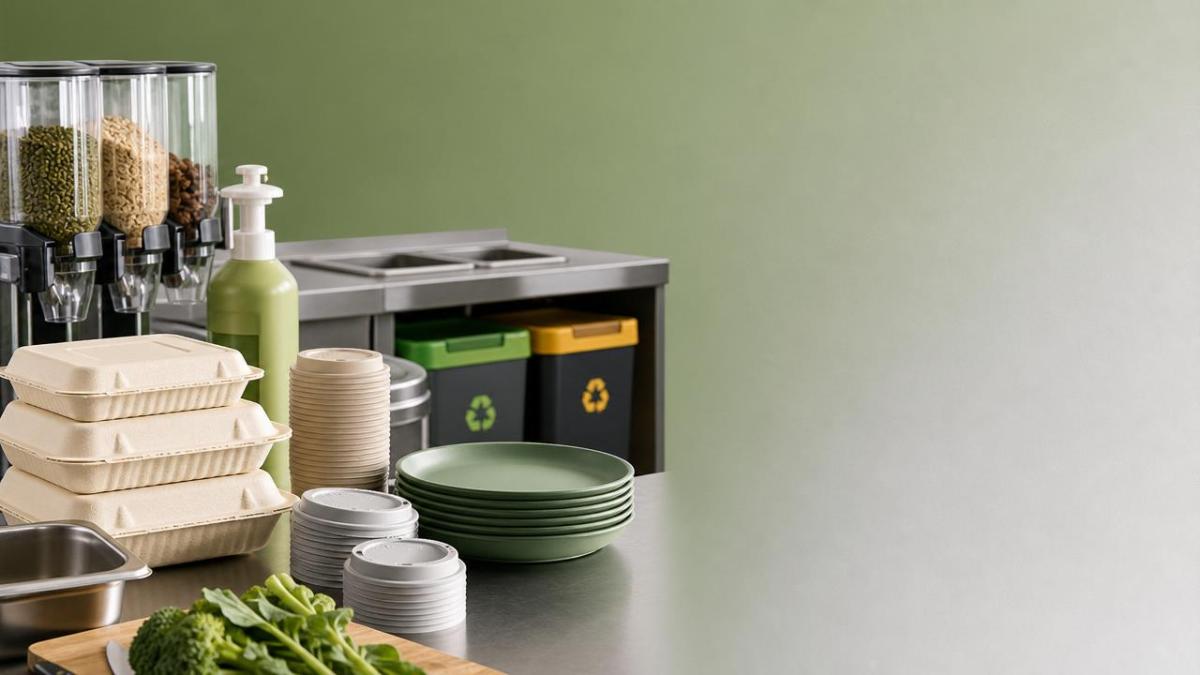
Eco-friendly restaurant supplies are products designed to reduce environmental impact during sourcing, use, and disposal.
They often include compostable packaging, recyclable containers, reusable tableware, efficient dispensers, biodegradable trash liners, and low-toxicity cleaning materials.
In the broader kitchen equipment industry, these supplies support the same direction seen in modern appliances: efficiency, automation, safety, and resource savings.
They matter because restaurant waste is expensive in three ways.
- You pay for the product.
- You pay to store and handle it.
- You pay again to throw it away.
Eco-friendly restaurant supplies can lower all three costs when matched to the correct service model.
They also help kitchens align with customer expectations around responsible packaging, food safety, and visible waste reduction.
How do eco-friendly restaurant supplies actually reduce waste?
Waste reduction starts with material choice, but it does not end there.
The best eco-friendly restaurant supplies reduce overuse, breakage, leakage, contamination, and unnecessary disposal.
1. They reduce single-use volume
Replacing high-turnover disposable items with durable alternatives can significantly cut weekly trash output.
Examples include reusable trays, refillable condiment systems, and long-life serving baskets.
2. They improve portion control
Many sustainable dispensers are designed for measured output.
That reduces napkin waste, cleaning chemical overuse, and excess sauce packaging.
3. They lower spoilage and damage
Better lids, stronger containers, and improved thermal packaging protect food during delivery and storage.
When food arrives intact, the business avoids refunds, remakes, and wasted ingredients.
4. They support sorting and recycling
Consistent materials make waste streams easier to separate.
This is especially useful in operations connected to local recycling or composting programs.
The result is not just less trash.
It is a cleaner workflow, fewer reorder emergencies, and better alignment with efficient kitchen systems.
Can eco-friendly restaurant supplies really lower operating costs?
Yes, but the savings usually come from total use cost, not only unit price.
A cheaper disposable item may look attractive on paper.
However, it can create hidden costs through high consumption, product failure, or poor storage efficiency.
Where savings typically appear
- Lower reorder frequency from durable or higher-capacity products
- Reduced waste-hauling or disposal volume
- Fewer food leaks, spills, and transport losses
- Better storage organization due to standardized packaging sizes
- Lower chemical consumption with controlled dispensing systems
In foodservice environments using modern kitchen equipment, supply efficiency often complements equipment efficiency.
For example, energy-efficient dishwashing systems make reusable service ware more practical.
Digital inventory tools also make it easier to track which eco-friendly restaurant supplies deliver measurable savings.
Which eco-friendly restaurant supplies make the biggest impact first?
The best first step is usually a high-volume, high-waste category.
That creates visible results without disrupting the full operation.
Priority categories to review
- Takeout containers and lids
- Cups, straws, and cutlery
- Napkin and tissue dispensing systems
- Trash liners and cleaning chemical packaging
- Storage containers for prep and transport
Delivery-heavy businesses often start with packaging performance.
Dine-in operations may gain more from reusable service items and controlled dispensers.
Central kitchens and food processing sites often see strong results from standardized reusable bins and efficient cleaning systems.
The right answer depends on traffic volume, menu type, local waste rules, and available washing capacity.
How should you choose eco-friendly restaurant supplies without making costly mistakes?
A sustainable product is only valuable if it works in daily service.
Selection should balance environmental benefit, operational fit, and total cost.
Key checks before switching
- Material suitability for hot, cold, oily, or wet foods
- Stacking, storage, and transport efficiency
- Compatibility with dishwashing or sanitation systems
- Availability and supply consistency
- Certification, food-contact safety, and disposal guidance
- Real performance during peak service periods
Pilot testing is strongly recommended.
Try one category, track usage for two to four weeks, and compare breakage, complaints, waste volume, and reorder rate.
This practical approach prevents expensive full-scale changes based on marketing claims alone.
What are the most common misconceptions about eco-friendly restaurant supplies?
Several myths stop businesses from moving forward.
Myth 1: Sustainable always means expensive
Some items cost more per piece, but many reduce total operating expense through lower use and waste.
Myth 2: All green products perform the same
Performance varies widely by material, design, and supplier quality.
A weak compostable lid can create more waste than a durable recyclable one.
Myth 3: Switching supplies alone solves sustainability
It helps, but it works best with efficient kitchen equipment, smart inventory control, and waste tracking.
Myth 4: Customers only care about labels
Customers notice function too.
Leak-proof, sturdy, and responsible packaging creates a better experience than a product that is green in name only.
How can you implement eco-friendly restaurant supplies step by step?
A phased rollout is usually the safest path.
It controls risk while building measurable progress.
Suggested implementation plan
- Audit the top five disposable or waste-heavy categories.
- Measure current monthly usage, complaints, and disposal volume.
- Test one or two eco-friendly restaurant supplies in live service.
- Train staff on handling, sorting, and replacement procedures.
- Review performance with purchasing and kitchen data.
- Expand only after confirming cost and waste improvements.
This process fits well with the broader evolution of the kitchen equipment industry.
As foodservice operations adopt smarter appliances and digital controls, supply decisions should become equally data-driven.
Eco-friendly restaurant supplies are most effective when treated as part of an integrated efficiency system.
That system includes packaging, storage, cleaning, preparation flow, and disposal handling.
In the end, eco-friendly restaurant supplies help cut waste and costs because they improve how materials move through the operation.
They support cleaner workflows, stronger sustainability performance, and better long-term purchasing control.
The most practical next step is to review one high-volume category, compare total use cost, and test a better alternative under real kitchen conditions.
Small, measured changes often deliver the fastest proof that eco-friendly restaurant supplies are a smart operational investment.
Popular Tags
Kitchen Industry Research Team
Dedicated to analyzing emerging trends and technological shifts in the global hospitality and foodservice infrastructure sector.
Industry Insights
Join 15,000+ industry professionals. Get the latest market trends and tech news delivered weekly.
No spam. Unsubscribe anytime.
Hot Articles
 How to Size a Commercial Kitchen Hood for Cooking Equipment and Heat Loads
- How to Size a Planetary Mixer Machine for High-Viscosity Batch Production
- How to Choose Ceramic Rice Plates for Restaurants: Size, Glaze, and Chip Resistance
- Kitchen Innovation Trends in Emerging Markets: Where Growth Will Come From in 2026

Contact With us
Contact:
Anne Yin (Ceramics Dinnerware/Glassware)
Lucky Zhai(Flatware)