
What equipment do food trucks really need first?
Launching a food truck starts with smart equipment choices, not a full kitchen buildout. The right restaurant kitchen equipment for food trucks shapes speed, safety, menu quality, and operating cost.
Early equipment decisions also affect licensing, power planning, storage design, and long-term upgrades. A focused setup helps mobile kitchens start lean while staying ready for stable growth.
Why the first equipment choices depend on your food truck scenario
Not every truck needs the same starting lineup. A coffee-and-breakfast truck has different priorities from a burger concept or a prep-light dessert truck.
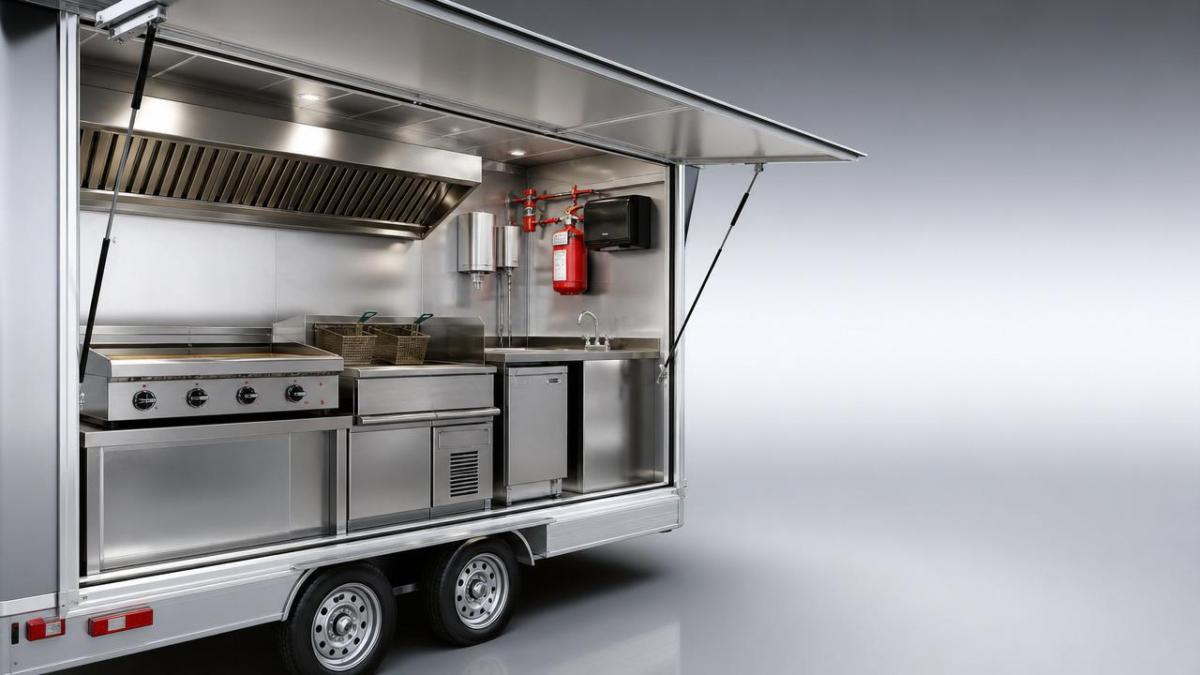
That is why restaurant kitchen equipment for food trucks should be selected by workflow first. Menu complexity, peak-hour volume, and local compliance rules decide what must come first.
In the broader kitchen equipment industry, compact, energy-efficient, and integrated systems are becoming more important. Food trucks benefit directly from this shift because every inch and every watt matter.
Scenario one: high-volume hot food trucks need cooking power first
If the truck serves burgers, tacos, fried snacks, or grilled sandwiches, production speed drives revenue. In this case, primary cooking equipment should be the first investment.
Core judgment points
- Most orders require heat during service.
- Peak demand comes in short lunch or evening windows.
- Menu items share similar cooking methods.
For this scenario, the first restaurant kitchen equipment for food trucks usually includes a griddle, fryer, charbroiler, or compact range, depending on the menu.
A ventilation hood and fire suppression system are also essential. These are not optional add-ons when heat-heavy cooking is the business model.
What to prioritize
- Primary cooking unit matched to top-selling items.
- Ventilation and fire safety equipment.
- Undercounter refrigeration for line speed.
- Compact prep table with food-safe surfaces.
Scenario two: beverage, dessert, and low-heat concepts need cold and prep efficiency first
Some trucks rely more on assembly than cooking. Smoothies, coffee, ice cream, crepes, and packaged desserts often need cold holding, clean prep flow, and quick service.
Here, restaurant kitchen equipment for food trucks should start with refrigeration, freezers, display holding, beverage machines, and sanitation tools before major hot-line equipment.
Core judgment points
- The menu depends on ingredients staying cold or frozen.
- Customer wait time must stay under a few minutes.
- Equipment noise, power load, and cleaning matter daily.
This model benefits from energy-efficient refrigerators, insulated ingredient rails, blender stations, espresso systems, and point-of-use sinks. Compact design reduces wasted movement.
Scenario three: prep-heavy specialty menus need storage and workflow balance first
Some food trucks sell bowls, wraps, meal prep boxes, or fusion dishes with many toppings. These menus can overwhelm a truck if storage and assembly are not planned first.
In this case, restaurant kitchen equipment for food trucks should focus on refrigerated prep tables, ingredient bins, shelving, holding cabinets, and safe transport containers.
Core judgment points
- The menu has many ingredients but limited cooking steps.
- Cross-contamination risks are higher.
- Off-truck prep and on-truck finishing must connect smoothly.
This is where the wider kitchen equipment industry offers strong value. Modular, stainless, easy-clean systems improve sanitation while supporting flexible menu changes.
What every food truck should buy first, regardless of concept
No matter the menu, several equipment categories belong at the front of the list. These create the minimum operating foundation for compliance and daily efficiency.
Essential first-purchase categories
- Food-safe refrigeration or freezer capacity.
- Hand sink and warewashing sink setup.
- Primary cooking or finishing equipment.
- Ventilation and fire suppression where required.
- Worktables, shelving, and sealed storage.
- Power system compatibility and safe connections.
- Temperature monitoring tools and food safety basics.
Skipping any of these can create delays, inspection issues, or service breakdowns. Good restaurant kitchen equipment for food trucks is not only about cooking output.
How needs change across food truck scenarios
This comparison shows why restaurant kitchen equipment for food trucks should never be selected from a generic checklist alone. The best setup matches the actual selling pattern.
Practical equipment matching advice before you purchase
Before ordering equipment, map the full service cycle. Start with receiving, move to storage, prep, cooking, packaging, and cleaning, then identify where delays or safety issues may appear.
Useful matching steps
- Rank menu items by sales volume and preparation time.
- Calculate peak-hour order capacity.
- Check generator, gas, and electrical limits.
- Confirm local health and fire code requirements.
- Choose equipment that fits cleaning and maintenance routines.
- Leave room for one future upgrade, not five unnecessary machines.
This approach keeps restaurant kitchen equipment for food trucks aligned with real operating conditions instead of idealized plans that exceed budget or space.
Common mistakes when choosing first food truck equipment
A common mistake is buying too much cooking capacity before securing enough cold storage or sink capacity. Production speed means little if ingredients cannot be stored safely.
Another mistake is ignoring equipment dimensions during layout planning. Doors, ventilation clearances, staff movement, and cleaning access all affect performance inside a small truck.
Some operators also choose household appliances to save money. In most cases, commercial-grade restaurant kitchen equipment for food trucks delivers better durability, safety, and compliance.
Power mismatch is another hidden issue. An efficient piece of equipment is only useful if the truck can support its electrical, gas, or ventilation needs without constant interruptions.
Take the next step with a scenario-based equipment plan
The first equipment for a food truck should support the menu, service pattern, and compliance needs from day one. Start with the equipment category that protects workflow and food safety first.
A practical shortlist often beats a complete wish list. Build around essential restaurant kitchen equipment for food trucks, then expand after actual sales data reveals what deserves the next investment.
If the layout, menu, and utility limits are reviewed together, the result is a more efficient mobile kitchen. That leads to better service consistency, lower waste, and stronger long-term returns.
Popular Tags
Kitchen Industry Research Team
Dedicated to analyzing emerging trends and technological shifts in the global hospitality and foodservice infrastructure sector.
Industry Insights
Join 15,000+ industry professionals. Get the latest market trends and tech news delivered weekly.
No spam. Unsubscribe anytime.
Hot Articles
Contact With us
Contact:
Anne Yin (Ceramics Dinnerware/Glassware)
Lucky Zhai(Flatware)