
Restaurant kitchen equipment standards to check first
Before investing in or approving any commercial kitchen setup, quality control and safety managers should verify the most critical restaurant kitchen equipment standards first. From food-contact materials and electrical safety to sanitation design and energy performance, these standards directly affect compliance, operational reliability, and risk prevention. Understanding what to check at the start helps ensure safer kitchens, smoother inspections, and more consistent foodservice operations.
Why restaurant kitchen equipment standards should be checked before purchase approval
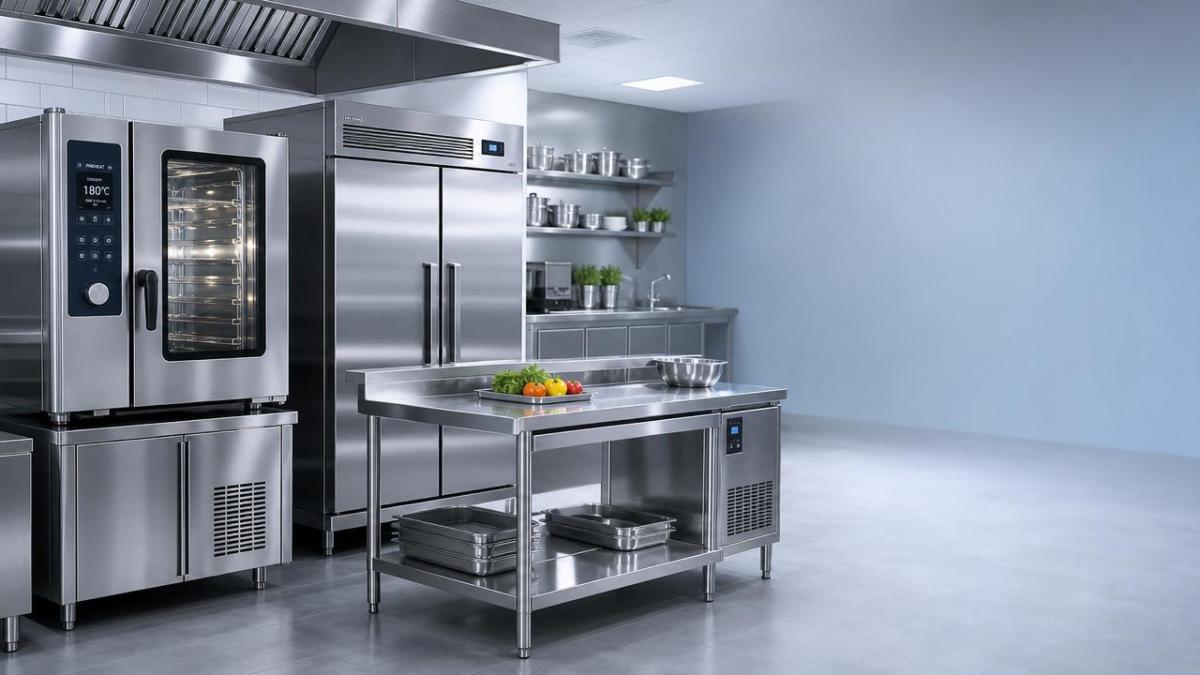
For quality control personnel and safety managers, the biggest risk is not only buying the wrong equipment, but approving equipment that later fails sanitation, electrical, or operational review. In fast-moving foodservice projects, installation deadlines often compress inspection time. That is exactly why restaurant kitchen equipment standards must be reviewed at the earliest procurement stage.
This issue has become more important as the kitchen equipment industry moves toward automation, smart controls, and energy-efficient systems. Modern restaurants, hotels, central kitchens, and food processing environments now rely on equipment that combines mechanics, electronics, software interfaces, and food-contact construction. Each layer adds a new compliance checkpoint.
Checking standards early helps teams avoid three costly outcomes: non-compliant materials, failed site inspections, and operational downtime after handover. It also improves supplier comparison because safety and quality teams can evaluate products using objective criteria instead of price alone.
- It reduces the chance of selecting units with poor hygienic design, exposed fasteners, difficult-to-clean corners, or non-food-grade contact surfaces.
- It helps verify electrical and thermal safety before installation in high-load kitchens with steam, grease, and continuous use.
- It supports smoother acceptance procedures when local regulators, consultants, or internal audit teams request technical files and declarations.
- It creates a defensible procurement record for cross-border sourcing, especially when equipment is imported from multiple manufacturing regions.
What standards matter most in commercial kitchens?
When reviewing restaurant kitchen equipment standards, safety managers should focus on the standards that directly affect food safety, operator safety, durability, and energy use. Not every market uses the same certification pathway, but the core evaluation logic remains similar across global foodservice projects.
The table below gives a practical view of the first standards categories to check when evaluating restaurant cooking equipment, refrigeration, preparation machines, warewashing systems, and smart kitchen devices.
A useful lesson from this comparison is that compliance is multi-dimensional. A machine may be powerful and affordable, yet still become a poor choice if it uses difficult-to-clean joints, lacks sufficient ingress protection, or cannot provide documentation on food-contact components.
Standards review is not the same for every equipment type
A fryer, combi oven, blast chiller, slicer, and dishwasher do not fail for the same reasons. Heating equipment demands stronger attention to thermal insulation, ventilation compatibility, and fire-related safety controls. Refrigeration requires stable temperature performance, drainage reliability, and condensate management. Preparation machines raise more mechanical safety concerns.
Smart kitchen systems add another layer. If equipment uses sensors, touch controls, remote diagnostics, or cloud-connected monitoring, quality teams should also review firmware stability, alarm functionality, and whether data interfaces interfere with cleaning and service access.
How to evaluate restaurant kitchen equipment standards by risk level
Not all checkpoints carry the same urgency. Quality control teams often work under limited time, so a risk-ranked review model can speed up decisions without weakening control. The best approach is to divide requirements into critical, important, and supporting checks.
Critical checks that should never be skipped
- Verify food-contact safety. Confirm the declared materials for tanks, trays, worktops, internal chambers, gaskets, and piping sections that may touch food, water, steam, or residues.
- Confirm electrical compatibility with the destination site. Mismatch in voltage, phase, frequency, or grounding design can delay commissioning and create significant safety exposure.
- Inspect sanitation design. Equipment should not have deep crevices, open threads in cleaning zones, rough welds, or disassembly steps so complex that staff skip proper cleaning.
- Check operating safeguards. High-speed cutters, mixers, conveyors, and powered preparation machines require guards, interlocks, and stable emergency stop behavior.
Important checks for long-term operating reliability
- Ease of maintenance, including access to serviceable parts, cleaning filters, drain systems, and replacement seals.
- Performance consistency under peak kitchen load rather than only under laboratory or showroom conditions.
- Resistance to heat, moisture, cleaning chemicals, and repeated opening and closing cycles.
- Availability of technical documentation, wiring diagrams, cleaning instructions, and spare parts lists.
Supporting checks that improve procurement decisions
After the critical and important items are cleared, teams can compare energy efficiency, automation functions, training requirements, and service access. These points may not determine immediate compliance, but they strongly affect operating cost and user acceptance after installation.
Procurement checklist: what quality and safety managers should ask suppliers first
In global sourcing, restaurant kitchen equipment standards are often described differently by different manufacturers. Some suppliers present strong marketing claims but weak technical proof. To avoid confusion, buyers should request specific evidence instead of general statements.
The following supplier assessment table can be used during quotation review, technical clarification, or pre-approval meetings.
This checklist is especially valuable when comparing manufacturers from different countries. Major export regions such as China, Germany, Italy, and Japan may each offer strong production capabilities, but document formats, standard references, and optional configurations can differ. A unified review sheet makes decisions faster and more consistent.
Questions that expose weak supplier preparation
- Can the supplier clearly identify every food-contact component, not just the main body material?
- Can they explain how cleaning is performed in hidden or enclosed sections?
- Do the declared utilities match your project’s actual power, gas, water, and drainage conditions?
- Can they provide a realistic lead time for compliant configuration rather than a generic standard offer?
Common mistakes when checking restaurant kitchen equipment standards
Many compliance failures come from reasonable assumptions that turn out to be wrong. Safety managers often assume stainless steel alone guarantees food safety, or that a familiar product category automatically meets local code expectations. In reality, details determine risk.
Mistake 1: Focusing on the outer shell only
The visible cabinet may be stainless steel, but internal fittings, seals, wheels, tubing, adhesives, and plastic bins may be the real compliance issue. A proper standards review must include hidden components, not only external surfaces.
Mistake 2: Treating certification labels as the whole answer
Labels and declarations matter, but they do not replace technical evaluation. A product can carry conformity information and still be unsuitable for a specific environment if it lacks washdown protection, has poor service access, or cannot withstand heavy production cycles.
Mistake 3: Ignoring installation conditions
Restaurant kitchen equipment standards must be checked together with site conditions. Floor drainage, hood design, air extraction, utility capacity, ambient temperature, and operator workflow all affect whether a compliant machine remains compliant after installation.
Mistake 4: Buying only by initial price
A lower purchase price may hide higher cleaning labor, more frequent replacement parts, greater utility consumption, or delayed approvals. For high-traffic kitchens, total operating cost and compliance stability are usually better decision metrics than entry price alone.
How standards change across application scenarios
The same restaurant kitchen equipment standards are interpreted differently depending on the kitchen format. A hotel banquet kitchen, quick service restaurant, hospital canteen, and central production kitchen each place different pressure on sanitation, speed, traceability, and utility use.
The table below helps quality and safety teams match standards priorities to real application scenarios rather than using a one-size-fits-all review model.
This scenario view shows why standards review should follow operational context. Equipment that is acceptable in a low-volume outlet may become inadequate in a central kitchen where hygiene turnover, batch consistency, and service continuity are much more demanding.
FAQ: practical questions quality and safety managers ask
How do I know which restaurant kitchen equipment standards apply to my project?
Start with the equipment type, installation country, and application scenario. Then review food-contact safety, electrical safety, sanitation design, and mechanical or thermal safety as the baseline. If the project involves imported equipment, request all technical documents early so local consultants or internal compliance teams can identify any gaps before purchase.
Is certification enough to approve equipment?
No. Certification or conformity markings are useful, but approval should also include a review of materials, cleanability, utilities, environmental suitability, and service access. In many projects, the operational mismatch is the real problem, not the missing label. Approval should therefore combine document review with application-based assessment.
What should I prioritize if the budget is tight?
Protect the non-negotiable items first: food-contact safety, sanitation design, electrical compatibility, and operator protection. If compromises are necessary, make them in secondary features such as interface options or advanced automation, not in the core standards that affect compliance and safety exposure.
How early should standards review begin?
Ideally, during specification drafting or before RFQ release. If standards are reviewed only after the order is placed, teams may discover utility mismatches, documentation gaps, or non-compliant construction too late. Early review shortens revision cycles and protects delivery schedules.
Why choosing the right supplier support matters
As kitchen equipment becomes smarter, more energy conscious, and more integrated across restaurant and food processing operations, buyers need more than product catalogs. They need suppliers who can translate restaurant kitchen equipment standards into workable project decisions across sourcing, customization, compliance review, and delivery planning.
A capable supplier should help your team compare equipment options, identify compliance-sensitive components, adapt configurations to local utilities, and clarify what documentation can be provided before production. This is especially important for projects involving multiple equipment categories, imported systems, or central kitchen expansion.
Why choose us for standards-focused kitchen equipment support
If your team is evaluating restaurant kitchen equipment standards for a new site, replacement project, or multi-country sourcing plan, we can support the decision process with practical technical coordination. Our focus is to help quality control and safety managers reduce uncertainty before approval, not after installation.
- Parameter confirmation: review voltage, power load, drainage, ventilation, material contact points, and operating environment before order release.
- Product selection guidance: compare equipment by sanitation design, safety functions, maintenance access, and application fit rather than price only.
- Delivery and project planning: discuss lead time, configuration changes, spare parts expectations, and installation dependencies that may affect opening schedules.
- Certification and documentation alignment: clarify what declarations, drawings, manuals, and technical records can be prepared for your review flow.
- Sample and quotation support: evaluate sample feasibility, trial priorities, and quotation scope for commercial kitchen equipment, food processing systems, and integrated kitchen solutions.
Contact us if you need help with parameter checks, equipment selection, compliance-oriented sourcing, delivery timing, customized solutions, sample support, or quotation discussion. A standards-first review can save far more time and cost than correcting problems after the kitchen is already built.
Popular Tags
Kitchen Industry Research Team
Dedicated to analyzing emerging trends and technological shifts in the global hospitality and foodservice infrastructure sector.
Industry Insights
Join 15,000+ industry professionals. Get the latest market trends and tech news delivered weekly.
No spam. Unsubscribe anytime.
Hot Articles
 How to Select Restaurant Kitchen Equipment for High-Volume Catering Operations
- Hygienic Restaurant Kitchen Design: Layout Rules to Reduce Cross-Contamination
- Why Glass Tea Servers Crack—and How to Prevent Thermal Shock When Brewing Tea
- How to Choose a Glass Tea Server for Hot and Cold Brewing Without Cracking


Contact With us
Contact:
Anne Yin (Ceramics Dinnerware/Glassware)
Lucky Zhai(Flatware)