
How to judge professional kitchen equipment quality?
Judging the quality of professional kitchen equipment requires more than checking appearance or brand reputation. For technical evaluators, it involves a systematic review of materials, structural design, safety compliance, energy efficiency, performance stability, and long-term maintenance value. As modern kitchens move toward automation, intelligence, and sustainable operation, selecting reliable equipment directly affects food safety, workflow efficiency, and operating costs. This guide outlines key evaluation points to help identify durable, compliant, and high-performing solutions for commercial and industrial kitchen applications.
What Defines Quality in Professional Kitchen Equipment?
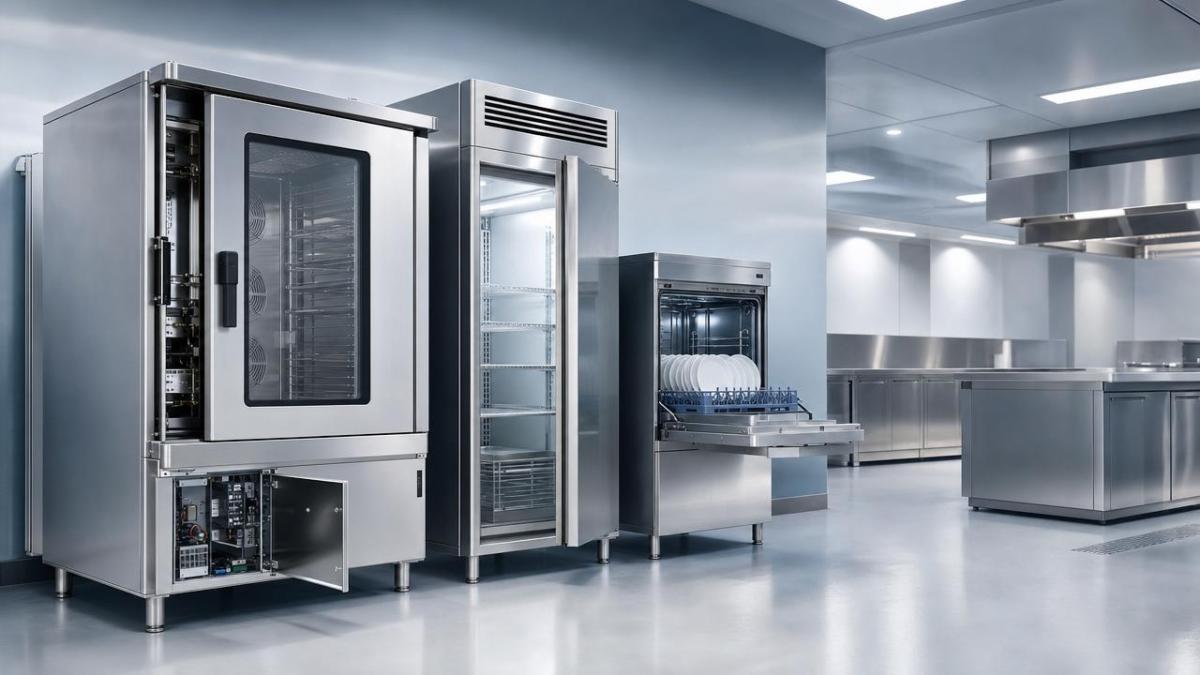
Quality in professional kitchen equipment is not a single feature. It is the combined result of engineering design, material selection, process control, operating stability, and after-sales maintainability.
For technical evaluators, the first task is to translate business needs into measurable inspection criteria. A restaurant, hotel kitchen, central kitchen, and food processing facility may use similar equipment, but their operating loads are very different.
Core quality indicators to check first
- Material reliability, especially food-contact surfaces, frame thickness, corrosion resistance, weld quality, and resistance to frequent cleaning chemicals.
- Mechanical structure, including load-bearing design, stability under vibration, door hinge strength, sealing performance, and ease of component replacement.
- Electrical and control safety, including wiring protection, grounding, temperature control accuracy, overload protection, and emergency stop functions where required.
- Operational consistency, such as heating uniformity, refrigeration stability, mixing accuracy, cooking repeatability, or processing speed under continuous use.
A high-quality unit should remain stable during peak hours, not only during a short demonstration. This is why technical evaluation should include real workload assumptions, not only catalogue specifications.
How to Inspect Materials, Structure, and Workmanship
Material inspection is a practical starting point because it directly affects hygiene, durability, and lifecycle cost. Stainless steel is common, but grade, thickness, surface finish, and fabrication quality matter.
When evaluating professional kitchen equipment, do not rely only on a polished exterior. Open panels, inspect internal reinforcement, check fasteners, and verify whether food residue can accumulate in hidden corners.
This table can be used as a first-round inspection checklist. If a supplier cannot provide clear material specifications or structural drawings, further technical verification is necessary.
Common material evaluation mistakes
- Judging stainless steel only by brightness, while ignoring grade, thickness, magnetic response, and actual application environment.
- Checking only external panels, while internal brackets, fasteners, and welded areas may determine long-term durability.
- Ignoring cleaning conditions, especially in seafood processing, bakery production, hotel kitchens, and humid central kitchens.
Which Performance Parameters Should Technical Evaluators Prioritize?
Performance evaluation should connect equipment parameters with real kitchen workflow. A specification may look strong, but it must match production volume, menu complexity, labor allocation, and available utilities.
For professional kitchen equipment, technical evaluators should pay attention to rated capacity, continuous operating ability, recovery speed, control accuracy, and energy consumption under practical loads.
Performance data should be requested under defined conditions. Without test conditions, capacity numbers may not reflect actual output in restaurants, hotels, central kitchens, or food processing sites.
Recommended field test approach
- Define the expected daily output, peak-hour load, operator count, menu category, and cleaning frequency before testing.
- Run the equipment long enough to observe temperature drift, vibration, noise, component heating, and recovery speed.
- Record energy consumption, water usage, processing yield, and operator feedback rather than relying only on supplier claims.
- Compare maintenance access, spare part replacement time, and cleaning steps after the performance test is completed.
How to Compare Safety, Compliance, and Certification Requirements
Safety and compliance are critical because professional kitchen equipment operates around heat, electricity, gas, water, moving parts, and food-contact surfaces. A low-cost unit can become expensive if it fails inspection.
Technical evaluators should review applicable regional requirements before procurement. The required documentation may vary by destination market, facility type, and equipment category.
Certification should be matched to the target market, not treated as a universal label. Always verify document scope, product model coverage, issue date, and whether the configuration matches the purchased unit.
Red flags in compliance review
- The certificate covers a different model, different voltage, or an earlier product version.
- The user manual lacks installation clearances, cleaning instructions, wiring diagrams, or safe operating limits.
- The supplier cannot explain material declarations, spare part standards, or conformity requirements for the destination country.
How to Judge Energy Efficiency and Long-Term Operating Cost
Purchase price is only one part of cost. Energy consumption, water usage, cleaning labor, downtime, spare parts, and equipment lifespan often determine total ownership cost.
In modern foodservice operations, energy-efficient professional kitchen equipment supports lower operating expenses and better sustainability targets. However, the efficiency claim must be measurable.
Cost factors evaluators should calculate
- Daily electricity, gas, or water consumption under realistic operating hours, not only rated input power.
- Cleaning time, required detergents, removable parts, and whether sanitation can be completed without special tools.
- Expected replacement cycle for consumables such as gaskets, filters, blades, heating elements, belts, or seals.
- Downtime impact during peak service, especially for refrigeration, dishwashing, cooking lines, and automated processing systems.
A higher initial investment may be reasonable if the equipment reduces labor dependency, improves production consistency, or cuts energy waste over several years.
When lower-cost alternatives may work
Budget equipment may be acceptable for low-frequency use, backup stations, temporary kitchens, or small operations with limited menu complexity. The risk increases when the unit becomes mission-critical.
For high-volume sites, choose stronger construction, documented testing, accessible maintenance, and clear spare part support. This is especially important for central kitchens and industrial food processing facilities.
Which Application Scenarios Require Different Evaluation Standards?
Different kitchens need different evaluation priorities. A hotel buffet kitchen values flexibility, while a food processing plant values continuous output, traceability, and repeatable performance.
Before selecting professional kitchen equipment, technical evaluators should classify the use scenario and define what failure would mean for food safety, service speed, and production cost.
Scenario-based evaluation prevents overbuying and under-specification. The best choice is not always the largest unit, but the one that matches workflow, compliance, and maintenance capacity.
What Should Be Included in a Procurement Evaluation Checklist?
A structured checklist helps technical evaluators communicate with purchasing teams, kitchen managers, engineers, and suppliers. It also reduces the risk of comparing incomplete quotations.
Practical procurement checklist
- Confirm application conditions, including daily output, working hours, menu type, site utilities, ventilation, drainage, and space restrictions.
- Request technical documents, including specification sheets, material descriptions, electrical diagrams, installation requirements, and maintenance manuals.
- Compare configuration details, because similar equipment names may include different compressors, motors, controllers, insulation, or safety devices.
- Review compliance needs for the destination market, especially electrical safety, food-contact materials, gas compatibility, and sanitation requirements.
- Evaluate delivery conditions, packaging method, spare parts availability, commissioning support, training needs, and warranty service process.
When comparing quotations for professional kitchen equipment, technical evaluators should ask suppliers to separate base price, optional configuration, shipping terms, spare parts, and customization cost.
Questions to ask suppliers before ordering
- Can the equipment be configured for the required voltage, gas type, plug standard, language interface, and installation environment?
- Which parts are considered consumables, and what is the recommended stock list for the first year of operation?
- What inspection or test can be performed before shipment, and what records can be provided to support acceptance?
FAQ: Technical Questions About Professional Kitchen Equipment Quality
How can I quickly identify poor-quality professional kitchen equipment?
Look for weak panel rigidity, rough welds, unclear wiring, missing labels, unstable doors, poor sealing, and incomplete manuals. These signs often indicate limited process control.
Is stainless steel grade enough to judge equipment quality?
No. Stainless steel grade is important, but thickness, finishing, welding, drainage design, internal support, and cleaning accessibility also determine long-term performance and hygiene.
Should smart kitchen functions be a priority?
Smart functions are valuable when they improve control accuracy, data monitoring, energy management, or process consistency. Avoid paying for digital features that do not support workflow decisions.
What documents are useful for acceptance inspection?
Useful documents include specifications, material information, wiring diagrams, user manuals, packing lists, test records, compliance references, spare part lists, and installation requirements.
Why Choose Us for Kitchen Equipment Evaluation and Selection Support?
Selecting professional kitchen equipment is easier when technical requirements, procurement budget, and operating scenarios are reviewed together. We can support structured evaluation before purchase decisions are finalized.
What you can consult with us
- Parameter confirmation for cooking, refrigeration, washing, preparation, and food processing equipment based on actual operating load.
- Product selection comparison for restaurants, hotels, central kitchens, food factories, and integrated kitchen projects.
- Customization discussion covering dimensions, power configuration, material requirements, control systems, and layout compatibility.
- Certification and documentation review for electrical safety, food-contact use, gas compatibility, and destination-market compliance.
- Quotation communication, sample support, delivery cycle planning, spare part recommendations, and pre-shipment inspection coordination.
If you are comparing professional kitchen equipment for a new project, replacement plan, or supplier audit, contact us with your application scenario, target capacity, utility conditions, and compliance requirements.
A clear technical brief allows faster selection, more accurate quotation, and lower procurement risk. It also helps ensure the final equipment supports safe, efficient, and sustainable kitchen operation.
Popular Tags
Kitchen Industry Research Team
Dedicated to analyzing emerging trends and technological shifts in the global hospitality and foodservice infrastructure sector.
Industry Insights
Join 15,000+ industry professionals. Get the latest market trends and tech news delivered weekly.
No spam. Unsubscribe anytime.

Contact With us
Contact:
Anne Yin (Ceramics Dinnerware/Glassware)
Lucky Zhai(Flatware)