
Heavy duty restaurant supplies that reduce breakage in peak hours
During peak service hours, every dropped tray, chipped plate, or bent utensil can slow your team down and increase costs. Heavy duty restaurant supplies are designed to handle constant use, reduce breakage, and keep kitchen and front-of-house operations running smoothly. For operators who need reliability under pressure, choosing the right durable equipment is a practical step toward safer, faster, and more efficient service.
What are heavy duty restaurant supplies, and why do they matter so much in peak hours?
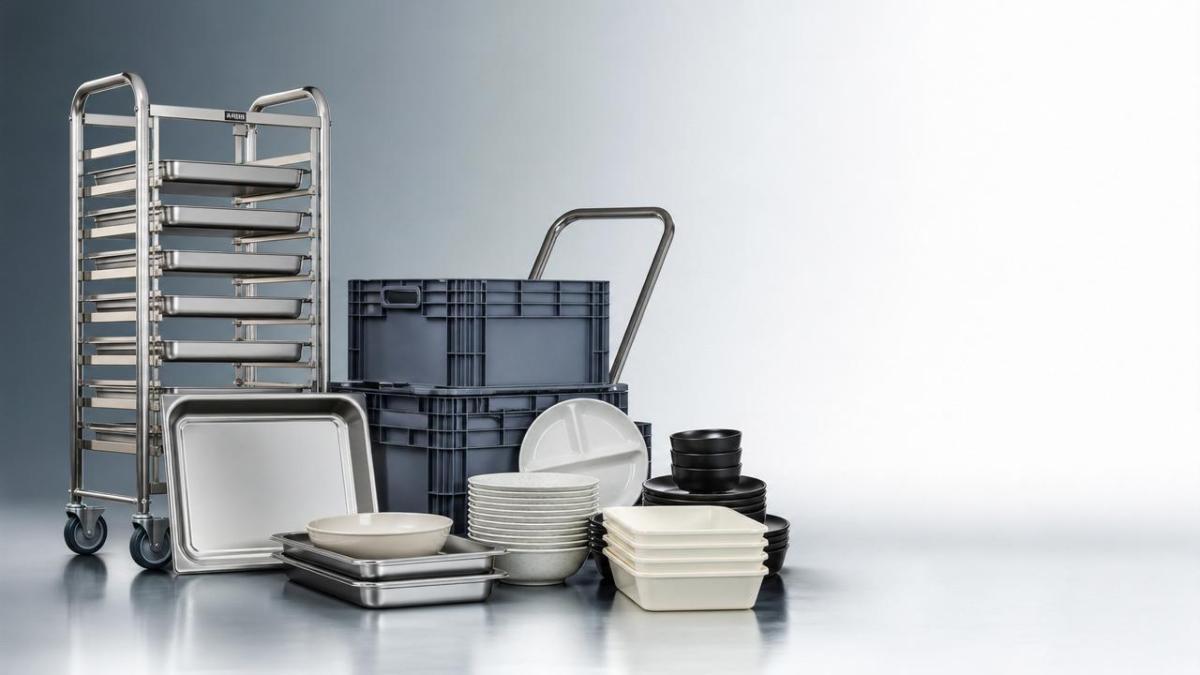
Heavy duty restaurant supplies are commercial-grade tools, containers, tableware, carts, racks, storage systems, and foodservice accessories built to withstand repeated use in fast, high-volume environments. Unlike light-duty options made for occasional handling, these products are selected for impact resistance, structural strength, heat tolerance, corrosion resistance, and long-term reliability. In practical terms, they are the items that keep working when a kitchen is under pressure.
Peak hours expose every weak point in an operation. Staff move faster, dishwashing cycles increase, trays are stacked higher, and dining room turnover becomes more aggressive. In those moments, a cracked pan insert, warped sheet tray, or chipped plate does more than create replacement cost. It interrupts workflow, creates safety risks, and can affect food presentation and service speed. That is why heavy duty restaurant supplies are not simply a purchasing preference; they are an operational control measure.
For kitchen operators, the value is measurable. Durable restaurant equipment helps reduce breakage, lower emergency replacement needs, protect staff from cuts or spills, and support more predictable service. It also aligns with broader kitchen equipment trends such as efficiency, hygiene, and lifecycle cost management. In busy restaurants, durability often has a direct relationship with labor productivity.
Which restaurant areas benefit most from heavy duty restaurant supplies?
Almost every zone in a foodservice business can benefit, but the return is especially strong in locations where handling frequency and impact risk are high. Back-of-house kitchens typically see the greatest gains first because prep tables, mixing bowls, storage bins, cutting boards, ladles, tongs, and sheet pans are used continuously throughout the day. A heavy duty design reduces the chance of bending, cracking, and cross-contamination caused by damaged surfaces.
Front-of-house operations also rely on durability. Trays, beverage dispensers, melamine serving pieces, bus tubs, plate racks, and transport carts move between guests, servers, and cleaning stations many times per shift. If these items fail, service delays become visible to customers. For buffets, banquets, hotel dining, and high-turnover casual restaurants, durable foodservice supplies can directly protect guest experience.
Storage and transport areas are another common weak point. Shelving, ingredient containers, dollies, and utility carts must handle repeated loading and unloading. In central kitchens and food processing environments, stronger restaurant supplies also support better sanitation and inventory organization. Operators managing multiple outlets often prioritize these categories because damage in storage systems tends to create a chain reaction across production and replenishment.
How do you tell whether a product is truly heavy duty instead of just marketed that way?
This is one of the most important buying questions. Many products are labeled as durable, commercial, or premium, but those terms do not always mean the item will survive peak-hour stress. Operators should look beyond appearance and focus on performance indicators.
First, examine the material. Stainless steel, reinforced polymers, high-impact melamine, thick-gauge aluminum, and commercial-grade polypropylene are common in heavy duty restaurant supplies because they resist deformation and repeated washing. Second, check construction details. Weld quality, edge finishing, handle reinforcement, corner strength, and load-bearing design often reveal more than marketing copy. Third, verify suitability for actual use conditions, including heat, cold, moisture, chemicals, stacking weight, and dishmachine cycles.
It is also wise to review compliance and compatibility. Products intended for food contact should meet relevant food safety requirements. Stackable items should fit existing shelving, dish racks, or carts. Replaceable components, such as lids, casters, and inserts, can extend usable life. In other words, the best heavy duty restaurant supplies are not only strong by themselves; they integrate smoothly into the working system of the kitchen.
Quick evaluation table for operators
What types of supplies reduce breakage the most in busy restaurants?
The biggest impact usually comes from categories with the highest drop rate, stacking pressure, or temperature stress. For dining service, melamine plates, reinforced trays, polycarbonate drinkware, and durable bus bins often outperform more fragile alternatives in fast casual, cafeteria, school, and high-volume family dining environments. They are especially useful where speed matters more than formal presentation.
In prep and production areas, strong food storage containers, commercial cutting boards, heavy gauge sheet pans, deep hotel pans, and stainless steel mixing tools reduce downtime caused by warping, cracking, or edge damage. For transport, utility carts with high load capacity and stable wheels help prevent accidental collisions and drops. For warewashing, sturdy racks and stackable containers reduce chipping during transfer.
It is important to connect the product choice to the service model. A premium dining room may still use porcelain or glass in guest-facing areas, but it can lower losses by switching support items behind the scenes to heavy duty restaurant supplies. Meanwhile, a high-turnover chain or buffet operation may benefit from broader replacement of breakable pieces with impact-resistant alternatives. The right answer depends on guest expectations, handling frequency, and labor conditions.
Are heavy duty restaurant supplies more expensive, or do they actually save money?
They usually cost more upfront, but the real question is total operating cost. Low-cost supplies may seem attractive during procurement, yet they often lead to recurring replacement, staff frustration, cleaning disruptions, and hidden labor waste. A plate that chips easily or a tray that warps after a short time creates a repeated expense pattern. When this happens across many units, the initial savings disappear quickly.
Heavy duty restaurant supplies typically improve cost control in four ways. First, they last longer under repeated use. Second, they reduce breakage-related interruptions. Third, they support safer handling, which may reduce accidents and product loss. Fourth, they make procurement planning easier because replacement cycles become more predictable. This matters for independent restaurants and multi-site operators alike.
A practical buying approach is to divide items into critical and non-critical categories. Invest more heavily in supplies that are touched constantly, exposed to heat or movement, or essential to service continuity. For lower-risk items, a mid-range specification may be enough. This balanced strategy allows operators to improve durability without overspending on every product line.
What mistakes do operators make when choosing durable restaurant supplies?
One common mistake is buying only on unit price. The cheaper option may be acceptable in light use, but peak-hour performance is where weak products fail. Another mistake is choosing materials without considering actual handling conditions. For example, a product may be heat-resistant but still crack under impact, or it may be strong enough for storage but not for repeated dishwashing.
A third mistake is ignoring ergonomics. Some heavy duty restaurant supplies are structurally strong but uncomfortable to carry, grip, stack, or clean. If staff struggle to use them efficiently, the operation may still lose time. Weight, handle position, edge design, and nesting function all matter. Durability should support speed, not reduce it.
Another frequent issue is poor standardization. If one location uses different pan sizes, storage boxes, or tray formats than another, ordering and replacement become more complex. Standardizing durable kitchen equipment across stations or sites improves training, inventory management, and workflow consistency. Operators should think in systems, not isolated products.
How should staff use and maintain heavy duty restaurant supplies to maximize lifespan?
Even the strongest products need correct handling. Start with simple operating rules: do not overload carts beyond design capacity, avoid mixing sharp metal tools with surfaces that can gouge, and train staff to stack items according to manufacturer guidance. Small handling habits can dramatically change breakage rates, especially during high-pressure service windows.
Cleaning protocols are equally important. Some durable plastics can degrade if exposed to unsuitable chemicals, while metal items may corrode if not dried properly. Operators should make sure warewashing settings, sanitizers, and storage methods match the product material. Routine inspection also helps. Removing a cracked bin or unstable rack early can prevent larger losses later.
The most effective operations combine durable product selection with disciplined maintenance. In a modern kitchen equipment environment, that may include digital inventory records, replacement tracking, and scheduled checks for high-use tools. This approach reflects the broader industry movement toward smarter, more efficient kitchen management rather than reactive purchasing.
What should you confirm before placing an order for heavy duty restaurant supplies?
Before procurement, operators should confirm the real service demands of the site. How many turns happen during peak periods? Which items break most often now? Are losses caused by impact, heat, dishwashing, stacking, or transport? Answers to these questions help identify the right product category and specification instead of relying on generic recommendations.
It is also useful to confirm dimensions, material preferences, storage compatibility, expected lifespan, and replacement availability. If ordering for multiple outlets, align on standard sizes and usage procedures. Requesting samples for testing in live kitchen conditions can be more valuable than comparing catalog descriptions alone. A short trial often reveals whether a product truly performs under rush-hour pressure.
If you need to move from interest to action, start the conversation around a few practical points: which supplies break most often, what daily volume they handle, what safety or sanitation requirements apply, what equipment they must match, and what replacement cycle is acceptable. With those details clarified, it becomes much easier to choose heavy duty restaurant supplies that support faster service, lower losses, and more stable long-term operations.
Popular Tags
Kitchen Industry Research Team
Dedicated to analyzing emerging trends and technological shifts in the global hospitality and foodservice infrastructure sector.
Industry Insights
Join 15,000+ industry professionals. Get the latest market trends and tech news delivered weekly.
No spam. Unsubscribe anytime.
Contact With us
Contact:
Anne Yin (Ceramics Dinnerware/Glassware)
Lucky Zhai(Flatware)