
Is restaurant supplies OEM worth the cost and control tradeoff
For business decision-makers sourcing commercial kitchen products, restaurant supplies OEM can offer stronger cost advantages, brand differentiation, and supply flexibility—but often at the expense of direct control over quality, lead times, and innovation. As global foodservice demand rises and smart, energy-efficient equipment becomes standard, understanding whether restaurant supplies OEM is worth the tradeoff is essential for making profitable, scalable purchasing decisions.
In practice, the answer depends less on a simple yes-or-no calculation and more on product category, supplier maturity, order volume, compliance requirements, and the buyer’s internal capabilities. A distributor building a private-label utensil line faces a different risk profile than a hotel group sourcing combi ovens, refrigeration units, or digital kitchen systems.
In the kitchen equipment sector, where reliability, food safety, energy use, and after-sales service directly affect operating margins, OEM decisions must be evaluated beyond unit price. The best sourcing strategy balances 4 factors: total landed cost, quality consistency, supply resilience, and commercial control.
What restaurant supplies OEM really means in commercial kitchen sourcing
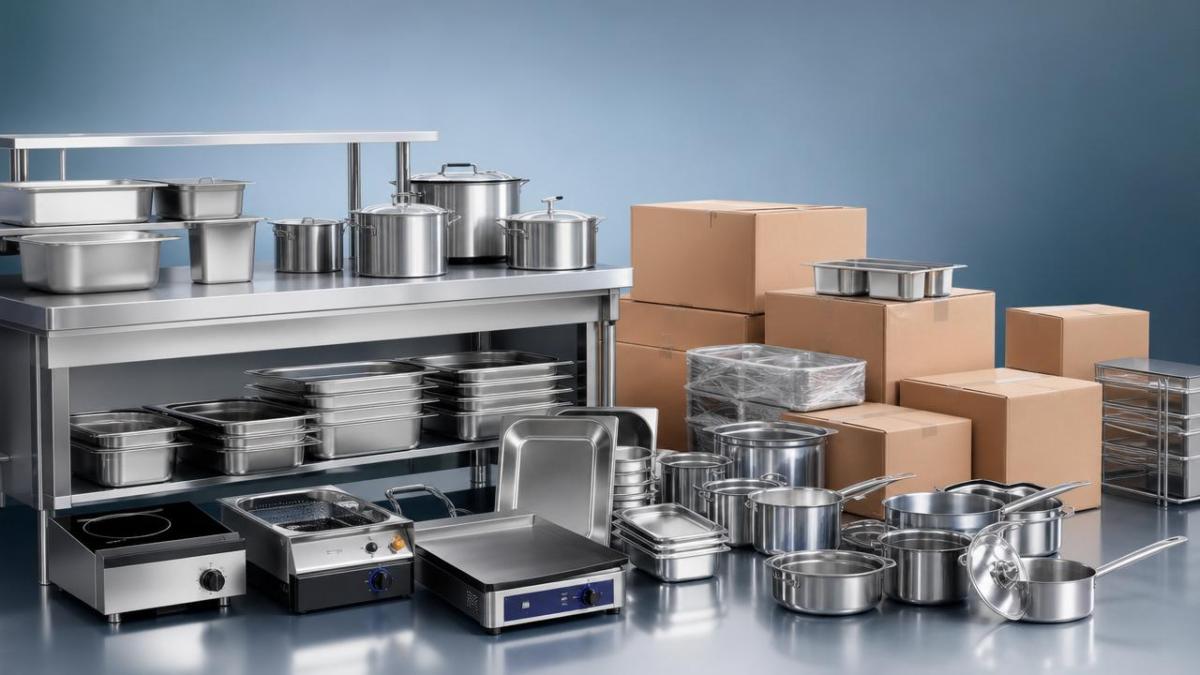
Restaurant supplies OEM usually refers to products manufactured by one company and sold under another company’s brand, specification, or packaging. In commercial kitchen procurement, this can include stainless steel worktables, cookware, GN pans, shelving, food prep tools, warming equipment, refrigeration accessories, and selected electric appliances.
The OEM model is especially common when buyers need moderate differentiation without building a factory. Typical adjustments include logo marking, packaging changes, material thickness, voltage options, plug types, accessory bundles, and regional compliance labeling. For many categories, the real value appears when annual volume reaches 500 to 5,000 units, depending on complexity.
How OEM differs from standard trading and ODM
A standard trading purchase usually means selecting an existing catalog product with limited changes. OEM gives the buyer more influence over branding and selected specifications. ODM goes one step further, where the manufacturer provides more design ownership and often proposes product architecture, features, or appearance based on its internal development resources.
For restaurant supplies OEM, the most common structure is semi-customization rather than full engineering from zero. That matters because full redesign often extends lead times by 4 to 12 weeks, raises tooling cost, and increases approval complexity for electrical and food-contact products.
The table below shows how buyers should compare three sourcing routes when evaluating commercial kitchen products for brand, cost, and control.
For most enterprise buyers, restaurant supplies OEM sits in the middle: stronger margin potential than off-the-shelf sourcing, but less technical control than managing an in-house manufacturing or engineering network. That middle ground is attractive only when governance is strong.
Why OEM is gaining traction in the kitchen equipment industry
Three market shifts are driving growth. First, foodservice buyers need differentiated product lines without carrying full production assets. Second, buyers increasingly want region-specific compliance, energy-saving features, and modular configurations. Third, global supply networks now make cross-border sourcing from China, Germany, Italy, Japan, and other manufacturing hubs more accessible than they were 10 years ago.
At the same time, the rise of smart kitchen equipment changes the OEM equation. A branded ladle or stockpot is easy to private-label. A connected fryer, induction range, or automated prep machine involves firmware, sensors, safety controls, spare parts, and field service. The more complex the equipment, the more expensive the “control tradeoff” becomes.
When restaurant supplies OEM is worth the cost and control tradeoff
Restaurant supplies OEM is usually worth it when the buyer has repeat demand, clear product specifications, and enough operational discipline to manage supplier performance. It is less attractive when orders are highly irregular, technical standards are still changing, or after-sales support is mission-critical and difficult to outsource.
Best-fit scenarios for enterprise buyers
The model works especially well in 5 scenarios: private-label distribution, chain expansion, regional market adaptation, cost-down initiatives, and portfolio extension into adjacent kitchen categories. In these cases, the buyer typically gains negotiating leverage through scale and can spread development cost across multiple SKUs.
- Private-label restaurant supply distributors that want stronger shelf differentiation.
- Hospitality groups standardizing kitchen accessories across 20 to 200 properties.
- Importers adapting voltage, packaging, or language labeling for local markets.
- Foodservice brands targeting a 5% to 15% landed-cost reduction on recurring SKUs.
- Central kitchen operators sourcing modular stainless products with stable replenishment cycles.
Low-risk product categories
Lower-risk OEM categories usually include hand tools, containers, trays, shelving, prep tables, utility carts, basic cookware, and non-electrical accessories. These products have fewer failure points, shorter validation cycles, and simpler incoming inspections. MOQ often starts from 200 to 1,000 pieces, with lead times around 20 to 45 days.
Higher-risk product categories
Higher-risk categories include refrigerators, dishwashers, induction equipment, combi ovens, automated processing machines, and connected kitchen systems. These often require electrical testing, thermal performance checks, spare parts planning, and more structured warranty support. A quality failure in these categories can interrupt operations within hours, not weeks.
Before choosing restaurant supplies OEM, buyers should classify product families by operational risk and service complexity. The decision matrix below helps separate items suitable for OEM from items that may require direct-brand sourcing or deeper technical oversight.
The key takeaway is simple: the more a product affects uptime, food safety, or technician dependency, the more expensive poor OEM control becomes. Buyers should avoid using one sourcing logic for every kitchen category.
Where the financial upside comes from
Cost savings from restaurant supplies OEM do not come only from a lower ex-factory price. They also come from packaging optimization, accessory bundling, reduced channel overlap, better margin retention under a private label, and standardized procurement across multiple outlets. In some programs, a 3% price reduction matters less than a 10% improvement in reorder efficiency.
For example, a buyer ordering 1,200 stainless prep tables annually may reduce landed cost by changing carton configuration, unifying leg assemblies, and consolidating container loading. None of those savings appear in a basic unit-price comparison, yet they directly improve profitability.
The hidden costs behind reduced control
The biggest mistake in restaurant supplies OEM is underestimating non-price cost. A low purchase price can be erased by inconsistent material thickness, delayed shipments, poor weld finishing, missing compliance marks, weak carton protection, or slow replacement parts. These failures often surface after the container arrives, when correction cost is highest.
Quality drift and specification erosion
When suppliers face raw material volatility, they may attempt minor substitutions unless requirements are tightly documented. In kitchen equipment, even small changes matter. A stainless steel panel reduced from 1.2 mm to 1.0 mm can affect rigidity. A caster change can alter load performance. A heating element sourced from a different sub-supplier can shorten service life.
To reduce this risk, buyers should define at least 6 control points: material grade, thickness tolerance, finish standard, packaging method, functional test method, and labeling requirement. For electrical products, add voltage, plug, temperature stability, and safety shutoff verification.
Lead-time instability and planning risk
Lead times in restaurant supplies OEM often look acceptable during sampling but stretch during peak seasons. A sample may arrive in 10 days, while mass production requires 35 to 60 days, plus 2 to 5 weeks of sea transit. If the buyer has no demand buffer, a single schedule slip can affect store openings, replacement programs, or seasonal promotions.
This is especially important for project-based foodservice installations. If sinks, tables, hoods, or refrigeration accessories arrive out of sequence, on-site contractors may face idle time, rescheduling cost, and delayed handover. In those cases, direct control over production milestones is not optional; it is a project-management requirement.
Innovation limits in fast-moving equipment categories
OEM is less effective when the buyer expects a supplier to deliver continuous innovation without a deeper development partnership. In smart kitchen categories, feature updates may involve software, sensors, energy optimization, and remote diagnostics. A factory that mainly supports label customization may not provide meaningful innovation roadmaps over a 12- to 24-month cycle.
That is why many experienced buyers split sourcing into two tracks: OEM for stable, repeatable categories and closer strategic partnerships for advanced or connected equipment. This hybrid model improves margin without weakening technical competitiveness.
How to evaluate an OEM supplier before committing
A good restaurant supplies OEM program is built on process discipline rather than assumptions. Buyers should assess suppliers using a structured scorecard, not only a quotation sheet. The right evaluation process typically takes 3 stages and 2 to 6 weeks, depending on product complexity.
A practical 5-step evaluation framework
- Define the target SKU family, annual volume, and must-have specifications.
- Request drawings, samples, process details, and packaging proposals.
- Audit quality controls such as incoming inspection, in-process checks, and final testing.
- Validate commercial terms including MOQ, lead time, tooling, spare parts, and warranty handling.
- Run a pilot order before approving a broader rollout across regions or product lines.
What decision-makers should verify
For stainless and mechanical products, verify dimensional tolerance, welding consistency, load rating, finish quality, and carton drop protection. For electrical equipment, verify test protocols, batch traceability, replacement component policy, and service documentation. A pilot order of 50 to 200 units often reveals issues that a single sample cannot.
The supplier review table below can be adapted for sourcing meetings, RFQ comparison, and pilot-order approval.
A supplier that answers these questions clearly is usually safer than one offering the lowest price with vague process details. In commercial kitchens, predictability often delivers more value than a short-term discount.
Contract and communication safeguards
Enterprise buyers should convert verbal assumptions into written controls. This includes approved sample retention, revision control for drawings, acceptable quality limits, replacement responsibilities, and milestone dates for production, inspection, and shipment. If a specification changes, both sides should confirm version history before manufacturing begins.
A monthly or biweekly supplier review is useful for active OEM programs. Even a 30-minute review covering open issues, forecast changes, and defect trends can prevent avoidable problems from spreading across the next 2 or 3 orders.
A balanced sourcing strategy for long-term growth
The smartest buyers rarely treat restaurant supplies OEM as an all-or-nothing strategy. Instead, they segment procurement by business impact. Standardized accessories and stable mechanical products can move through OEM channels. High-risk cooking, refrigeration, or connected systems may require deeper technical review, stronger service commitments, or direct manufacturer engagement.
This segmented approach helps buyers protect uptime while still improving gross margin and brand control. It also aligns with broader trends in the kitchen equipment industry, where automation, smart controls, and energy efficiency are raising the technical stakes of procurement. As equipment becomes more integrated, sourcing decisions must become more selective.
Who should move forward with OEM now
Decision-makers most likely to benefit are those with repeat purchasing volume, clear quality standards, internal sourcing discipline, and a need for private-label growth. If your team can manage specifications, approvals, pilot testing, and supplier reviews, restaurant supplies OEM can be a practical path to lower total cost and stronger market positioning.
If your priority is rapid innovation, complex technical integration, or zero tolerance for service disruption, use OEM selectively. The right question is not whether OEM is cheaper on paper, but whether it supports your revenue, reliability, and expansion goals over the next 12 to 36 months.
For buyers in commercial kitchens, hospitality, food processing, and distribution, restaurant supplies OEM can be highly effective when matched to the right products and governed with the right controls. If you are evaluating private-label kitchen equipment, supply chain risk, or category-by-category sourcing strategy, now is the time to review your requirements in detail and build a more resilient procurement model.
Contact us to discuss your product categories, compare OEM suitability across your portfolio, and get a tailored sourcing plan for commercial kitchen equipment, restaurant appliances, and related foodservice supplies.
Popular Tags
Kitchen Industry Research Team
Dedicated to analyzing emerging trends and technological shifts in the global hospitality and foodservice infrastructure sector.
Industry Insights
Join 15,000+ industry professionals. Get the latest market trends and tech news delivered weekly.
No spam. Unsubscribe anytime.
Hot Articles
 How to Size a Commercial Kitchen Hood for Cooking Equipment and Heat Loads
- How to Size a Planetary Mixer Machine for High-Viscosity Batch Production
- How to Choose Ceramic Rice Plates for Restaurants: Size, Glaze, and Chip Resistance
- Kitchen Innovation Trends in Emerging Markets: Where Growth Will Come From in 2026
Contact With us
Contact:
Anne Yin (Ceramics Dinnerware/Glassware)
Lucky Zhai(Flatware)