
Glass Latte Mug vs Ceramic Mug: Which Option Is Better for Cafes and Home Use?
Choosing between a glass latte mug and a ceramic mug affects more than appearance. It changes heat retention, handling, cleaning routines, and even how coffee is perceived in a café or at home.
That matters in a kitchen equipment market focused on efficiency, presentation, safety, and daily durability. A mug is a small item, but it sits at the meeting point of function, style, and user experience.
For latte service especially, the choice often comes down to two favorites. The glass latte mug highlights the drink itself, while ceramic brings familiarity, insulation, and a classic feel.
Why this comparison matters now
Coffee presentation has become part of the product. In cafés, visual appeal shapes first impressions. At home, many people also want drinkware that feels intentional, not purely practical.
At the same time, the wider kitchen equipment industry keeps moving toward smarter, more efficient, and more sustainable decisions. Even basic tools and utensils are now judged by performance, maintenance, and longevity.
This is why the glass latte mug keeps gaining attention. It fits modern beverage culture, supports visual merchandising, and works well in spaces where drink presentation is part of the experience.
Ceramic, however, remains strong because it solves everyday issues very well. It is dependable, comfortable to hold, and often easier to integrate into fast service routines.
Understanding the real difference
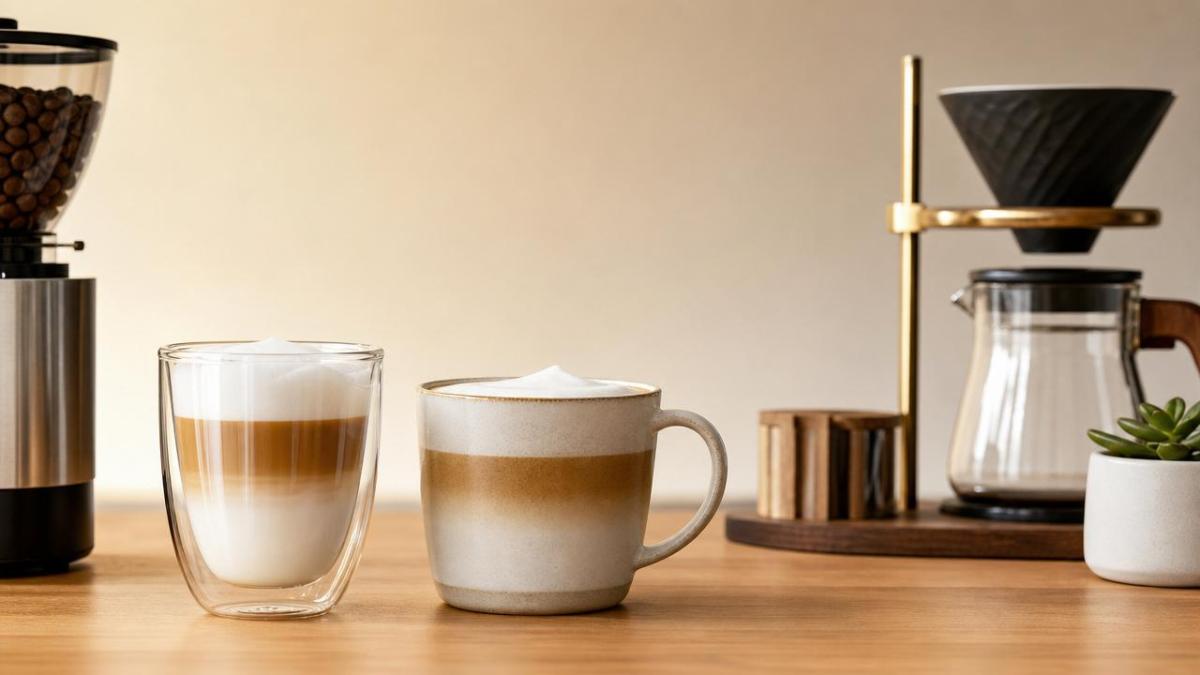
A glass latte mug is usually made from tempered or borosilicate glass. Its main advantage is transparency. It shows espresso layers, milk texture, foam height, and latte art structure.
A ceramic mug is opaque and thicker. It tends to prioritize heat retention, hand comfort, and a more traditional drinking feel over visual display.
The better option depends on what matters most in actual use. If the cup needs to support presentation, glass often leads. If it must support routine comfort, ceramic often wins.
What users usually notice first
- Glass makes layered drinks look premium and more photogenic.
- Ceramic feels warmer in the hand and more familiar.
- Glass can appear lighter and cleaner in minimalist interiors.
- Ceramic often feels sturdier during repeated daily use.
Performance in cafes and home kitchens
In commercial settings, drinkware is part of workflow. Staff need cups that are easy to stack, wash, replace, and pair with machines, trays, and storage systems.
In home kitchens, convenience matters too, but aesthetics often carry more weight. One good glass latte mug can elevate a morning coffee ritual in a way a standard mug may not.
The table below captures the most practical differences.
Heat, durability, and daily handling
Heat retention is often the deciding factor for daily use. Ceramic usually keeps a latte warm longer, especially in cooler environments or slower drinking situations.
A glass latte mug can still perform well, particularly when made from double-wall borosilicate glass. That design improves insulation and keeps the outer surface more comfortable.
Durability requires a more careful view. Neither material is unbreakable. The difference is how each behaves under repeated service conditions.
Ceramic tends to handle minor knocks with more confidence, though it can chip at the rim or handle. Glass is more vulnerable to visible cracking, but quality tempered glass can still be reliable.
In practical terms, high-turnover counters often lean ceramic. Slower, presentation-led beverage service often finds the glass latte mug worth the extra care.
Points worth checking before choosing
- Wall thickness and whether the glass is single or double walled.
- Handle size and grip comfort when the mug is full.
- Dishwasher and microwave compatibility.
- Stackability, storage footprint, and replacement availability.
- Consistency across a full set if visual presentation matters.
Presentation value and customer perception
For lattes, the drink is part of the visual story. Espresso color, milk layering, and foam structure are easier to appreciate in a glass latte mug.
This is especially relevant in cafés where beverage photography, counter display, and menu styling influence purchasing decisions. A well-chosen mug can support brand identity without changing the recipe.
Ceramic sends a different message. It suggests warmth, comfort, and a more relaxed pace. That can be ideal for breakfast service, all-day coffee, or home settings centered on routine and ease.
So the comparison is not just about material. It is also about what kind of coffee moment the cup is expected to create.
Where each option fits best
The strongest choice often depends on the setting rather than the drink alone. The same latte may benefit from different mugs in different environments.
A glass latte mug works well when
- Layered beverages are part of the menu identity.
- Open shelving or display service supports visual merchandising.
- Minimalist or contemporary interiors shape the overall experience.
- Home coffee routines emphasize presentation and enjoyment.
Ceramic is often better when
- The mug will be used heavily across the day.
- Longer heat retention matters more than drink visibility.
- Service speed and easy handling are top priorities.
- The setting favors a traditional, cozy table feel.
How this connects to broader kitchen equipment choices
In the wider kitchen equipment industry, even small serving items are judged more carefully than before. Buyers now look at lifecycle value, cleaning efficiency, safety, and compatibility with modern service systems.
That shift mirrors larger trends across restaurants, hotels, and household kitchens. Equipment is expected to do more while wasting less space, energy, and replacement cost.
A glass latte mug fits this landscape when it improves beverage presentation and supports premium positioning. Ceramic fits when consistency, insulation, and operational ease offer better long-term value.
Neither choice is universally better. The better choice is the one that matches the service model, maintenance routine, and visual goals of the kitchen.
A practical way to make the final decision
Start by ranking the factors that matter most: appearance, heat retention, break risk, cleaning visibility, and replacement frequency. This quickly reveals whether glass or ceramic deserves priority.
If the drink itself needs to be seen, a glass latte mug usually makes more sense. If comfort and heat stability matter more, ceramic often proves more satisfying over time.
It also helps to test one or two sizes before standardizing a full set. In many cases, the best answer is not either-or. Glass can serve signature lattes, while ceramic handles everyday coffee service.
That balanced approach reflects how modern kitchens increasingly operate: choosing tools by use case, not by habit alone. A careful comparison now makes future purchasing decisions easier, smarter, and more consistent.
Popular Tags
Kitchen Industry Research Team
Dedicated to analyzing emerging trends and technological shifts in the global hospitality and foodservice infrastructure sector.
Industry Insights
Join 15,000+ industry professionals. Get the latest market trends and tech news delivered weekly.
No spam. Unsubscribe anytime.

Contact With us
Contact:
Anne Yin (Ceramics Dinnerware/Glassware)
Lucky Zhai(Flatware)