
Commercial Restaurant Supplies Checklist: What New Restaurants Need First
Launching a new restaurant is exciting, but the first purchasing round usually decides how smooth the next two years will feel. The right commercial restaurant supplies support speed, food safety, labor efficiency, and daily consistency.
That is why early buying should focus on core function, not just catalog variety. A smart setup balances immediate opening needs with long-term operating cost, maintenance demands, and room for future expansion.
In today’s kitchen equipment market, automation, digital controls, and energy-saving designs are no longer optional extras. They are increasingly practical ways to reduce waste, improve output, and protect margins.
Start with the equipment that keeps service moving
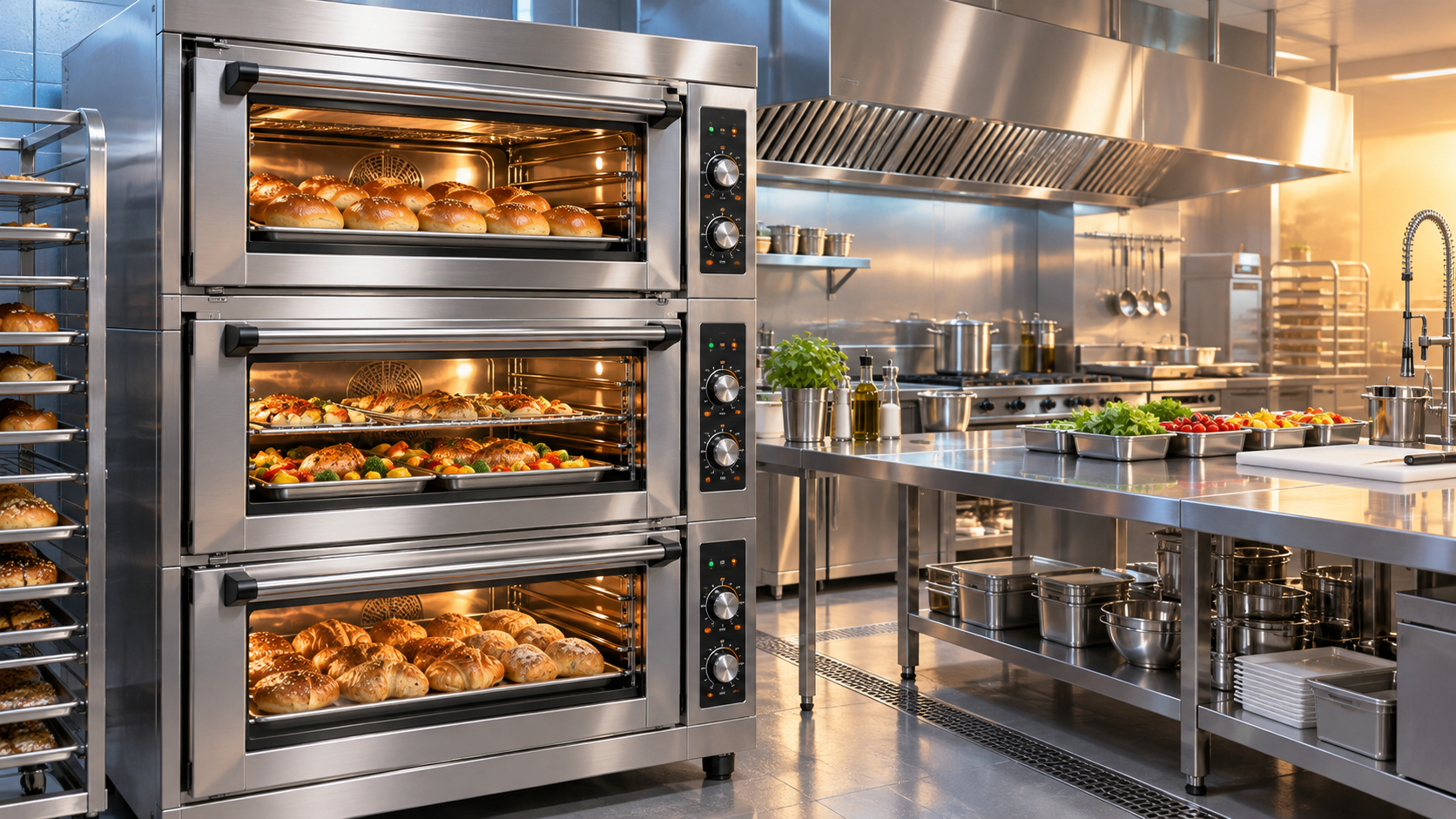
Before choosing smaller tools, lock in the equipment that directly controls production flow. These commercial restaurant supplies usually determine layout, utility requirements, and staffing efficiency.
[Image 01: Core commercial restaurant supplies for a new restaurant kitchen layout]
- Cooking line equipment should match the menu first. Choose ranges, fryers, ovens, or griddles based on peak-hour output, recovery speed, and available gas or electric infrastructure.
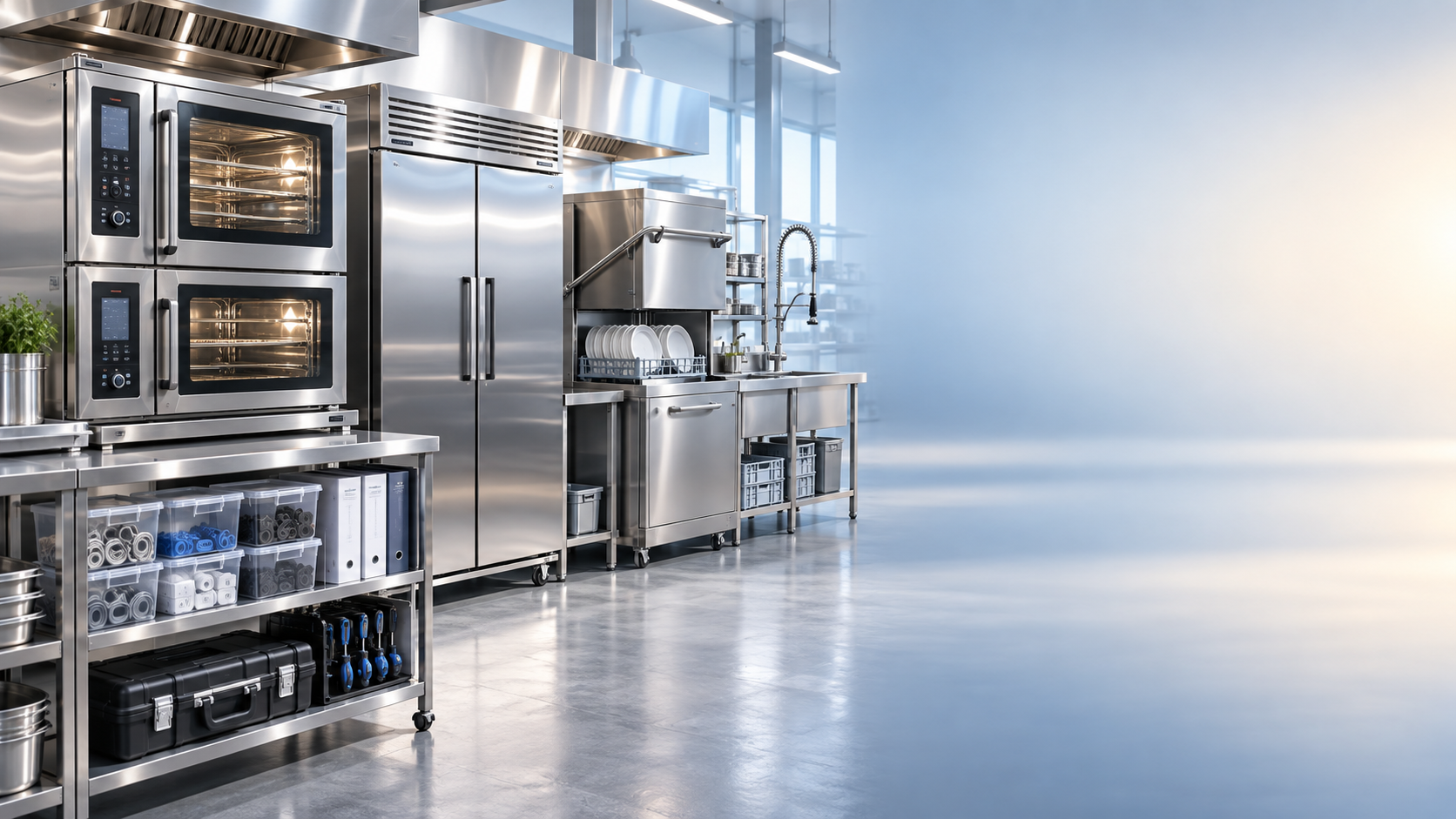
- Refrigeration comes next because storage failures create immediate operational risk. Reach-in units, prep tables, and freezers should support line workflow, temperature stability, and easy cleaning access.
- Ventilation and fire suppression often get delayed in planning. They should be confirmed early because hood size, airflow, and code compliance affect equipment selection and opening timelines.
- Dishwashing equipment protects labor hours and sanitation standards. A properly sized dishwasher, sink setup, and drying area prevent bottlenecks that quietly slow both kitchen and front-of-house turnover.
- Food prep equipment saves more labor than many first-time buyers expect. Mixers, slicers, processors, and prep counters should be selected around actual prep volume, not idealized future demand.
- Cold and dry storage shelving must be included from day one. Organized storage reduces spoilage, simplifies stock counts, and makes every other commercial restaurant supplies purchase easier to manage.
A common mistake is overspending on showpiece appliances while undersizing refrigeration or warewashing. That looks fine on opening day, but it creates hidden labor costs almost immediately.
The supplies that support daily prep, safety, and consistency
Once major equipment is covered, the next layer of commercial restaurant supplies should protect product quality and keep the kitchen predictable during rush periods.
- Prep tables, cutting boards, food pans, and ingredient bins should reflect station workflow. Standardized sizing improves speed, reduces clutter, and makes replacement purchasing much simpler later.
- Knives, thermometers, scales, timers, and measuring tools are small purchases with big impact. Accuracy here protects portion control, food safety, and recipe consistency across shifts.
- Holding cabinets, heat lamps, and insulated containers become essential when service volume rises. They help protect texture and temperature without forcing the line to recook items.
- Storage containers with clear labels and date systems reduce waste fast. This is one of the lowest-cost commercial restaurant supplies decisions with one of the best operational returns.
- Cleaning chemicals, sanitizer systems, mops, brushes, and disposable gloves should be purchased together. Splitting these orders often leads to missed items and compliance problems before opening.
- Waste bins, grease handling tools, and liner supplies deserve more attention. Poor waste flow creates odors, safety hazards, and extra cleaning time that quietly drains productivity.
Why smaller items deserve early budget attention
Many openings stay on schedule with the big equipment installed, then struggle because the kitchen lacks enough pans, racks, utensils, or storage lids. The service line feels busy, but not efficient.
This is where practical purchasing matters. Instead of ordering broad assortments, buy according to station count, expected turns, and cleaning rotation. That keeps the initial investment lean and usable.
Match commercial restaurant supplies to your operating model
Not every restaurant needs the same equipment mix. The most efficient commercial restaurant supplies plan depends on menu complexity, service style, and how much prep is done in-house.
Quick-service operations
Fast output matters most here. High-recovery fryers, compact prep stations, undercounter refrigeration, and easy-clean surfaces usually deliver better value than highly customized specialty equipment.
Look closely at holding capacity and packaging flow. If delivery and takeaway are important, support tools like sealing equipment and organized pickup shelving become just as critical as cooking appliances.
Full-service restaurants
These kitchens often need more flexibility. Multi-function ovens, broader cold storage, and stronger plating support can help manage menu variation without overloading labor during service peaks.
Here, one overlooked issue is transition space. Extra landing tables, pass shelves, and hot holding support prevent traffic jams between prep, cook, and service areas.
Centralized prep or multi-unit growth
If expansion is part of the plan, choose commercial restaurant supplies with standard dimensions, stronger durability, and easier parts access. That simplifies scaling and training across future locations.
This is also where smart kitchen technology starts making clear sense. Digital temperature logs, programmable cooking systems, and energy monitoring can reduce inconsistency across sites.
Where costs rise faster than expected
The purchase price is only part of the decision. A cheaper item can become more expensive if it wastes electricity, breaks often, or slows staff every single day.
Global kitchen equipment supply has improved in variety, especially from major production hubs like China, Germany, Italy, and Japan. Still, consistency in after-sales service matters just as much as unit price.
- Do not compare commercial restaurant supplies by price alone. Include freight, installation, utility upgrades, maintenance frequency, and expected service life before making a final decision.
- Avoid buying oversized equipment just for future growth. Underused capacity increases energy costs, occupies valuable floor space, and can make cleaning routines harder than necessary.
- Check replacement part lead times before ordering. A lower upfront price loses value quickly if a minor component failure shuts down production for several days.
- Review warranties in practical terms, not marketing terms. Coverage for labor, travel, wear components, and response time often makes a bigger difference than warranty length.
A practical order of purchase before opening
The easiest way to control early spending is to buy in sequence. That reduces duplicate orders and helps confirm that every supply supports the final kitchen flow.
- Confirm menu, service style, and projected daily volume before ordering any commercial restaurant supplies. Equipment choices should follow production needs, not showroom appeal.
- Lock in utilities, ventilation, drainage, and code requirements next. These limits shape which cooking, refrigeration, and warewashing units will actually fit and function properly.
- Purchase heavy equipment first, then map prep and storage around it. This prevents awkward layouts and reduces the risk of reordering smaller support items later.
- Standardize pans, shelves, containers, and racks wherever possible. Shared sizing makes cleaning, storage, staff training, and future replenishment much easier to manage.
- Finish with consumables, sanitation stock, and backup smallwares. These final commercial restaurant supplies keep opening week stable when usage is still hard to predict.
A well-planned purchase list should feel tight, not crowded. If an item does not improve production, food safety, storage, or cleaning, it probably does not belong in the first order.
Make the first round of buying easier to manage
The best commercial restaurant supplies plan is not the biggest one. It is the one that helps the kitchen open cleanly, run consistently, and scale without expensive corrections.
Start with production-critical equipment, support it with practical prep and sanitation tools, and evaluate every purchase through labor, safety, energy use, and replacement risk. That approach usually leads to better cost control from day one.
If the next step is supplier comparison, build a short list using three filters: fit for the menu, lifetime operating cost, and service reliability. That simple review process keeps commercial restaurant supplies decisions grounded and easier to defend.
Popular Tags
Kitchen Industry Research Team
Dedicated to analyzing emerging trends and technological shifts in the global hospitality and foodservice infrastructure sector.
Industry Insights
Join 15,000+ industry professionals. Get the latest market trends and tech news delivered weekly.
No spam. Unsubscribe anytime.
Hot Articles
 How to Size a Commercial Oven for Peak Production Without Wasting Energy
- How to Evaluate Foodservice Equipment Suppliers for Reliability, Service, and Total Cost
- How to Choose a Cutlery Set for Restaurants: Material, Durability, and Cost
- How to Evaluate Restaurant Supplies Distributors for Reliable Multi-Location Delivery
Contact With us
Contact:
Anne Yin (Ceramics Dinnerware/Glassware)
Lucky Zhai(Flatware)