
Planetary Mixer Machine Buying Guide: Capacity, Speed, and Bowl Size Explained
A planetary mixer machine sits at the center of many modern kitchen workflows, from bakery prep to sauce production and ingredient blending. For teams comparing equipment seriously, the decision is rarely about headline power alone. Capacity, speed, and bowl size shape batch consistency, labor rhythm, sanitation effort, and the ability to support future production without overspending on oversized equipment.
Why this equipment matters more now
In the wider kitchen equipment industry, expectations have changed. Restaurants, hotels, central kitchens, and food processors need stable output, better food safety control, and smarter use of energy and floor space.
That is why the planetary mixer machine attracts close attention during specification review. It is no longer just a mixing tool. It is part of a production system that must match throughput, cleaning routines, operator habits, and product quality targets.
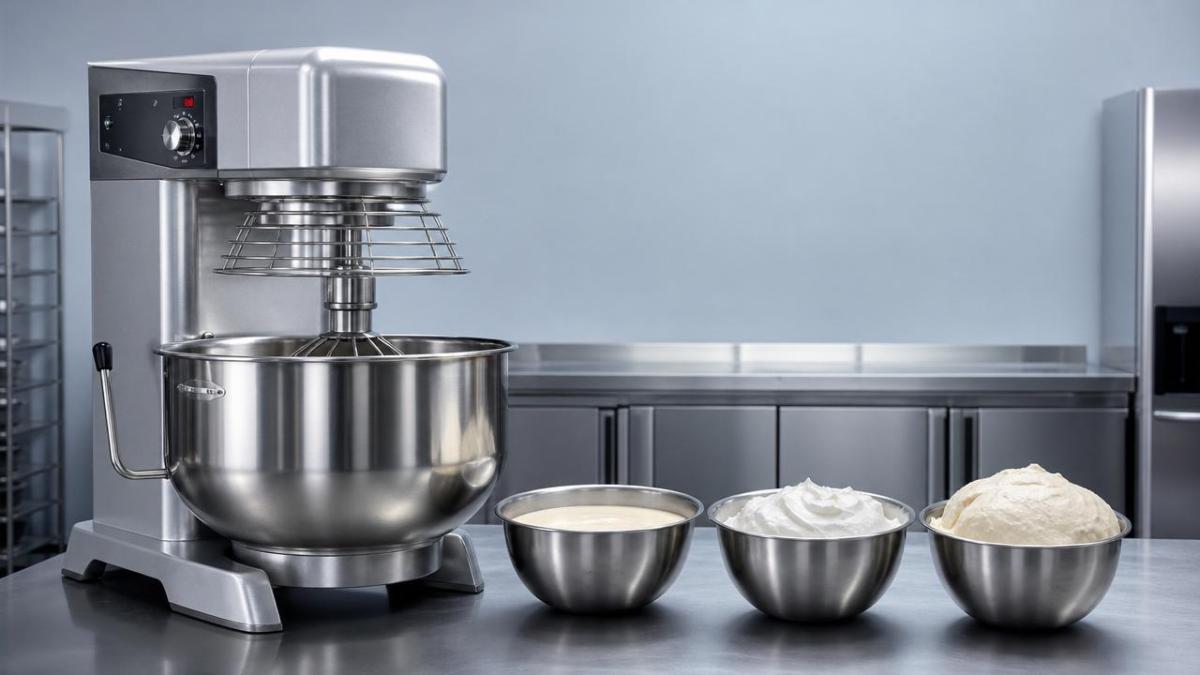
When global buyers compare equipment from major manufacturing regions, the conversation increasingly includes automation readiness, durability, and lifecycle efficiency. A mixer that performs well in a test batch but fails under repetitive daily loads can quickly become a weak point.
What a planetary mixer machine actually does
The name comes from the movement of the agitator. It rotates on its own axis while traveling around the bowl, similar to a planetary motion. This pattern helps cover more of the bowl and supports even mixing.
In practical terms, a planetary mixer machine is used for doughs, creams, batters, mashed fillings, whipped products, and many semi-viscous food materials. The same machine may serve very different recipes, depending on the tool attachment and speed range.
That flexibility is a strength, but it also creates selection risk. A machine suited for light bakery work may struggle with dense dough or continuous operation. Reading the specification sheet without understanding the process context can lead to the wrong conclusion.
Capacity is about usable output, not just tank volume
Capacity is often the first figure people compare, yet it is also one of the most misunderstood. Rated capacity does not always equal effective production capacity. Product density, hydration, viscosity, and mixing time all affect real output.
A planetary mixer machine with a larger nominal rating may not deliver better results if the batch is too small for the agitator geometry. The material may not contact the tool efficiently, causing uneven incorporation or longer processing time.
On the other hand, operating too close to the upper limit can overload the drive system, reduce mixing quality, and increase wear. For heavier dough applications, the safe working load is often lower than the bowl’s headline volume suggests.
Questions behind the capacity number
- What is the minimum and maximum batch size for each recipe?
- How many batches are required per shift?
- Will the load be light whipping, medium batter, or heavy dough?
- Does the process require short bursts or long continuous runs?
- Is future output expansion likely within two to three years?
Simple volume comparison does not answer these questions. A more reliable method is to translate production demand into kilograms per batch, batches per hour, and expected recipe variation.
Speed affects texture, control, and repeatability
Speed is not just a convenience feature. It changes how ingredients hydrate, emulsify, aerate, and develop structure. In many applications, the wrong speed profile causes more quality problems than insufficient motor power.
Low speed is typically used for initial incorporation and heavier materials. Medium speed often supports general blending. Higher speed is more useful for whipping, aeration, and finishing stages where texture matters.
A planetary mixer machine with multiple stable speeds allows tighter control over process consistency. That matters when the same product must be reproduced across shifts, sites, or export-oriented production lines.
What to watch in speed evaluation
Where possible, compare not only maximum RPM, but also performance at real load. Empty-bowl speed data can look impressive while offering little insight into actual production behavior.
Bowl size changes workflow more than expected
Bowl size seems straightforward, yet it influences much more than batch volume. It affects ingredient loading, splash control, transfer steps, cleaning time, and whether the machine fits existing benches or mobile stations.
A larger bowl can reduce batch frequency, but it may also increase handling difficulty. In tight production areas, lifting, scraping, and washing become more demanding if bowl dimensions are poorly matched to the workflow.
For operations with multiple recipes each day, bowl interchangeability can be as important as bowl volume. Fast swap capability helps reduce downtime between allergen-sensitive or flavor-sensitive batches.
Bowl size should be checked against
- Available floor space and access around the machine
- Height limits under shelves or ventilation structures
- Cleaning sink dimensions and wash procedures
- Need for spare bowls during continuous production
- Manual handling safety during bowl removal and transfer
Matching the mixer to common operating scenarios
The best planetary mixer machine for a hotel pastry section may be a poor fit for a central kitchen or a food processing room. Selection improves when the machine is tied to the production scenario rather than generic capacity bands.
This scenario view also aligns with broader industry trends. As smart kitchen systems and automated production become more common, each machine is expected to fit a connected and measurable workflow, not operate in isolation.
Specification details that deserve closer review
Capacity, speed, and bowl size are core variables, but they do not tell the full story. Several supporting details often determine whether a planetary mixer machine performs reliably over time.
Important secondary checks
- Motor and transmission design for sustained load, not only peak load
- Food-contact material quality and ease of sanitation
- Guarding, interlocks, and emergency stop arrangement
- Attachment compatibility for whisk, beater, and dough hook tasks
- Noise, vibration, and stability during dense product mixing
- Availability of replacement parts and service support across regions
In international sourcing, after-sales support matters more than many buyers expect. A competitively priced unit can become expensive if spare bowls, agitators, or drive components are difficult to obtain.
How to build a sound comparison process
A useful comparison starts with recipes and operations, not catalog pages. List the actual products, batch weights, target textures, shift hours, and cleaning constraints. Then map those needs to machine capability.
It also helps to separate essential requirements from preferred features. For one operation, bowl-lift stability may be critical. For another, removable accessories and washdown efficiency may matter more than top speed.
When evaluating a planetary mixer machine, ask for application-specific test evidence. A proof run using similar material is usually more informative than general promotional claims or ideal-condition performance figures.
A practical review sequence
- Define real batch range and product types
- Check usable capacity for each recipe category
- Confirm speed options under expected load
- Review bowl handling, cleaning, and spare availability
- Compare safety, service access, and operating cost
- Run a structured trial before final approval
A balanced next step
Choosing a planetary mixer machine becomes easier when the specification is translated into production reality. Capacity should reflect usable batch output. Speed should support product quality. Bowl size should fit both workflow and sanitation routines.
In a kitchen equipment market moving toward smarter, more efficient systems, the better choice is usually the one that performs predictably inside the full process, not the one with the biggest numbers. A short internal checklist, a recipe-based trial, and a lifecycle comparison often reveal the strongest option.
From here, the most practical move is to align expected output, recipe mix, cleaning requirements, and service conditions in one evaluation sheet. That creates a clearer basis for comparing each planetary mixer machine on evidence rather than assumption.
Popular Tags
Kitchen Industry Research Team
Dedicated to analyzing emerging trends and technological shifts in the global hospitality and foodservice infrastructure sector.
Industry Insights
Join 15,000+ industry professionals. Get the latest market trends and tech news delivered weekly.
No spam. Unsubscribe anytime.

Contact With us
Contact:
Anne Yin (Ceramics Dinnerware/Glassware)
Lucky Zhai(Flatware)