
What matters most in restaurant kitchen equipment wholesale?
In restaurant kitchen equipment wholesale, what matters most is finding the right balance between quality, efficiency, compliance, and long-term value. For procurement professionals, choosing reliable suppliers and equipment that meets operational demands can directly impact kitchen performance, food safety, and cost control. This article explores the key factors that help buyers make smarter wholesale purchasing decisions.
For buyers managing restaurant projects, chain expansion, hotel kitchens, or central food preparation sites, wholesale purchasing is rarely about unit price alone. A lower upfront quote can create higher costs later through downtime, delayed installation, poor energy performance, or non-compliant materials.
The restaurant kitchen equipment wholesale market now includes traditional stainless steel workstations, refrigerated storage, cooking lines, ventilation systems, dishwashing solutions, and increasingly smart, automated, and energy-efficient equipment. That wider choice is valuable, but it also makes supplier evaluation more complex.
Procurement teams therefore need a structured framework. The strongest purchasing decisions usually combine 4 core dimensions: operational fit, supplier reliability, lifecycle cost, and compliance readiness. When these elements are reviewed together, sourcing becomes less risky and more scalable.
Key purchasing priorities in restaurant kitchen equipment wholesale
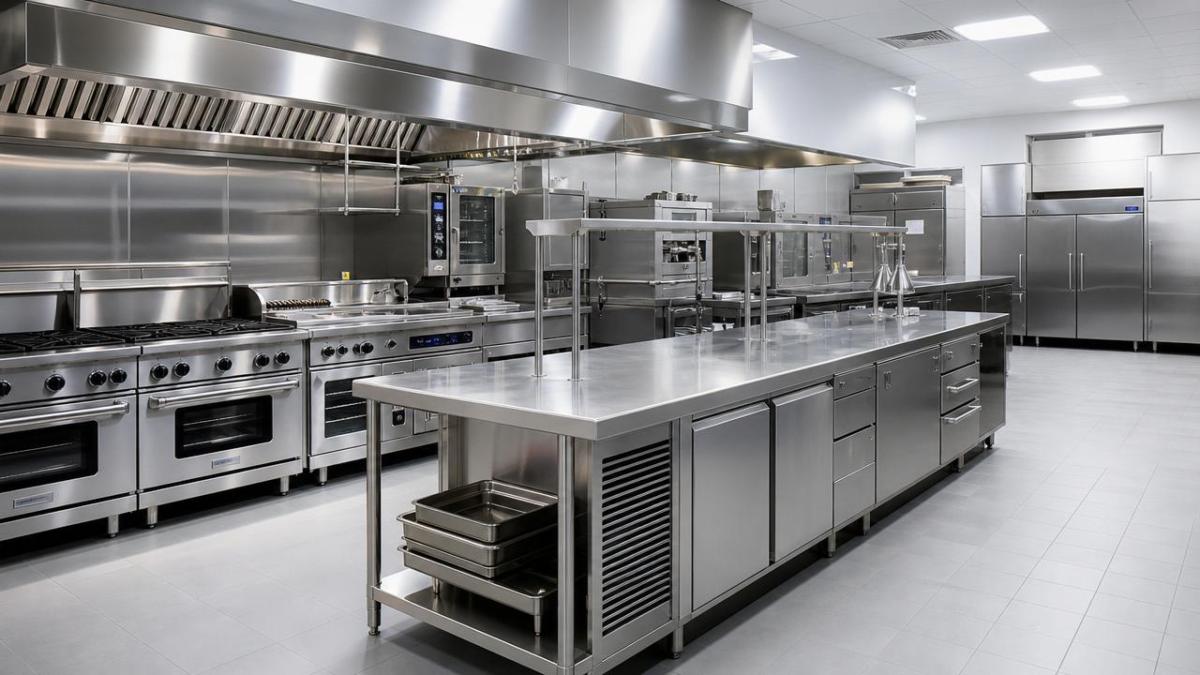
In practical terms, restaurant kitchen equipment wholesale decisions should start with workflow, not catalog size. Equipment must match menu type, output volume, available space, utility conditions, and labor model. A fast-casual kitchen serving 300 meals per day has very different needs from a hotel banquet kitchen producing 1,000 covers.
Buyers should also look beyond headline specifications. A fryer rated at 12kW, for example, may still underperform if recovery time is slow or cleaning access is poor. In wholesale projects, details such as stainless steel grade, insulation thickness, compressor quality, and spare parts availability often matter more than promotional claims.
Operational fit comes first
Before requesting quotations, procurement teams should define 5 basic project inputs: daily output, peak-hour demand, menu process, installation footprint, and utility supply. This reduces mismatched proposals and helps suppliers recommend equipment with realistic capacities rather than oversized or undersized configurations.
Questions that should be answered before ordering
- How many meals, trays, or batches will the kitchen handle per hour and per day?
- What gas, electric, water, and drainage conditions are available on site?
- What are the exact dimensions of doors, corridors, lifts, and installation areas?
- Will the kitchen operate 8 hours, 12 hours, or 16 hours per day?
- Does the project require standard equipment or custom fabrication?
These questions may seem basic, but they prevent common wholesale errors. In many projects, a 20mm dimensional mismatch, insufficient exhaust capacity, or wrong voltage specification can delay commissioning by 7–15 days and create avoidable rework costs.
Quality should be measured in usable details
For restaurant kitchen equipment wholesale, quality should be verified through materials, construction, safety, and serviceability. Commercial kitchens are high-heat, high-moisture environments, so durability depends on design details that buyers can inspect and compare systematically.
The table below outlines common checkpoints used in B2B purchasing reviews across cooking, refrigeration, and preparation equipment.
A strong wholesale supplier should be able to answer these points clearly and provide specification sheets, drawings, material details, and recommended maintenance intervals. If a vendor cannot explain these basics, the purchase risk rises quickly.
Compliance is not optional
Procurement personnel often focus on cost and lead time, but compliance failures can be more expensive than either. Restaurant equipment must align with local electrical, gas, food-contact, sanitation, and fire-safety requirements. Even small nonconformities can delay opening dates or trigger replacement costs after delivery.
In cross-border restaurant kitchen equipment wholesale, it is wise to confirm 3 things early: destination standards, required documentation, and local installation responsibilities. Clarifying these items before mass production or shipment can save 2–4 weeks in approval and handover time.
How to evaluate suppliers for long-term wholesale success
A supplier is not just a manufacturer or trader. In restaurant kitchen equipment wholesale, the supplier also influences project timing, technical coordination, spare parts continuity, and after-sales efficiency. A low-cost source with weak process control can create repeat procurement problems across multiple sites.
Procurement teams should therefore evaluate suppliers at both transaction level and partnership level. The first level covers price, quality, and delivery. The second covers engineering support, customization ability, communication speed, documentation quality, and post-installation response.
Core supplier assessment criteria
In most B2B buying cycles, supplier selection can be simplified into 6 review areas. This structure works well for independent restaurants, hotel groups, cloud kitchens, and foodservice contractors sourcing equipment in batches of 10, 50, or 100 units.
- Technical accuracy of quotations and drawings
- Lead time reliability across standard and custom items
- Ability to support spare parts for 3–5 years
- Documentation completeness for shipping and installation
- Response speed for service issues within 24–72 hours
- Consistency across repeat orders and multi-site rollouts
These criteria matter because wholesale procurement is usually repeatable. One successful trial order may turn into a regional rollout, while one poor delivery may affect an entire chain opening schedule. Consistency is therefore as important as the first shipment itself.
Lead times, MOQ, and project coordination
In restaurant kitchen equipment wholesale, lead time planning should separate stock items from engineered products. Standard preparation tables or shelving may ship in 7–20 days, while custom cooking lines, exhaust hoods, or integrated counters may require 25–45 days depending on drawings and order volume.
Buyers should also confirm minimum order quantity, packaging standards, inspection steps, and partial shipment options. For rollout projects, staggered delivery can be more practical than one bulk shipment, especially if 3 or 4 sites open in different phases over a 60-day period.
The table below helps procurement teams compare suppliers beyond unit price.
When comparing offers, this broader view often changes the result. A supplier with a slightly higher price but stronger delivery control and service response may offer better total value over 12–36 months of operation.
Why communication quality matters
In international restaurant kitchen equipment wholesale, communication mistakes are a major hidden cost. Incorrect plug types, left-hand versus right-hand configurations, missing accessories, or unclear installation scope can all create delays. Procurement teams should insist on written confirmation for every technical revision.
A dependable supplier should be able to provide revised drawings, utility schedules, and packing details in a structured format. Even a simple three-step document flow—quotation, approval drawing, final production confirmation—can significantly reduce order errors.
Balancing price, efficiency, and total cost of ownership
Price always matters, but restaurant kitchen equipment wholesale should be judged on total cost of ownership rather than invoice value alone. Equipment cost is only one part of the budget. Energy use, cleaning time, maintenance frequency, repair parts, and equipment lifespan can easily outweigh a 5%–10% purchase price difference.
For example, a refrigeration unit with better insulation and more stable temperature control may reduce energy consumption and product loss over time. Likewise, a cooking line designed for faster cleaning can save labor every day, which becomes meaningful across 300 operating days per year.
Where hidden costs usually appear
- High utility consumption from outdated burners, motors, or compressors
- Frequent service calls due to low-grade components or weak assembly quality
- Longer staff cleaning time because of poor hygiene design
- Inventory losses caused by unstable refrigeration temperatures
- Installation modifications when dimensions or power loads are inaccurate
Buyers should ask suppliers for typical operating ranges, cleaning requirements, and recommended maintenance intervals. Even when exact cost forecasts are not available, these practical indicators help estimate whether a lower quote is genuinely economical.
Energy efficiency and smart controls are becoming more relevant
As foodservice operations move toward automation and better resource control, energy-efficient and smart-enabled equipment is becoming more important in restaurant kitchen equipment wholesale. This is especially true for chains, central kitchens, and institutional catering operations running equipment for 10–16 hours each day.
Features such as programmable cooking cycles, temperature alerts, digital diagnostics, and automatic shutdown modes can improve consistency and reduce operator error. Not every project needs advanced connectivity, but in multi-unit operations these functions can support better maintenance planning and performance monitoring.
When smart features justify the investment
Digital functions tend to deliver better returns when the operation has at least one of the following characteristics: high staff turnover, multiple outlets, standardized recipes, strict HACCP-style process control, or remote management requirements. In these cases, even modest automation can reduce errors and training time.
Implementation, risk control, and buying recommendations
A good sourcing decision can still fail if implementation is weak. In restaurant kitchen equipment wholesale, handover risk often appears between order confirmation and final commissioning. Procurement teams should manage this phase carefully with clear milestones and shared accountability.
A practical 5-step procurement workflow
- Define kitchen process, utility conditions, and equipment list
- Request detailed quotations with drawings and technical data
- Review compliance, dimensions, and installation interfaces
- Approve pre-production details and shipping schedule
- Inspect delivery, installation, testing, and staff handover
This sequence sounds straightforward, but skipping one step often creates downstream costs. For example, failing to verify drain locations or exhaust connections can force site changes after arrival, while incomplete handover documents can slow operator training during opening week.
Common mistakes buyers should avoid
One common mistake is comparing quotations that do not cover the same scope. Some suppliers price the core machine only, while others include shelves, faucets, wheels, guards, or starter kits. Procurement teams should normalize all quotations so that at least 8–10 commercial and technical points are aligned.
Another mistake is treating all equipment categories the same. Cooking, refrigeration, stainless fabrication, ventilation, and warewashing each have different risk profiles. The supplier that is strongest in one category may not be equally strong in another, so category-based sourcing can improve outcomes.
Final checklist before confirming a wholesale order
- Confirm model list, quantities, dimensions, and utility requirements
- Verify included accessories and optional add-ons
- Check production lead time and shipping readiness date
- Review warranty terms and spare parts support period
- Request installation guidance and operating manuals
- Clarify inspection method before dispatch or before acceptance
For procurement professionals, this checklist supports more predictable outcomes, especially when handling multiple sites or imported equipment. It also improves internal communication with chefs, project managers, contractors, and finance teams.
What matters most in restaurant kitchen equipment wholesale is not simply finding the cheapest source, but securing equipment and supplier support that fit real operating conditions. The best procurement results come from balancing quality, compliance, lead time, maintainability, and long-term cost control across the full project lifecycle.
If you are sourcing for restaurants, hotels, central kitchens, or foodservice expansion projects, a structured purchasing approach can reduce risk and improve performance from day one. Contact us now to discuss your equipment list, get a tailored wholesale solution, and learn more about practical options for reliable restaurant kitchen equipment wholesale.
Popular Tags
Kitchen Industry Research Team
Dedicated to analyzing emerging trends and technological shifts in the global hospitality and foodservice infrastructure sector.
Industry Insights
Join 15,000+ industry professionals. Get the latest market trends and tech news delivered weekly.
No spam. Unsubscribe anytime.
Hot Articles
Contact With us
Contact:
Anne Yin (Ceramics Dinnerware/Glassware)
Lucky Zhai(Flatware)