
How to compare restaurant kitchen equipment suppliers wisely
Choosing among restaurant kitchen equipment suppliers is more than comparing prices. For procurement professionals, the right supplier can improve kitchen efficiency, product quality, compliance, and long-term operating costs. As the industry shifts toward smart, automated, and energy-efficient solutions, knowing how to evaluate suppliers wisely is essential for making reliable purchasing decisions and supporting sustainable business growth.
Why comparing restaurant kitchen equipment suppliers is now a strategic procurement task
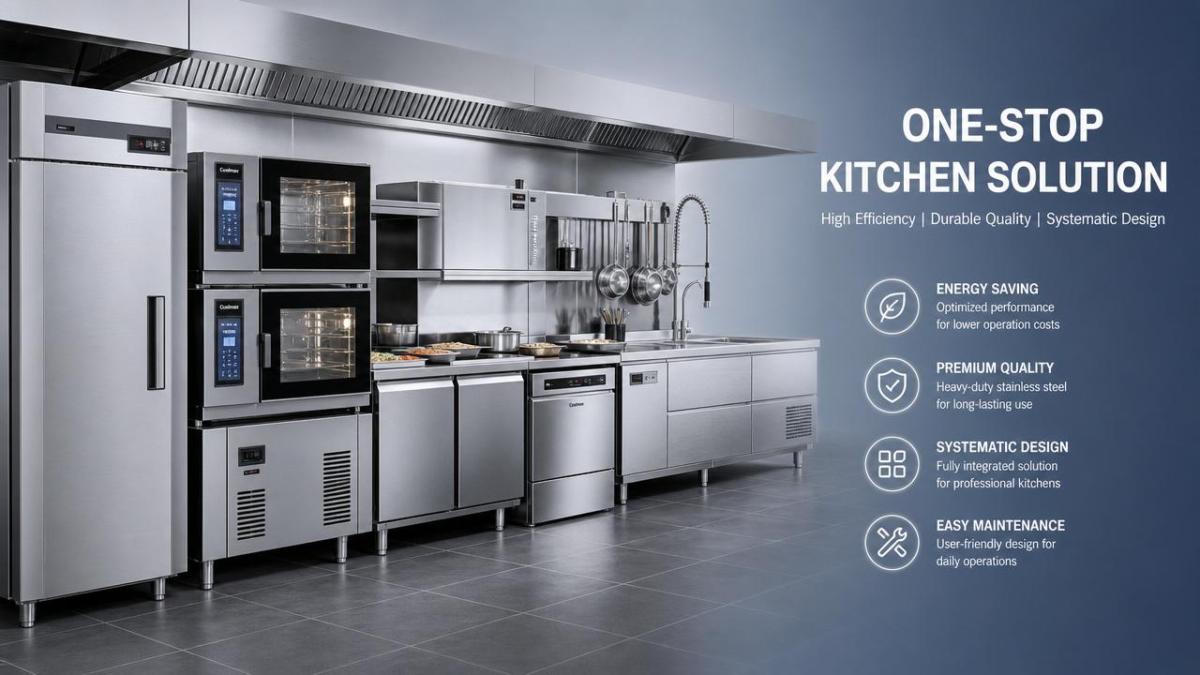
Restaurant operations no longer depend on isolated appliances. Today, cooking lines, refrigeration, ventilation, preparation stations, dishwashing systems, and digital controls work as a connected production environment. That changes how procurement teams should compare restaurant kitchen equipment suppliers.
A low upfront quote may hide higher energy use, slower service response, weak spare parts support, or limited compliance documentation. On the other hand, a supplier with stronger engineering support may reduce installation errors, improve workflow, and lower downtime over the equipment lifecycle.
Global sourcing also adds complexity. Buyers often compare manufacturers and traders from China, Germany, Italy, Japan, and other export markets. Product quality can vary, but so can technical communication, lead time reliability, and after-sales execution.
- Food safety requirements are stricter, so documentation, material quality, and hygiene-focused design matter more than before.
- Labor shortages push restaurants toward automated and easy-to-operate equipment, making usability and controls part of the supplier evaluation.
- Energy costs remain volatile, so efficient heating, refrigeration, and water use directly affect total operating cost.
- Multi-site operators need standardized equipment programs, which requires suppliers that can maintain consistency across batches and deliveries.
For procurement professionals, the best comparison method is to move from price-based buying to risk-adjusted value assessment. That means checking technical fit, compliance, operating cost, service capability, and supplier responsiveness together.
What should buyers compare first when reviewing restaurant kitchen equipment suppliers?
The first step is not the quotation sheet. It is defining the use case. A fast-casual chain, hotel banquet kitchen, central kitchen, bakery, and fine dining restaurant need different equipment priorities. If the operating model is unclear, supplier comparison becomes distorted from the start.
Core evaluation dimensions
- Product suitability: capacity, dimensions, output speed, utility requirements, and menu compatibility.
- Build quality: stainless steel grade, weld quality, insulation, seals, hinges, burners, compressors, and controls.
- Compliance readiness: electrical safety, food contact materials, hygiene design, and region-specific documentation.
- Service support: spare parts availability, troubleshooting process, remote guidance, and maintenance response time.
- Commercial terms: payment terms, warranty scope, lead time, packaging, installation support, and training.
The table below helps procurement teams structure an apples-to-apples comparison of restaurant kitchen equipment suppliers instead of relying on sales claims or incomplete specs.
This framework makes supplier comparison more objective. It also helps internal stakeholders agree on selection criteria before final negotiation, which is useful when finance, operations, and kitchen managers have different priorities.
How to compare product quality, technical performance, and operating efficiency
Many restaurant kitchen equipment suppliers present similar catalog photos, but performance differences become obvious during heavy daily use. Procurement teams should ask how the equipment behaves under load, not just what it looks like in a brochure.
Key technical questions to ask
- How quickly does the equipment recover temperature after the door opens or after batch loading?
- What is the rated output per hour under practical operating conditions rather than ideal lab conditions?
- Are controls simple for frontline staff, or do they require repeated training?
- How easy is cleaning around corners, gaskets, drainage points, and removable components?
- Does the supplier provide utility consumption data for electricity, gas, and water?
These questions are especially important as the industry moves toward intelligent cooking equipment, automated kitchen systems, and energy-efficient kitchen solutions. A unit that saves labor minutes every hour may be more valuable than a cheaper unit with more manual adjustment points.
The next table can help buyers compare restaurant kitchen equipment suppliers on technical and operational factors that directly influence total kitchen productivity.
This type of comparison is useful for ovens, fryers, refrigeration, dishwashers, preparation equipment, and food processing machines. It also creates a stronger basis for evaluating whether a supplier supports the industry trend toward smart and integrated kitchen systems.
Which supplier model fits your project: manufacturer, trading company, or integrated solution provider?
Not all restaurant kitchen equipment suppliers operate the same way. Some own factories. Some source from multiple factories. Others combine products, layout support, and project coordination. The right model depends on your project complexity, order volume, and internal technical resources.
Common supplier models
- Direct manufacturers often offer better production control and customization, but their range may be narrower.
- Trading companies can consolidate categories and simplify sourcing, but quality consistency depends on supplier management.
- Integrated project suppliers may support layout coordination, utilities planning, and installation sequencing, which helps for hotel, chain, or central kitchen projects.
For a small replacement order, a product-focused supplier may be enough. For a new restaurant opening, a renovation, or a multi-site rollout, a supplier that can coordinate several equipment categories often reduces procurement workload and project risk.
Selection clues by scenario
- Single item purchase: prioritize specification accuracy, stock status, and spare parts access.
- Full kitchen setup: prioritize workflow planning, utility matching, and coordinated delivery.
- Chain expansion: prioritize repeatability, standardized models, and after-sales process across locations.
- Export or cross-border procurement: prioritize documentation, packaging, shipping protection, and communication clarity.
How to assess cost beyond the purchase price
One of the most common procurement mistakes is comparing quotations without calculating lifecycle cost. Restaurant kitchen equipment suppliers may offer different prices because they use different components, insulation quality, compressors, burners, control systems, or packaging methods.
A better method is to compare total cost of ownership across five years or across the expected operating life of the equipment. Even a modest difference in maintenance frequency, energy use, or downtime can outweigh a lower purchase price.
Cost areas buyers should include
- Purchase price and accessories, including trays, racks, filters, or installation kits.
- Freight, customs, local delivery, and damage risk during transport.
- Installation and utility adaptation costs, such as electrical upgrades or ventilation changes.
- Energy, water, detergent, or gas consumption during normal use.
- Preventive maintenance, spare parts replacement, and emergency repair costs.
When comparing restaurant kitchen equipment suppliers, ask for a breakdown rather than a single line-item quote. Serious suppliers should be able to explain what is included, what is optional, and which operating assumptions affect long-term cost.
What compliance, safety, and documentation should procurement teams verify?
Compliance is often treated as a final checkpoint, but it should be part of early supplier screening. Different countries and projects may require different documentation. The details depend on market and equipment type, yet buyers should always verify basic product safety, food-contact suitability where relevant, and operating instructions.
Practical compliance checklist
- Electrical and gas specifications must match the destination market and local installation conditions.
- Food-contact components should use suitable materials and surfaces that support sanitation.
- User manuals should be clear enough for operators, technicians, and inspectors.
- Labeling should identify model, rating, serial traceability, and key safety information.
If your project involves hotels, institutional kitchens, central kitchens, or export markets, documentation discipline becomes even more important. It helps avoid customs delays, installation disputes, and confusion during service or warranty claims.
What mistakes do buyers make when choosing restaurant kitchen equipment suppliers?
Most procurement problems come from incomplete evaluation, not from one bad specification. The following mistakes appear frequently across restaurant, hotel, and foodservice projects.
Common purchasing mistakes
- Choosing by price alone and discovering later that spare parts are hard to source.
- Ignoring kitchen layout and utility constraints until installation day.
- Buying oversized equipment that wastes energy and floor space during normal service.
- Accepting vague lead times without checking production schedule and shipping readiness.
- Failing to involve chefs, maintenance teams, and operations managers in evaluation.
The easiest way to reduce these mistakes is to use a supplier scorecard and a pre-order checklist. That keeps discussions evidence-based and prevents late-stage surprises that affect opening dates or operating costs.
FAQ about comparing restaurant kitchen equipment suppliers
How many suppliers should a buyer compare for a serious procurement decision?
In many cases, three qualified restaurant kitchen equipment suppliers are enough for a meaningful comparison. Fewer than three may limit negotiation and benchmarking. Too many can slow the process and create confusion if specifications are not aligned across quotations.
What matters more: country of origin or supplier management?
Country of origin can indicate manufacturing strengths, but supplier management often matters more. Strong process control, clear documentation, responsive communication, and dependable after-sales support are usually better predictors of project success than origin alone.
How can buyers evaluate after-sales service before placing an order?
Ask about spare parts lead time, warranty handling steps, technical support channels, and whether troubleshooting can be done remotely. Also request a sample parts list or service workflow. Good restaurant kitchen equipment suppliers can explain these points clearly before the order is signed.
Is smart kitchen equipment always the better choice?
Not always. Smart features add value when they improve consistency, reduce labor, support diagnostics, or provide data for operations management. If the kitchen has simple workflows, high staff turnover, or limited technical support, simpler controls may sometimes be the more practical option.
Why choose us for supplier comparison, specification review, and project support
If you are comparing restaurant kitchen equipment suppliers, we can support the process with practical, procurement-focused guidance. The goal is not only to find a suitable product, but to reduce commercial and operational risk across the full buying cycle.
- We can help confirm technical parameters such as capacity, power, gas type, footprint, and utility requirements.
- We can assist with product selection based on restaurant format, service volume, menu structure, and kitchen workflow.
- We can discuss delivery cycle expectations, packaging needs, and cross-border shipping considerations.
- We can review customization options for integrated kitchen solutions, automation needs, and energy-saving priorities.
- We can align on documentation, certification expectations, sample support, and quotation details before final purchase decisions.
Contact us if you need help building a comparison checklist, narrowing supplier options, confirming specifications, or requesting a tailored quotation. A structured review early in the process can save significant time, cost, and operational disruption later.
Popular Tags
Kitchen Industry Research Team
Dedicated to analyzing emerging trends and technological shifts in the global hospitality and foodservice infrastructure sector.
Industry Insights
Join 15,000+ industry professionals. Get the latest market trends and tech news delivered weekly.
No spam. Unsubscribe anytime.
Hot Articles

Contact With us
Contact:
Anne Yin (Ceramics Dinnerware/Glassware)
Lucky Zhai(Flatware)