
How to compare a restaurant kitchen equipment distributor
Choosing a restaurant kitchen equipment distributor affects more than unit price. It shapes lead times, installation quality, warranty response, spare parts access, and future expansion. A careful comparison helps reduce sourcing risk and supports smoother kitchen operations over time.
In a market driven by automation, energy efficiency, and food safety standards, distributors are no longer simple resellers. The right partner can help align equipment selection with kitchen workflow, compliance targets, and total cost of ownership.
Why a checklist matters when comparing a restaurant kitchen equipment distributor
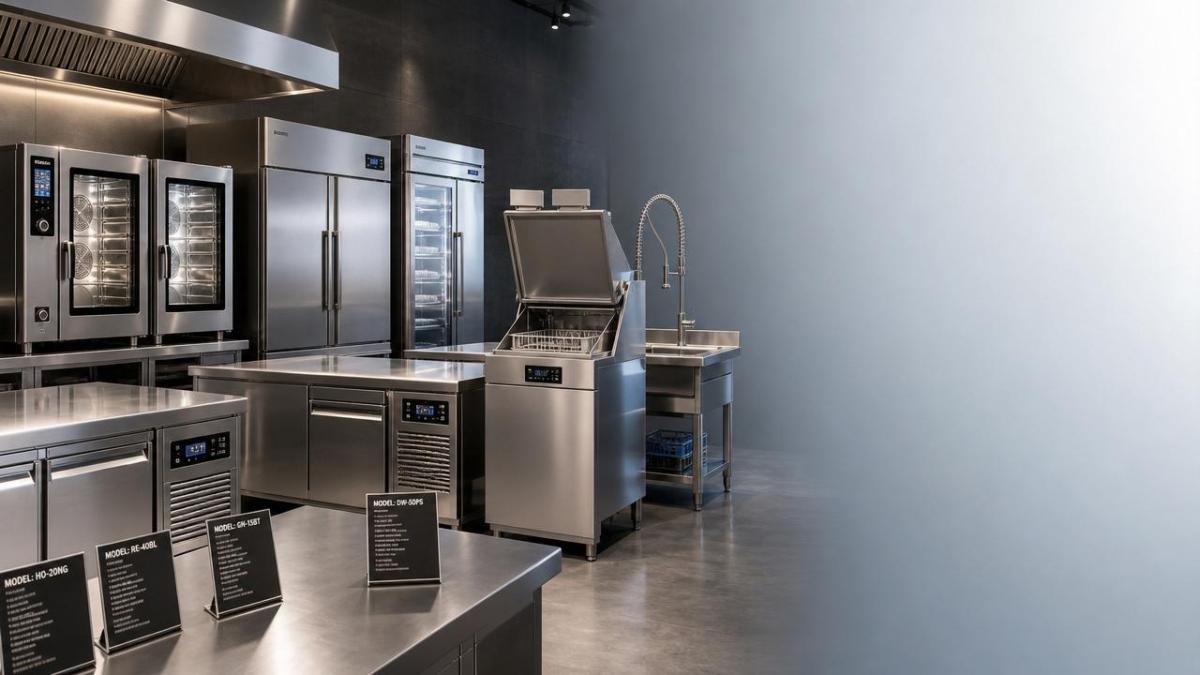
A structured checklist turns subjective impressions into measurable criteria. It also makes it easier to compare multiple offers without overlooking technical support, delivery performance, or equipment compatibility.
This approach is especially useful when sourcing commercial ovens, refrigeration, preparation systems, dishwashing lines, or integrated smart kitchen solutions from different channels.
Core checklist for evaluating a restaurant kitchen equipment distributor
- Verify business credentials, export capability, certifications, and local compliance knowledge before discussing pricing, especially for gas, electrical, ventilation, and food-contact equipment.
- Check product range depth across cooking, refrigeration, storage, prep, sanitation, and stainless solutions to confirm the distributor can support complete kitchen projects.
- Compare brand portfolio quality, including premium, mid-range, and value options, so specifications can match budget, expected output, and service life.
- Review technical documentation carefully, including power load, gas type, dimensions, drainage, ventilation, and installation requirements for each quoted model.
- Ask for project references in restaurants, hotels, central kitchens, or foodservice chains that resemble your operating scale and menu complexity.
- Measure stock availability and replenishment speed for fast-moving items, because long backorders can delay opening schedules and interrupt replacement planning.
- Confirm lead times by product category rather than by overall quote, since imported refrigeration and custom stainless units often follow different timelines.
- Evaluate quotation clarity by checking model numbers, accessories, exclusions, freight terms, installation scope, and warranty conditions line by line.
- Compare total landed cost instead of unit cost alone, including shipping, duties, commissioning, training, spare parts, and future maintenance exposure.
- Test after-sales service responsiveness by asking technical questions before purchase and noting how quickly clear, useful answers are returned.
- Inspect spare parts strategy, service network coverage, and repair turnaround time, especially for combi ovens, ice machines, refrigeration, and dishwashers.
- Assess energy efficiency claims using real specifications, annual consumption data, and operating conditions rather than relying on generic marketing language.
- Request layout assistance or equipment matching advice to ensure selected units fit workflow, utility points, staff movement, and food safety zoning.
- Review payment terms, damage claim handling, return policy, and contract flexibility to understand commercial risk before placing a larger order.
How to score distributors more objectively
Use a weighted scorecard. Assign points to price, lead time, product quality, technical support, warranty, and service coverage. This keeps the restaurant kitchen equipment distributor comparison practical and consistent.
A simple model can give 25% to technical fit, 20% to after-sales support, 20% to total cost, 15% to lead time, 10% to references, and 10% to documentation quality.
Comparison points for different sourcing scenarios
Single-site restaurant opening
For a new restaurant, delivery coordination matters as much as price. Equipment must arrive in the right sequence for utility setup, installation, inspection, and final commissioning.
A restaurant kitchen equipment distributor with layout guidance and bundled sourcing can reduce mistakes between cooking, refrigeration, and washing zones.
Multi-unit or chain expansion
Chain projects need standardization. Compare whether the distributor can maintain consistent models, specifications, and spare parts across locations and over repeated order cycles.
It is also important to check whether the distributor can support rollout schedules in several cities without service gaps or documentation inconsistencies.
Hotel, institutional, or central kitchen projects
Large projects require stronger engineering coordination. Ventilation, drainage, HACCP workflow, stainless fabrication, and utility integration become major selection factors.
In this case, the best restaurant kitchen equipment distributor is often the one with project management capability, not simply the lowest quote.
Replacement purchasing for active kitchens
When replacing failed equipment, downtime is expensive. Prioritize stock availability, swap compatibility, quick installation, and immediate service access.
Fast response is especially important for refrigeration, ice equipment, and warewashing systems that directly affect food safety and daily output.
Commonly overlooked risks when choosing a restaurant kitchen equipment distributor
Focusing only on the lowest quote
A cheaper offer may exclude accessories, commissioning, freight insurance, or installation requirements. The real cost appears later through delays, add-ons, or service problems.
Ignoring service coverage after delivery
Some distributors sell nationally but service only selected regions. Without nearby technicians or parts stock, warranty promises may not translate into usable support.
Accepting vague specifications
If model details are unclear, received equipment may not match required voltage, gas type, capacity, or dimensions. This creates immediate installation and compliance issues.
Missing lifecycle cost analysis
High-energy or difficult-to-repair equipment can cost more over time. Comparing energy use, maintenance frequency, and spare parts cost improves long-term value.
Overlooking integration with smart kitchen trends
As digital kitchen management grows, compatibility with monitoring systems, programmable controls, and automated workflows may become an important buying factor.
Practical steps to compare distributors efficiently
- Build one equipment list with exact capacities, utility requirements, and preferred brands before requesting quotations from each distributor.
- Ask every restaurant kitchen equipment distributor to quote on the same specification sheet to prevent hidden mismatches.
- Request reference contacts, warranty terms, delivery schedule, and spare parts policy in writing for easier side-by-side review.
- Schedule a technical review call to test product knowledge, communication quality, and willingness to solve installation constraints.
- Visit a showroom, completed project, or service center when possible to validate actual product condition and support capability.
- Start with a smaller order if the supplier relationship is new, especially for projects with strict deadlines or specialized equipment.
Final thoughts and next action
To compare a restaurant kitchen equipment distributor well, look beyond headline pricing. The best decision comes from balancing technical fit, delivery reliability, service strength, and long-term operating value.
Create a shortlist, use a weighted checklist, and collect written answers on specifications, support, and lead times. That process will make distributor selection clearer, faster, and far less risky.
Popular Tags
Kitchen Industry Research Team
Dedicated to analyzing emerging trends and technological shifts in the global hospitality and foodservice infrastructure sector.
Industry Insights
Join 15,000+ industry professionals. Get the latest market trends and tech news delivered weekly.
No spam. Unsubscribe anytime.
Hot Articles
Contact With us
Contact:
Anne Yin (Ceramics Dinnerware/Glassware)
Lucky Zhai(Flatware)