
How bakeries choose restaurant supplies that cut daily waste
For bakery operations, choosing restaurant supplies for bakeries affects far more than purchase cost. It shapes ingredient loss, labor flow, shelf life, sanitation, and product consistency.
A well-matched supply setup helps reduce spoilage, limit overproduction, improve storage control, and support smoother baking routines across preparation, baking, packaging, and display.
In the wider kitchen equipment industry, this topic reflects rising demand for energy-efficient tools, smarter workflows, and practical systems that lower waste without lowering output quality.
Understanding restaurant supplies for bakeries in daily operations
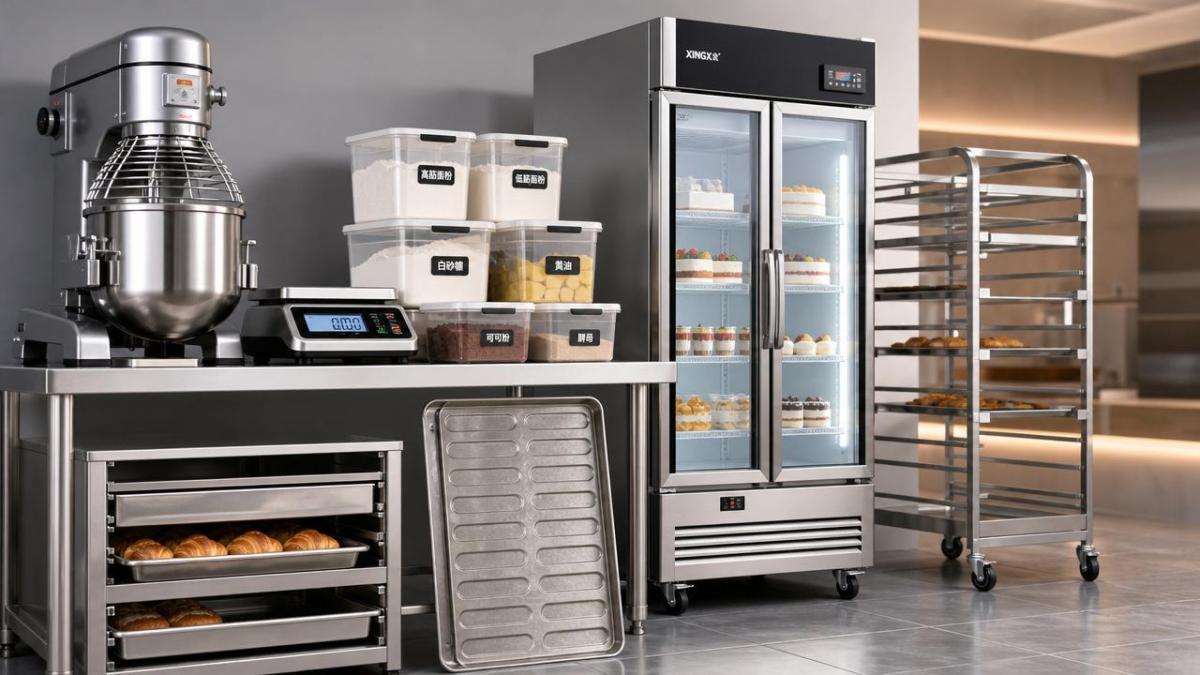
Restaurant supplies for bakeries include storage containers, racks, mixers, scales, sheet pans, proofing tools, refrigerators, display cases, packaging materials, and cleaning equipment.
These supplies support every production stage. Poor choices often create hidden waste through damaged ingredients, uneven portioning, broken workflow, excess energy use, and shortened product freshness.
The best restaurant supplies for bakeries are not always the most advanced. They are the supplies that fit product volume, menu mix, cleaning routines, and available space.
Waste in bakeries usually appears in five areas: raw ingredient spoilage, preparation errors, baking inconsistency, display losses, and packaging inefficiency. Supply decisions influence all five.
Core waste points linked to supply selection
- Incorrect container sizes lead to stale flour, sugar clumping, and ingredient contamination.
- Unreliable scales cause overportioning and recipe inconsistency.
- Low-quality pans create uneven baking and higher reject rates.
- Poor refrigeration increases cream, dairy, and dough losses.
- Weak display equipment shortens freshness and reduces sell-through.
Industry signals shaping supply decisions
The kitchen equipment sector is moving toward automation, intelligent control, and energy efficiency. Bakeries are increasingly selecting supplies that balance durability with measurable operating savings.
Food safety expectations also continue to rise. That makes material quality, cleanability, temperature control, and traceable storage systems more important than before.
Another trend is the integration of preparation, baking, holding, and display systems. Connected workflows help reduce handling errors and improve batch planning.
How the right supplies reduce bakery waste
Choosing restaurant supplies for bakeries should start with where waste happens most often. Supplies should solve repeated loss points rather than simply replace old equipment.
Storage and ingredient protection
Flour, chocolate, nuts, dairy, fillings, and fresh fruit need different storage conditions. Airtight bins, dated labels, and stackable shelving reduce moisture damage and forgotten stock.
Clear containers also improve visibility. When stock can be seen quickly, duplicate opening and unnecessary ordering become less common.
Portion accuracy and recipe consistency
Precision scales, measuring tools, and portioning scoops help control ingredient use. Small inaccuracies repeated daily create major cost leakage over time.
Consistent portioning also improves baking results. Fewer underbaked, overbaked, or misshapen products means less disposal and stronger product reliability.
Bakeware durability and heat performance
Warped trays and low-grade pans create uneven browning and damaged shapes. Commercial-grade bakeware often reduces product rejects and lowers replacement frequency.
Standardized pan sizes also improve oven loading and batch planning. That supports better output timing and less emergency rebaking.
Cold holding and display life
Refrigerated display cases, reach-in coolers, and holding units should match product sensitivity. Cream cakes, mousse desserts, and filled pastries fail quickly under unstable temperatures.
Well-designed display systems extend saleable time while preserving appearance. This lowers end-of-day waste and supports better product presentation.
Supply categories that matter most in bakery settings
Not every bakery needs the same restaurant supplies for bakeries. A bread-focused shop, dessert studio, and hybrid café require different priorities.
Practical evaluation points before buying
A supply item should be judged by total operating impact, not only initial price. Lower-cost products can create higher long-term waste through failure or inconsistency.
Check fit with production volume
- Choose capacities that match real batch size.
- Avoid oversized equipment that wastes energy and space.
- Avoid undersized tools that cause repeated handling.
Review material and sanitation performance
- Prefer food-safe materials that resist odor, staining, and corrosion.
- Choose surfaces that clean quickly and dry fast.
- Reduce designs with hard-to-reach residue points.
Measure compatibility across the workflow
Trays should fit racks, racks should fit ovens, and containers should fit shelves. Compatible dimensions cut transfer loss, breakage, and time waste.
Consider maintenance and replacement cycles
Reliable parts availability matters. Supplies that cannot be repaired or replaced quickly may force emergency substitutions and increase product loss.
A simple framework for better supply decisions
- Track where daily waste occurs for two to four weeks.
- Separate losses into storage, prep, baking, holding, and display.
- Identify which restaurant supplies for bakeries directly affect each loss point.
- Compare options by durability, cleanability, energy use, and workflow fit.
- Pilot a small number of upgrades before wider replacement.
This approach helps connect supply investment with measurable outcomes. It also supports better planning within a kitchen equipment market focused on efficiency and sustainable operations.
Next-step focus for waste-conscious bakery operations
The strongest restaurant supplies for bakeries are the ones that reduce repeated loss, support food safety, and make daily work easier across the full production cycle.
Start with the supplies tied to the highest waste categories, especially storage, weighing, bakeware, refrigeration, and display. Improvements in these areas often deliver the fastest visible results.
In a market moving toward smarter and greener kitchen systems, practical supply choices can help bakeries cut waste, protect quality, and build a more efficient operation over time.
Popular Tags
Kitchen Industry Research Team
Dedicated to analyzing emerging trends and technological shifts in the global hospitality and foodservice infrastructure sector.
Industry Insights
Join 15,000+ industry professionals. Get the latest market trends and tech news delivered weekly.
No spam. Unsubscribe anytime.
Hot Articles
 How to Size a Commercial Kitchen Hood for Cooking Equipment and Heat Loads
- How to Size a Planetary Mixer Machine for High-Viscosity Batch Production
- How to Choose Ceramic Rice Plates for Restaurants: Size, Glaze, and Chip Resistance
- Kitchen Innovation Trends in Emerging Markets: Where Growth Will Come From in 2026
Contact With us
Contact:
Anne Yin (Ceramics Dinnerware/Glassware)
Lucky Zhai(Flatware)