
How catering teams avoid costly equipment buying mistakes
For catering businesses, choosing the right restaurant kitchen equipment for catering shapes cost control, service speed, food safety, and future growth. Many buying mistakes happen during periods of expansion and operational change. Teams often compare prices first, yet ignore workflow fit, utility costs, maintenance demands, staff usability, and upgrade potential. In today’s evolving foodservice environment, better equipment decisions come from reading market signals, understanding operational pressure, and matching investment with long-term kitchen performance.
Why equipment buying mistakes are increasing across modern catering operations
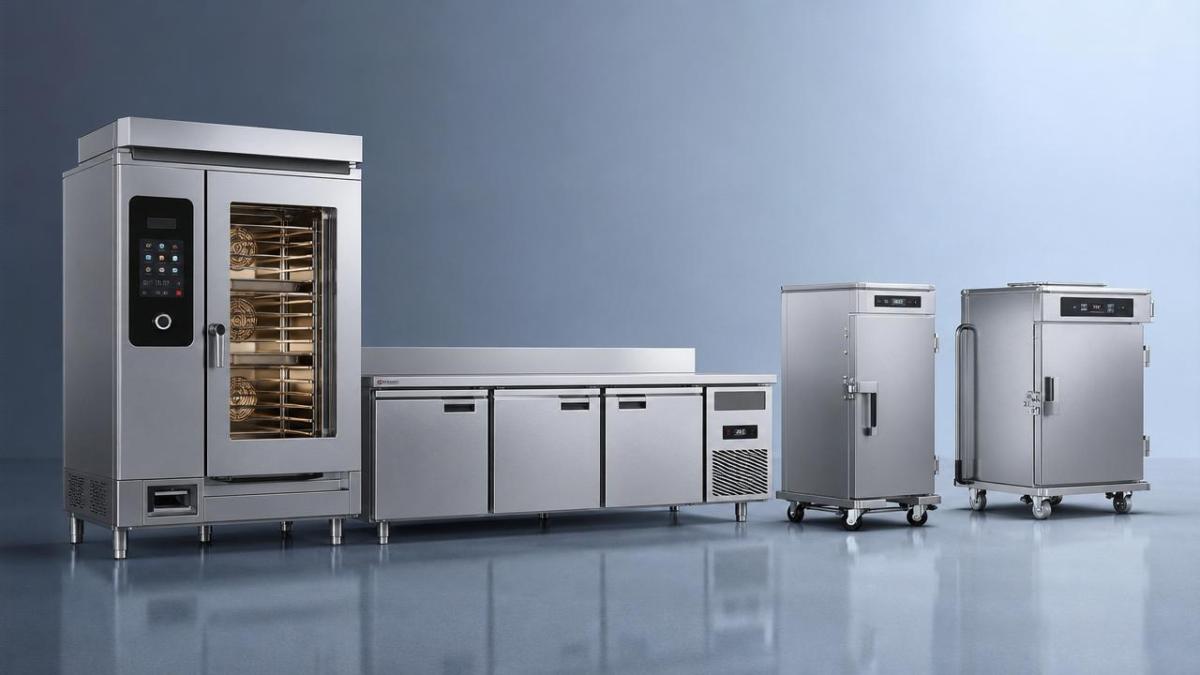
The market for restaurant kitchen equipment for catering is changing faster than before. Automation, digital controls, energy standards, and compact designs are reshaping purchasing priorities.
At the same time, catering formats are diversifying. Central kitchens, event catering, delivery-focused menus, hybrid dining, and mobile service models all require different equipment strategies.
This shift creates risk. Equipment that worked for a traditional restaurant may underperform in high-volume, multi-site, or fast-turnover catering environments.
As a result, buying errors are no longer simple budgeting mistakes. They are often strategic mismatches between equipment capability and real kitchen demand.
The strongest trend signals behind smarter restaurant kitchen equipment for catering
Several clear signals explain why equipment selection has become more complex and more important. These factors are changing what value means in commercial kitchens.
These signals show why restaurant kitchen equipment for catering should be evaluated as an operating asset, not a one-time purchase.
Why low-price decisions often become high-cost outcomes
The most common mistake is treating purchase price as the main decision factor. A lower quote can hide larger costs during daily use.
Energy waste is a major issue. Older or low-efficiency units raise electricity or gas use, especially in kitchens running long service hours.
Maintenance is another hidden burden. If spare parts are difficult to source, downtime can interrupt preparation schedules and reduce service reliability.
Poor ergonomic design creates labor inefficiency. Staff may need extra movement, repeated handling, or awkward cleaning steps, slowing output and increasing fatigue.
In many cases, the wrong restaurant kitchen equipment for catering also limits menu growth. A unit may support current demand but block expansion into higher-margin offerings.
Cost areas that are often underestimated
- Installation and ventilation modifications
- Utility consumption over three to five years
- Cleaning time and sanitation labor
- Repair response time and parts availability
- Operator training requirements
- Capacity loss during peak catering periods
Operational impact reaches far beyond the cooking line
Equipment choices affect more than food production. They influence storage planning, prep flow, staffing patterns, event timing, delivery readiness, and customer consistency.
For example, oversized machines may reduce workspace in compact kitchens. Undersized units can create bottlenecks during banquet, buffet, or off-site catering surges.
The right restaurant kitchen equipment for catering should support the full service chain, from receiving ingredients to holding, plating, transport, and cleaning.
Where poor equipment selection creates friction
- Prep stations become crowded and inefficient
- Hot holding times are harder to control
- Cold chain reliability weakens during transport
- Dish return and washing capacity falls behind service pace
- Output consistency drops across different staff shifts
What today’s market rewards in restaurant kitchen equipment for catering
The strongest market direction favors flexible, durable, efficient, and easy-to-maintain systems. Buyers increasingly value total performance over simple upfront savings.
Multi-function equipment is gaining attention because it supports menu change, seasonal demand, and varying event sizes without requiring multiple separate units.
Smart controls are also becoming more relevant. Monitoring temperature, cycle timing, and energy use can improve consistency and support compliance documentation.
Another growing priority is modularity. Kitchens want equipment layouts that can adapt as service formats change or as capacity expands.
Features that deserve closer attention
- Energy-saving certification or measurable efficiency data
- Simple interfaces for faster staff adoption
- Wash-down friendly surfaces and hygienic construction
- Service support coverage and spare parts stability
- Scalable design for future kitchen upgrades
- Reliable output under peak-volume conditions
Key checkpoints before committing to a purchase decision
A better buying approach starts with operational reality. Decision quality improves when teams compare equipment against actual service patterns, not generic specifications.
- Map daily workflow from prep to cleaning.
- Measure real peak volume, not average volume.
- Review utility capacity and ventilation limits.
- Calculate lifetime operating cost.
- Check maintenance access and support speed.
- Test ease of cleaning and operator usability.
- Confirm whether the unit supports future menu plans.
This process reduces the chance of buying restaurant kitchen equipment for catering that looks suitable on paper but performs poorly in real service conditions.
A practical framework for comparing equipment options
How to respond as kitchen technology and catering models keep evolving
The next phase of the market will likely favor connected, efficient, and integrated kitchen systems. Static buying habits will become more costly.
Before replacing or adding equipment, review whether business growth depends on speed, consistency, mobility, or menu diversification. Each priority changes the best equipment choice.
It is also wise to track manufacturer support quality, not only machine specifications. Long-term reliability depends on service infrastructure as much as product design.
The most resilient investment strategy is to choose restaurant kitchen equipment for catering that balances present workload with future adaptability.
The next move should be evidence-based, not price-led
Costly mistakes can often be prevented by slowing the decision and strengthening the evaluation method. Compare total cost, workflow fit, support access, and growth readiness together.
Build a short checklist for every equipment category, from cooking and refrigeration to holding, transport, and cleaning. Use real operating data whenever possible.
In a market shaped by efficiency, automation, and service flexibility, the best restaurant kitchen equipment for catering is the option that reduces risk while supporting stronger kitchen performance over time.
Popular Tags
Kitchen Industry Research Team
Dedicated to analyzing emerging trends and technological shifts in the global hospitality and foodservice infrastructure sector.
Industry Insights
Join 15,000+ industry professionals. Get the latest market trends and tech news delivered weekly.
No spam. Unsubscribe anytime.
Hot Articles
Contact With us
Contact:
Anne Yin (Ceramics Dinnerware/Glassware)
Lucky Zhai(Flatware)