
Food Slicer Machine Buying Mistakes That Show Up Later
Buying a food slicer machine based only on price or basic specifications often creates problems that do not appear during quotation review. For business evaluators, the real risk is not the visible purchase cost, but the later impact on labor efficiency, hygiene control, downtime, operator safety, and maintenance expense.
A slicer that looks comparable on paper can perform very differently once it enters daily production. Blade stability, cleaning complexity, throughput consistency, and parts support all affect long-term value. The smartest buying process focuses less on headline features and more on operational fit, risk exposure, and total cost over time.
What Business Evaluators Usually Get Wrong First
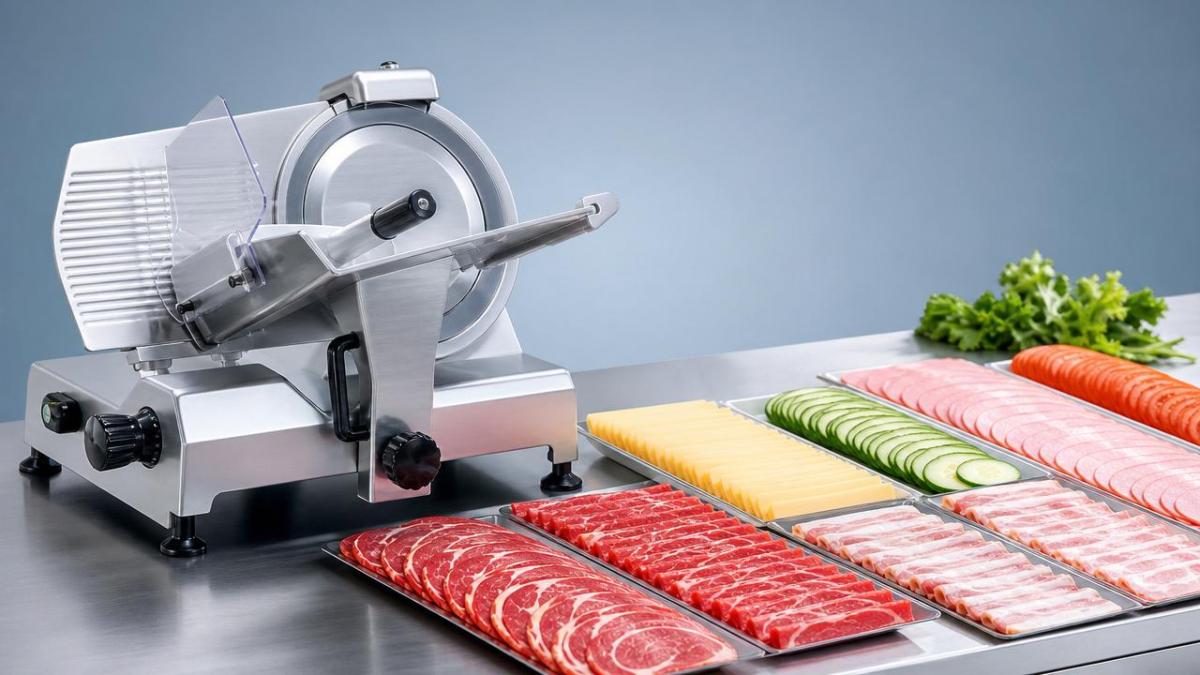
The core search intent behind this topic is practical and preventive. Readers are not looking for a general introduction to slicers. They want to know which purchasing mistakes seem minor at first but become expensive after installation and regular use.
For business evaluation teams, the biggest concerns are usually hidden cost, compliance risk, workflow disruption, inconsistent slice quality, operator injury exposure, and difficulty proving return on investment. They need decision criteria that go beyond catalogs and sales claims.
That means the most useful article is not one that lists slicer types in a generic way. It should explain how poor buying decisions affect productivity, sanitation, labor, maintenance planning, and equipment lifespan, especially in restaurants, central kitchens, and food processing settings.
Mistake 1: Choosing by Purchase Price Instead of Total Cost of Ownership
The most common buying mistake is treating the slicer as a low-complexity item and selecting the cheapest acceptable model. This often happens when teams compare motor power, blade size, and list price, but ignore what daily operation will cost.
A low-price machine may require slower manual feeding, more frequent sharpening, longer cleaning time, and earlier replacement of wear parts. If a slicer adds ten extra minutes of cleaning per shift, that hidden labor cost compounds quickly across months and locations.
Total cost of ownership should include acquisition, installation, training, energy use, sanitation time, blade maintenance, spare parts lead time, downtime risk, and expected service life. In many operations, these factors matter far more than the original purchase price.
Business evaluators should ask suppliers for realistic maintenance cycles, recommended cleaning frequency, blade replacement intervals, and average annual service requirements. If a seller cannot provide these details clearly, that is already a useful warning sign.
Mistake 2: Ignoring the Real Production Environment
A food slicer machine may test well in a showroom but fail in actual operating conditions. Evaluators sometimes focus on ideal performance numbers without checking whether the machine matches the products, volumes, temperatures, and workflow of the site.
For example, slicers used for chilled meats, cheese, cooked products, vegetables, or bakery items face different resistance levels and hygiene demands. A machine that handles one product smoothly may struggle with another, causing tearing, uneven thickness, or operator fatigue.
Environment also matters. Humid kitchens, high-turnover restaurant lines, central production units, and food processing rooms place very different demands on corrosion resistance, guarding, cleaning speed, and throughput. A good buying decision starts with a real usage map, not a generic product category.
Before approving a purchase, define what will be sliced, the target thickness range, expected daily hours of use, number of operators, cleaning frequency, and operating environment. Without this profile, even a high-quality machine can become the wrong machine.
Mistake 3: Underestimating Cleaning Time and Hygiene Design
Many post-purchase complaints come from sanitation problems rather than slicing problems. A slicer may cut well, but if it has difficult-to-reach surfaces, trapped food zones, or complicated disassembly, cleaning becomes slow, inconsistent, and risky.
In commercial food operations, hygiene design affects both compliance and labor efficiency. If staff avoid full cleaning because the machine is inconvenient, residue buildup increases contamination risk. If full cleaning takes too long, production schedules are affected and labor cost rises.
Evaluators should look closely at smooth surfaces, removable components, tool-free disassembly where appropriate, sealed controls, and access to blade-adjacent areas. Materials matter as well. Stainless steel construction and corrosion-resistant components support both hygiene and service life.
It is worth asking suppliers to demonstrate cleaning steps in real time. A machine that looks simple in photos can be surprisingly difficult in practice. Cleaning time should be measured, not assumed, because sanitation labor becomes a repeating operating cost.
Mistake 4: Focusing on Motor Power but Missing Slice Consistency
Power is easy to compare, so it often receives too much attention. However, long-term user satisfaction depends more on stable slicing performance than on a single specification. In many operations, consistency is the true driver of product quality and waste control.
If thickness settings drift, blades wobble, or feeding pressure is uneven, output becomes inconsistent. That can damage presentation in retail or hospitality settings, and it can also distort portion control in foodservice and processing environments.
Inconsistent slicing creates hidden losses: overweight portions, unattractive product appearance, slower packing, more trimming, and customer complaints. These issues rarely appear in short sales demonstrations, but they become obvious after weeks of daily production.
When evaluating a food slicer machine, request performance testing on the actual food items you plan to process. Review whether the machine maintains accuracy over repeated cycles, not just during the first few cuts. Mechanical stability often matters more than advertised power.
Mistake 5: Overlooking Operator Safety and Training Burden
Slicer injuries are a serious business risk. Yet safety is sometimes reduced to a checkbox rather than a practical evaluation area. A machine can meet basic requirements and still be difficult for ordinary staff to use safely under time pressure.
Guard design, hand protection, emergency stop access, carriage movement, blade exposure during cleaning, and ease of thickness adjustment all influence real safety outcomes. A design that requires awkward handling increases the chance of accidents, especially in high-turnover environments.
Training burden is equally important. If the slicer requires too much operator judgment, performance and safety will vary from person to person. Businesses with multiple shifts or frequent staff changes should favor equipment that is intuitive, repeatable, and easy to standardize.
Evaluators should ask a simple question: can an average trained employee use, clean, and reset this machine safely without shortcuts? If the answer is uncertain, later incidents or inconsistency are likely, even if the machine appears technically capable.
Mistake 6: Buying More Capacity Than the Operation Can Actually Use
Some buyers assume larger capacity always means better value. In reality, overspecification can increase cost without delivering meaningful operational benefit. A bigger slicer may occupy more space, consume more energy, require more cleaning time, and create unnecessary complexity.
This happens when businesses buy for hypothetical future growth without checking whether demand, product mix, staffing, and layout will support that equipment efficiently. In smaller kitchens or mixed-use facilities, a large industrial model can become a poor fit.
The right question is not the maximum output on the brochure. It is the useful output during normal shifts, with actual operators, product changeovers, and sanitation requirements included. A properly sized slicer often performs better in business terms than a larger underused machine.
Scalability still matters, but it should be tied to realistic volume planning. If growth is expected, assess whether the machine can support that increase without creating bottlenecks elsewhere, such as prep tables, packaging stations, or cleaning resources.
Mistake 7: Failing to Check Service, Parts, and Supplier Support
A slicer is not just a machine purchase; it is also a support commitment. One of the costliest mistakes is buying a unit with weak after-sales coverage, long spare parts lead times, or unclear technical support channels.
Even reliable equipment needs blades, belts, switches, lubricated components, or replacement assemblies over time. If parts are difficult to source, downtime can last far longer than expected. In production settings, that means delayed orders, labor disruption, and possible revenue loss.
Business evaluators should verify local service availability, warranty scope, spare parts inventory, response times, and documentation quality. It is also helpful to know whether the supplier supports remote troubleshooting and whether manuals are clear enough for maintenance teams.
A supplier with a slightly higher upfront price may offer far better long-term value if service is dependable. This is especially important for import purchases, where attractive pricing can be offset by weak technical support after delivery.
Mistake 8: Not Matching the Machine to Business Use Cases
The best slicer for a supermarket deli is not automatically the best slicer for a hotel kitchen, central kitchen, meat processor, or catering company. Buying mistakes often happen when decision-makers compare machines without defining the business use case clearly enough.
Restaurants may prioritize flexibility, compact size, and easy cleanup between menu items. Central kitchens may focus on sustained throughput, standardization, and sanitation control. Food processors may require higher durability, stricter compliance, and integration with broader production workflows.
For evaluators, the key is to connect machine features to business outcomes. Does the slicer reduce prep time? Improve portion consistency? Lower waste? Support food safety procedures? Fit labor availability? If these answers are vague, the decision is not ready.
Use a scenario-based evaluation rather than a feature-only comparison. Review how each shortlisted machine performs in your actual application, with your actual products and staffing realities. That is where long-term suitability becomes visible.
A Practical Checklist for Smarter Food Slicer Machine Evaluation
To reduce buying risk, evaluators should follow a structured review process. Start with application details: product types, target volume, thickness range, duty cycle, and cleaning frequency. Then assess space, power supply, operator skill level, and hygiene requirements.
Next, compare machines on measurable factors: slicing consistency, cleaning time, disassembly effort, safety features, parts availability, warranty terms, and expected annual maintenance. Ask for demonstrations using real products, not ideal test samples chosen by the seller.
It is also wise to involve the people who will actually use or maintain the machine. Procurement, kitchen managers, operators, and sanitation teams often notice different risks. Their combined feedback gives a much clearer picture than a specification sheet alone.
Finally, score each option against business value, not only technical data. A strong evaluation framework should show which machine delivers the best balance of efficiency, hygiene, safety, durability, and support over the full operating lifecycle.
Conclusion: The Best Buying Decision Is the One That Prevents Later Regret
The biggest mistakes in buying a food slicer machine usually come from evaluating visible features while missing daily operating realities. Problems like long cleaning time, uneven slicing, difficult training, poor support, and hidden maintenance cost tend to appear only after purchase.
For business evaluators, the most reliable approach is to treat the slicer as an operational asset rather than a simple appliance. That means testing real use cases, checking long-term support, and calculating ownership cost beyond the quotation price.
A well-chosen machine should improve consistency, protect food safety, reduce labor friction, and support stable output over time. When those factors guide the decision, the purchase is far more likely to deliver lasting value instead of delayed disappointment.
Popular Tags
Kitchen Industry Research Team
Dedicated to analyzing emerging trends and technological shifts in the global hospitality and foodservice infrastructure sector.
Industry Insights
Join 15,000+ industry professionals. Get the latest market trends and tech news delivered weekly.
No spam. Unsubscribe anytime.
Hot Articles
 How to Choose a Leak-Proof Glass Storage Container for Meal Prep and Transport
- How to Size a Commercial Charbroiler for Peak-Hour Restaurant Output
- How to Specify Stainless Steel Kitchen Equipment for High-Volume Commercial Kitchens
- How to Choose Food Containers for Hot, Cold, and Leak-Prone Takeout Meals
Contact With us
Contact:
Anne Yin (Ceramics Dinnerware/Glassware)
Lucky Zhai(Flatware)