
Commercial freezer lead times are shifting across key markets
Lead times for commercial freezer orders are changing across major markets, affecting how buyers plan kitchen preparation equipment and cold-chain capacity. For restaurants, processors, and distributors comparing a commercial ice maker, kitchen prep table, or food warmer equipment, understanding these shifts is now essential to control costs, avoid delays, and make smarter purchasing decisions.
In the kitchen equipment industry, delivery timing is no longer a routine operational detail. It now shapes menu planning, new store openings, central kitchen expansion, and replacement cycles for aging refrigeration assets. When a commercial freezer moves from a 2–4 week lead time to 6–10 weeks in a specific market, the impact extends beyond procurement and affects installation sequencing, food safety planning, inventory turns, and cash flow.
This matters to several buyer groups at once. Operators need reliable cold storage to protect daily service performance. Procurement teams need more accurate supplier timelines and better visibility on components. Decision-makers need to balance capital budgets, energy efficiency, and market risk. Researchers comparing commercial freezer supply conditions across regions also need a practical framework to understand what is driving these changes.
Across foodservice, hospitality, food processing, and distribution, the same question keeps coming up: how should buyers respond when commercial freezer lead times are shifting market by market? The answer depends on region, configuration complexity, shipping route stability, and whether the project involves standalone cabinets, undercounter units, blast chilling support, or full cold-chain integration with other kitchen equipment.
Why commercial freezer lead times are changing in key markets
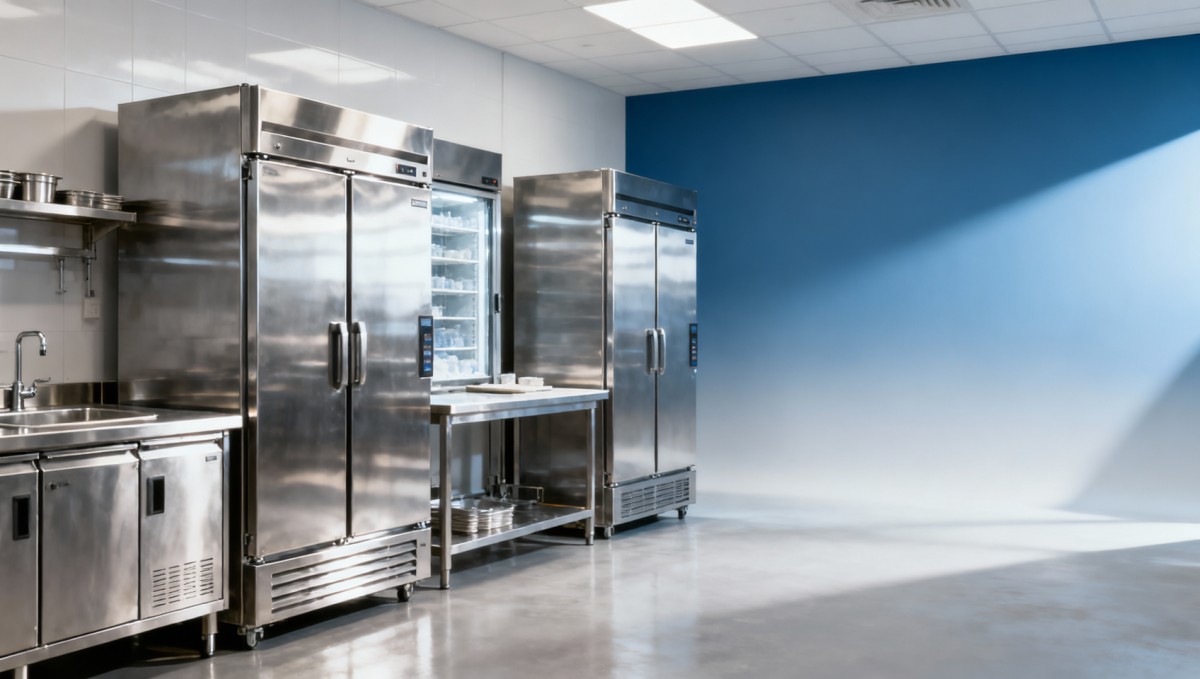
Commercial freezer lead times are influenced by a combination of manufacturing capacity, component availability, transport conditions, and local demand cycles. In many markets, standard upright or chest freezer models may still be available within 2–5 weeks, while custom configurations, remote condensing systems, or high-capacity units can require 8–14 weeks. This gap has widened as buyers request more energy-efficient and digitally monitored equipment.
Regional variation is especially important. In export-oriented supply centers such as China, Italy, Germany, and Japan, production schedules can shift quickly when seasonal orders rise before summer or holiday periods. In import-dependent markets, the total lead time often includes 1–3 weeks of factory preparation, 2–6 weeks of ocean or inland transport, plus customs and local delivery. A freezer that appears available on paper may still face final-mile delays.
Another factor is the growing technical complexity of commercial kitchen equipment. Buyers increasingly prefer freezers that integrate with digital temperature monitoring, smart alarms, or energy management systems. These added features improve operational control, but they can also lengthen sourcing cycles because controllers, compressors, insulation materials, and electronic parts may come from different suppliers across several countries.
Demand patterns are also changing. Restaurants upgrading prep lines may place combined orders for a commercial freezer, kitchen prep table, food warmer equipment, and a commercial ice maker rather than sourcing each item separately. While bundled purchasing can simplify vendor management, it may slow delivery if one product category becomes the bottleneck. In many projects, the freezer is no longer purchased in isolation, so its lead time must be assessed as part of the full kitchen rollout.
Common drivers behind longer or unstable lead times
- Compressor, thermostat, and control board availability can add 1–4 extra weeks.
- Customized sizes, door counts, or voltage requirements often extend production windows by 2–6 weeks.
- Port congestion, inland trucking shortages, or customs clearance can delay final delivery by 5–20 days.
- Peak ordering periods before summer, year-end, or chain-store openings can reduce factory flexibility.
For B2B buyers, the main lesson is clear: delivery promises should be evaluated by configuration type and route, not just by catalog listing. A standard unit and a project-specific freezer may belong to the same product family, but they can have very different fulfillment timelines.
How lead time shifts affect restaurants, processors, and distributors
When commercial freezer lead times stretch unexpectedly, operators face direct service risks. A restaurant opening can be delayed if frozen inventory storage is not ready before menu testing begins. In a central kitchen or processing facility, even a 7–10 day delay can disrupt inbound ingredient planning, production runs, and food safety workflows. The cost is not only downtime but also rescheduling labor, contractors, and inspections.
Distributors and multi-site buyers face a different challenge: planning accuracy. If one market can deliver in 3 weeks and another requires 9 weeks for a similar commercial freezer, standardized procurement assumptions become unreliable. Teams that do not segment lead times by region, product type, and installation conditions often overstock backup equipment in one location while leaving another location exposed to service interruptions.
The impact spreads to adjacent kitchen categories as well. A delayed freezer can postpone the commissioning of a kitchen prep table, food warmer equipment, or a commercial ice maker if the layout, power planning, or cold-chain balance depends on all units arriving together. In compact commercial kitchens, equipment sequencing matters because ventilation, floor drainage, and operator flow are often designed around the complete line rather than individual machines.
For decision-makers, the largest risk is hidden cost. A unit with a lower purchase price but a 10–12 week uncertain lead time may create more operational loss than a slightly higher-priced freezer that can ship in 3–5 weeks. This is why buyers are increasingly evaluating lead time as a strategic procurement metric alongside energy consumption, storage volume, temperature recovery speed, and serviceability.
Typical operational consequences by buyer type
The following comparison helps clarify where lead time pressure appears first and what teams should monitor before a freezer order becomes a project bottleneck.
A clear pattern emerges from this table: freezer lead times should be managed by business model. Operators need launch certainty, processors need specification certainty, and distributors need forecast discipline. The same delivery delay creates different costs depending on how the equipment is used.
What buyers should evaluate before placing a commercial freezer order
The most effective response to changing commercial freezer lead times is better pre-order evaluation. Buyers should not focus only on cabinet size or list price. They need to assess at least 4 dimensions: equipment specification, delivery route, installation readiness, and service support. This reduces the risk of ordering a unit that is technically suitable but operationally difficult to receive on time.
Specification clarity is the first priority. Freezer type, temperature range, ambient operating conditions, door configuration, shelving load, and electrical requirements all affect availability. For example, a standard freezer operating around -18°C to -22°C may be easier to source than a model requiring rapid pull-down performance, remote monitoring, or a non-standard voltage setup. Every special requirement can shift the factory schedule.
Installation readiness is equally important. In many projects, a “delivery delay” is actually an installation delay caused by incomplete site preparation. Doorway clearance, floor load limits, drain location, ventilation spacing, and power supply must be checked early. If the freezer arrives before these conditions are ready, the delivery date may be met on paper while the operational start date still slips by 3–7 days.
Serviceability should also be part of the purchase decision. A shorter lead time loses value if local spare parts support is weak or technician response takes more than 48–72 hours. This is especially critical for high-usage sites such as hotel kitchens, commissaries, and food distribution hubs, where freezer downtime can create immediate inventory exposure.
Key procurement checklist
- Define required storage volume, temperature range, and expected daily door-open frequency.
- Confirm whether the order is standard, semi-custom, or fully customized.
- Map the supply route, including production, transit, customs, and local delivery stages.
- Verify site readiness at least 10–14 days before delivery.
- Check after-sales response time, spare parts availability, and warranty scope.
Lead time planning by freezer type
The table below gives a practical framework for comparing commercial freezer categories and the purchasing implications attached to each one. Exact timings vary by supplier and route, but the ranges are useful for planning.
For procurement teams, the key takeaway is that customization should be treated as a scheduling decision, not only a technical one. The more a freezer is tailored to site conditions or digital controls, the earlier the project team should finalize specifications.
Strategies to reduce delivery risk and improve project timing
Buyers can reduce exposure to commercial freezer lead time volatility by adopting a layered planning strategy. The first layer is forecast discipline. Instead of ordering when existing equipment fails or when a new site is nearly complete, procurement teams should classify demand into replacement, expansion, and new-build categories. Replacement demand often requires a 2–3 supplier backup list, while expansion projects benefit from phased ordering tied to milestone dates.
The second layer is specification standardization. Multi-location groups can reduce lead time variability by narrowing the number of acceptable freezer sizes, door formats, and electrical setups. If a chain uses 12 different freezer configurations across 20 sites, sourcing becomes fragmented. Reducing that mix to 3–5 standard formats improves supplier planning and increases the chance that inventory or near-ready units are available.
The third layer is coordinated equipment planning. Freezers should be ordered in connection with related equipment such as a commercial ice maker, food warmer equipment, and kitchen prep table stations. This allows project managers to align receiving dates, utility preparation, and technician scheduling. In many kitchens, coordination can save 5–10 working days compared with sequential, category-by-category procurement.
Finally, buyers should use milestone tracking instead of relying on one promised delivery date. Good practice is to monitor 5 checkpoints: order confirmation, production start, factory completion, shipment departure, and site delivery. If one stage slips, teams can still protect the launch date by adjusting labor, temporary cold storage, or installation sequence before the problem reaches the kitchen floor.
Practical risk-control actions
- Place seasonal orders 6–10 weeks earlier than usual when entering peak demand periods.
- Keep at least 1 approved substitute model for critical freezer applications.
- Ask suppliers to separate factory lead time from transit lead time in quotations.
- Use temporary rental cold storage only as a contingency, not as a standard operating plan.
These actions do not eliminate uncertainty, but they convert a reactive purchasing process into a controlled one. In markets where freezer availability changes quickly, speed matters less than visibility. Buyers that can see delays early usually have more options and lower emergency costs.
FAQ: planning around freezer lead times in modern kitchen equipment projects
Because commercial freezer purchasing is increasingly linked to broader kitchen system planning, several questions appear repeatedly across restaurant, hospitality, and food processing projects. The answers below are useful for both first-time buyers and experienced procurement teams managing multiple equipment categories.
How early should a buyer order a commercial freezer?
For a standard replacement unit, 4–6 weeks is often a practical minimum. For a new kitchen build, 6–8 weeks gives better protection. If the freezer is customized, integrated with remote monitoring, or part of a larger cold-chain layout, 8–12 weeks is a safer planning range. Buyers should also add a buffer of 7–14 days for site readiness and installation coordination.
What is the most common mistake in lead time planning?
The most common mistake is treating quoted lead time as total project time. A supplier may quote 3 weeks to produce the freezer, but actual usable time includes shipping, unloading, inspection, positioning, electrical connection, startup, and temperature stabilization. In a busy site, these steps can add another 3–10 days before the unit is ready for stored product.
Should buyers prioritize faster delivery or lower price?
That depends on the operating scenario. For emergency replacement in a restaurant or hotel, faster delivery often protects revenue and reduces spoilage risk, making it worth a moderate price premium. For planned expansion with flexible deadlines, a lower-price option may be acceptable if the supplier can provide milestone transparency and dependable after-sales support. The decision should be based on total project impact, not unit price alone.
Which supporting equipment should be planned together with the freezer?
In most commercial kitchen projects, buyers should coordinate the freezer with at least 3 adjacent categories: a kitchen prep table, a commercial ice maker, and food warmer equipment. This ensures that prep capacity, cold holding, and service flow are balanced. If one piece arrives far earlier or later than the others, layout efficiency and startup timing can suffer.
Commercial freezer lead times are shifting because the kitchen equipment market is becoming more global, more customized, and more dependent on coordinated supply chains. Buyers who understand the difference between standard and customized lead times, evaluate route and installation risk, and align the freezer with related kitchen equipment will make stronger purchasing decisions and avoid avoidable delays.
Whether you are sourcing for a restaurant, hotel, processor, or distribution project, the right approach is to combine clear specifications, realistic scheduling, and supplier visibility. If you need support comparing commercial freezer options, planning around a commercial ice maker or kitchen prep table, or building a more resilient cold-chain equipment strategy, contact us to discuss your project, request product details, or get a tailored solution.
Popular Tags
Kitchen Industry Research Team
Dedicated to analyzing emerging trends and technological shifts in the global hospitality and foodservice infrastructure sector.
Industry Insights
Join 15,000+ industry professionals. Get the latest market trends and tech news delivered weekly.
No spam. Unsubscribe anytime.
Contact With us
Contact:
Anne Yin (Ceramics Dinnerware/Glassware)
Lucky Zhai(Flatware)