
Where Is Kitchen Equipment Wholesale Demand Growing Fast?
Global demand for kitchen equipment wholesale is growing fastest in regions where foodservice expansion, hospitality investment, urbanization, and modern food processing are happening at the same time. In practical terms, that means the strongest momentum is now seen in Southeast Asia, the Middle East, India, parts of Africa, and selected Latin American markets, while North America and Europe continue to generate stable replacement and upgrade demand. For wholesalers, importers, procurement teams, and business decision-makers, the key question is no longer simply where demand exists, but where demand is accelerating, what product categories are moving fastest, and how to source with lower risk and better long-term value.
Where is kitchen equipment wholesale demand growing the fastest right now?
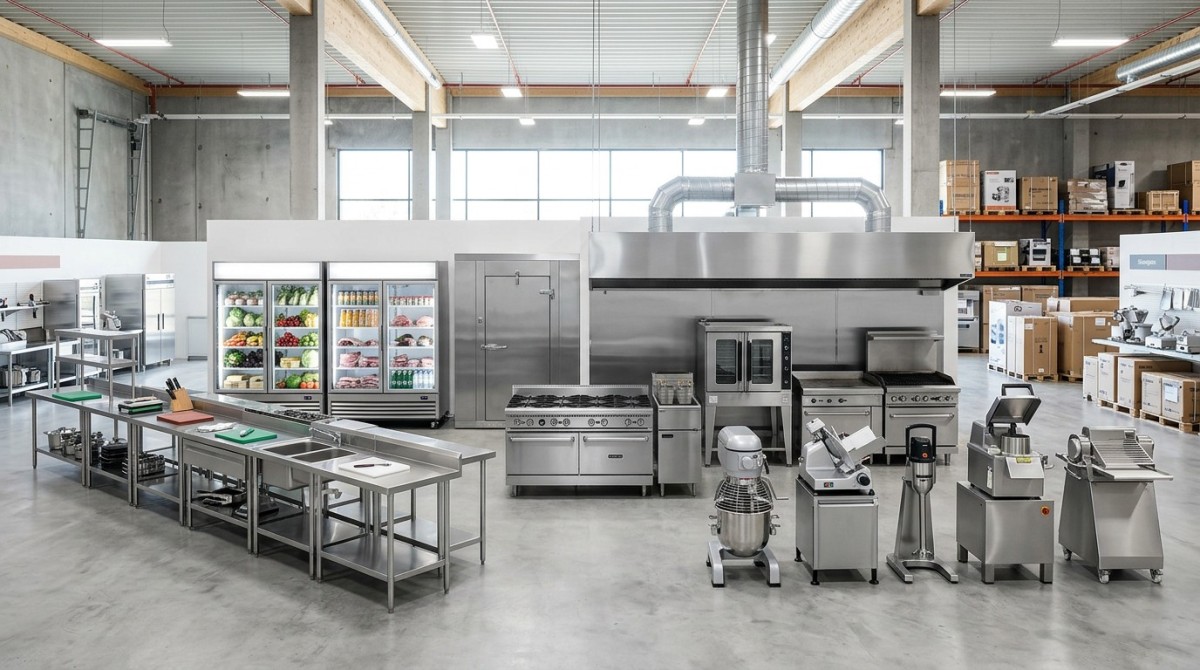
The fastest wholesale growth is generally coming from markets that are expanding restaurant chains, hotel capacity, cloud kitchens, food factories, and institutional catering systems. These markets are not just buying more equipment; they are upgrading to more efficient, durable, and scalable solutions.
Southeast Asia is one of the most active growth regions. Countries such as Vietnam, Indonesia, Thailand, and the Philippines are seeing rapid growth in quick-service restaurants, franchise dining, tourism-related hospitality, and centralized food preparation. This is driving wholesale demand for stainless steel kitchen equipment, prep tables, cooking ranges, refrigeration systems, sinks, storage racks, and food holding equipment.
India is another high-growth market. Rising urban consumption, food delivery platforms, chain restaurant expansion, and investment in hotels and institutional kitchens are fueling purchases of commercial kitchen equipment. Buyers in India often focus on price-performance, energy efficiency, after-sales support, and products suited for high-volume use.
The Middle East, especially Saudi Arabia, the UAE, and Qatar, continues to see strong demand linked to hospitality projects, tourism development, premium restaurants, and large-scale foodservice infrastructure. Demand here often favors high-quality restaurant kitchen supplies, commercial refrigerator units, bakery equipment, display refrigeration, and integrated kitchen systems for hotels and catering operations.
Africa is gaining attention, particularly in countries with growing urban centers, supermarket development, hospitality investment, and food processing upgrades. While some markets are still price-sensitive, the long-term growth opportunity is clear, especially for practical, durable, easy-to-maintain kitchen equipment.
Latin America, including Mexico, Colombia, Peru, and parts of Central America, is also showing rising wholesale demand. Restaurant expansion, tourism, and local food manufacturing are increasing the need for cold storage, cooking equipment, food prep machinery, and stainless steel workstations.
By contrast, North America and Europe remain important, but growth there is often driven more by equipment replacement, kitchen modernization, compliance, automation, and energy-saving upgrades than by first-time infrastructure buildout.
What is driving wholesale buyers to expand kitchen equipment purchases?
Several demand drivers are shaping purchasing behavior across global markets.
Foodservice industry growth is the most obvious factor. As more restaurants, cafés, hotels, catering businesses, and delivery kitchens open or expand, they need complete kitchen setups or replacement equipment at scale.
Central kitchen and food factory development is another major driver. Many operators are moving toward centralized production to improve consistency, labor efficiency, and food safety. This increases demand for food processing machinery, large-capacity refrigeration, stainless steel fabrication, and integrated preparation systems.
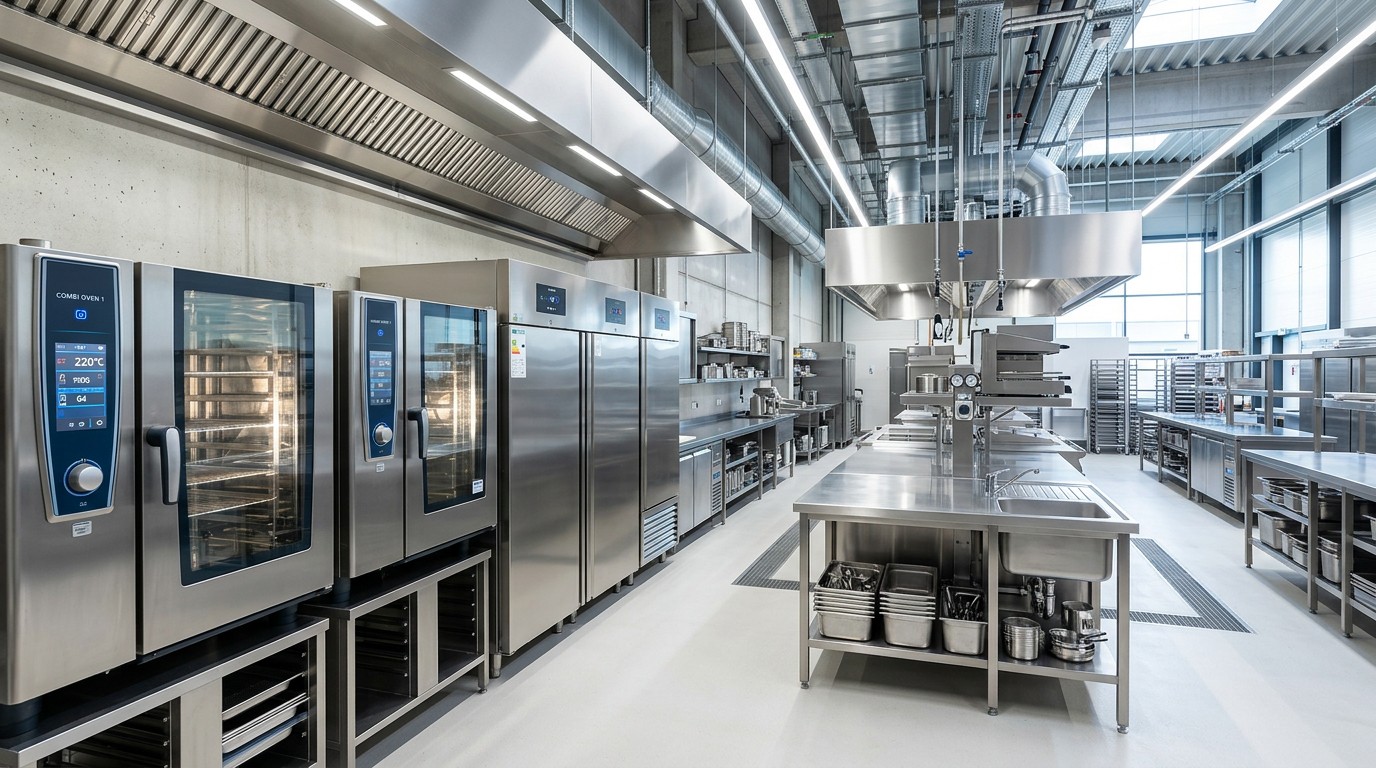
Energy costs and operating efficiency are strongly influencing buying decisions. Commercial users increasingly want equipment that lowers electricity use, improves workflow, reduces downtime, and supports faster service. This explains growing interest in energy-efficient ovens, induction cooking, insulated refrigeration, and smart monitoring systems.
Food safety and regulatory compliance also matter more than before. Buyers are looking for hygienic design, easy-to-clean surfaces, durable stainless steel construction, temperature control accuracy, and equipment that supports safer storage and preparation processes.
Labor shortages in many markets are pushing operators toward automation and easier-to-use equipment. This trend supports demand for programmable cooking devices, automatic processing machines, and digital kitchen management tools.
Which kitchen equipment categories are attracting the most wholesale attention?
Not all product segments are growing at the same speed. Wholesale demand is strongest in categories tied directly to expansion, efficiency, and compliance.
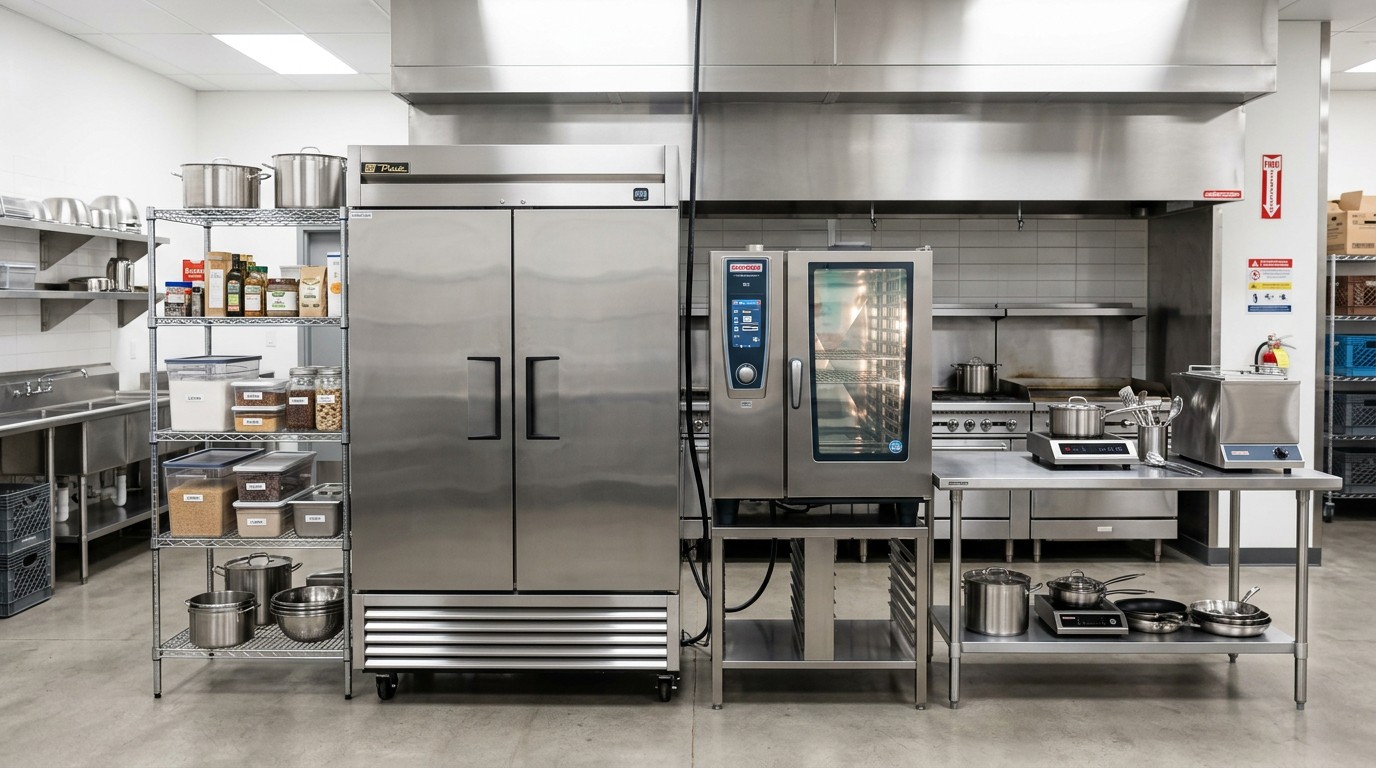
Commercial refrigeration remains one of the top segments. Commercial Refrigerator systems, upright chillers, freezers, prep counters, undercounter refrigeration, and cold rooms are in high demand because nearly every foodservice or processing operation depends on reliable cold chain performance.
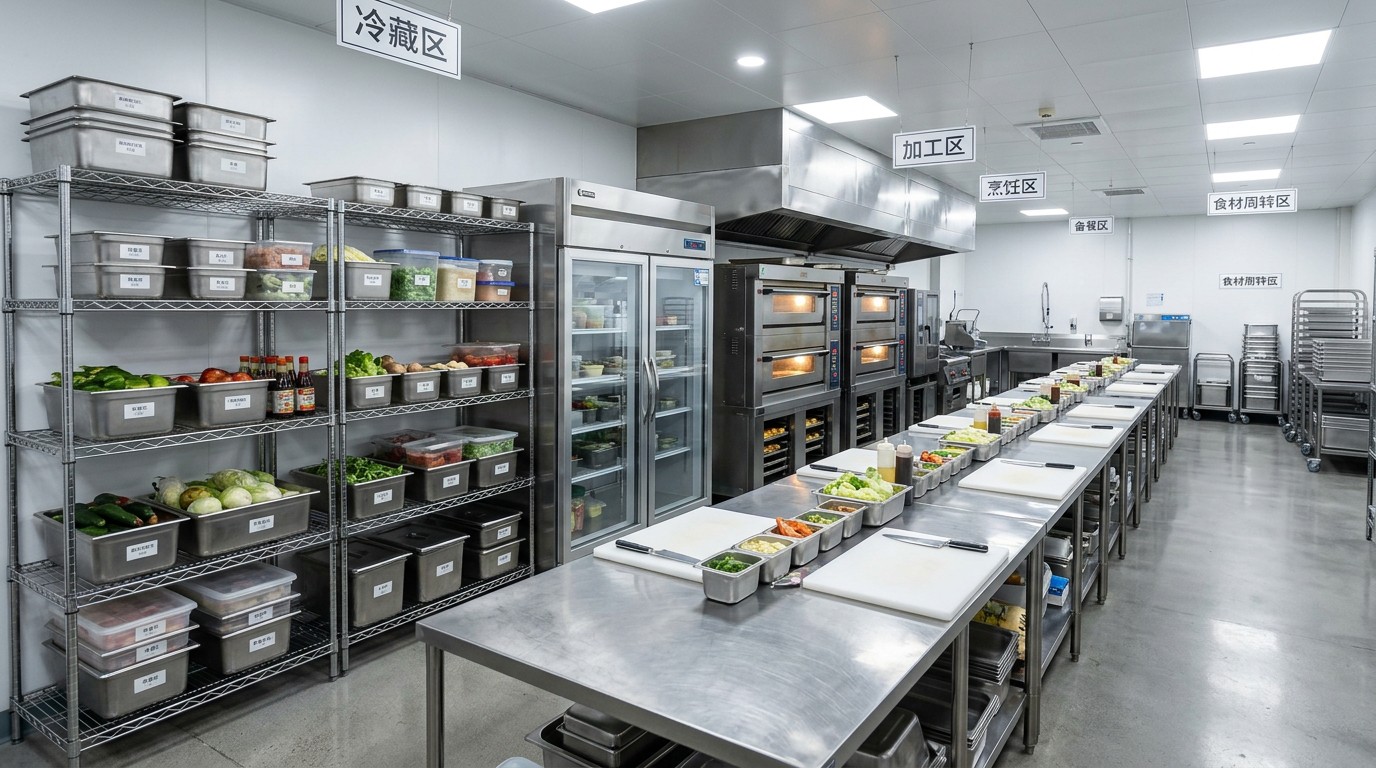
Stainless steel kitchen equipment continues to perform strongly across both mature and emerging markets. Worktables, shelves, sinks, cabinets, exhaust hoods, and custom fabrication products are popular because they are versatile, durable, hygienic, and essential for kitchen setup.
Cooking equipment such as ranges, fryers, ovens, griddles, steamers, and induction units is also seeing strong movement, especially in restaurant, hotel, and institutional kitchen projects.
Food preparation and processing machinery is growing quickly in central kitchens, bakery operations, meat processing, ready-meal production, and high-volume catering. Mixers, slicers, cutters, peelers, vacuum packers, and automated prep systems are increasingly relevant.
Smart and energy-efficient kitchen solutions are a rising category rather than a niche. Buyers are beginning to value monitoring functions, programmable control, reduced utility costs, and maintenance alerts because these features improve long-term operating performance.
What do procurement teams and business buyers care about most before placing wholesale orders?
For procurement managers and business decision-makers, location-based demand is only part of the picture. What matters more is whether a supplier can support a repeatable, low-risk purchasing process.
The first concern is usually product reliability. A lower upfront price may not be attractive if failure rates are high, spare parts are hard to get, or performance is unstable in heavy-use environments.
The second concern is fit for application. A restaurant chain, hotel kitchen, bakery, food processor, and cloud kitchen all have different workflow requirements. Buyers want to know whether equipment is suitable for volume, menu type, available space, ventilation conditions, and local power standards.
Third is total cost of ownership. Experienced buyers do not only compare quotation prices. They also evaluate energy use, cleaning time, maintenance frequency, replacement cycles, shipping costs, and installation complexity.
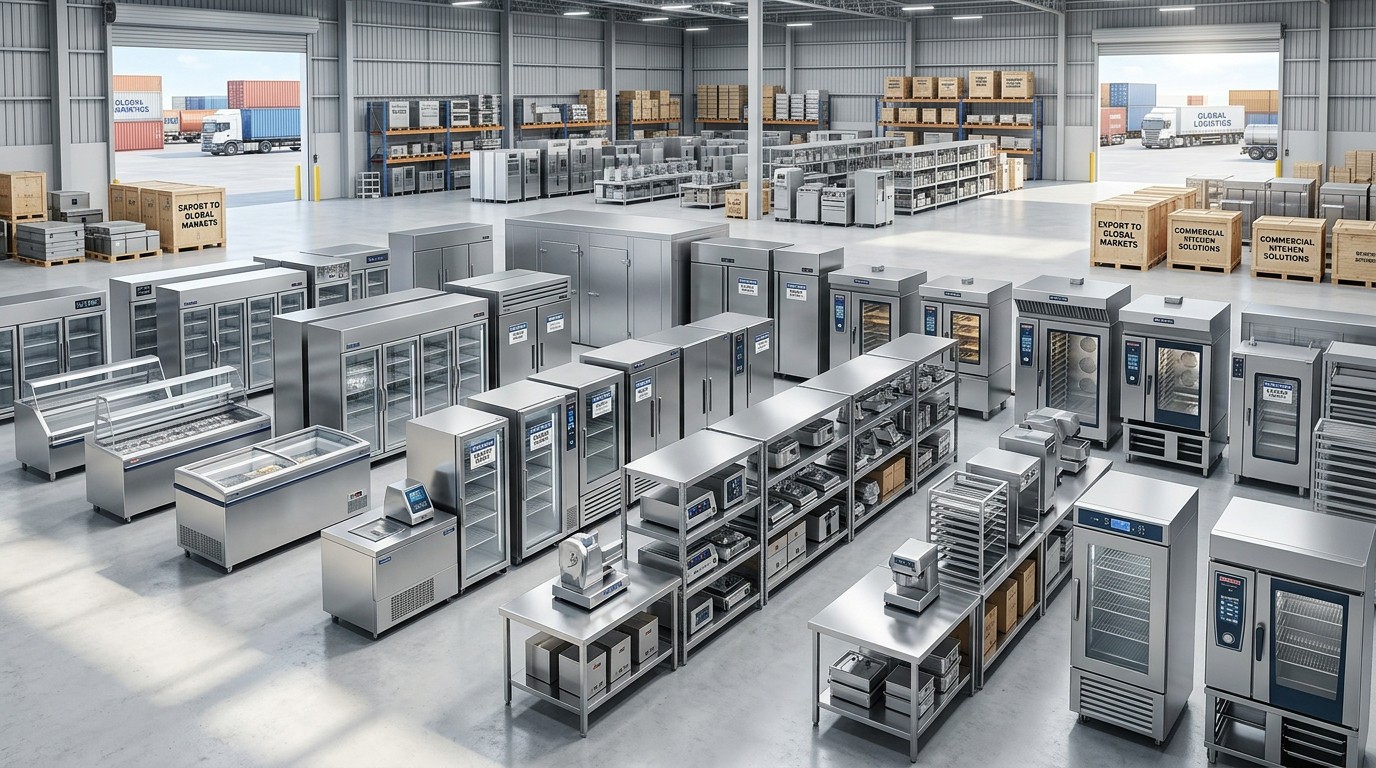
Fourth is supply chain stability. Wholesale buyers need dependable lead times, export documentation, packaging quality, and production consistency. This is especially important for project-based purchases and multi-unit rollouts.
Fifth is compliance and certification. Depending on the target market, buyers may require CE, NSF, ETL, ISO-related manufacturing control, food-contact material conformity, or other local certification standards.
How should buyers evaluate high-growth markets before entering or expanding?
If you are assessing where to target wholesale kitchen equipment sales, it is not enough to look at population size or general GDP growth. More useful indicators include:
- Growth of chain restaurants and franchise brands
- Hotel, resort, and tourism-related construction activity
- Expansion of supermarkets, convenience food, and cold chain logistics
- Investment in central kitchens and food manufacturing
- Import dependency versus local manufacturing strength
- Energy prices and demand for efficient equipment
- Local distributor capability and after-sales service expectations
Markets with strong foodservice expansion but limited local manufacturing can be especially attractive for exporters and wholesalers. However, these same markets may require stronger distributor partnerships, technical support, and localized product adaptation.
In many cases, the best opportunities are not the largest countries by volume, but the countries where demand is rising faster than local supply quality. That gap creates room for trusted wholesale suppliers offering commercial kitchen equipment with competitive pricing and dependable service.
What sourcing strategy works best when demand is growing quickly?
When kitchen equipment wholesale demand is rising fast, buyers should avoid purely reactive purchasing. A more effective strategy combines market prioritization, category planning, and supplier screening.
Start by identifying which customer segments are expanding fastest in your target market: restaurants, hotels, institutional kitchens, food factories, or retail foodservice. Then align sourcing around the product categories these users replace or add most often.
Next, standardize your supplier evaluation process. Compare manufacturers on production capability, quality control, customization support, export experience, certification readiness, and responsiveness. For many buyers, manufacturers in China remain highly competitive due to scale, range, and pricing, while Germany, Italy, and Japan are often considered for premium or specialized equipment.
It also helps to balance core volume products and higher-value technical products. For example, restaurant kitchen supplies such as sinks, racks, and tables may deliver steady volume, while refrigeration, cooking systems, and automated food prep units may offer stronger margins and deeper customer dependence.
Finally, plan for serviceability. Fast-growing markets can generate repeat business only if installation, training, spare parts, and warranty handling are manageable.
Conclusion: where is the real growth opportunity in kitchen equipment wholesale?
The real growth opportunity is concentrated in markets where foodservice expansion, hospitality investment, central kitchen development, and modernization are happening at the same time. Today, that points most clearly to Southeast Asia, India, the Middle East, parts of Africa, and selected Latin American countries, while North America and Europe remain valuable for upgrade-driven demand.
For readers evaluating this market, the best takeaway is simple: focus less on broad global demand and more on the specific regions, buyer types, and product categories where replacement cycles are shortening and new kitchen capacity is being added. In those environments, demand for stainless steel kitchen equipment, restaurant kitchen supplies, Commercial Refrigerator systems, and smart commercial kitchen equipment is likely to keep growing.
Wholesale success will depend on choosing the right markets, understanding buyer priorities, and sourcing products that deliver reliability, compliance, efficiency, and long-term operating value.
- commercial kitchen equipment
- bakery equipment
- cooking equipment
- stainless steel kitchen
- central kitchen
- restaurant kitchen
- kitchen solutions
- Griddle
- Commercial Refrigerator
- Freezer
- Slicer
- Mixer
- Food Processor
- kitchen equipment
- stainless steel kitchen equipment
- restaurant kitchen supplies
- kitchen equipment wholesale
Popular Tags
Kitchen Industry Research Team
Dedicated to analyzing emerging trends and technological shifts in the global hospitality and foodservice infrastructure sector.
Industry Insights
Join 15,000+ industry professionals. Get the latest market trends and tech news delivered weekly.
No spam. Unsubscribe anytime.
Contact With us
Contact:
Anne Yin (Ceramics Dinnerware/Glassware)
Lucky Zhai(Flatware)