
Restaurant Kitchen Equipment Specifications and Local Code Conflicts
Restaurant kitchen equipment specifications may seem simple on paper, but in real projects, the biggest problems often start when standard product requirements meet local building, fire, health, and mechanical codes. A piece of equipment can be well designed, energy efficient, and sized correctly for production, yet still cause delays or rework if clearance, exhaust, grease management, sanitation, or utility connections do not meet local rules.
For restaurant owners, kitchen operators, purchasing teams, and project managers, the practical question is not only “What equipment do we need?” but also “Will this equipment pass review, fit the workflow, and operate safely in this jurisdiction?” That is where conflicts appear. One city may require a larger ventilation hood, another may interpret floor sink placement differently, and a landlord may impose additional building conditions on top of official code.
This guide explains how to evaluate restaurant kitchen equipment specifications against local code requirements before ordering. It focuses on the issues that matter most in a commercial restaurant kitchen: restaurant kitchen stainless steel surfaces, ventilation, fire safety, utilities, storage, sanitation, layout, and documentation. The goal is to help readers avoid expensive mistakes and make better planning and purchasing decisions.
Why restaurant kitchen equipment specifications often conflict with local codes
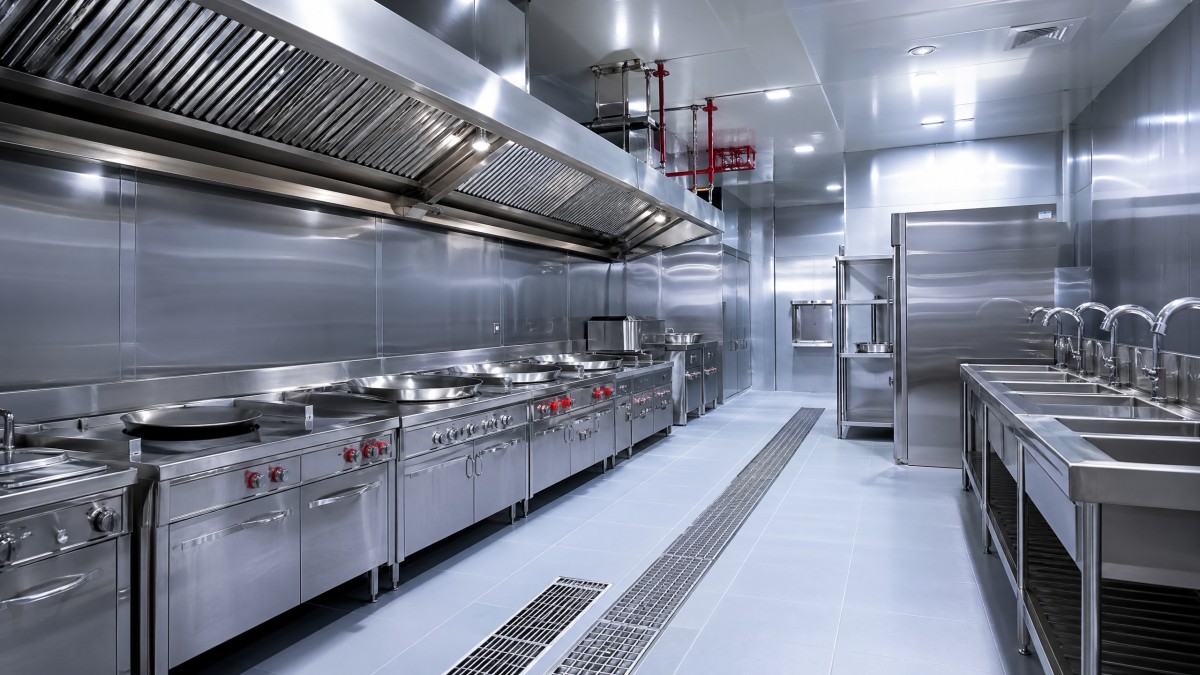
Most equipment specifications are created to describe product dimensions, power load, materials, operating capacity, and recommended installation conditions. These specification sheets are useful, but they are not the same as local approval documents. Manufacturers usually design for broad market use, while local codes are written and enforced at the city, county, state, or national level. That gap is where confusion begins.
In a restaurant project, several authorities may influence compliance at the same time. Health departments focus on food safety and cleanability. Fire departments review suppression systems, hood design, and fuel-related hazards. Building departments examine structural conditions, accessibility, and installation details. Mechanical and plumbing reviewers may have their own requirements for exhaust air, make-up air, condensate handling, interceptors, or drainage. Even if the equipment itself is certified, the full installation may still fail review.
Another source of conflict is that restaurant kitchen organization changes over time. Operators may choose one cooking line during concept design and then switch to a different menu, higher-volume fryer bank, or combi oven later. When that happens, the original hood, gas line, electrical panel capacity, or floor layout may no longer be enough. What looked compliant early in the project can become noncompliant after equipment changes.
What buyers and operators should check before selecting equipment
If you are comparing commercial kitchen equipment, start with three filters at the same time: operational fit, code fit, and site fit. Operational fit means the equipment supports your menu, throughput, labor model, and cleaning process. Code fit means the equipment category, fuel type, heat output, and installation method are acceptable to the local authority. Site fit means the unit can physically enter the building, connect to available utilities, and work within the actual kitchen envelope.
Many purchasing mistakes happen because buyers focus too heavily on price or capacity and treat compliance as a later installation issue. In practice, local code conflicts can erase any savings from a lower-cost purchase. A range that requires a different hood type, a dishwasher needing upgraded drainage, or refrigerated equipment that blocks required aisle widths can create redesign costs far beyond the equipment price difference.
A practical review checklist should include equipment dimensions, service clearances, door swing, cleaning access, utility loads, ventilation classification, heat and moisture output, drainage requirements, material finish, mounting details, and certification labels. Ask early whether the local authority accepts the certification standard shown on the unit. Also confirm whether field modifications, caster installations, shelving additions, or wall-sealing methods affect approval.
Ventilation and fire protection are where many projects go wrong
Ventilation is one of the most common causes of restaurant kitchen code conflict because it sits at the intersection of equipment selection, building infrastructure, and fire safety. Different cooking appliances generate different grease, smoke, heat, and vapor loads. A specification sheet may describe output and recommended hood use, but local code may classify the appliance differently or require a larger exhaust system than the buyer expected.
For example, adding charbroilers, wok ranges, high-production fryers, or solid-fuel cooking equipment can change the hood design, fire suppression requirements, duct routing, and air balancing needs for the entire kitchen line. Even switching from electric to gas can trigger additional review. In many cases, the equipment itself is not the problem; the real issue is that the building cannot support the exhaust volume or make-up air required for safe operation.
Operators should also remember that ventilation affects comfort, energy use, and kitchen productivity. A code-compliant system that is poorly matched to the equipment can still create hot work zones, pressure imbalances, and cleaning burdens. This is why smart procurement involves coordination between equipment suppliers, kitchen designers, mechanical engineers, and local reviewers before final approval and ordering.
Restaurant kitchen stainless steel requirements are not just about appearance
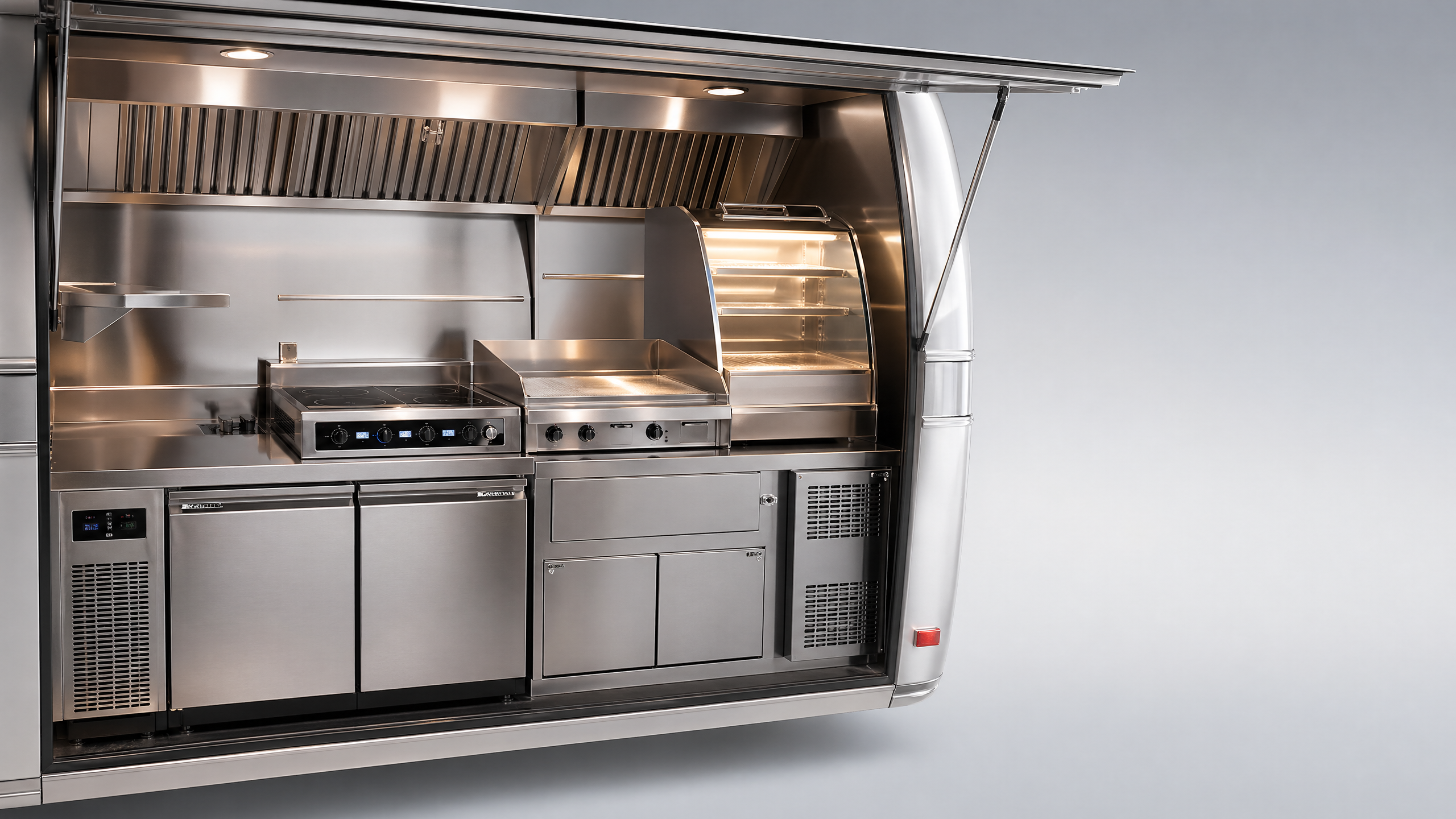
Restaurant kitchen stainless steel is often discussed as a default material choice, but its importance goes beyond visual consistency or corrosion resistance. Local health codes typically care about whether food-contact and non-food-contact surfaces are smooth, durable, nonabsorbent, and cleanable. The type of stainless steel, weld quality, surface finish, seams, and edge treatments can all affect whether an installation is considered sanitary and maintainable.
In many jurisdictions, the problem is not whether stainless steel is used, but how it is used. A table with difficult-to-clean joints, shelving with exposed unfinished edges, or equipment legs that do not allow sufficient cleaning access can create compliance concerns. Wall flashings, backsplashes, coved transitions, and sealed penetrations matter because health inspectors evaluate the full sanitation environment, not only the machine itself.
Buyers should verify where stainless construction is essential and where alternative materials may be accepted. High-moisture, high-cleaning, and food-prep zones usually justify stronger sanitation-focused specifications. Storage or back-of-house support areas may have more flexibility, depending on local rules and operational risk. The key is to match material specifications to actual use conditions rather than assuming all stainless products are equally suitable for every part of a commercial restaurant kitchen.
Storage, workflow, and sanitation rules can affect equipment decisions
Restaurant kitchen organization has a direct relationship to code compliance. Equipment that fits the room may still create problems if it interrupts clean-to-dirty flow, blocks handwashing access, crowds refrigerated storage, or reduces safe movement around hot equipment. In health and safety terms, layout is not only a productivity issue. It supports contamination control, staff behavior, and emergency access.
Cold storage placement, dry storage shelving height, chemical separation, utensil storage, and waste handling all influence what equipment should be purchased and where it should be installed. A prep cooler may seem convenient near a cook line, but if it interferes with required aisle width or hand sink access, it can become a problem. Similarly, adding shelving to maximize storage can affect sprinkler coverage, cleanability, or inspection access.
Decision-makers should evaluate storage and workflow as part of equipment specification review rather than as a separate interior planning exercise. The more compact the kitchen, the more important this becomes. Small restaurant footprints often force teams to choose between theoretical maximum output and code-compliant, sustainable daily operation. In many cases, the better decision is to select fewer but more versatile pieces of equipment that support both workflow and compliance.
How to manage code conflicts before they become change orders
The best way to prevent local code conflicts is to build a structured review process before purchase orders are issued. Start by creating a coordinated equipment schedule that includes model numbers, utility data, ventilation type, dimensions, certifications, and intended location. Then compare that schedule against local review requirements, landlord standards, and site conditions. This sounds basic, but many projects skip this step and rely on informal assumptions.
It is also wise to request a pre-submittal or advisory review when the jurisdiction allows it. While inspectors may not approve a full kitchen concept in an informal meeting, early feedback can identify known problem categories such as hood sizing, grease waste, indirect drainage, ADA access, or solid-fuel restrictions. Catching these issues before fabrication or shipment can protect both timeline and budget.
Procurement teams should document all revisions carefully. If a supplier substitutes an equivalent model, changes electrical characteristics, revises dimensions, or modifies factory accessories, the updated specification should go back through the project team. “Equivalent” in purchasing does not always mean equivalent in code review. Small changes can create large consequences when space, airflow, and approvals are tight.
Questions decision-makers should ask suppliers, consultants, and contractors
Business owners and purchasing managers do not need to become code experts, but they do need to ask the right questions. First, ask whether the equipment has been installed in similar jurisdictions and under similar operating conditions. Second, ask what assumptions the specification sheet makes about utilities, air movement, drainage, and clearances. Third, ask what site-specific items are not included in the equipment package but are necessary for compliance.
It is equally important to ask kitchen designers and contractors how they validate coordination. Do they review submittals against local code comments? Do they confirm field dimensions before release? Do they track utility rough-ins against final equipment selections? Strong vendors and consultants welcome these questions because they reduce project risk for everyone involved.
Finally, ask for documentation that supports approval and maintenance over time. This may include cut sheets, certification records, cleaning instructions, hood integration details, and utility schedules. For operators, good documentation is not just a permit tool. It also supports safer training, easier inspections, and smarter long-term equipment replacement decisions.
Balancing compliance, efficiency, and long-term value in a commercial restaurant kitchen
The right restaurant kitchen equipment decision is rarely the cheapest model or the highest-capacity model. It is the one that aligns menu needs, labor efficiency, sanitation, energy use, maintenance demands, and local code requirements within the physical constraints of the site. For growing businesses, this balanced approach is especially important because noncompliant or poorly coordinated installations limit future flexibility.
Smart kitchen investments increasingly include energy-efficient appliances, programmable cooking systems, and connected monitoring features. These can improve productivity and operating control, but they still need to fit local rules on ventilation, electrical service, water use, and installation. Advanced equipment does not remove the need for code coordination; in some cases, it makes that coordination even more important.
When evaluating long-term value, think beyond the opening day inspection. Consider cleaning labor, downtime risk, spare parts access, staff training, utility costs, and how easily the kitchen can adapt if the menu changes. A well-coordinated equipment package supports both compliance and operational resilience, which is often more valuable than short-term savings on the initial order.
Conclusion: treat specifications as a starting point, not the final answer
Restaurant kitchen equipment specifications are essential, but they do not guarantee that a piece of equipment will work smoothly in your specific project. Local code conflicts usually appear in the details: hood requirements, stainless steel sanitation standards, floor drainage, access clearances, fire protection, and workflow constraints. That is why careful review before purchase is one of the most important steps in commercial kitchen planning.
For information researchers, operators, buyers, and business leaders, the most useful mindset is simple: compare every equipment decision against real local conditions, not only manufacturer literature. The sooner that happens, the easier it becomes to protect the budget, avoid delays, and create a restaurant kitchen organization that supports safe and efficient daily work.
In short, successful kitchen planning is not about choosing equipment in isolation. It is about integrating product specifications, local compliance, and operational reality into one coordinated decision. When that happens, your commercial restaurant kitchen is far more likely to open on time, perform well, and stay adaptable for the future.
- commercial kitchen equipment
- smart kitchen
- cooking equipment
- kitchen design
- restaurant kitchen
- Wok Range
- Charbroiler
- kitchen equipment
- restaurant kitchen equipment
- restaurant kitchen equipment specifications
- commercial restaurant kitchen
- restaurant kitchen stainless steel
- restaurant kitchen organization
Popular Tags
Kitchen Industry Research Team
Dedicated to analyzing emerging trends and technological shifts in the global hospitality and foodservice infrastructure sector.
Industry Insights
Join 15,000+ industry professionals. Get the latest market trends and tech news delivered weekly.
No spam. Unsubscribe anytime.
Contact With us
Contact:
Anne Yin (Ceramics Dinnerware/Glassware)
Lucky Zhai(Flatware)