
Where a Commercial Induction Cooker saves money fastest
For finance decision-makers, a Commercial Induction Cooker is often one of the fastest kitchen upgrades to show measurable savings. Lower energy consumption, reduced ventilation load, faster cooking times, and less wasted heat can quickly improve operating margins. In this article, we look at where the return appears fastest and how to evaluate the investment with practical cost-focused criteria.
Where does a Commercial Induction Cooker deliver savings first?
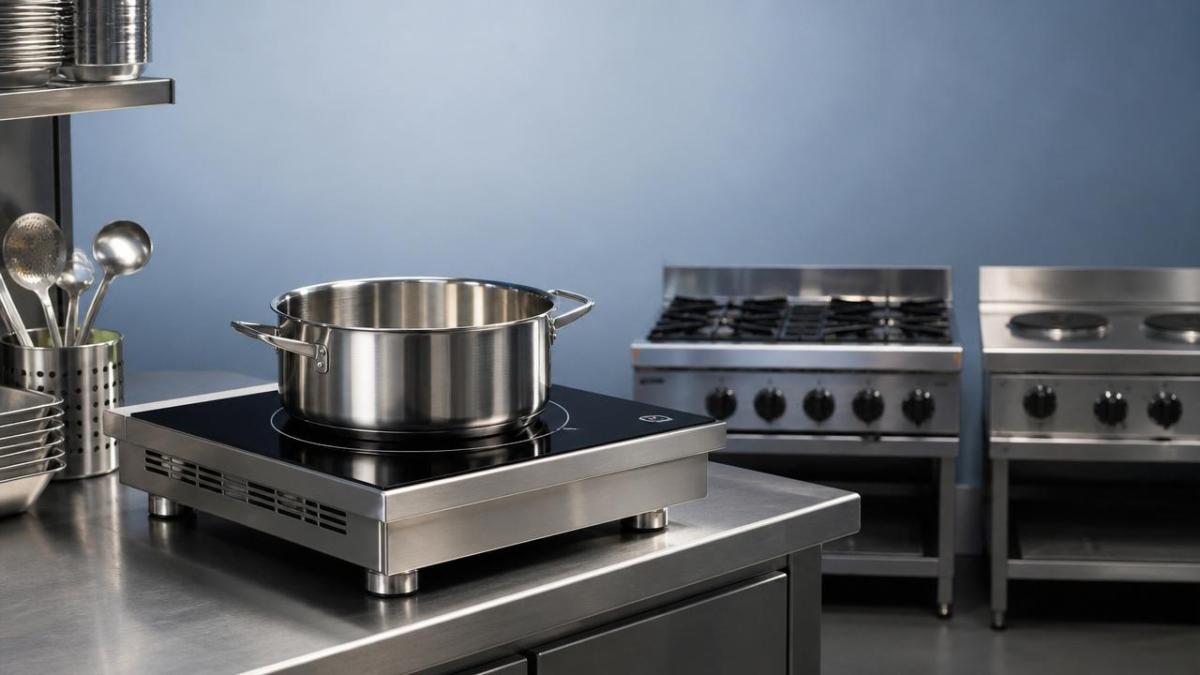
A Commercial Induction Cooker does not save money in just one line item. Its value usually appears across several operating costs at the same time. For financial approvers, that matters because small gains in energy, labor flow, kitchen comfort, and maintenance can combine into a short payback period, especially in high-volume kitchens.
The fastest savings usually show up in sites where cooking is frequent, service windows are tight, and ventilation costs are high. Restaurants, hotels, central kitchens, foodservice chains, and some food processing environments often benefit sooner than low-usage kitchens. This aligns with broader kitchen equipment industry trends toward energy efficiency, automation, and better control of operating costs.
- High daily usage magnifies energy savings because induction transfers more heat directly into the cookware instead of the surrounding air.
- Heat-sensitive kitchen layouts benefit from lower ambient temperature, which can ease ventilation demand and improve staff comfort.
- Operations with repetitive cooking tasks often gain labor productivity because heating response is faster and more controllable.
- Sites replacing aging electric hotplates or gas ranges may capture savings faster than sites already using efficient equipment.
The key financial point is simple: the return on a Commercial Induction Cooker accelerates when energy use is visible, production volume is stable, and management can track before-and-after performance with discipline.
Which operating scenarios produce the fastest ROI?
Not every kitchen sees the same payback speed. Finance teams should prioritize scenarios where the equipment runs for long hours, where service speed affects revenue, or where heat management costs are unusually high. A Commercial Induction Cooker tends to pay back faster in these environments than in occasional-use kitchens.
The following comparison helps identify where cost recovery is typically strongest.
For budget holders, the strongest candidates are operations with high usage hours and measurable throughput. If a site cannot isolate utility consumption, production hours, or cooking volume, ROI may still exist, but approval becomes harder because savings remain anecdotal instead of auditable.
A practical rule for finance teams
If the kitchen runs multiple shifts, struggles with heat buildup, or depends on fast line turnover, a Commercial Induction Cooker is more likely to justify investment quickly. If usage is seasonal, intermittent, or operationally inconsistent, the payback period should be modeled more conservatively.
Commercial Induction Cooker vs gas or traditional electric: what changes financially?
Many purchase requests focus too narrowly on unit price. That creates a distorted decision. A Commercial Induction Cooker may cost more upfront than some conventional alternatives, but approval should consider total cost of ownership: energy transfer efficiency, ventilation impact, cleaning time, maintenance exposure, and downtime risk.
The table below compares the financial logic across common cooking options used in commercial kitchens.
This comparison shows why finance teams should avoid approving solely on purchase price. In many global kitchen equipment markets, the shift toward smart and energy-efficient systems is driven by operating economics, not by technology fashion. The more disciplined the kitchen is in tracking utilities and labor, the easier it becomes to justify induction on total cost rather than capex alone.
Hidden financial gains that are often missed
- Lower excess heat may reduce strain on HVAC and extraction systems in compact kitchens.
- More precise control can reduce overcooking, scorching, and avoidable product waste.
- Faster heat-up can shorten waiting time between orders or batches, raising usable output per shift.
- Cleaner surfaces may lower end-of-day labor minutes in busy operations.
What should financial approvers verify before purchase?
A Commercial Induction Cooker can be a strong investment, but only if the site is ready for it. Approvers should ask for operating evidence, not just sales claims. Good procurement in the kitchen equipment sector now requires a blend of technical fit, utility compatibility, compliance awareness, and measurable savings assumptions.
Key approval questions
- What is the current energy source cost at the site, and how stable is that cost over the next budget cycle?
- How many cooking hours per day will the unit actually run, including peak and off-peak periods?
- Does the cookware currently used support induction, or is replacement cost required?
- Does the electrical infrastructure support the unit without expensive distribution upgrades?
- What local compliance, installation, and safety requirements apply to commercial kitchen equipment?
Finance teams should also ask suppliers for a realistic operating profile. An honest estimate based on menu style, shift pattern, kitchen size, and service intensity is more useful than a generic promise of savings.
The next table offers a practical procurement checklist for evaluating a Commercial Induction Cooker before releasing budget.
This checklist helps keep the business case grounded. In large hospitality and foodservice projects, weak planning around power supply or cookware transition can erode the expected savings even when the Commercial Induction Cooker itself is technically sound.
How to build a practical cost case without overpromising
The most credible budget request uses a conservative savings model. Finance decision-makers should avoid broad claims and instead compare current-state cost against a likely future-state range. The best kitchen equipment proposals usually separate direct savings from secondary savings.
Direct savings categories
- Energy consumption during actual cooking hours.
- Reduced idle heat losses compared with older equipment.
- Potential reduction in ventilation-related operating load.
Secondary savings categories
- Faster line speed during peak service.
- Lower cleaning labor per station.
- Reduced food waste from better temperature control.
- Lower risk of staff discomfort in heat-intensive kitchens.
A sensible approval model should include unit price, installation, cookware adjustments, training time, and any electrical work. It should then estimate payback under low, medium, and high utilization. This gives decision-makers a usable range rather than a single optimistic number.
Common mistakes in ROI proposals
- Using theoretical efficiency values without matching them to real operating hours.
- Ignoring cookware replacement or site electrical adaptation.
- Assuming labor savings where kitchen workflow will not actually change.
- Comparing new induction against poorly maintained old equipment without acknowledging maintenance distortion.
What standards, compliance, and implementation points should be reviewed?
In global kitchen equipment procurement, compliance is not only a safety issue. It is also a cost issue. Delays caused by installation mismatches, missing documentation, or local inspection problems can weaken the business case for a Commercial Induction Cooker. Early review helps protect timeline and budget.
Areas to confirm before final approval
- Electrical specifications must align with the site’s supply, breaker configuration, and safety rules.
- Equipment documentation should support local commercial kitchen installation and inspection processes.
- Material, hygiene, and cleanability expectations should fit the operational setting, especially in hotel, restaurant, and food processing support areas.
- Service access and spare parts planning should be reviewed for multi-site rollouts or export projects.
Where organizations buy internationally, supplier capability matters. The kitchen equipment industry increasingly relies on coordinated manufacturing, export documentation, and technical support across markets. For finance teams, that means the right supplier reduces risk not just at purchase, but also during shipping, installation, and after-sales support.
FAQ: what do financial decision-makers ask most often?
How do I know whether a Commercial Induction Cooker will pay back quickly?
Start with three numbers: daily cooking hours, current energy cost, and production volume. If the station operates intensively, experiences peak-time bottlenecks, or adds significant heat to the kitchen, payback is usually faster. If use is occasional, the savings may still exist, but the recovery period will be longer.
Is the lower ventilation load always significant?
Not always. The financial effect depends on kitchen layout, extraction design, climate conditions, and whether the existing ventilation system is already oversized or fixed in operation. However, in compact, high-heat kitchens, reduced ambient heat can be financially relevant and should be included in the review.
What is the most overlooked cost in a Commercial Induction Cooker project?
Cookware compatibility and electrical preparation are commonly underestimated. A unit may appear attractive on price, but if the site needs new pans, circuit changes, or installation adjustments, the first-year cost picture changes. These items should be approved upfront, not discovered after delivery.
Does induction only make sense for restaurants?
No. Restaurants are a common fit, but hotels, institutional catering, central kitchens, and some food processing support areas can also benefit. The decision depends less on sector label and more on operating intensity, control needs, workflow consistency, and the ability to measure savings.
Why choose us for Commercial Induction Cooker evaluation and sourcing?
If you are reviewing a Commercial Induction Cooker for restaurants, hotels, central kitchens, or broader foodservice operations, we can support the decision process with practical, procurement-ready information rather than generic product talk. Our focus is aligned with the direction of the modern kitchen equipment industry: efficient, scalable, and operationally realistic solutions.
- Parameter confirmation: power range, operating profile, cookware suitability, and installation conditions.
- Product selection: matching a Commercial Induction Cooker to restaurant throughput, hotel buffet service, central kitchen volume, or export project needs.
- Delivery planning: estimated lead time, shipment coordination, and project sequencing for single-site or multi-site purchase.
- Compliance discussion: general documentation expectations, electrical fit, and commercial kitchen application requirements.
- Quotation support: comparing configuration options, identifying hidden cost drivers, and preparing a more defensible budget case.
Contact us if you want to review specifications, compare cooking solutions, confirm delivery timing, discuss certification-related questions, request sample or configuration support, or build a cost case for internal approval. For finance-led procurement, the right Commercial Induction Cooker decision starts with clear numbers, clear scenarios, and a supplier conversation focused on implementation reality.
Popular Tags
Kitchen Industry Research Team
Dedicated to analyzing emerging trends and technological shifts in the global hospitality and foodservice infrastructure sector.
Industry Insights
Join 15,000+ industry professionals. Get the latest market trends and tech news delivered weekly.
No spam. Unsubscribe anytime.
Contact With us
Contact:
Anne Yin (Ceramics Dinnerware/Glassware)
Lucky Zhai(Flatware)