
Meat grinder machine capacity gaps that raise operating costs
Choosing the wrong meat grinder machine capacity can quietly increase labor, energy use, maintenance frequency, and product waste. For financial decision-makers, small mismatches between output demand and equipment capability often lead to higher operating costs and slower return on investment. Understanding where capacity gaps occur helps businesses control budgets, improve processing efficiency, and make smarter equipment purchasing decisions.
Why meat grinder machine capacity gaps become a hidden cost issue
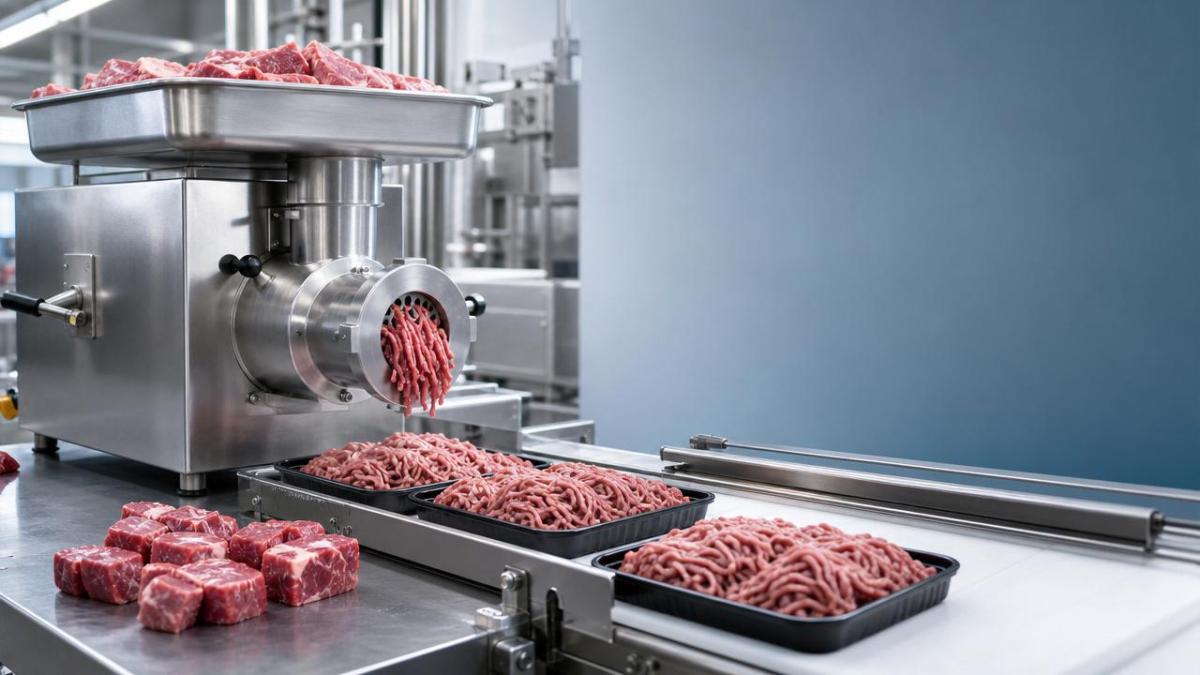
In commercial kitchens, hotels, central kitchens, butcher operations, and food processing lines, a meat grinder machine is rarely evaluated only by purchase price. For finance teams, the more important question is whether the selected capacity fits actual throughput, staffing structure, product mix, sanitation workflow, and peak-hour demand.
A capacity gap appears when the machine is either too small or too large for the real workload. Both situations raise operating costs. An undersized unit may need extra labor shifts, repeated feeding cycles, and more downtime for cooling or cleaning. An oversized unit may consume unnecessary power, require higher upfront capital, and run inefficiently at partial loads.
This issue matters more as the kitchen equipment industry moves toward automation, intelligent processing, and energy-efficient operations. Buyers are no longer comparing grinders as isolated tools. They are evaluating them as part of a broader production system that includes prep tables, mixers, patty lines, packaging steps, chilled storage, and digital production planning.
- If capacity is too low, labor cost per kilogram usually rises because operators spend more time loading, trimming backlog, and handling interruptions.
- If capacity is too high, utilization falls and depreciation per useful production hour becomes harder to justify.
- If capacity does not match upstream and downstream equipment, bottlenecks shift instead of disappearing.
What finance approvers should ask first
Before approving a meat grinder machine, finance leaders should ask whether quoted output is based on ideal test conditions or actual operating conditions. Vendor claims often assume steady feed size, chilled raw material, sharp cutting components, trained operators, and uninterrupted runtime. Real production may include mixed cuts, variable fat content, sanitation pauses, and shift changes.
Where capacity mismatch shows up in real operating budgets
Capacity mismatch rarely appears as one line item. It spreads across payroll, utilities, maintenance, waste, and delayed output. That is why a meat grinder machine decision often looks acceptable during procurement but becomes expensive after several months of use.
The table below shows how different types of mismatch can affect cost structure in foodservice and food processing environments.
For a finance approver, the key lesson is simple: rated capacity is not the same as effective capacity. Effective capacity must reflect cleaning time, operator rhythm, feed preparation, maintenance intervals, and product specification changes.
Four costs that often get underestimated
- Labor balancing cost: when a small meat grinder machine forces more manual staging or extra workers near the feed area.
- Yield loss: when inconsistent grinding temperature or throughput creates texture variation and trim waste.
- Maintenance frequency: when overloading accelerates wear on knives, plates, motors, and transmission components.
- Opportunity cost: when the facility cannot accept larger orders because the grinding step limits output.
How to evaluate meat grinder machine capacity by application scenario
The right capacity depends heavily on where the machine is used. A restaurant group, a hotel banquet kitchen, a supermarket backroom, and a frozen food processor all need different planning logic. Approving capacity without scenario analysis usually leads to poor asset utilization.
The table below provides a practical selection view for different operating environments.
This comparison helps finance teams move beyond a generic “bigger is better” mindset. In many kitchens, the better investment is a properly sized meat grinder machine with predictable output, simpler cleaning, and lower total operating cost.
Scenario-based warning signs
- If daily volume is modest but highly variable, avoid selecting only by maximum theoretical output.
- If the business handles multiple recipes, evaluate changeover and cleaning time as part of usable capacity.
- If the grinder feeds another automated process, check line balance rather than standalone grinder speed.
Which technical parameters matter most for cost control
A meat grinder machine should not be assessed on capacity numbers alone. Technical specifications directly affect labor efficiency, sanitation time, product quality, and maintenance cost. For finance-driven reviews, the goal is to connect each parameter to a budget consequence.
Parameters worth checking during approval
- Rated throughput versus tested throughput under actual product conditions, including fresh or chilled meat and different fat ratios.
- Motor power and duty cycle, especially if the machine will run for long shifts or in central kitchen production.
- Feed inlet size and screw design, which influence operator workload and pre-cut labor.
- Knife and plate accessibility, because difficult disassembly increases sanitation time and labor cost.
- Material contact surfaces and hygienic construction, which affect cleaning validation and food safety management.
- Noise, footprint, and electrical compatibility, especially in compact kitchen or retail environments.
Why effective hourly output matters more than brochure output
Suppose one meat grinder machine is rated higher but requires more frequent pauses for feeding adjustment or cutting set changes. Another model has a lower nominal figure but runs consistently with easier cleaning and lower operator fatigue. In cost terms, the second option may deliver more sellable output per paid hour.
This is especially relevant in a kitchen equipment market that increasingly values automation and integrated workflow. Machines that support stable production, digital planning, and predictable sanitation often outperform larger but less balanced systems.
A practical procurement guide for finance approvers
When reviewing meat grinder machine proposals, finance departments need a method that links operational reality with investment discipline. The checklist below helps reduce approval risk without delaying procurement.
Five-step approval framework
- Define daily, weekly, and peak-hour output. Do not use annual averages alone. Short peak periods often determine the real capacity requirement.
- Convert rated capacity into effective shift capacity by subtracting cleaning time, setup, loading pauses, and expected maintenance interruptions.
- Check line integration. Confirm whether the grinder matches upstream cutting and downstream mixing, filling, forming, or packaging capacity.
- Estimate total cost of ownership, including electricity, wearable parts, sanitation labor, spare parts access, and probable downtime cost.
- Verify supplier support on delivery schedule, technical documentation, installation planning, operator training, and parts replacement cycle.
For global sourcing projects, also review power standards, local food-contact expectations, and documentation needs. In cross-border kitchen equipment procurement, a competitively priced meat grinder machine can become costly if voltage adaptation, spare parts timing, or compliance paperwork are overlooked.
Common mistakes that lead to poor ROI
Many approval mistakes happen because stakeholders focus on one visible metric. In reality, the return on a meat grinder machine depends on how the machine performs inside a real production system.
Frequent misconceptions
- Choosing by maximum output only. Peak numbers can hide poor average utilization.
- Ignoring sanitation labor. In many kitchens, cleaning time meaningfully changes actual output economics.
- Assuming all minced meat products behave the same. Texture, temperature, and raw material consistency can change performance.
- Underestimating spare parts and blade wear. Low purchase price may be offset by frequent replacement cost.
- Failing to plan for business growth. A machine sized only for current volume may create a new bottleneck within a short time.
A balanced decision does not always mean buying the largest machine or the cheapest one. It means selecting a capacity range that supports current output, protects margin, and leaves room for realistic expansion.
FAQ about meat grinder machine capacity and cost planning
How do I know if a meat grinder machine is undersized?
Warning signs include routine overtime during prep windows, waiting raw material near the grinder, repeated partial batches, rising operator fatigue, and frequent pressure to skip preventive maintenance. If these issues appear even when staffing is stable, the grinder may be too small for actual peak demand.
Is an oversized meat grinder machine always safer for future growth?
Not always. Oversizing can increase capital expense, floor space demand, power consumption, and cleaning burden. It can be justified when growth visibility is strong or when the grinder must support multiple departments. Otherwise, it may reduce ROI because utilization stays low for too long.
What should finance teams request from suppliers?
Ask for rated output assumptions, electrical requirements, recommended cleaning intervals, wearable parts list, suggested spare parts package, expected delivery lead time, and any available guidance on installation and operator training. These details help convert a quote into a realistic operating cost model.
Which compliance topics are relevant in international kitchen equipment purchasing?
Typical concerns include food-contact material suitability, electrical safety expectations, sanitation-friendly construction, and documentation aligned with the destination market. Requirements vary by region, so buyers should confirm what is needed before shipment rather than after arrival.
Why choosing the right supplier matters as much as choosing the right capacity
In the kitchen equipment industry, capacity planning works best when the supplier understands not only the machine but also the production environment. Restaurants, hotels, central kitchens, and food processors need suppliers who can discuss throughput, sanitation rhythm, energy efficiency, workflow integration, and export coordination in practical terms.
A capable supplier should help you compare meat grinder machine options against application volume, labor structure, utility conditions, and delivery deadlines. That support reduces the risk of approving equipment that looks suitable on paper but performs poorly in the field.
Why choose us
We support buyers who need more than a simple quotation. If you are evaluating a meat grinder machine for a commercial kitchen, central kitchen, or food processing project, you can consult us on output matching, parameter confirmation, model selection, delivery timing, voltage and market requirements, spare parts planning, and solution coordination with other kitchen equipment.
You can also discuss sample support, application-specific recommendations, cleaning-oriented design concerns, and budget comparison between standard and customized configurations. If your finance team needs a clearer basis for approval, we can help organize the key data points needed for cost review, procurement comparison, and supplier communication.
Popular Tags
Kitchen Industry Research Team
Dedicated to analyzing emerging trends and technological shifts in the global hospitality and foodservice infrastructure sector.
Industry Insights
Join 15,000+ industry professionals. Get the latest market trends and tech news delivered weekly.
No spam. Unsubscribe anytime.
Contact With us
Contact:
Anne Yin (Ceramics Dinnerware/Glassware)
Lucky Zhai(Flatware)