
Heavy duty restaurant supplies that cut replacement cycles
For finance decision-makers, investing in heavy duty restaurant supplies is not just about equipment performance—it is about lowering total replacement costs, reducing downtime, and protecting long-term operating margins. As commercial kitchens move toward smarter, more efficient systems, durable supplies have become a practical strategy for extending asset life while supporting consistency, safety, and scalable growth.
Why do heavy duty restaurant supplies matter more to finance teams than to operators alone?
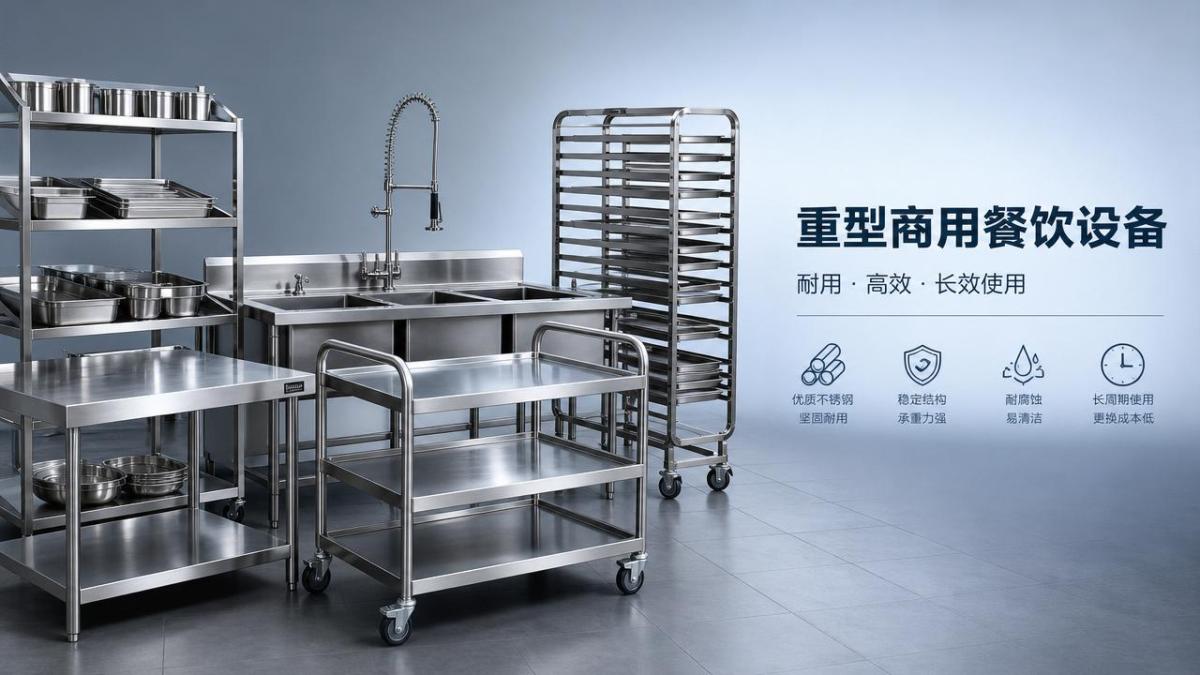
In many kitchen projects, operators focus on output, speed, and ease of use. Finance teams look at a different equation. They ask how often an item fails, what maintenance costs look like over three to five years, how quickly a replacement can be sourced, and whether an asset will still fit future kitchen upgrades. This is where heavy duty restaurant supplies become a capital protection decision rather than a simple purchasing line item.
Across restaurants, hotels, central kitchens, and food processing environments, replacement cycles often shorten because of under-specified materials, unstable sourcing, and poor compatibility with high-volume use. A low upfront price may appear attractive, yet frequent replacement can disrupt production schedules, raise labor pressure, and increase emergency procurement at unfavorable prices.
The kitchen equipment industry is also changing fast. Automated preparation systems, digital kitchen management, and energy-efficient cooking equipment all place new demands on support items, from shelving and worktables to cookware, carts, sinks, racks, and food handling tools. Heavy duty restaurant supplies need to match this environment by offering structural durability, hygiene compatibility, and long-term operational stability.
- They reduce hidden costs tied to emergency replacements, rushed shipping, and unplanned labor interruptions.
- They improve asset consistency across multiple sites, which simplifies budgeting and procurement control.
- They support food safety and cleaning compliance, especially in wet, hot, corrosive, or high-frequency-use kitchen zones.
- They align better with modern energy-efficient and automated kitchen layouts that demand stable, durable support infrastructure.
What counts as heavy duty restaurant supplies in today’s commercial kitchen environment?
The term covers more than large equipment. In practice, heavy duty restaurant supplies include high-load and high-cycle-use items that directly affect workflow, hygiene, and replacement frequency. Finance approvers should evaluate these items as operational enablers. If they fail early, they can trigger wider productivity losses across prep, cooking, storage, and service functions.
Common categories that influence replacement cycles
- Stainless steel worktables, sinks, cabinets, and shelving used in humid and high-cleaning environments.
- Heavy-duty cookware, gastronorm pans, mixing bowls, and food prep containers exposed to repeated heating, chilling, and handling.
- Transport carts, bakery racks, utility trolleys, and tray systems that face repeated rolling impact and high load cycles.
- Cutting stations, utensils, storage bins, and support accessories used intensively in quick-service and central kitchen operations.
- Support structures for smart kitchens, such as modular stations and integrated storage that must remain stable under changing layouts.
For buyers in a broad industry context, the best heavy duty restaurant supplies are not defined by weight alone. They are defined by resistance to corrosion, weld integrity, load-bearing stability, cleanability, repair practicality, and compatibility with the pace of daily production.
How do finance approvers compare low-cost supplies with heavy duty restaurant supplies?
The table below helps compare two common procurement paths. It is especially useful when a finance team must justify why a slightly higher purchase price may produce lower total ownership cost over the equipment life cycle.
For financial planning, the critical takeaway is simple: comparison should not stop at purchase price. It should include replacement timing, lost output, labor disruption, and the cost of sourcing non-standard replacements under pressure. Heavy duty restaurant supplies often win when those factors are included.
Which technical and material factors actually extend replacement cycles?
Not every durable-looking product performs well in commercial use. Finance decision-makers benefit from asking procurement teams for concrete specifications rather than general claims. Material grade, fabrication quality, load rating, and maintenance requirements often determine the real service life.
Key specification checkpoints
- Material suitability: Stainless steel is common, but suitability depends on the kitchen environment, moisture exposure, and cleaning agents used.
- Weld and joint quality: Weak welds are a frequent cause of early failure in tables, sinks, and carts subjected to repeated movement and load stress.
- Load-bearing design: Shelves, racks, and trolleys should be checked for practical working loads, not just static showcase figures.
- Mobility components: Wheels, handles, hinges, and casters often fail before the main structure, so these parts deserve equal review.
- Surface finish and cleanability: Smooth finishes and fewer dirt-trap points reduce sanitation risk and support longer usable life.
When a supplier understands automation, smart kitchen workflows, and energy-efficient layouts, they can usually recommend heavy duty restaurant supplies that integrate better with present and future operations. That matters in a market where kitchens are becoming more modular, more digital, and more sensitive to hygiene performance.
What procurement criteria should finance teams require before approval?
A clear approval framework helps prevent overbuying in low-stress areas and underbuying in high-stress areas. The next table can be used as a practical review tool for multi-site restaurant groups, hotel kitchens, central food production units, and institutional catering operations.
This type of matrix is especially valuable when evaluating suppliers from major manufacturing regions such as China, Germany, Italy, and Japan. Global sourcing can create cost advantages, but only if specifications, lead times, and quality consistency are controlled carefully at the approval stage.
Where do heavy duty restaurant supplies deliver the strongest return?
Not every area needs the same investment level. Finance teams can improve returns by identifying the points where failure is most expensive. In broad kitchen equipment operations, those are usually the areas with high moisture, high weight, high movement, or high sanitation pressure.
High-return application scenarios
- Central kitchens: Heavy load movement, repeated washing, and continuous prep cycles make durable carts, tables, and racks a clear priority.
- Hotel back-of-house operations: Mixed production schedules and varied menu demands require supplies that handle both peak volume and frequent cleaning.
- Quick-service restaurants: Fast throughput increases wear on utensils, prep stations, shelving, and transport systems.
- Food processing support zones: Hygiene, corrosion resistance, and stable handling performance are essential for compliance and product consistency.
In these scenarios, heavy duty restaurant supplies contribute not only to longer life but also to process stability. That stability protects labor scheduling, output planning, and service-level commitments, all of which matter directly to margin control.
How should buyers balance cost, compliance, and future-readiness?
Commercial kitchen investment is increasingly linked to sanitation discipline, energy efficiency, and digital workflow integration. As a result, procurement should evaluate heavy duty restaurant supplies in the context of future kitchen development, not just current replacement needs.
Practical compliance and planning considerations
- Food-contact and hygiene suitability should be reviewed according to the intended use environment and cleaning protocol.
- Dimensions and modular compatibility should be checked for integration with existing equipment, kitchen traffic flow, and storage planning.
- Energy-efficient kitchen upgrades often require support products that can handle reorganized layouts and higher utilization density.
- Documentation for materials, fabrication details, and sourcing consistency can simplify approval and reduce post-purchase disputes.
For organizations planning automation or smart kitchen adoption, this is particularly important. A durable support system reduces the need for repeated reconfiguration purchases when production lines become more connected and data-driven.
FAQ: what do finance decision-makers often ask about heavy duty restaurant supplies?
How do we know whether a heavy-duty option is worth the premium?
Compare expected service life, failure impact, cleaning exposure, and replacement logistics. If an item sits in a critical workflow, is moved daily, or is hard to replace quickly, the premium is often justified. The decision becomes stronger when standardization across multiple sites is possible.
Which items should be upgraded first if the budget is limited?
Start with supplies that create the highest operational risk when they fail: carts, racks, worktables, sinks, shelving, and frequently handled prep accessories. These items often cause disproportionate disruption compared with their purchase price.
Are heavy duty restaurant supplies only relevant for large hotels or central kitchens?
No. Smaller restaurants with fast turnover and tight labor scheduling can benefit just as much. In compact operations, even a single failed support item can interrupt prep flow, delay service, and create urgent replacement costs.
What is the most common purchasing mistake?
Treating all supplies as low-value consumables. Some supplies are mission-critical assets. When buyers fail to separate low-impact items from high-impact infrastructure, they often approve products that shorten replacement cycles and weaken budget control.
Why choose us for heavy duty restaurant supplies planning and sourcing support?
We understand that finance approval depends on more than a catalog price. In the kitchen equipment sector, purchasing decisions must align with operational intensity, food safety expectations, sourcing stability, and the long-term shift toward smarter, more efficient kitchens. That is why our support focuses on measurable decision points instead of generic product claims.
- Parameter confirmation: We help clarify material choice, load expectations, environmental exposure, and product matching before approval.
- Product selection: We assist in separating standard-use items from true heavy duty restaurant supplies that need higher specification levels.
- Delivery planning: We can discuss lead time expectations, sourcing routes, and replacement continuity for multi-site or phased projects.
- Custom solution support: We can review workflow, dimensions, and application scenarios for kitchens, hotels, food production areas, and integrated service operations.
- Compliance discussion: We can help align procurement with practical hygiene, material, and documentation expectations relevant to commercial kitchen use.
- Quotation communication: We can compare specification levels and cost structures so finance teams can evaluate replacement-cycle impact before purchase.
If you are reviewing heavy duty restaurant supplies for a new kitchen project, a replacement program, or a multi-location procurement plan, contact us with your target application, expected load conditions, preferred materials, and required delivery timeline. We can help you narrow specifications, compare options, and build a procurement plan designed to cut replacement cycles rather than simply delay them.
Popular Tags
Kitchen Industry Research Team
Dedicated to analyzing emerging trends and technological shifts in the global hospitality and foodservice infrastructure sector.
Industry Insights
Join 15,000+ industry professionals. Get the latest market trends and tech news delivered weekly.
No spam. Unsubscribe anytime.
Contact With us
Contact:
Anne Yin (Ceramics Dinnerware/Glassware)
Lucky Zhai(Flatware)