
Is glass storage container wholesale cheaper at scale
For finance decision-makers, the key question is whether glass storage container wholesale truly delivers lower unit costs at scale without creating hidden expenses in logistics, breakage, or inventory. In the kitchen equipment sector, bulk purchasing can improve margins, standardize supply, and support food safety goals, but only when supplier quality, packaging efficiency, and long-term procurement value are carefully evaluated.
When does glass storage container wholesale become cheaper at scale?
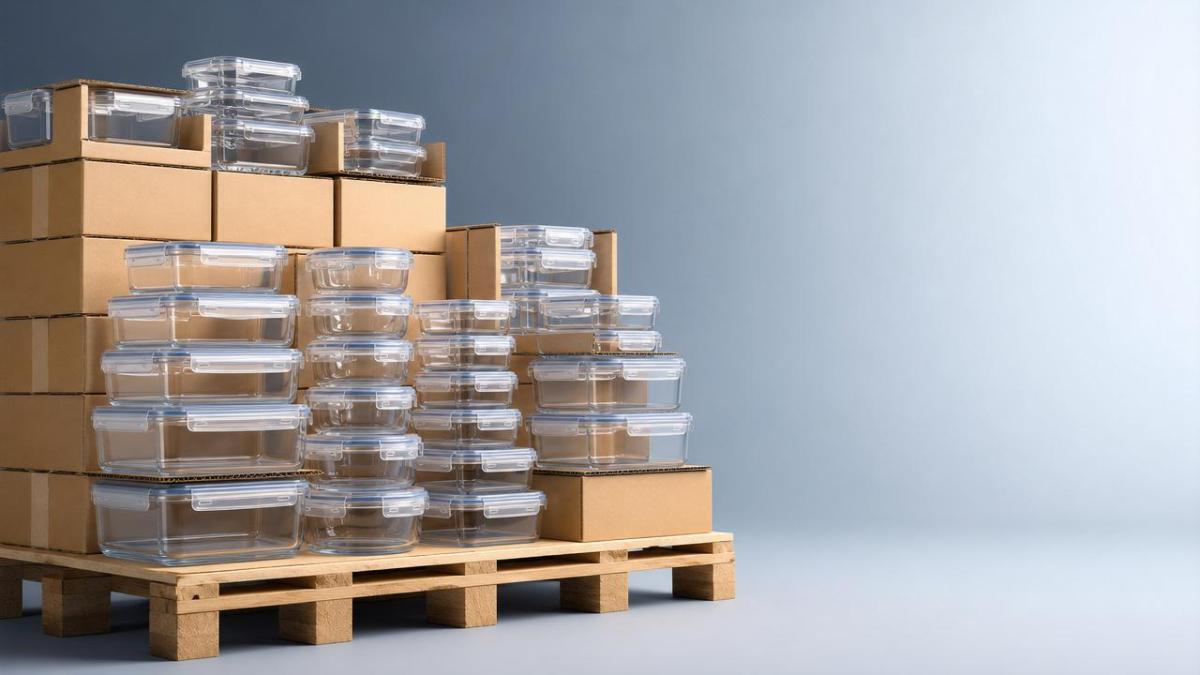
The short answer is yes, glass storage container wholesale is often cheaper at scale, but only under defined purchasing conditions. In foodservice, hospitality, food processing, and retail kitchen supply chains, the visible unit price is only one part of the financial picture. A lower ex-works quotation can be offset by breakage, poor carton design, inconsistent dimensions, or delayed replenishment.
For finance approvers, the decision is less about buying containers and more about managing total landed cost, operational reliability, and compliance risk. In a sector moving toward smarter, more efficient, and safety-driven kitchens, storage containers are no longer a simple commodity. They influence inventory turnover, labeling workflows, food safety practices, and replacement budgets.
Bulk procurement usually creates savings through production scale, shared tooling, packaging optimization, and freight efficiency. However, the savings are strongest when the order profile is stable and the specification is standardized across locations or product lines.
- A restaurant group can reduce per-unit purchasing costs by consolidating container sizes used in prep stations, cold storage, and takeaway support.
- A hotel chain can improve budgeting accuracy by fixing a standard pack assortment for kitchens, buffets, and back-of-house storage.
- A food processing company can lower replacement frequency when wholesale glass containers meet thermal shock and sealing expectations.
Why scale matters more in kitchen equipment procurement
The kitchen equipment industry operates across commercial kitchens, central kitchens, food factories, and household channels. Buyers increasingly want standardized items that support traceability, hygiene, energy-efficient workflows, and predictable replenishment. In this context, glass storage container wholesale can fit broader procurement goals because it links purchasing with operational control.
Scale matters because fixed costs are spread across more units. Mold amortization, packaging development, inspection setup, export documentation, and pallet planning all become more cost-efficient when volumes rise. Still, finance teams should ask whether order growth is real demand growth or just inventory accumulation.
What cost drivers should finance teams compare before approving bulk orders?
To assess whether glass storage container wholesale is truly economical, finance teams should compare full cost drivers rather than invoice price alone. The table below highlights the main cost categories that change as order volume increases in kitchen equipment supply chains.
The key takeaway is that scale lowers cost only when packaging engineering, replenishment planning, and quality control improve at the same time. A finance reviewer should request a landed-cost model that includes damage rate assumptions, not just purchase discounts.
Hidden expenses that can erase wholesale savings
In kitchen equipment procurement, glass products carry a specific risk profile. They are durable in use, but vulnerable in transit and handling. That means several hidden expenses can undermine the expected savings from glass storage container wholesale.
- Unplanned breakage during inbound transport, internal distribution, or first use after delivery.
- Low carton compression strength that causes damage in stacked pallet storage.
- Seal inconsistency that leads to leaks, food waste, or customer complaints.
- Excess SKU variation that makes forecasting harder and slows stock rotation.
- Long lead times that force emergency top-up orders at higher spot prices.
How does glass compare with plastic or metal alternatives in bulk procurement?
Finance teams rarely approve storage solutions in isolation. They compare glass against plastic and sometimes stainless steel based on cost, food safety, lifespan, cleaning, and presentation. In many kitchen equipment environments, the best choice depends on the operating scenario rather than one universal material preference.
The comparison table below is useful when evaluating glass storage container wholesale against other bulk purchasing options for restaurants, hotels, central kitchens, and food preparation businesses.
Glass tends to perform well where food visibility, odor resistance, and brand presentation matter. Plastic remains attractive where handling speed and low transport weight dominate. Stainless steel is often chosen for harsh commercial conditions. The finance decision should be tied to the operating model, not just the catalog price.
Where glass has stronger financial value
- Hotel and restaurant groups that want a cleaner visual standard across kitchens and buffet preparation areas.
- Food businesses that need ingredient visibility to reduce opening errors and improve stock checks.
- Retail and household-oriented channels where customer perception supports a higher resale value.
Which specifications matter most when evaluating wholesale glass containers?
Not all containers that look similar behave similarly in procurement. A finance approver should ask the sourcing or operations team to review a short list of technical and commercial specifications before confirming a glass storage container wholesale order.
Core selection points
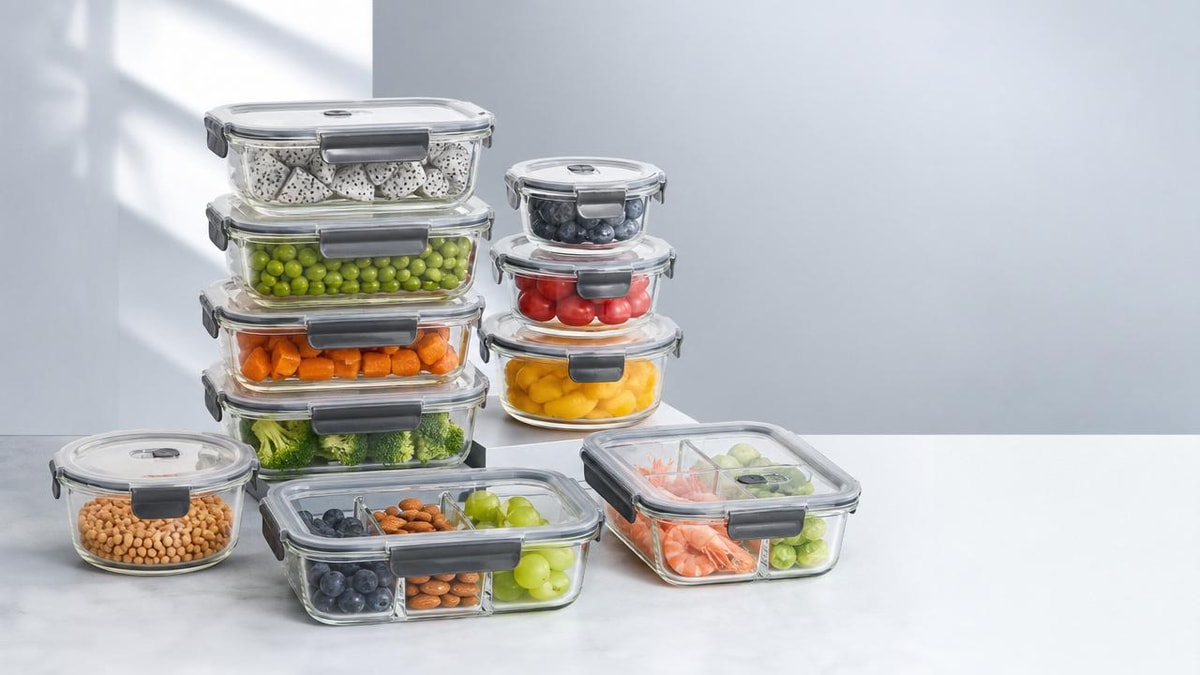
- Glass type and wall consistency, because uneven thickness can increase breakage risk and dimensional variation.
- Lid material and sealing structure, especially if the containers will be used for moist, oily, or odor-sensitive foods.
- Stackability and nesting efficiency, which influence storage density and freight economics.
- Temperature-use expectations, including chilled storage, reheating compatibility, and wash-cycle durability.
- Barcode labeling area and SKU clarity, which help digital kitchen management and inventory counting.
These points matter because the kitchen equipment market is shifting toward automation and smarter workflows. Even a basic storage container should work smoothly with standardized shelves, prep routines, and digital stock processes.
The following procurement guide helps finance teams translate technical details into commercial decisions when reviewing glass storage container wholesale proposals.
A practical approval method is to combine sample inspection with a landed-cost scenario. If the supplier cannot explain packaging logic, production consistency, or documentation readiness, the lower quote may not be the better financial decision.
How should buyers manage risk, compliance, and rollout at scale?
In the global kitchen equipment trade, scaling a purchase involves more than commercial negotiation. Buyers may source from major export regions such as China, Germany, Italy, or Japan, but the core approval logic is universal: validate use-case fit, quality consistency, compliance support, and delivery practicality before increasing order volume.
A workable rollout process for finance-led approval
- Standardize the container range. Reduce duplicate sizes and agree on the primary formats needed by operations.
- Test samples in real kitchen conditions. Include stacking, washing, chilled storage, and handling checks.
- Review packaging and shipping plans. Confirm carton count, pallet pattern, and likely breakage exposure.
- Request documentation for food-contact suitability and any market-specific import needs.
- Use phased delivery if demand is growing but not fully proven, so unit savings are balanced against working capital pressure.
This approach suits the modern kitchen equipment environment, where efficiency and standardization matter as much as product cost. It also helps finance teams align procurement with broader operational goals such as food safety, stock visibility, and multi-site control.
Common mistakes in glass storage container wholesale
- Approving the cheapest offer without reviewing packaging performance for export or domestic transfer.
- Buying too many sizes, which reduces scale benefits and complicates replenishment.
- Ignoring lid replacement economics, even though lids may fail earlier than the glass body.
- Treating wholesale savings as guaranteed without tracking breakage and fill-rate performance after rollout.
FAQ: what do finance decision-makers usually ask?
Is glass storage container wholesale always cheaper than buying in smaller batches?
No. It is usually cheaper on a unit basis, but not always on a total-cost basis. If inventory turns slowly, breakage rates are high, or the supplier cannot protect shipments effectively, the apparent discount may disappear. The best answer comes from comparing landed cost, replacement assumptions, and reorder frequency.
What order size usually justifies wholesale purchasing?
There is no single threshold because prices depend on size mix, packaging, destination, and supplier setup. In practice, wholesale value improves when buyers can consolidate repeat demand across sites, avoid one-off specifications, and fill cartons or pallets efficiently. Mixed-size standard programs often perform better than scattered spot purchases.
What should be checked before approving a large order?
Check sample quality, lid fit, packaging method, lead time reliability, documentation readiness, and palletization. Also ask operations how the containers will be stored, washed, and moved. A technically acceptable product can still be a poor financial choice if it does not match kitchen workflow.
Are glass containers suitable for all kitchen equipment scenarios?
No. They are strong for food visibility, non-reactive storage, and premium presentation, but may not be ideal in very high-impact or fast-transfer environments. Some businesses use glass in ingredient control and display areas while keeping plastic or stainless steel for rough handling zones.
Why choose us for glass storage container wholesale planning?
If you are evaluating glass storage container wholesale for restaurants, hotels, food processing, distribution, or retail kitchen programs, we can support the financial and operational review process with practical procurement guidance. The goal is not just a lower quote. It is a purchasing plan that works in real kitchen equipment environments.
- We can help confirm product parameters such as size combinations, sealing needs, stackability, and use scenarios.
- We can assist with product selection based on hospitality, central kitchen, food processing, or household channel requirements.
- We can discuss delivery cycles, phased shipment options, and packaging approaches to reduce damage risk.
- We can review certification and documentation expectations for food-contact and export-oriented procurement.
- We can arrange sample support and quotation discussions so your finance, sourcing, and operations teams can evaluate total value before scaling up.
If you are building a cost model or comparing suppliers, contact us with your target specifications, estimated annual demand, required delivery window, and compliance questions. That allows a more accurate discussion around unit price, landed cost, breakage control, and the real value of glass storage container wholesale at scale.
Popular Tags
Kitchen Industry Research Team
Dedicated to analyzing emerging trends and technological shifts in the global hospitality and foodservice infrastructure sector.
Industry Insights
Join 15,000+ industry professionals. Get the latest market trends and tech news delivered weekly.
No spam. Unsubscribe anytime.
Contact With us
Contact:
Anne Yin (Ceramics Dinnerware/Glassware)
Lucky Zhai(Flatware)