
Commercial Deep Fryer Oil Costs: Where Operators Overspend
Commercial deep fryer oil costs can quietly erode margins when operators overlook usage habits, filtration routines, and equipment efficiency. For restaurants comparing professional kitchen equipment, understanding how a commercial deep fryer performs alongside commercial kitchen hood systems, commercial griddle lines, and commercial refrigeration equipment is essential. This guide explores where businesses overspend, what drives oil waste, and how smarter kitchen decisions can improve consistency, food quality, and operating costs.
Why do operators overspend on commercial deep fryer oil?
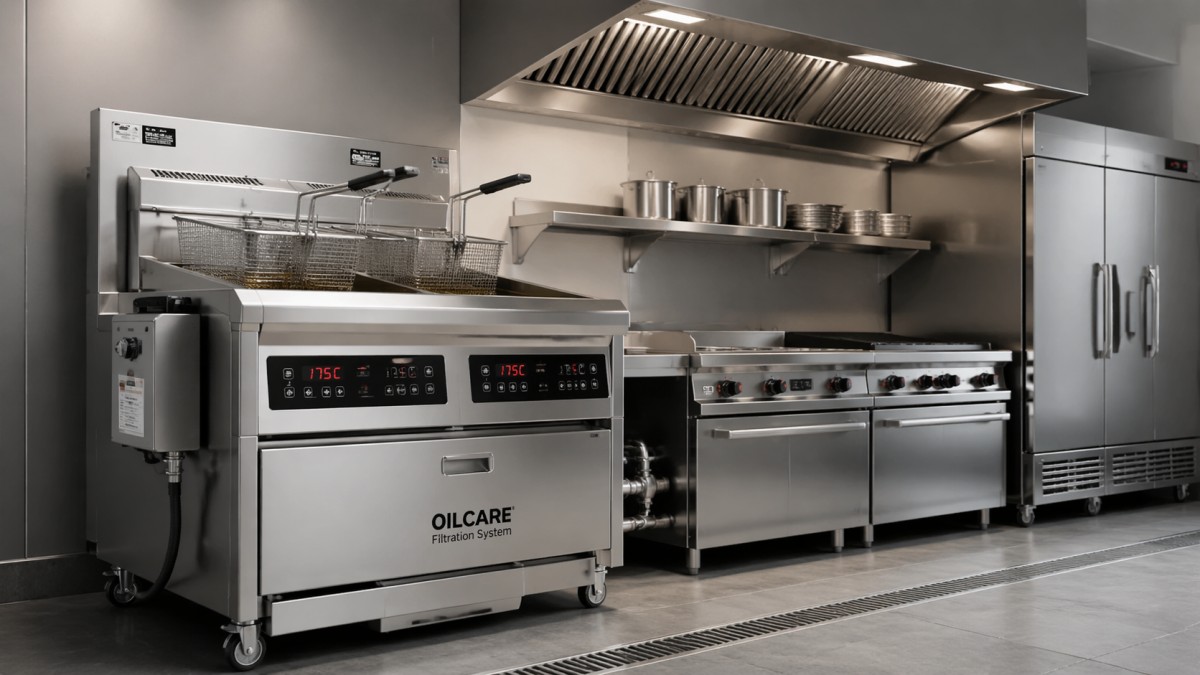
In many foodservice operations, oil expense is treated as a routine consumable rather than a controllable cost center. That is where overspending begins. A commercial deep fryer may run 8–14 hours per day, and even small inefficiencies in loading, temperature recovery, or filtration frequency can multiply across a week, a month, and an entire chain network. For operators, the issue is rarely one dramatic mistake; it is usually several moderate losses happening at the same time.
The kitchen equipment industry has moved toward automation, intelligent controls, and energy efficiency for exactly this reason. Restaurants, hotels, central kitchens, and food processing facilities now evaluate not only fryer capacity, but also heat transfer stability, oil management features, and how the fryer works with ventilation and cold storage systems. A fryer that looks economical at purchase can become expensive if it burns oil faster, generates more crumbs, or requires frequent full-pot changes.
Overspending usually appears in 4 areas: shortened oil life, inconsistent product quality, labor-heavy maintenance, and avoidable downtime. Technical evaluators often focus on power input, tank volume, and footprint, while operators feel the daily burden of top-ups, smoke, flavor carryover, and cleaning time. Business decision-makers need both views, because the lowest acquisition cost does not always produce the lowest operating cost over 12–36 months.
For information researchers and procurement teams, the practical question is simple: where does oil disappear faster than expected? The answer usually involves fryer design, kitchen workflow, operator discipline, and surrounding equipment conditions. If commercial kitchen hood systems pull heat too aggressively, if commercial refrigeration equipment does not hold frozen products at stable temperatures, or if prep routines introduce excess ice and crumbs, fryer oil degrades much faster.
The most common hidden cost drivers
- Overheating during idle periods, especially when fryers stay at full setpoint for 2–4 low-demand hours each day.
- Weak filtration routines, such as filtering only once daily instead of every 4–6 hours in high-volume applications.
- Cross-use of one vat for breaded, battered, and high-sugar products, which accelerates carbon buildup and flavor transfer.
- Improper loading from refrigeration or freezer storage, where excess ice and moisture shock the oil and increase breakdown.
When these factors combine, oil replacement frequency may shift from a manageable cycle to a disruptive one. In a busy restaurant, changing oil 1–2 extra times per week affects raw material cost, labor allocation, sanitation scheduling, and menu consistency. That is why commercial deep fryer oil costs should be reviewed as part of a full kitchen systems decision, not as an isolated line item.
Which operational habits shorten fryer oil life first?
Daily habits matter more than many teams expect. A quality commercial deep fryer can still consume oil inefficiently if staff use poor loading practices, mix product categories without a plan, or delay filtration until the end of the shift. Operators often see darkening oil as normal wear, but color change is only one signal. Smoke point drop, foaming, off-flavor transfer, and sticky residue around the vat are often earlier warnings that cost control is slipping.
Temperature discipline is one of the first checkpoints. Many commercial fryers are commonly used in the 160°C–190°C range depending on the menu. Running above the practical setpoint for the product increases thermal stress without improving throughput. In some kitchens, staff raise temperature to compensate for slow recovery, but that usually indicates a capacity mismatch, poor batch sizing, or a maintenance issue rather than a need for hotter oil.
Product preparation is another overlooked factor. Items taken from commercial refrigeration equipment or freezer storage should be loaded with minimal surface moisture and controlled batch weight. A fryer basket overloaded by 20%–30% can reduce recovery performance, increase crumb release, and force longer cook times. The result is a double cost: faster oil deterioration and less consistent food texture.
Cleaning routines also influence oil life. Operators sometimes scrape only visible debris and postpone a proper boil-out or scheduled tank cleaning. Carbonized residue then remains in the fryer zone and continuously contaminates fresh oil. In high-turnover kitchens, a simple difference in cleaning discipline over 7–10 days can noticeably change oil appearance, food color, and the frequency of oil top-ups.
A practical operator checklist for reducing oil waste
- Filter at a defined interval based on volume, such as every 4–6 hours in busy service or at least once per shift in moderate use.
- Separate product families when possible, especially breaded proteins, starch items, and sweet-coated foods.
- Avoid prolonged idle overheating by using standby temperature modes during low-demand periods of 30 minutes or longer.
- Train staff to shake excess ice and crumbs before loading baskets and to respect batch limits set by the fryer manufacturer.
These habits are especially important in integrated kitchens where deep fryers operate next to commercial griddle stations, hood systems, and refrigerated prep areas. A well-planned workflow reduces contamination, improves labor rhythm, and makes oil cost more predictable. For technical teams, this means user training is not separate from equipment performance; it is part of performance.
How surrounding equipment affects fryer oil economics
Commercial kitchen hood systems influence fryer performance through heat capture and airflow balance. If exhaust is excessive or makeup air is poorly managed, the fryer may struggle to maintain stable recovery. That encourages operators to raise setpoints or keep burners working harder, both of which add stress to the oil. Likewise, poor cold holding in adjacent refrigeration equipment can send partially thawed or icy products into the vat, accelerating degradation.
This is why operators should evaluate fryer oil costs in a whole-line context. Equipment selection is no longer just about individual machines. In modern kitchen design, automation, digital controls, and energy-aware layouts support better frying outcomes by stabilizing the environment around the fryer.
What equipment choices make the biggest difference in oil cost?
From a procurement perspective, not all commercial deep fryers manage oil equally. The most important differences often involve heating method, cold zone effectiveness, filtration integration, control precision, and recovery behavior under real service loads. A lower-price fryer without integrated filtration may look acceptable for a small menu, yet become expensive in a site that runs 3 meal periods or mixed fried products every day.
Gas and electric fryers each have valid use cases, but the right choice depends on utility structure, kitchen layout, and target throughput. More important than fuel type alone is whether the fryer can hold stable temperature during repeated drops and whether the tank design helps separate crumbs from the active cooking zone. For multi-unit buyers, standardizing controls and maintenance procedures can also reduce training errors over a 6–12 month period.
Integrated filtration is one of the strongest cost-control features for many operations. Manual filtration can work in lower-volume kitchens, but compliance falls when teams are rushed. Built-in systems improve routine execution because they reduce the time and mess involved. That can directly support oil life, labor efficiency, and safety, especially where kitchens run with lean staffing.
Decision-makers should also compare fryer selection against the rest of the cooking line. If the menu depends heavily on fried items, the fryer should not be undersized while capital is concentrated on less critical stations. In contrast, if a commercial griddle line or combi equipment handles most hot production, a smaller, better-controlled fryer may produce a better return than a large, underused unit.
Comparison points buyers should review before purchase
The table below compares common commercial deep fryer selection factors that influence oil cost, labor burden, and daily consistency. These are not fixed brand claims, but practical evaluation dimensions used across restaurants, hotels, and central kitchen projects.
The key lesson is that oil cost is heavily influenced by usability. A fryer that makes the right action easy will often outperform a technically capable model that depends on perfect manual discipline. For B2B buyers, this is why equipment trials, workflow observation, and serviceability review are more useful than headline specifications alone.
Three capacity questions that prevent mis-buying
- Will the fryer handle peak service windows of 60–120 minutes without forcing staff to overbatch products?
- Does the menu require separate vats for allergens, breaded proteins, fries, or sweet items?
- Can the installed hood and utility setup support the fryer’s operating profile without compromising airflow balance?
These questions connect capital purchase decisions to operating cost outcomes. They are also useful when comparing new installations, replacement projects, and kitchen upgrades in hotels, quick-service restaurants, and institutional foodservice sites.
How should buyers compare oil cost, throughput, and kitchen integration?
A commercial deep fryer should not be evaluated in isolation. Buyers who compare only vat size or input rating often miss the interaction between fryer performance, hood extraction, prep flow, and nearby refrigerated holding. In a modern kitchen equipment strategy, oil economy comes from system coordination. That means throughput planning, menu engineering, product staging, and ventilation design should be reviewed together during selection.
For example, central kitchens and high-volume restaurant groups usually benefit from more standardized frying workflows, because training can be applied across multiple units. Smaller restaurants may need a more flexible setup that balances capital budget with simplified operation. In both cases, comparing commercial deep fryer oil costs across 3 dimensions is useful: direct oil consumption, labor time for maintenance, and food consistency over repeated service cycles.
The table below provides a practical comparison framework for common kitchen environments. It helps procurement teams align fryer choice with production reality rather than relying on generic assumptions about size or fuel type.
This comparison shows why there is no single best fryer configuration for every site. The right commercial deep fryer is the one that matches production rhythm, staff capability, and adjacent equipment conditions. Buyers should also review expected delivery windows, installation constraints, and service access, which often fall in the 2–6 week planning range depending on project complexity and local infrastructure.
Procurement checkpoints for technical evaluators and managers
- Confirm whether oil filtration is manual, semi-automatic, or integrated, and estimate how often staff will realistically use it.
- Review compatibility with commercial kitchen hood systems, including airflow balance, heat load, and cleaning access.
- Check how products move from commercial refrigeration equipment to fry station to avoid moisture shock and basket overloading.
- Ask for maintenance guidance covering daily, weekly, and quarterly tasks rather than only installation specifications.
These checkpoints help connect engineering review with real operational economics. In a global kitchen equipment market shaped by smart controls and energy-efficient systems, procurement success depends on how well the selected fryer fits the total kitchen process.
What mistakes do buyers and operators make most often?
One common mistake is assuming oil cost is determined mainly by oil brand or purchase price. In reality, equipment design and kitchen discipline usually have equal or greater impact. Another mistake is treating fryer replacement as a stand-alone purchase instead of a line review involving ventilation, cold storage, workflow, and menu mix. This narrow approach often preserves the same hidden losses after the new equipment arrives.
A second error is oversizing or undersizing the fryer. Oversized units may hold more oil than the menu justifies, increasing idle exposure and replacement volume. Undersized units push staff into overloaded baskets, long recovery cycles, and aggressive setpoint adjustments. In both cases, oil management becomes unstable. A better approach is to size capacity to peak demand windows, product categories, and planned service duration.
A third mistake is underestimating staff execution. Even the most capable commercial deep fryer will not control oil cost if the team skips filtering, mixes incompatible products, or ignores residue buildup. This is why implementation should include at least 3 training elements: loading rules, filtration schedule, and cleaning verification. Without those steps, expected savings often remain theoretical.
Finally, some buyers overlook compliance and maintainability. Depending on market and application, equipment review may include food-contact material suitability, electrical or gas safety requirements, and practical sanitation expectations. While specific approvals vary by region, it is reasonable to ask suppliers about documentation, user manuals, spare parts planning, and routine service intervals before finalizing a purchase.
FAQ: practical questions from researchers, operators, and buyers
How often should a commercial deep fryer be filtered?
That depends on product mix and service volume. In busy operations, filtering every 4–6 hours is a common working routine. In moderate-volume kitchens, once per shift may be acceptable if crumbs and carbon buildup are controlled. The key is consistency. A schedule that staff can actually follow is better than an ideal plan that is skipped during peak periods.
Does a better hood system really affect fryer oil costs?
Yes, indirectly but significantly. Commercial kitchen hood systems influence heat capture, airflow stability, and working conditions around the fryer. Poorly balanced exhaust can disturb recovery performance or encourage overheating. A coordinated ventilation setup supports better fryer behavior and helps maintain a more stable frying environment.
Should fried menu items be separated into different vats?
In many cases, yes. Separating fries, breaded proteins, allergen-sensitive products, and sweet-coated items often reduces flavor carryover and slows oil contamination. Even a 2-vat or 3-product separation strategy can improve quality control in kitchens with diverse menus. The right configuration depends on throughput, available floor space, and menu priorities.
What should procurement teams request from a supplier before purchase?
Ask for operating parameter guidance, utility requirements, cleaning and maintenance routines, expected delivery lead time, spare parts support, and any applicable compliance documentation. It is also useful to discuss site layout, fryer capacity planning, filtration workflow, and integration with commercial refrigeration equipment and hood systems before confirming the final model.
Why choose a supplier that understands the full kitchen system?
Commercial deep fryer oil costs are rarely solved by one feature alone. They improve when fryer selection, ventilation, refrigeration, cleaning access, and operator workflow are planned as one system. That is especially important in today’s kitchen equipment industry, where automation, intelligent controls, and energy-efficient design are reshaping how restaurants, hotels, and food processing businesses invest in equipment.
If you are comparing options, we can support a more practical evaluation process. That includes confirming capacity ranges for your menu, reviewing fryer layout against commercial kitchen hood systems, checking product handling from commercial refrigeration equipment, and discussing whether integrated filtration or multi-vat separation is appropriate for your operation. For projects with tighter timelines, we can also discuss typical 2–6 week planning steps for specification, confirmation, and delivery coordination.
For technical evaluators, the discussion can focus on operating parameters, maintenance access, utility matching, and workflow compatibility. For purchasing teams and business decision-makers, we can help compare oil cost drivers, equipment value over 12–36 months, and practical trade-offs between entry-level and higher-control fryer solutions. For operators, we can outline cleaning frequency, filtration habits, and product separation rules that protect oil life.
Contact us to discuss parameter confirmation, product selection, project lead time, kitchen line integration, customization options, certification-related documentation, sample support where applicable, and quotation planning. A clearer comparison at the beginning usually prevents costly oil waste, performance mismatches, and avoidable rework later.
Popular Tags
Kitchen Industry Research Team
Dedicated to analyzing emerging trends and technological shifts in the global hospitality and foodservice infrastructure sector.
Industry Insights
Join 15,000+ industry professionals. Get the latest market trends and tech news delivered weekly.
No spam. Unsubscribe anytime.
Contact With us
Contact:
Anne Yin (Ceramics Dinnerware/Glassware)
Lucky Zhai(Flatware)