
Kitchen preparation equipment trends reshaping back-of-house
From the kitchen prep table to advanced kitchen preparation equipment, back-of-house operations are being transformed by smarter, faster, and more efficient solutions. Today’s buyers are comparing everything from a commercial sink unit and kitchen storage cabinet to a dough mixer machine, vegetable cutter machine, and commercial freezer to improve workflow, food safety, and cost control. Understanding these trends is essential for operators, purchasers, and decision-makers planning future-ready kitchens.
In commercial foodservice, preparation is where labor hours, hygiene risks, and output consistency often converge. A poorly planned prep area can add 10–20 extra motion steps per batch, increase cross-contamination risk, and create bottlenecks that affect service speed. For restaurants, hotels, central kitchens, and food processing facilities, the current shift is not only about replacing manual work with machines, but about building integrated, scalable back-of-house systems.
The most important market movement is the convergence of automation, digital monitoring, and energy-efficient design. Buyers are no longer evaluating a single machine in isolation. They are assessing how a vegetable cutter machine works with prep tables, how a dough mixer machine fits production capacity, how a commercial freezer supports temperature control, and how storage and washing zones influence labor efficiency over 8–12 hour operating cycles.
Why kitchen preparation equipment is becoming the center of back-of-house design
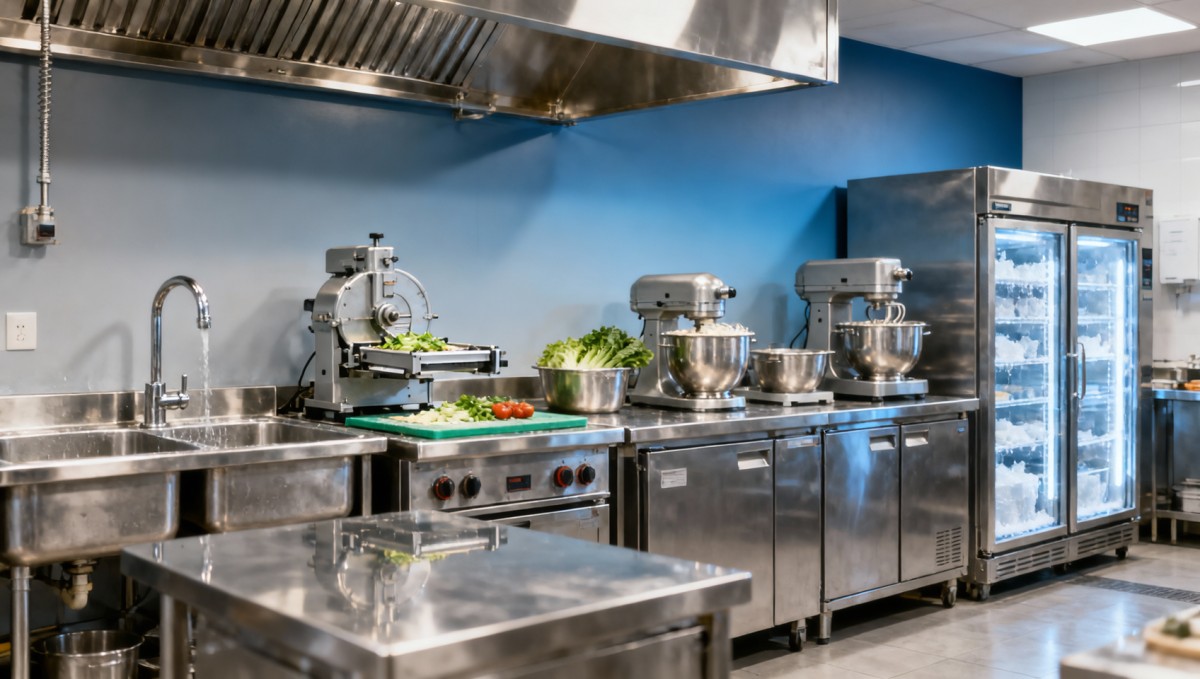
Back-of-house design has shifted from static layout planning to performance-based planning. In the past, many operators selected equipment by price and footprint alone. Today, the more practical question is how each preparation station affects throughput, safety, cleaning time, and staffing. A prep line that saves 15 seconds per tray can create meaningful gains when repeated 200–500 times per day.
Kitchen preparation equipment now includes more than slicers, mixers, and prep counters. It covers washing stations, ingredient storage, refrigerated holding, cutting systems, weighing integration, and workflow zoning. In a high-volume kitchen, these elements must support a logical sequence: receiving, washing, cutting, mixing, temporary holding, and transfer to cooking or packaging. If even one step is undersized, the rest of the line slows down.
For operators, this trend matters because labor remains one of the highest controllable costs. Semi-automatic equipment can reduce repetitive manual prep by 20–40% in suitable applications, especially for cutting, dough handling, and ingredient batching. For procurement teams, the implication is clear: the lowest initial purchase price may not offer the lowest total operating cost over 3–5 years.
Food safety is another strong driver. Prep areas often involve raw vegetables, dough ingredients, meat, sauces, and ready-to-cook components in close proximity. Stainless steel contact surfaces, smooth welds, easy-drain sink systems, and cold holding at 0–4°C are now basic evaluation points rather than optional upgrades. Equipment that is difficult to clean can add daily sanitation time and increase inspection risk.
Key forces behind the shift
- Higher output expectations from smaller kitchen footprints, especially in urban restaurants and delivery-focused operations.
- Stronger hygiene requirements, including easier wash-down design, separation of raw and ready-to-use zones, and reliable refrigeration control.
- Labor shortages that push kitchens toward machines with shorter training curves, often 1–3 days instead of several weeks.
- Energy management goals that favor efficient motors, better insulation, and reduced idle-time power consumption.
The table below shows how preparation equipment categories are reshaping kitchen planning priorities across common back-of-house environments.
The practical conclusion is that prep equipment is no longer a support purchase. It is a productivity system. The more complex the menu, the greater the need to align storage, washing, cutting, and holding capacities instead of buying each unit independently.
The most important equipment trends buyers should watch
Several equipment trends are changing how commercial kitchens evaluate preparation zones. The first is modularity. Buyers increasingly prefer systems that can be expanded in stages, such as adding extra shelves, interchangeable cutter heads, or larger cold storage modules as production grows. This reduces the need for full replacement when demand rises by 20–30% over a 12–24 month period.
The second trend is automation with practical limits. Not every operation needs a fully automated line, but partial automation is becoming common. A vegetable cutter machine with multiple blade sets, a programmable dough mixer machine, or a prep station linked to temperature logging can deliver measurable benefits without requiring large process changes. This is especially attractive to medium-volume kitchens that need better consistency but must still control capital spending.
The third trend is energy and resource efficiency. Equipment buyers are paying closer attention to motor efficiency, water use, insulation, and standby consumption. In refrigeration, better door seals and improved compressor performance can reduce operating strain. In wash zones, commercial sink unit design that improves drainage and cleaning flow can lower water waste and shorten sanitation cycles by several minutes per shift.
Another clear trend is digital visibility. Smart controls, basic production counters, error alerts, and temperature tracking are moving from premium options to mainstream expectations. Even simple alerts for overload, door-open duration, or maintenance intervals can help operators prevent downtime. For procurement managers, this improves maintenance planning over quarterly and annual service cycles.
From standalone machines to connected prep systems
One of the most important changes is how buyers define compatibility. A kitchen storage cabinet should not block workflow to the sink unit. A mixer should match actual batch size rather than theoretical peak demand. A commercial freezer should be located to reduce unnecessary walking distance while preserving temperature stability. These choices influence labor, ergonomics, and hygiene at the same time.
What this means for different buyer groups
- Information researchers need comparable criteria such as hourly output, cleaning complexity, and footprint efficiency.
- Operators need equipment that is intuitive, safe, and stable during long shifts of 6–12 hours.
- Purchasers need dependable lead times, service access, and spare part visibility.
- Business decision-makers need a clear case for return on labor savings, food safety improvement, and production consistency.
The following table summarizes major trend directions and their purchasing implications.
For most commercial kitchens, the best approach is not maximum automation, but balanced automation. Equipment should reduce repetitive work, support hygiene, and fit the real production rhythm of the operation.
How to select kitchen preparation equipment for workflow, safety, and capacity
Selection should start with workflow analysis rather than a product catalog. The first step is to define daily volume in realistic terms: kilograms of vegetables per hour, dough batches per shift, number of trays staged in cold holding, and wash cycles required before service. Without these numbers, kitchens often overspend on capacity they do not use or underspecify critical points that fail under peak demand.
A common mistake is focusing only on machine speed. A vegetable cutter machine may process a high hourly volume, but if its feed opening is too small or cleaning takes 20 minutes between product types, overall efficiency suffers. The same applies to a dough mixer machine: rated capacity should reflect usable batch size, not only maximum bowl volume. In practice, many kitchens operate best when regular batches stay within about 70–85% of nominal capacity.
Safety and sanitation must be built into selection criteria. Stainless steel surfaces, removable contact parts, covered moving components, overload protection, and stable base construction are especially important in heavy daily use. In cold storage, a commercial freezer should maintain target conditions with frequent door openings, not only under laboratory-like idle conditions. Temperature recovery time becomes critical in kitchens with repeated access during busy windows.
Storage planning also deserves more attention. A kitchen storage cabinet is not just a shelving unit; it affects ingredient rotation, cleaning access, and staff movement. In compact kitchens, poor cabinet depth or door swing can interfere with washing and cutting zones. Durable storage with easy-clean surfaces and logical compartment design helps reduce clutter, improves first-in-first-out discipline, and supports faster line setup.
A practical 5-step evaluation process
- Map the prep sequence from receiving to cooking or packaging, including transfer points and cold holding.
- Measure real peak demand over at least 7 operating days, not only average demand.
- Check equipment against cleaning time, operator skill level, and space constraints.
- Review utilities such as power load, water supply, drainage, and ventilation before ordering.
- Compare ownership factors including maintenance intervals, consumables, spare parts, and expected service response.
The table below provides a selection framework for typical prep equipment categories.
This comparison shows why purchasing should be cross-functional. Operations teams, maintenance staff, and business managers often notice different risks. Bringing these viewpoints together before final approval reduces the chance of expensive misalignment after installation.
Implementation, maintenance, and risk control in real operating environments
Even well-chosen kitchen preparation equipment can underperform if implementation is rushed. Typical deployment includes 4 stages: site review, utility confirmation, delivery and positioning, then operator training and acceptance. Depending on project size, this may take 7–15 days for a single-site kitchen or 3–6 weeks for a larger central kitchen installation involving multiple prep zones and coordinated utility work.
Training should focus on repeatable tasks rather than only startup instructions. Operators need to learn safe loading, product-specific settings, cleaning routines, and daily checks. A 30-minute demonstration is rarely enough for high-use equipment. For most prep machines, 1–2 structured training sessions plus supervised first-shift use can reduce early misuse and help standardize operation between teams.
Maintenance planning is equally important. A cutter machine may need blade inspection at defined intervals. A dough mixer machine should be checked for belt condition, unusual noise, and bowl alignment. A commercial freezer requires regular condenser cleaning and seal inspection. When maintenance is delayed, performance often drops gradually rather than suddenly, which makes inefficiency harder to notice until product quality or energy cost is affected.
Risk control should also cover sanitation and process discipline. If a kitchen uses one wash station for incompatible tasks without clear sequencing, contamination risk rises. If storage cabinets are overloaded beyond practical airflow or access limits, product handling slows down and cleaning quality declines. Small layout errors can create daily friction that compounds over hundreds of shifts.
Common implementation risks
- Buying equipment before confirming electrical load, drainage, and floor space clearance.
- Ignoring cleaning access around rear panels, doors, casters, or underframe areas.
- Choosing the highest capacity machine without checking actual batch rhythm and operator handling ability.
- Overlooking spare part lead time, especially for blades, seals, gaskets, and wear components.
Routine maintenance checkpoints
A workable maintenance schedule often includes daily cleaning verification, weekly mechanical inspection, monthly performance review, and quarterly preventive service for heavy-use sites. This rhythm gives operators a clear routine and helps procurement teams estimate service needs more accurately across the year.
The most effective back-of-house operations treat maintenance as part of productivity, not as a separate technical issue. Clean, calibrated, and properly serviced equipment supports better output consistency, fewer disruptions, and safer food preparation.
FAQ: common buying questions about kitchen preparation equipment
Because back-of-house projects often involve multiple departments, buyers usually ask similar questions before committing to a new prep solution. The answers below are especially relevant for restaurants, hotels, food processors, and central kitchens comparing manual, semi-automatic, and integrated equipment options.
How do I know whether a semi-automatic prep machine is worth the investment?
Start by measuring repetitive labor time, output variation, and bottlenecks during peak periods. If one task is repeated more than 50–100 times per day or causes waiting in adjacent stations, semi-automation is often worth evaluating. The best candidates are cutting, mixing, and repetitive washing or staging tasks with clear volume patterns.
What capacity should a dough mixer machine have?
Choose based on your regular batch size, not the largest batch you might produce once in a while. Many operators aim to use about 70–85% of rated capacity for stable mixing results and easier handling. Also consider dough type, hydration level, and the number of batches required per shift.
How long is a typical lead time for commercial prep equipment?
Lead time varies by product category, customization level, and shipment route. Standard items may be available within 7–20 days, while customized stainless steel stations or integrated prep lines can take 3–8 weeks. Buyers should confirm not only production time, but also installation readiness, utility conditions, and spare part availability.
Which indicators matter most when comparing commercial freezers?
Look beyond gross volume. Key indicators include usable storage layout, door opening frequency tolerance, temperature stability, seal quality, and cleaning access. In busy kitchens, the ability to recover after repeated door openings can matter more than nominal capacity alone.
What is the biggest purchasing mistake in prep area upgrades?
The biggest mistake is buying equipment as isolated items instead of as part of a workflow. A fast cutter, a large freezer, or a premium sink unit will not solve output problems if the surrounding storage, sanitation sequence, staffing, and transfer paths are not aligned.
Kitchen preparation equipment trends are reshaping back-of-house operations by connecting efficiency, hygiene, labor control, and scalable design. The most successful kitchens are not simply adding more machines; they are building coordinated preparation systems that match real production needs, support safer handling, and reduce avoidable operating friction. Whether you are comparing a commercial sink unit, kitchen storage cabinet, dough mixer machine, vegetable cutter machine, or commercial freezer, the right decision comes from balancing capacity, cleaning, serviceability, and workflow fit. If you are planning a kitchen upgrade, expanding production, or evaluating future-ready solutions, contact us to discuss your application, get a tailored equipment recommendation, and learn more about practical back-of-house preparation systems.
Popular Tags
Kitchen Industry Research Team
Dedicated to analyzing emerging trends and technological shifts in the global hospitality and foodservice infrastructure sector.
Industry Insights
Join 15,000+ industry professionals. Get the latest market trends and tech news delivered weekly.
No spam. Unsubscribe anytime.
Contact With us
Contact:
Anne Yin (Ceramics Dinnerware/Glassware)
Lucky Zhai(Flatware)