
Industrial Kitchen Equipment Trends to Watch in 2026
As 2026 approaches, industrial kitchen equipment is entering a new era shaped by automation, energy efficiency, and smarter workflows. From kitchen equipment wholesale trends to upgrades in stainless steel kitchen equipment, Commercial Refrigerator systems, commercial convection oven performance, and Central Kitchen Equipment planning, buyers and operators must track what matters most. This guide highlights the innovations redefining restaurant kitchen supplies, catering kitchen equipment, and kitchen tools and utensils for a more competitive foodservice future.
For most buyers, operators, and decision-makers, the real question is not simply what is new in industrial kitchen equipment, but which trends will actually improve efficiency, reduce operating costs, support food safety, and remain viable over the next several years. The clearest answer for 2026 is this: the market is moving toward connected, energy-efficient, modular, and labor-saving equipment. Businesses that invest selectively in these areas are more likely to improve kitchen output, control utility expenses, and adapt to changing service models.
Which industrial kitchen equipment trends will matter most in 2026?
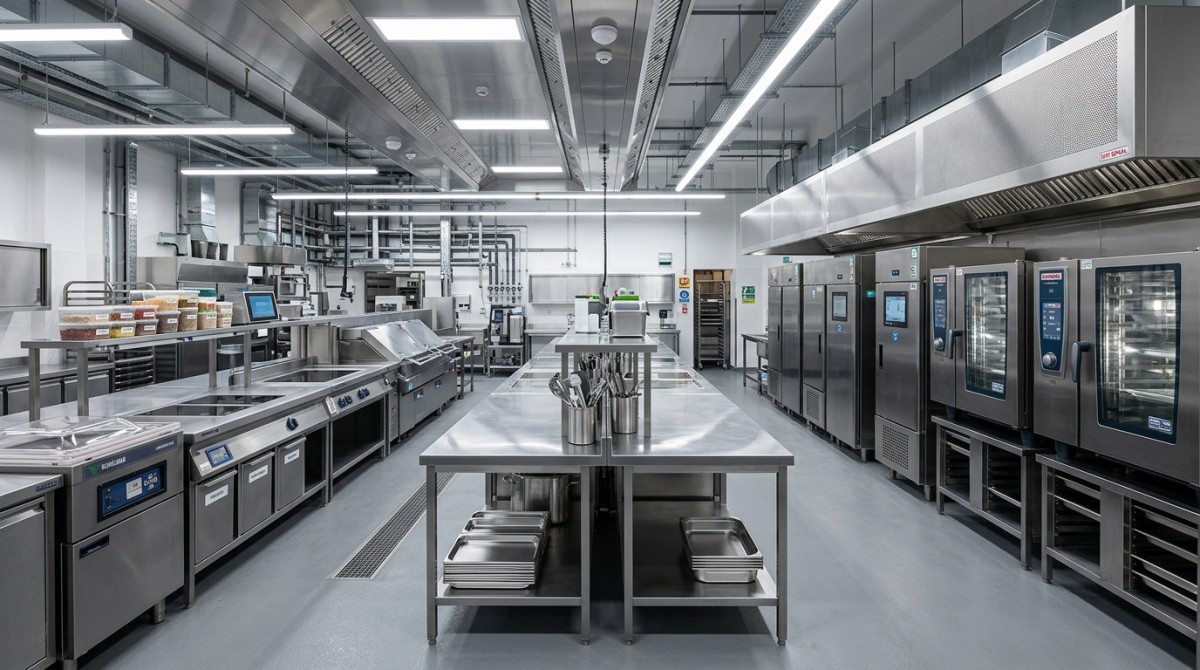
The most important industrial kitchen equipment trends to watch in 2026 are not just technical upgrades. They are practical shifts that affect labor planning, procurement decisions, maintenance costs, and kitchen performance every day. The trends with the strongest impact include:
- Automation for repetitive kitchen tasks, especially in prep, cooking, washing, and holding.
- Smart kitchen connectivity for monitoring performance, temperature, energy use, and maintenance status.
- Energy-efficient kitchen equipment that lowers electricity, gas, and water consumption.
- Modular and flexible kitchen layouts that support changing menus and multi-format operations.
- Stronger food safety controls built into equipment design and digital monitoring systems.
- Durable stainless steel kitchen equipment with improved hygiene, cleanability, and lifecycle value.
- Growth in central kitchen and batch production systems for chains, catering, and food processing operations.
These trends matter because kitchens are under pressure from multiple directions at once: rising labor costs, stricter compliance requirements, higher utility prices, and customer expectations for speed and consistency. Equipment that reduces manual effort while improving control has become a strategic investment rather than a simple replacement purchase.
Why are automation and smart systems becoming a priority?
Automation is no longer limited to very large factories or highly specialized food processing lines. In 2026, more restaurants, hotels, catering companies, and central kitchens are expected to adopt semi-automated and fully automated systems where they create measurable value.
Examples include automated fryers, programmable cooking stations, ingredient dispensing systems, combi ovens with recipe memory, conveyor dishwashing systems, and intelligent holding cabinets. These systems help solve one of the industry’s biggest operational problems: inconsistent output caused by staffing shortages and uneven skill levels.
Smart systems add another layer of value. Equipment connected to kitchen management platforms can provide:
- Real-time temperature tracking
- Preventive maintenance alerts
- Usage and idle-time monitoring
- Energy consumption data
- Production consistency across multiple sites
For operators, this means less guesswork. For procurement teams, it means easier comparison of total cost of ownership. For business leaders, it means more control over performance across locations. In a chain or multi-unit business, digital visibility can be just as important as cooking speed.
How is energy efficiency changing buying decisions?
Energy efficiency is one of the strongest purchasing drivers in industrial kitchen equipment today, and it will become even more important in 2026. Utility costs can significantly affect profit margins, especially in high-volume kitchens operating long hours. Buyers are increasingly looking beyond purchase price and asking how much a machine will cost to run every month.
This shift is especially visible in key product categories such as:
- Commercial Refrigerator systems with better insulation, inverter compressors, and smart temperature controls
- Commercial convection oven units with faster preheating, improved airflow, and programmable energy-saving modes
- Low-water warewashing equipment
- Induction cooking systems with faster heat transfer and less ambient heat loss
- Ventilation systems with demand-controlled airflow
Energy-efficient kitchen solutions provide more than lower bills. They can also improve working conditions by reducing excess heat, support sustainability goals, and help companies meet internal ESG targets or local compliance requirements. For many decision-makers, the best approach is to compare equipment based on lifecycle cost, not just initial capital expenditure.
What equipment categories are seeing the most meaningful upgrades?
Not all equipment categories are changing at the same pace. In 2026, the most meaningful improvements are likely to appear in equipment that directly affects throughput, consistency, food safety, and resource efficiency.
1. Refrigeration and cold storage
Commercial Refrigerator technology is improving through remote diagnostics, tighter temperature control, better airflow design, and lower-emission refrigerants. These upgrades are especially important for food safety, inventory protection, and compliance.
2. Cooking equipment
Commercial convection oven systems, combi ovens, pressure cooking equipment, and programmable ranges are becoming more precise and easier to operate. Recipe automation reduces training time and improves consistency between shifts and locations.
3. Preparation systems
Food processors, slicers, mixers, and portioning systems are increasingly built for speed, safety, and easier cleaning. For high-volume kitchens, these upgrades save labor and reduce production bottlenecks.
4. Central Kitchen Equipment
As more brands centralize prep and semi-finished food production, demand is rising for large-capacity cooking kettles, blast chillers, vacuum packaging systems, tray sealing lines, and transport-ready holding systems. This is one of the most important structural trends in the market.
5. Stainless steel kitchen equipment and workstations
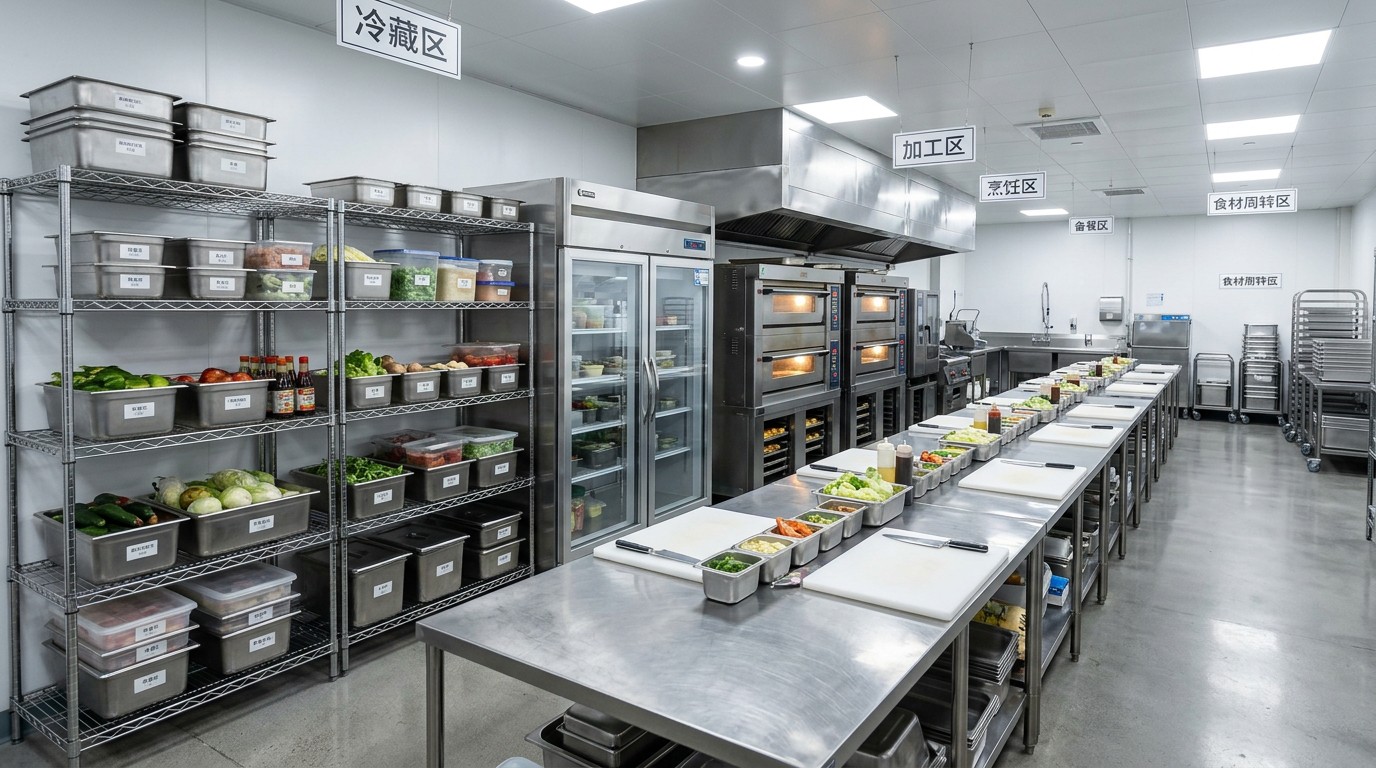
Worktables, sinks, storage units, shelving, and integrated prep stations remain essential. The focus is shifting toward hygienic design, modularity, and durability, especially in environments with strict sanitation requirements.
How are central kitchens and modular layouts influencing the market?
One of the biggest strategic shifts in foodservice is the growing role of central kitchens. Chains, catering businesses, institutional food providers, and food processing companies are using central production to improve standardization, control costs, and scale more efficiently. As a result, Central Kitchen Equipment is becoming a major investment area.
This change affects equipment selection in two ways.
First, businesses need production-oriented systems that can handle batch cooking, chilling, packaging, storage, and distribution. The focus is less on single-point cooking equipment and more on connected workflow design.
Second, local kitchens increasingly need modular front-end systems that can quickly finish, reheat, assemble, and serve products. This makes flexibility more valuable than large numbers of fixed-purpose machines.
Modular layouts also help businesses respond to menu changes, delivery growth, labor constraints, and limited urban kitchen space. For buyers, this means equipment planning should start with workflow mapping rather than isolated product comparison.
What should procurement teams and business leaders evaluate before investing?
For procurement professionals and decision-makers, trend awareness is only useful if it leads to better buying decisions. Before investing in industrial kitchen equipment in 2026, it is important to evaluate several practical factors.
- Operational fit: Does the equipment match actual menu, volume, staffing, and service model needs?
- Total cost of ownership: Consider energy use, maintenance, spare parts, downtime risk, and expected lifespan.
- Ease of cleaning and compliance: Hygienic design matters as much as performance.
- Training requirements: Highly advanced equipment must still be usable by real kitchen teams.
- Service and support: A strong after-sales network is critical, especially for high-dependency equipment.
- Scalability: Can the equipment support future expansion, multi-site rollout, or process standardization?
- Data capability: If smart features are included, will the business actually use the data?
This is also where kitchen equipment wholesale sourcing and supplier selection become more important. Price matters, but reliability, certification, lead time, customization capability, and technical support often have greater long-term impact. A lower-cost supplier can become more expensive if service delays or performance issues interrupt operations.
How can operators and users prepare for these changes?
For kitchen operators and end users, 2026 equipment trends bring clear benefits, but only if teams are prepared to use the equipment effectively. Even the best restaurant kitchen supplies or catering kitchen equipment will underperform if staff workflows do not change with the tools.
Operators should focus on:
- Training staff on programmable and connected systems
- Standardizing cleaning and maintenance routines
- Using equipment data to reduce waste and idle time
- Reviewing station layout for smoother movement and less congestion
- Replacing outdated kitchen tools and utensils that slow production or create safety risks
Small improvements in workflow can produce significant results when paired with better equipment. In many cases, productivity gains come not from one major machine, but from a better combination of cooking, storage, prep, and holding systems working together.
What is the overall outlook for industrial kitchen equipment in 2026?
The outlook for industrial kitchen equipment in 2026 is strongly positive, but also more selective and performance-driven than before. Buyers are no longer impressed by innovation alone. They want equipment that solves labor challenges, improves consistency, reduces energy use, supports food safety, and fits modern kitchen workflows.
The strongest demand is likely to center on smart and efficient commercial kitchen equipment, upgraded Commercial Refrigerator systems, more capable commercial convection oven platforms, adaptable stainless steel kitchen equipment, and integrated Central Kitchen Equipment solutions. At the same time, basic restaurant kitchen supplies, catering kitchen equipment, and kitchen tools and utensils will continue to evolve toward better durability, hygiene, and workflow support.
In short, the most valuable trend to watch is not any single product. It is the shift toward kitchens that are more connected, more efficient, and easier to manage at scale. Businesses that evaluate equipment through that lens will be in a much stronger position to invest wisely and compete effectively in 2026 and beyond.
- commercial kitchen equipment
- smart kitchen
- industrial kitchen
- cooking equipment
- stainless steel kitchen
- central kitchen
- kitchen tools
- restaurant kitchen
- kitchen solutions
- Commercial Refrigerator
- Slicer
- Mixer
- Food Processor
- Central Kitchen Equipment
- kitchen equipment
- industrial kitchen equipment
- stainless steel kitchen equipment
- kitchen tools and utensils
- restaurant kitchen supplies
- catering kitchen equipment
- kitchen equipment wholesale
- commercial convection oven
Popular Tags
Kitchen Industry Research Team
Dedicated to analyzing emerging trends and technological shifts in the global hospitality and foodservice infrastructure sector.
Industry Insights
Join 15,000+ industry professionals. Get the latest market trends and tech news delivered weekly.
No spam. Unsubscribe anytime.
Contact With us
Contact:
Anne Yin (Ceramics Dinnerware/Glassware)
Lucky Zhai(Flatware)