
Dinnerware set demand is moving toward smaller box counts
Demand for the modern dinnerware set is shifting toward smaller box counts as buyers seek flexibility, lower inventory risk, and better market fit. From ceramic dinner set and stoneware dinnerware to ceramic plate, ceramic bowl, and dinner plate collections, this trend is reshaping sourcing decisions for distributors, retailers, and foodservice buyers in the kitchen equipment industry.
Why are smaller box counts gaining traction in dinnerware procurement?
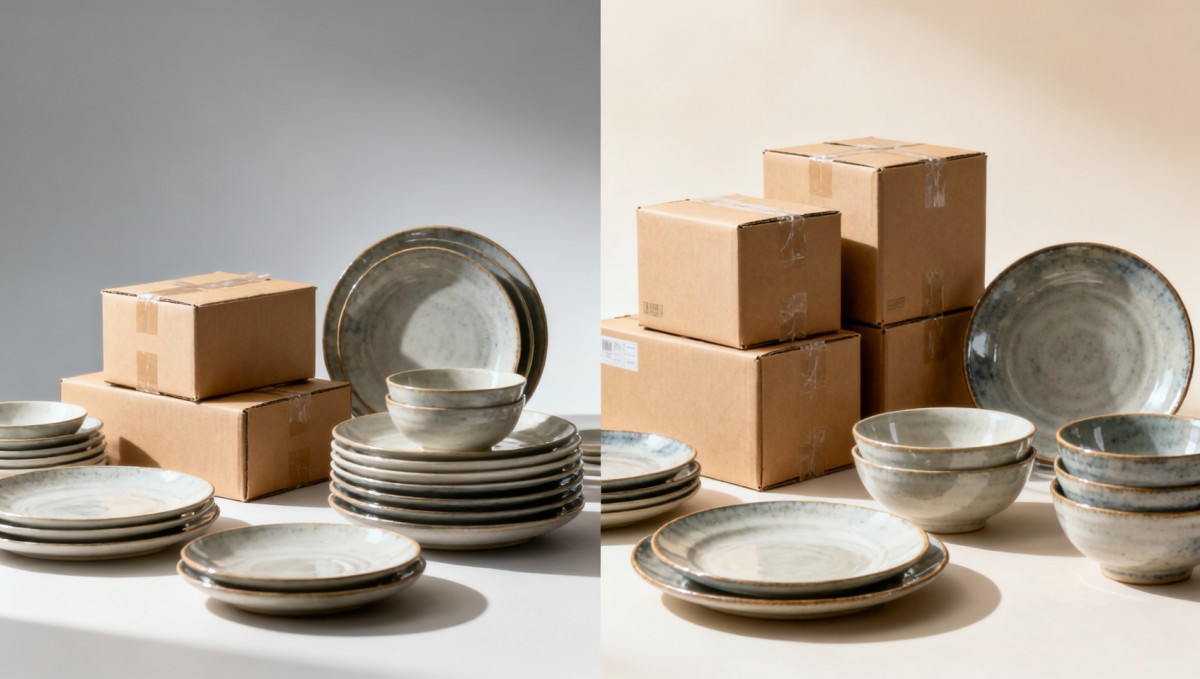
In the kitchen equipment industry, demand patterns are becoming more segmented. Restaurants, hotels, e-commerce sellers, and importers no longer want to commit to the same large carton quantities that once dominated the market. A smaller box count dinnerware set helps reduce storage pressure, supports faster stock rotation, and gives buyers more room to test product acceptance before scaling up.
This shift is especially visible in ceramic dinner set and stoneware dinnerware categories, where style, finish, and color trends change quickly. For many buyers, holding 6–12 months of one pattern is now less attractive than running 2–3 shorter replenishment cycles. Smaller packs align better with seasonal launches, limited collections, and mixed-SKU retail strategies.
Operational teams also benefit. A dinner plate, ceramic bowl, or ceramic plate assortment in a compact carton is easier to count, move, and replenish across warehouses, stores, or foodservice units. In practical terms, smaller cartons can reduce handling complexity during receiving, internal transfer, and shelf allocation, particularly when buyers manage dozens of active SKUs at the same time.
From a decision-making perspective, the move is not only about packaging. It reflects a broader market preference for agile procurement, controlled cash flow, and lower dead stock exposure. In a sector increasingly shaped by smart operations, digital forecasting, and demand volatility, packaging format has become part of product strategy rather than a simple logistics detail.
What is changing in buyer behavior?
Procurement teams are balancing 3 core pressures: assortment breadth, inventory efficiency, and fulfillment speed. A large-box ceramic dinner set may still suit stable institutional demand, but many retail and distribution buyers now prioritize flexibility. They often prefer to test 1–3 designs in smaller quantities first, then reorder the best-performing shapes or glazes after initial sell-through feedback.
For operators and category managers, smaller box counts also support channel-specific planning. A marketplace seller, a chain restaurant, and a hotel supplier may all buy dinnerware, yet their order rhythm differs. One may reorder every 2–4 weeks, another quarterly, and another by project cycle. Smaller packs make these different models easier to support without inflating warehouse occupancy.
- Lower inventory risk for trend-sensitive ceramic plate and dinner plate collections.
- Better fit for trial orders, sample programs, and small batch launches.
- Improved compatibility with e-commerce, mixed pallets, and multi-channel distribution.
- Easier warehouse handling for teams processing frequent inbound and outbound orders.
How do smaller and larger box counts compare in real purchasing scenarios?
Choosing the right dinnerware set box count depends on sales channel, turnover speed, breakage risk, and reorder confidence. Buyers should compare not only unit pricing, but also the cost of storage, replenishment frequency, and packaging suitability. The table below highlights common decision differences between smaller and larger box count strategies for ceramic dinner set and stoneware dinnerware sourcing.
The comparison shows that smaller box counts are not automatically better in every case. They perform best when buyers need flexibility, assortment control, and faster reaction to market feedback. Larger packs still make sense when demand is stable over 6–12 months and carton-level efficiency matters more than SKU agility.
For procurement managers, the most useful approach is often hybrid. A business can source core dinner plate and ceramic bowl items in larger cartons while shifting seasonal or premium ceramic plate series into smaller box counts. This reduces exposure without sacrificing scale on predictable products.
Which channels benefit the most?
Online retail, specialty homeware distribution, hospitality projects, and regional wholesalers are among the strongest users of compact packaging. These channels often work with fragmented demand, multiple style themes, and shorter decision windows. In those cases, a dinnerware set packed in lower quantities offers better fit than a uniform bulk-pack model.
By contrast, central kitchens, canteens, and high-volume institutional buyers may continue to prefer bulk packaging if shape uniformity matters more than assortment breadth. Their purchase logic is driven by operational replacement cycles, standardization, and consistent table setting requirements rather than trend responsiveness.
Key comparison points before approval
- Check whether forecast accuracy is strong enough to justify larger carton commitments.
- Review handling cost per carton, not only ex-factory product price.
- Assess breakage exposure during storage, picking, and final-mile transport.
- Compare replenishment rhythm, such as every 2–4 weeks versus every 8–12 weeks.
What should buyers check when sourcing ceramic dinner set and stoneware dinnerware in smaller packs?
Smaller box counts solve one problem but can introduce others if the packaging structure is weak. Buyers should assess the dinnerware set at three levels: product consistency, carton protection, and downstream handling fit. For ceramic dinner set and stoneware dinnerware, packaging should protect rims, flat surfaces, and nested components such as ceramic bowl stacks during normal warehouse and transport cycles.
A practical procurement review usually includes 5 checkpoints: item count accuracy, inner separation method, outer carton strength, drop-risk areas, and label clarity. If the supplier supports export or cross-border distribution, it is also useful to confirm how products are packed for palletization, container loading, and mixed-order consolidation. These details matter more when carton quantity becomes smaller and handling frequency goes up.
For foodservice buyers, the selection logic is slightly different from retail. They need to confirm whether a dinner plate or ceramic bowl in smaller packs can still support replacement efficiency across locations. A hotel group, for example, may want flexible replenishment but still require glaze consistency and dimensional uniformity over repeated orders placed every quarter or every season.
The table below can be used as a sourcing checklist for evaluating smaller-pack dinnerware set programs across product, packaging, and service dimensions.
This checklist helps buyers move beyond surface-level style comparison. In practice, many sourcing problems come from pack engineering or replenishment planning rather than the ceramic plate or ceramic bowl itself. A well-structured smaller box count program should protect the product while also matching the buyer’s sales rhythm and warehouse process.
Procurement guide for different buyer roles
Information researchers usually focus on market direction and category fit. They should map whether smaller box count demand is strongest in retail, hospitality replacement, giftware, or online channels. Operators should focus on handling convenience, carton integrity, and item verification speed. Procurement teams need to compare reorder flexibility, quotation structure, and total landed cost. Decision-makers should look at working capital exposure, product life cycle risk, and channel adaptability.
- For researchers: compare 3–5 representative pack formats across similar dinnerware set categories.
- For operators: verify carton labeling, count accuracy, and shelf-ready handling steps.
- For buyers: request sample review, lead time range, and replacement order policy.
- For executives: evaluate whether smaller packs support lower risk market entry in new regions.
How do cost, logistics, and compliance affect the shift to smaller box counts?
Smaller cartons can improve flexibility, but they may change cost structure. The direct unit price of a dinnerware set may rise slightly when packaging materials, packing labor, and handling steps increase. However, the total ownership cost can still improve if buyers reduce slow-moving stock, lower markdown risk, or avoid large-volume mistakes in pattern selection. This is why cost analysis should cover the full chain rather than ex-works price alone.
Logistics planning becomes more important as pack count decreases. More cartons may mean more labels, more scans, and more touchpoints in warehousing. At the same time, smaller cartons often fit mixed pallets and partial replenishment better. For importers serving multiple customers, this can simplify split shipments and reduce the need to break bulk cartons after arrival.
Compliance should not be overlooked. For dinnerware used in food contact settings, buyers often review basic documentation related to material suitability, labeling, and destination-market requirements. The exact documents vary by market and product category, but procurement teams should confirm packaging marks, product identification, and any applicable food-contact or market-entry documentation before shipment rather than after container arrival.
In global kitchen equipment trade, lead times commonly include 3 stages: sample approval, production, and shipment arrangement. Depending on decoration complexity and order volume, sample confirmation may take 7–15 days, while production planning may require several additional weeks. Smaller box count projects often move faster in initial testing, but repeat-order discipline is still necessary to prevent stock gaps.
Common cost and risk misunderstandings
One common mistake is assuming that smaller box count always means lower overall spend. The carton is smaller, but the total cost per shipped unit can rise if protection requirements are higher or if freight efficiency drops. Another mistake is focusing only on purchase price while ignoring carrying cost. For slow-moving collections, excess inventory held for 6–9 months can be more damaging than a modest packaging premium.
A second misunderstanding is treating all dinnerware set categories the same. A plain white dinner plate for commercial replacement behaves differently from a reactive-glaze stoneware dinnerware collection aimed at lifestyle retail. The first often rewards standardization; the second often rewards agility. Procurement strategy should follow demand behavior, not only factory packing tradition.
Practical risk-control steps
- Request a packaging review before final order approval, including internal protection layout.
- Run a pilot order for 1–2 best-seller designs before broad roll-out.
- Align reorder timing with realistic sales velocity and transit windows.
- Confirm destination-market documentation requirements early in the process.
FAQ: what do buyers usually ask before switching dinnerware set packaging?
Is a smaller box count better for every ceramic dinner set?
No. It works best for products with uncertain demand, frequent assortment updates, or channel-specific replenishment. For high-volume, highly standardized items, larger packs may still be more efficient. Buyers should compare expected sales speed, reorder confidence, and storage capacity before changing the pack structure.
What box count is usually suitable for testing a new stoneware dinnerware line?
There is no single universal count, because product size, market channel, and transport mode all matter. In practice, buyers often start with a small pilot quantity that can be evaluated within one sales cycle, such as 2–4 weeks for fast-moving channels or one seasonal window for slower channels. The goal is to measure acceptance without locking excessive capital into one design.
How should operators inspect smaller-pack ceramic plate and ceramic bowl shipments?
Operators should check carton label accuracy, visible damage, inner separators, and actual piece count. For repeat orders, they should also compare glaze shade, stacking stability, and dimensional consistency with previous lots. A simple 4-step receiving process can reduce errors: label check, outer carton inspection, random carton opening, and quantity plus appearance verification.
Does smaller packaging help e-commerce sellers?
Often yes, especially when sellers manage broad SKU ranges and need flexible fulfillment. Smaller cartons can support better stock segmentation and faster listing tests. However, e-commerce buyers should still verify whether the export or warehouse carton is suitable for parcel distribution, or whether an additional retail-ready protective layer will be required.
What is the most important factor for enterprise decision-makers?
The main question is whether smaller box counts improve business resilience. Decision-makers should examine 3 things: how quickly the market can change, how much cash is tied to inventory, and how flexible replenishment must be across channels. If the organization values faster response and lower obsolete stock risk, smaller-pack dinnerware set sourcing can be a strong strategic fit.
Why choose us for dinnerware set sourcing and what can you discuss with us?
In a market where kitchen equipment procurement increasingly depends on flexibility, operational fit, and reliable supply coordination, choosing a supplier should go beyond product appearance. What matters is whether your partner can help align ceramic dinner set or stoneware dinnerware packaging with your sales model, warehouse process, and delivery schedule.
We support buyers who need practical guidance rather than generic quotations. If you are comparing dinnerware set box counts, we can discuss pack configuration, product matching for ceramic plate, ceramic bowl, and dinner plate assortments, common lead-time ranges, and how to structure a pilot order before larger-scale purchasing. This is useful for distributors, retailers, hospitality suppliers, and project buyers alike.
You can also consult us on sample planning, carton design considerations, reorder timing, and destination-market documentation preparation. If your team needs a balanced recommendation between larger bulk packs and smaller box counts, we can help map the choice by channel, order frequency, and inventory strategy rather than by price alone.
Contact us to discuss 4 key areas in detail: product selection, packaging structure, delivery schedule, and quotation options. If you already have target items or drawings, we can start with parameter confirmation and sample support. If you are still evaluating market direction, we can help you compare sourcing paths for new dinnerware set programs with clearer procurement logic and lower decision risk.
Popular Tags
Kitchen Industry Research Team
Dedicated to analyzing emerging trends and technological shifts in the global hospitality and foodservice infrastructure sector.
Industry Insights
Join 15,000+ industry professionals. Get the latest market trends and tech news delivered weekly.
No spam. Unsubscribe anytime.



Contact With us
Contact:
Anne Yin (Ceramics Dinnerware/Glassware)
Lucky Zhai(Flatware)