
Why Kitchen Innovation Fails Without Workflow Changes
Kitchen innovation often starts with advanced equipment like a Heated Display, Refrigerated Worktable, Charbroiler, or Wok Range, but real performance gains depend on workflow redesign as much as kitchen automation. For operators, buyers, and decision-makers, understanding why new tools fail without process alignment is essential to improving efficiency, food safety, and long-term returns.
Across restaurants, hotels, central kitchens, and food processing sites, equipment upgrades are often approved faster than process changes. A site may install a faster prep line, a smarter cooking station, or a more energy-efficient holding unit, yet still struggle with delays, cross-traffic, temperature loss, and inconsistent output. The problem is rarely the machine alone. It is usually the gap between equipment capability and daily kitchen workflow.
For research-focused readers, this topic explains why technology projects underperform. For operators, it shows where service bottlenecks really begin. For procurement teams, it clarifies what to evaluate beyond price and power ratings. For business leaders, it connects kitchen layout, labor design, safety control, and investment return into one practical decision framework.
Why New Kitchen Equipment Does Not Automatically Improve Performance
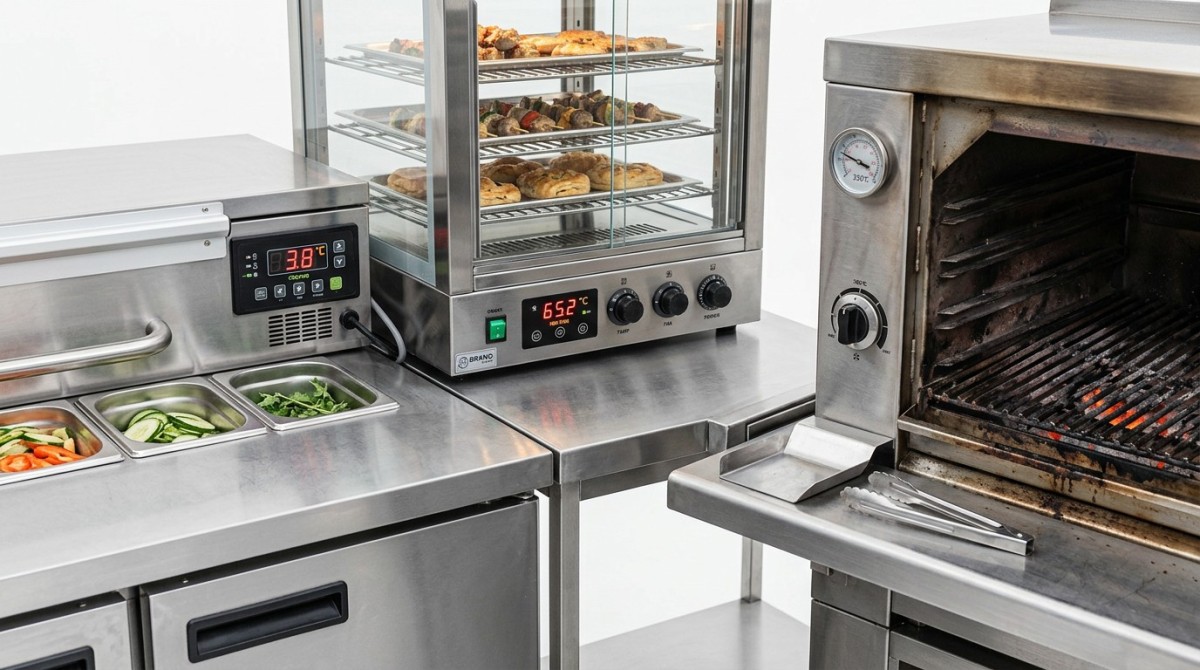
In the kitchen equipment industry, innovation is increasingly tied to automation, intelligent controls, and energy-efficient systems. However, replacing a manual station with a smart device does not automatically reduce ticket time or labor pressure. A charbroiler with better heat recovery, for example, can still cause output delays if ingredient staging, plating order, and pass coordination remain unchanged.
A common mistake is treating equipment as an isolated productivity tool. In reality, a kitchen is an interconnected system with 4 core workflow layers: receiving and storage, preparation, cooking and holding, and service or dispatch. If one layer is upgraded while the others stay inefficient, the result is a new bottleneck rather than a better kitchen.
Many commercial kitchens also underestimate movement. In a medium-volume operation, staff may walk several extra meters per order cycle due to poor station adjacency. Over a 6-hour service window, those unnecessary movements add up to dozens of minutes of lost labor time. Equipment with advanced functions cannot recover time lost through layout conflict, handoff delays, or unclear work sequencing.
Workflow failure often appears in subtle ways: hot food waiting 3-5 minutes too long before service, raw and cooked zones crossing during peak hours, or refrigeration access slowing down prep staff. These are not product defects. They are process design issues that reduce the real value of kitchen automation and digital kitchen management.
Typical mismatch between equipment and process
The table below shows how common kitchen equipment investments can fail when workflow redesign is missing.
The key conclusion is simple: equipment can increase capacity at one point, but workflow determines whether that capacity reaches the customer. Without synchronized prep, holding, sanitation, and dispatch steps, technical upgrades remain underused.
Early warning signs buyers and operators should watch
- Service speed improves for less than 2 weeks after installation, then returns to old levels.
- Staff still rely on workarounds such as temporary tables, extra trays, or manual note passing.
- Cleaning and maintenance take longer because the new equipment interrupts existing station flow.
- Peak-hour output increases in one zone, but errors, waiting, or waste increase in another.
Where Workflow Problems Usually Begin in Commercial and Processing Kitchens
Workflow breakdown usually starts before cooking. In many kitchens, receiving, cold storage, ingredient preparation, hot line production, and final handoff are managed as separate tasks rather than one connected chain. That separation creates delay points. A kitchen may invest in automated food processing machinery, but if incoming products are not sorted by use frequency or batch schedule, prep teams still lose 10-20 minutes per shift searching, moving, or re-staging materials.
Another frequent issue is station imbalance. If prep supports 80 portions per hour but the hot line can produce 120 portions per hour, the cooking equipment appears underutilized even when it is functioning correctly. The reverse is also common: a high-capacity line is installed, yet dispatch, packaging, or pass service cannot handle more than 60-70 completed orders per hour.
Food safety can also suffer when workflow is ignored. For example, temperature-controlled equipment helps maintain ingredient integrity, but unsafe handling paths can still compromise results. If raw product crosses plated food routes, or if chilled ingredients remain at ambient temperature for repeated 8-12 minute intervals, the kitchen gains technology but not stronger control.
Labor design matters just as much. A smart kitchen system may reduce manual monitoring, but if job roles are not redefined, teams often duplicate checks, wait for approval, or misuse features. In practice, the first 30 days after installation are critical. That is when workflow habits either adapt to the new equipment or pull performance back to old patterns.
High-risk workflow zones
The following matrix helps procurement teams and managers identify where equipment investment should be paired with process redesign.
This kind of assessment is especially valuable in central kitchens and food processing facilities, where even a 5% workflow mismatch can affect labor planning, product consistency, and downstream delivery schedules.
Operational questions worth asking before purchase
- How many steps does the current task require from storage to service, and can at least 1-2 steps be removed?
- Will the new equipment reduce walking distance, waiting time, or handoff errors in measurable terms?
- Can surrounding stations match the new output rate during peak periods of 60-180 minutes?
- Are cleaning, maintenance, and sanitation routines realistic for the available labor per shift?
How to Redesign Kitchen Workflow So Innovation Delivers Real ROI
A successful kitchen upgrade begins with process mapping, not just equipment selection. Before buying automated kitchen systems or high-performance commercial kitchen equipment, teams should map the current state in 3 layers: material flow, people movement, and information flow. Material flow tracks ingredients and finished products. People movement tracks operator steps and station interactions. Information flow tracks who makes decisions, who signals replenishment, and how exceptions are handled.
Once the current state is visible, the next step is to redesign for sequence, not just speed. A faster station is only useful if the previous and next stations can support it. In many projects, a 15%-25% gain in practical throughput comes from reorganizing handoff timing, reducing duplicate checks, and repositioning small support tools rather than from buying the most advanced unit available.
Implementation should be phased. Phase 1 is diagnosis and layout review, usually 3-7 days in a single-site project. Phase 2 is pilot operation, often 1-2 weeks, where teams test output rhythm, cleaning access, and replenishment logic. Phase 3 is standardization, with SOP updates, training, and acceptance checks. This staged approach lowers disruption and gives decision-makers clearer evidence before wider rollout.
It is also important to define measurable success criteria. Instead of saying a project should “improve efficiency,” operators should track indicators such as average prep time per batch, station waiting time, hot-hold duration, cleaning minutes per shift, and orders completed per labor hour. Even 4-6 indicators are enough to tell whether the workflow redesign is working.
A practical 5-step implementation framework
- Step 1: Audit current layout, process path, and peak-hour load by time block.
- Step 2: Match equipment capacity with upstream prep and downstream service requirements.
- Step 3: Redefine station ownership, replenishment rules, and cleaning responsibilities.
- Step 4: Run a pilot for at least 5 service cycles or 1 full production week.
- Step 5: Lock in SOPs, train operators, and review data after 14-30 days.
Selection criteria that connect equipment and workflow
Buyers often compare kitchen equipment by energy use, footprint, temperature range, or output rate. Those metrics matter, but they are incomplete unless evaluated against the working process. A refrigerated worktable should be selected not only by storage volume, but also by door opening frequency, prep-side access, and cleaning clearance. A heated display should be chosen not only for holding performance, but also for reload speed, visibility, and service-side reach.
For larger foodservice groups and food processing companies, integration matters even more. Digital kitchen management solutions can connect production timing, maintenance records, and batch control, but only if the operating process is standardized. Inconsistent naming, manual overrides, and unassigned responsibilities will weaken the benefit of intelligent cooking equipment, no matter how advanced the interface is.
What Procurement and Management Teams Should Evaluate Before Investing
Procurement decisions in the kitchen equipment sector should go beyond purchase price and technical brochure claims. For B2B buyers, the better question is whether the proposed equipment fits the real operating model over 3 dimensions: capacity fit, process fit, and support fit. Capacity fit asks whether output matches demand. Process fit checks whether the equipment improves movement, safety, and coordination. Support fit reviews installation, training, spare parts, and maintenance planning.
In practice, a lower-priced machine can create higher total cost if it increases labor minutes, causes cleaning difficulty, or requires more frequent intervention. A site should estimate not only unit cost but also expected service life, routine maintenance frequency, downtime exposure, and training intensity. For many commercial kitchens, the first 12 months reveal whether the investment supports smoother production or simply adds another management burden.
Decision-makers should also consider supply-chain realities. Global kitchen equipment sourcing now involves different manufacturing and export centers, including China, Germany, Italy, and Japan. That gives buyers broader choice, but also makes lead time, specification alignment, documentation quality, and after-sales support more important. For standard equipment, delivery may range from 2-6 weeks. For integrated kitchen systems or customized configurations, 6-12 weeks is more realistic.
The most effective procurement teams include end users early. Operators can identify access problems, cleaning challenges, or sequencing conflicts that may not appear in a technical sheet. When users, buyers, and management review the same process map, selection quality improves and post-installation resistance usually drops.
Procurement checklist for workflow-based buying
The table below can be used in equipment evaluation meetings to compare options with workflow impact in mind.
This framework helps buyers avoid a common error: selecting a high-spec product that does not fit the real pace, staffing model, or service logic of the kitchen. In B2B purchasing, the best choice is often the system that delivers the most stable workflow, not the one with the longest feature list.
Questions senior leaders should ask vendors
- What process assumptions are built into the recommended configuration?
- How should station layout change to achieve the quoted output range?
- What operator training is needed in the first 7, 30, and 90 days?
- Which performance indicators should be reviewed after commissioning?
Common Misconceptions, Maintenance Needs, and FAQ for Smarter Kitchen Upgrades
One common misconception is that automation eliminates the need for skilled coordination. In reality, automated food processing systems and intelligent cooking equipment shift labor from repetitive activity to supervision, exception handling, and timing control. That means training remains essential. Without clear role assignment, the team may still depend on informal habits instead of using the system as designed.
Another misconception is that energy-efficient kitchen solutions always reduce cost immediately. Savings depend on runtime pattern, load consistency, maintenance condition, and workflow discipline. A unit designed for efficient holding can still waste energy if doors are opened too frequently, loading is inconsistent, or production is scheduled in fragmented batches.
Maintenance planning should also be part of workflow redesign. If preventive checks are not assigned, even high-quality kitchen electrical appliances and restaurant appliances can lose performance. A simple plan may include daily cleaning verification, weekly inspection of seals or burners, monthly calibration or function tests where applicable, and a quarterly review of parts wear. The point is not excessive maintenance, but stable operation with predictable service intervals.
For kitchens planning future investment, the strongest long-term trend is integration. Smart technologies, green operating targets, and connected kitchen systems are becoming more important across global foodservice and food processing industries. Yet the same rule still applies: technology creates potential, while workflow turns potential into repeatable output, safety, and return.
FAQ: practical questions from buyers and operators
How long does a workflow-based kitchen upgrade usually take?
For a single site using mostly standard equipment, assessment and planning may take 3-7 days, installation 1-5 days depending on utilities, and stabilization another 2-4 weeks. Multi-station or integrated projects usually require longer validation.
Which kitchens benefit most from workflow redesign?
High-volume restaurants, hotel kitchens, central kitchens, and food processing facilities benefit the most because they handle repeated tasks, strict timing, and multiple handoff points. In these environments, even a small reduction in delay per cycle compounds quickly.
What should operators measure after new equipment is installed?
Track at least 4 items: output per hour, average waiting time between stations, cleaning minutes per shift, and product holding duration. If possible, also review labor hours per batch and reject or rework frequency.
What is the biggest buying mistake?
The biggest mistake is buying for specification alone. Equipment should be selected based on actual workflow, staffing pattern, sanitation routine, and service target. A technically strong product can still underperform if the surrounding process is weak.
Kitchen innovation succeeds when equipment, layout, labor, and operating rules are designed together. Whether you are sourcing commercial kitchen equipment, evaluating automated kitchen systems, or planning a broader modernization project, workflow should be treated as part of the investment, not as an afterthought.
If you want better throughput, safer handling, clearer procurement decisions, and stronger long-term returns, start by reviewing how work actually moves through the kitchen. To explore a workflow-focused equipment plan, get a tailored solution, consult product details, or contact us to discuss your application scenario in more depth.
Popular Tags
Kitchen Industry Research Team
Dedicated to analyzing emerging trends and technological shifts in the global hospitality and foodservice infrastructure sector.
Industry Insights
Join 15,000+ industry professionals. Get the latest market trends and tech news delivered weekly.
No spam. Unsubscribe anytime.



Contact With us
Contact:
Anne Yin (Ceramics Dinnerware/Glassware)
Lucky Zhai(Flatware)