
Why Refrigerated Worktable Layout Affects Kitchen Speed
In a fast-paced commercial kitchen, the layout of a Refrigerated Worktable can directly influence prep flow, food safety, and overall service speed. As kitchen innovation and kitchen automation continue reshaping foodservice operations, choosing the right position alongside equipment like a Charbroiler, Wok Range, or Heated Display is no longer a minor detail but a smart efficiency strategy.
Why does Refrigerated Worktable placement change kitchen speed so much?
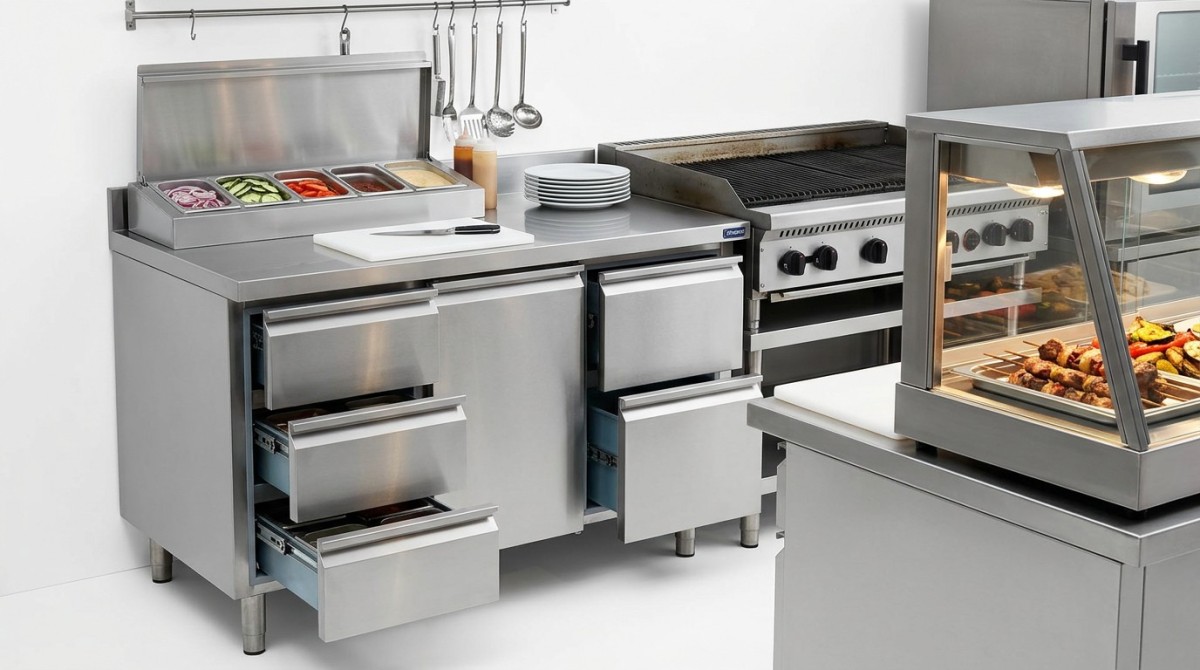
A Refrigerated Worktable is not only a cold storage unit with a prep surface. In commercial kitchens, it is often the bridge between ingredient holding, portioning, assembly, and dispatch. When that bridge is placed poorly, staff take extra steps, cross each other’s path, and lose seconds on every order. Across a lunch rush lasting 2–4 hours, those seconds accumulate into delayed tickets, inconsistent plating, and more pressure on operators.
For restaurants, hotels, central kitchens, and food processing support areas, layout affects three linked goals: workflow speed, temperature control, and labor efficiency. A prep line that places a Refrigerated Worktable too far from a Charbroiler or Wok Range may reduce heat exposure, but it can also add repeated walking distances of 1–3 meters per task cycle. In high-volume service, that gap is large enough to affect output during peak periods.
The kitchen equipment industry has been moving toward integrated kitchen systems, smarter controls, and energy-efficient operation. That trend makes layout planning even more important. Equipment is no longer purchased as isolated units. Buyers now compare how cold prep stations, cooking lines, holding cabinets, and digital management systems function together in one workflow. A Refrigerated Worktable layout decision should therefore be treated as an operational design issue, not just a product placement choice.
This matters to four types of readers. Information researchers want to understand why layout affects speed. Operators want less reaching, bending, and traffic conflict during 6–12 hour shifts. Procurement teams need selection criteria they can compare across suppliers. Decision-makers want a layout that supports food safety, energy use control, and future expansion without unnecessary renovation later.
The hidden losses caused by weak layout planning
Many kitchens focus on equipment capacity first and placement second. That order often creates avoidable inefficiencies. A worktable may have the right refrigeration volume and surface size, yet still fail operationally because drawers open into the aisle, ingredient access conflicts with the cooking line, or staff must turn repeatedly to move between cold prep and hot finishing zones.
- Extra movement: repeated walking, pivoting, and reaching can slow every prep cycle by a few seconds, which becomes significant over 100–300 orders.
- Temperature exposure: placing the unit too close to intense heat sources may increase compressor workload and challenge stable holding conditions.
- Traffic conflict: two or three operators sharing a narrow passage can interrupt both prep and plating, especially in compact kitchens.
- Cleaning difficulty: poor clearance around the base, rear, or side panels can make daily sanitation and quarterly maintenance less consistent.
When buyers evaluate layout from the beginning, they reduce these losses before installation. That is usually more cost-effective than correcting line flow after opening, when changes may involve downtime, utility adjustment, or replacing adjacent stainless steel furniture.
Which layout patterns work best for different kitchen scenarios?
There is no universal best position for a Refrigerated Worktable. The right layout depends on menu style, production rhythm, kitchen footprint, and how often ingredients are replenished. In a quick-service kitchen, the worktable often supports assembly speed. In a hotel or full-service restaurant, it may support mise en place, garnish prep, or cold-side staging. In central kitchen environments, it may act as a short-cycle holding and finishing station.
A practical way to assess placement is to map the path from receiving and cold storage to washing, prep, cooking, holding, and pass-out. If a Refrigerated Worktable serves a station that handles high-frequency ingredients, it should usually sit within one or two operator steps of the main production action. If it stores low-frequency items, a slightly longer access distance may be acceptable in exchange for better aisle clearance.
The comparison below helps procurement and operations teams match layout logic with actual kitchen conditions rather than choosing a standard setup by habit. It focuses on workflow, staffing, and coordination with nearby equipment such as Charbroilers, Wok Ranges, and Heated Displays.
The best layout is usually the one that shortens the most repeated task, not the one that looks most symmetrical on a floor plan. For many kitchens, that means designing around top-selling menu items and the busiest 20% of the shift, rather than average daily flow.
Scenario-based placement logic
If the station supports raw proteins or chilled sauces used every few minutes, near-line placement is usually stronger. If the ingredients are bulk-prepped and replenished every 30–60 minutes, backline support can be more practical. For kitchens operating both dine-in and delivery, a split workflow may be needed so the Refrigerated Worktable supports two service channels without forcing one operator to cross the other’s route.
Three layout questions procurement teams should ask
- How many touches does one ingredient require from cold storage to final plating, and can the layout remove 1–2 unnecessary transfers?
- How many operators share the station during peak periods, and does drawer or door movement interfere with aisle circulation?
- Is the worktable exposed to heat, grease, or splash zones that increase cleaning time or affect refrigeration stability?
These questions seem simple, but they often reveal whether the equipment should be located beside cooking, behind prep, or closer to the service line. That kind of analysis is far more valuable than selecting by dimensions alone.
What technical and operational factors should buyers compare before selecting a layout?
A Refrigerated Worktable should be assessed as both a refrigeration device and a workstation. Buyers who compare only external size may miss factors that directly affect kitchen speed. Typical evaluation should include internal storage configuration, usable top surface, door versus drawer access, temperature holding range, ventilation space, and compatibility with adjacent stations. In many projects, 5–7 practical checks can prevent major placement mistakes.
Temperature stability is especially important when the unit is placed near high-heat equipment such as a Charbroiler or Wok Range. Commercial refrigerated prep equipment is commonly designed to hold chilled ingredients within a food-safe operating range set by local regulations and product specifications. Actual performance depends on ambient kitchen conditions, door opening frequency, loading method, and cleaning discipline. That is why location planning and operator behavior matter as much as the specification sheet.
The table below summarizes selection points that connect equipment choice with layout performance. It is useful for procurement teams comparing suppliers, for chefs reviewing line setup, and for decision-makers balancing labor efficiency with compliance and energy use.
A selection decision becomes stronger when technical checks are translated into workflow results. For example, a drawer model may cost more than a door model, but if it reduces bending and improves access in a high-frequency station, it may support faster service and lower operator fatigue over the long term.
Standards, compliance, and practical design checks
In B2B purchasing, compliance matters alongside speed. Depending on the market, buyers may review food-contact material suitability, electrical safety requirements, energy considerations, and refrigeration-related compliance. For export or multi-region projects, the approval path may add 2–6 weeks depending on documentation, testing needs, and local distributor coordination.
From a layout perspective, compliance is not only about the unit itself. It also concerns cleanability, operator access, and how the station supports safe ingredient handling. If raw and ready-to-eat items are handled in the same area, the worktable placement should support separation practices, utensil control, and replenishment routines that reduce cross-contact risk.
- Check whether the installation environment matches the intended operating condition of the unit.
- Confirm utility access, maintenance space, and cleaning reach before final line drawing approval.
- Review whether the station will store raw, cooked, or ready-to-serve ingredients and design separation accordingly.
For decision-makers, these details reduce the risk of expensive rework. For operators, they support a station that is easier to use correctly every day, not only easier to buy initially.
How should procurement teams balance cost, workflow, and future expansion?
Budget pressure often leads buyers to compare only purchase price. That can be risky in commercial kitchen equipment projects, where layout inefficiency creates hidden labor and service costs. A lower-cost Refrigerated Worktable may still be the right choice if the kitchen volume is stable and the station is simple. But in operations expecting menu growth, shift expansion, or higher order density within 12–24 months, layout flexibility deserves more weight.
The most effective procurement approach is to compare total operational fit across three levels: current workflow, peak service demand, and future adjustment potential. For example, a compact unit may fit today’s line, yet leave no space for ingredient pan expansion or adjacent automation upgrades later. In contrast, a slightly larger or better-configured model may reduce future renovation cost if the kitchen plans to add digital kitchen management, more delivery orders, or semi-automated prep.
Procurement teams should also distinguish between one-time layout savings and repeated daily labor savings. Saving on initial equipment cost is visible immediately. Saving 10–20 minutes of cumulative staff movement per shift is less visible, but over months of operation it can be more meaningful, especially in kitchens facing labor shortages or high staff turnover.
A practical 4-step selection process
- Map the station task cycle. Identify the top 3 ingredients or actions repeated most often during a busy 60–90 minute window.
- Review nearby equipment interactions. Confirm where the Refrigerated Worktable sits relative to Charbroilers, Wok Ranges, prep sinks, pass lines, and Heated Displays.
- Compare access and service needs. Check opening direction, cleaning reach, ventilation space, and utility compatibility before placing an order.
- Plan for change. Leave room for menu adjustment, higher-volume ingredients, or future line balancing over the next 1–2 years.
This process helps information researchers turn general knowledge into a buying framework. It also gives procurement teams a way to compare proposals from different suppliers using operational logic rather than only specifications and price.
Common layout mistakes that raise long-term cost
One frequent mistake is placing the worktable wherever there is leftover floor space. Another is ignoring replenishment flow from main cold storage. A third is underestimating the effect of heat-producing equipment nearby. These issues can raise power use, slow prep, and increase wear on seals or components because the unit works harder than expected in the actual environment.
A more disciplined procurement decision asks not only “Will it fit?” but also “Will it still support service speed after six months of real use?” That mindset is increasingly important as commercial kitchens adopt smarter, more connected, and more energy-conscious systems.
FAQ: what do buyers and operators most often ask about Refrigerated Worktable layout?
How close should a Refrigerated Worktable be to a cooking line?
Close enough to reduce unnecessary steps, but not so close that heat exposure, grease, or traffic disrupts operation. In many kitchens, one or two operator steps is practical for high-frequency ingredients. Final placement should follow the equipment design, required clearances, and the real conditions around the Charbroiler, Wok Range, or fry line.
Is a drawer model better than a door model for kitchen speed?
Not always. Drawer models can improve access and reduce bending in fast repetitive stations, especially when multiple ingredient pans are used. Door models may be suitable for lower-frequency access or kitchens with simpler prep flow. The right choice depends on staff count, aisle space, ingredient format, and how often the station is opened during peak service.
What should procurement check before confirming an order?
At minimum, confirm 5 key points: station function, nearby heat sources, opening clearance, ventilation space, and cleaning access. It is also wise to review delivery lead time, utility requirements, documentation for the target market, and whether the configuration matches future menu expansion or automation plans.
How long does layout confirmation and delivery usually take?
For standard commercial kitchen equipment projects, layout review may take several days to 2 weeks depending on drawing readiness and site complexity. Product lead time varies by configuration, quantity, and region. Customized solutions, export documentation, or special compliance requests can extend the cycle by several additional weeks, so early technical confirmation is important.
Why choose us for Refrigerated Worktable selection and kitchen layout support?
A strong supplier should do more than offer a catalog. In the kitchen equipment industry, the real value comes from connecting product specification with workflow design, compliance awareness, and long-term operational fit. That is especially important when buyers need to coordinate multiple units such as Refrigerated Worktables, Charbroilers, Wok Ranges, Heated Displays, and other integrated commercial kitchen equipment within one project.
We support customers who need practical answers before ordering. That includes parameter confirmation, station-based product selection, layout suggestions for different service models, estimated delivery timing, and discussion of custom configurations based on menu type and kitchen footprint. For procurement teams, this means clearer comparison logic. For operators, it means equipment that is easier to use efficiently. For decision-makers, it means a better balance between cost, speed, and future scalability.
If you are evaluating a new line or upgrading an existing kitchen, you can contact us to discuss 6 key topics: working dimensions, access format, placement near hot equipment, compliance expectations, sample or specification support, and quotation planning. If your project involves export, multi-site rollout, or customized stainless steel matching, those requirements can be reviewed early to reduce approval delays and installation risk.
Share your floor plan, target application, or expected service volume, and we can help you assess whether your Refrigerated Worktable layout supports faster prep flow, safer ingredient handling, and a more efficient kitchen system overall. That conversation is often the fastest route to a better equipment decision.
Popular Tags
Kitchen Industry Research Team
Dedicated to analyzing emerging trends and technological shifts in the global hospitality and foodservice infrastructure sector.
Industry Insights
Join 15,000+ industry professionals. Get the latest market trends and tech news delivered weekly.
No spam. Unsubscribe anytime.




Contact With us
Contact:
Anne Yin (Ceramics Dinnerware/Glassware)
Lucky Zhai(Flatware)