
Stainless steel restaurant supplies with fewer rust complaints
Choosing stainless steel restaurant supplies with fewer rust complaints is essential for restaurants, hotels, and foodservice buyers seeking durability and hygiene. Whether sourcing commercial restaurant supplies through a restaurant supplies manufacturer or planning a restaurant supplies bulk order, understanding material quality, finish, and usage needs helps reduce maintenance risks and improve long-term value.
In commercial kitchens, rust complaints rarely come from a single cause. They usually result from a combination of lower-grade stainless steel, poor surface finishing, chloride exposure, aggressive cleaning chemicals, trapped moisture, and unsuitable product design. For operators, rust means extra cleaning time and hygiene concerns. For procurement teams, it can mean replacement costs within 6 to 24 months instead of the expected multi-year service life.
This matters across restaurants, hotel kitchens, central kitchens, catering facilities, and food processing environments where equipment is washed daily, exposed to heat, and often in contact with salt, acids, and sanitizers. Buyers comparing restaurant supplies bulk order options need more than a low unit price. They need a practical framework for selecting stainless steel restaurant supplies that perform consistently under real kitchen conditions.
The following guide explains how to reduce rust-related issues through better material selection, specification review, supplier evaluation, and maintenance planning. It is designed for information researchers, kitchen users, purchasing professionals, and business decision-makers who want fewer complaints, longer service life, and stronger value from commercial restaurant supplies.
Why Rust Complaints Happen in Stainless Steel Restaurant Supplies
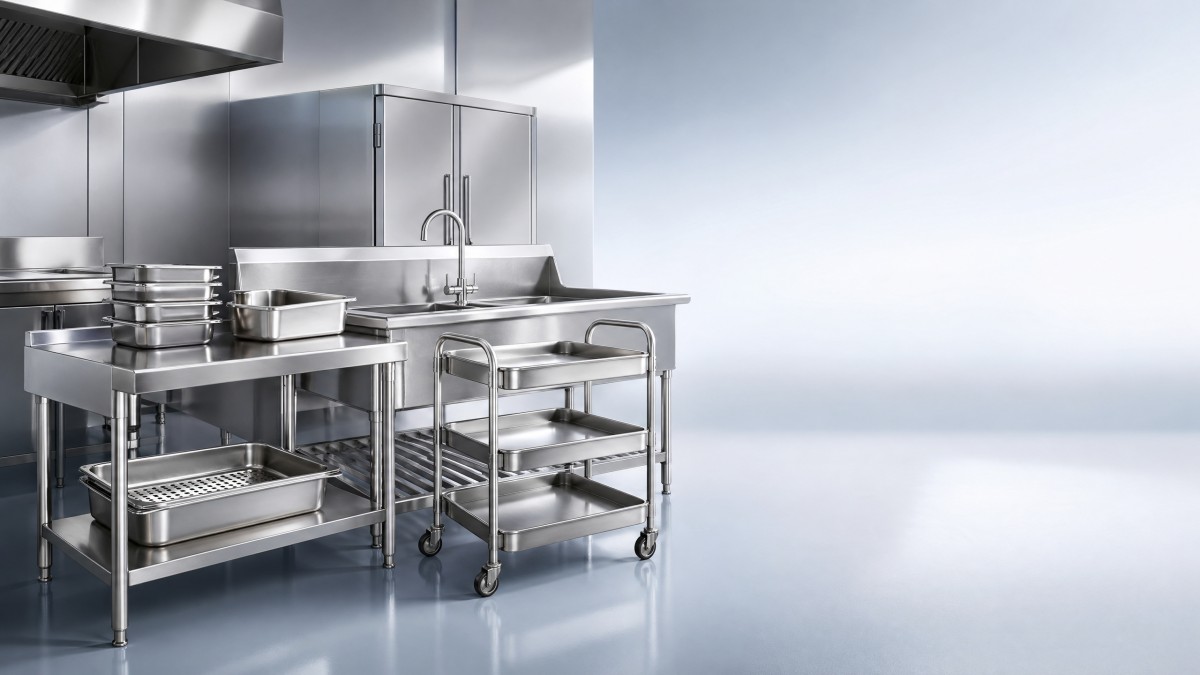
Stainless steel is corrosion-resistant, not corrosion-proof. In restaurant use, many buyers assume any stainless steel product will resist rust equally well. In reality, the difference between 201, 304, and 316 stainless steel can significantly affect performance. A sink, trolley, prep table, or GN pan exposed to chlorides 2 to 6 times per day will behave differently depending on grade, finish, weld quality, and drainage design.
One common source of complaints is grade mismatch. For dry storage racks, shelving, or light-duty worktables in low-humidity areas, 201 stainless steel may be acceptable in some markets. However, in dishwashing zones, seafood kitchens, or high-salt environments, 304 is often the safer baseline, while 316 becomes more suitable where chloride exposure is frequent or sanitation standards are stricter.
Another issue is surface contamination during manufacturing or installation. If carbon steel particles contact stainless steel during fabrication, handling, or packaging, localized rust spots can appear even when the base material itself is acceptable. This is why experienced restaurant supplies manufacturers separate processing tools, polishing steps, and storage areas for stainless components whenever possible.
Design details also matter. Flat surfaces without proper slope, poorly finished welds, and hollow sections that trap water can accelerate visible staining. In many kitchens, the complaint is described simply as “rust,” but the real problem may be tea staining, surface contamination, or corrosion starting near weld seams and unsealed joints.
High-risk conditions operators should identify
- Frequent use of chlorine-based cleaners, especially if not rinsed within 5 to 10 minutes.
- Coastal or humid climates where salt in the air increases corrosion risk over 12 months or more.
- 24-hour operations where equipment stays wet for long periods and drying time is limited.
- Food contact with brine, vinegar, tomato concentrate, or seafood residues.
A practical view for B2B buyers
For procurement and management teams, fewer rust complaints start with realistic application mapping. The right question is not only “What is the unit price?” but also “What environment will this item face 3 times a day, 7 days a week, for the next 3 to 5 years?” That shift usually improves specification accuracy and lowers total ownership cost.
How to Select the Right Stainless Steel Grade and Finish
Selecting stainless steel restaurant supplies with fewer rust complaints begins with matching grade and finish to use conditions. In many purchasing cases, the material grade alone is discussed, but finish quality is equally important. A smooth, properly polished surface is easier to clean, less likely to trap contaminants, and more resistant to visible staining than a rough or inconsistent finish.
For general commercial restaurant supplies, 304 stainless steel is widely used because it balances corrosion resistance, cost, and availability. It is a common choice for worktables, sinks, shelves, cabinets, and food prep accessories. When budgets are tight, buyers may compare it with 201 stainless steel, but that decision should be limited to drier applications with lower chemical exposure and lower hygiene risk.
In more demanding environments such as seafood processing, high-saline kitchens, heavy sanitizing zones, or premium hospitality kitchens, 316 stainless steel may offer a stronger corrosion margin. Although the upfront cost can be 15% to 35% higher depending on product category and market conditions, the reduction in complaints and replacements may justify the difference in high-risk applications.
Thickness also matters. Thin-gauge material can deform more easily, creating micro-cracks near stress points, welds, and folded edges. For example, a commercial worktable top may commonly fall within 0.8 mm to 1.5 mm depending on load and reinforcement design. Buyers should review both nominal thickness and structural support, not just the material label.
Typical grade selection by application
The table below helps compare common stainless steel options used in restaurant supplies procurement. It is not a fixed rule for every project, but it provides a practical starting point for matching risk level and cost sensitivity.
The key takeaway is that the “best” option depends on application. Over-specifying every item raises project cost, but under-specifying wet-area supplies often creates repeat complaints. A category-by-category material strategy usually produces the best commercial result.
Finish and fabrication checkpoints
- Prefer smoother finishes for food contact and easy-clean surfaces, especially where cleaning happens 2 to 4 times daily.
- Check whether welds are ground and polished evenly, with no sharp pits or discoloration.
- Review edge treatment, splashback design, and drainage angle on sinks and tables.
- Ask whether protective film is removed and surfaces inspected before packing.
Procurement Criteria for Commercial Restaurant Supplies and Bulk Orders
When handling a restaurant supplies bulk order, rust prevention should be built into the procurement process, not treated as an after-sales problem. Many projects compare quotations mainly by price, size, and lead time. A stronger method adds four more dimensions: material verification, fabrication consistency, packaging method, and after-sales response time. This is especially important for distributors, hotel groups, chain restaurants, and central kitchens buying 20, 50, or 200 units at once.
Supplier communication should be specific. Instead of requesting only “stainless steel table,” buyers should define the intended environment, expected cleaning frequency, load requirement, and exposure to salt or chemicals. For example, a prep table used in a bakery has a very different corrosion profile from a seafood wash station. A clear specification can reduce mismatch risk during production and improve quotation accuracy.
It is also useful to distinguish visible cosmetics from structural quality. A polished surface may look attractive at delivery, but if weld treatment, reinforcement, or tube sealing is weak, complaints can appear after 3 to 9 months. Decision-makers should request sample photos, process details, or pre-shipment inspection records when evaluating a restaurant supplies manufacturer for larger orders.
Lead time affects quality as well. Extremely compressed delivery windows can increase the risk of rushed polishing, insufficient drying after cleaning, or packaging surfaces before they are fully ready. For standard restaurant supplies, a common production lead time may range from 15 to 35 days depending on quantity, customization level, and factory capacity.
Procurement checklist for fewer rust complaints
The following table can help purchasing teams evaluate multiple suppliers using practical criteria rather than price alone.
For large projects, a shortlist based on these four criteria is often more reliable than choosing the lowest bidder. This approach helps both procurement teams and business leaders protect long-term operating value.
Recommended bulk-order workflow
- Map products by area: dry storage, prep, wash, cook line, or cold room.
- Assign target material grades and thickness ranges by use condition.
- Review samples or detailed photos before confirming full quantity.
- Set inspection points before shipment and within 7 days after arrival.
- Train site teams on cleaning chemicals and drying routines from day 1.
Maintenance Practices That Reduce Rust Risk After Installation
Even high-quality stainless steel restaurant supplies can develop complaints if daily care is poor. In many facilities, the issue begins after installation when cleaning teams use unsuitable chemicals, abrasive pads, or leave chlorinated solutions on surfaces overnight. A simple maintenance standard can make a visible difference within the first 30 to 90 days of use.
The first rule is to remove food residue and cleaning chemicals promptly. Salt, vinegar, soy sauce, bleach-based disinfectants, and hard-water deposits should not remain on metal surfaces for extended periods. After routine washing, clean water rinse and surface drying are basic but important steps. In high-use kitchens, this may need to happen at the end of every shift, typically 2 or 3 times per day.
The second rule is to avoid cross-contamination from steel wool, iron tools, or mixed storage. Small metal particles left on the surface can rust and create the impression that the stainless product itself is failing. Non-abrasive pads and stainless-safe cleaning agents are generally the better choice for preserving finish and reducing complaint frequency.
The third rule is preventive inspection. Operators should check weld areas, undersides, drain zones, caster brackets, and folded edges every 2 to 4 weeks. These locations often show the earliest signs of trapped moisture or neglected residue. Addressing minor discoloration early is easier than dealing with established corrosion or customer-facing hygiene concerns later.
Daily and weekly care priorities
- Rinse off chlorine-based cleaners instead of allowing long contact times.
- Dry sink rims, shelf corners, and folded edges where water may remain for 8 hours or more.
- Use separate cleaning tools for stainless steel and carbon steel zones.
- Inspect mobile equipment wheels and mounting points at least once every 30 days.
When complaints appear
If a rust complaint appears, the response should be diagnostic rather than reactive. Confirm whether it is true base-metal corrosion, surface contamination, chemical staining, or weld discoloration. Taking clear photos, checking use conditions, and reviewing cleaning history within the previous 7 to 14 days often helps identify the cause faster than immediate replacement.
Application-Based Specification Strategy for Restaurants, Hotels, and Foodservice Facilities
A strong specification strategy does not treat all kitchen equipment the same. Restaurants, hotels, institutional kitchens, and food processing areas each place different demands on stainless steel supplies. By segmenting applications, buyers can reduce unnecessary cost in low-risk zones while strengthening performance where rust complaints are more likely.
For example, front-of-house display supports, enclosed storage, and dry shelving may not need the same corrosion resistance as wash-up stations, pot sinks, floor trough covers, or seafood prep tables. This type of zoning becomes even more important in integrated kitchen planning, where procurement spans tables, carts, racks, sinks, cabinets, and supporting accessories across several departments.
Hotels and central kitchens should also consider cleaning intensity and labor consistency. A product that performs well in a single-site restaurant may face more variable maintenance in a multi-site operation with 10, 20, or 50 locations. In those cases, slightly higher material and finish standards can reduce complaint management workload across the network.
As the kitchen equipment industry moves toward smarter, more integrated, and more efficient solutions, material selection should align with operational realities. Stainless steel restaurant supplies remain a core category because they support hygiene, durability, and workflow. But the best results come from linking material choice to actual use, cleaning behavior, and lifecycle expectations.
Typical specification guidance by environment
The table below offers a practical zoning approach that buyers can adapt when developing product lists or discussing requirements with a restaurant supplies manufacturer.
This zoning model helps decision-makers prioritize spending where it protects operations most. It also gives purchasing teams a practical structure for comparing quotations and reducing future claims.
Common Questions from Buyers and Operators
Many search queries around stainless steel restaurant supplies focus on simple yes-or-no questions, but real purchasing decisions need context. The answers below address common concerns from researchers, users, procurement teams, and business leaders managing commercial kitchen equipment investments.
Is 304 stainless steel always enough for restaurant supplies?
Not always. For many indoor restaurant applications, 304 is a reliable baseline and often the most practical choice. However, if the item is exposed to saltwater ingredients, coastal air, bleach-heavy sanitation, or repeated wet storage, 316 may be the better option. The decision should be based on exposure level, cleaning method, and expected service life rather than habit alone.
Why do some new stainless steel items show rust quickly?
Early complaints can result from surface contamination, packaging moisture, rough weld finishing, or misuse of harsh cleaners during the first few weeks. In some cases, the stainless steel itself is acceptable, but iron particle contamination during fabrication or installation causes visible rust spots. This is why complaint review should include environment, cleaning agents, and handling process within the first 30 days.
What should buyers ask a restaurant supplies manufacturer before placing a bulk order?
At minimum, ask about stainless steel grade by component, thickness range, weld treatment, finish consistency, packaging protection, and complaint response procedure. For larger orders, also ask how products are stored before shipment, whether carbon steel processing is separated, and what inspection points can be confirmed before delivery. These questions are often more valuable than asking only about unit price.
How often should stainless steel restaurant supplies be inspected?
For busy kitchens, a quick visual check each week and a more detailed inspection every 2 to 4 weeks is a practical standard. High-risk areas such as sinks, caster mounts, undershelves, drain edges, and welded corners should be prioritized. In coastal or seafood operations, shorter intervals may help detect issues before they affect hygiene or appearance.
Choosing stainless steel restaurant supplies with fewer rust complaints requires more than selecting a familiar material name. Buyers need to evaluate grade, finish, fabrication quality, use environment, maintenance routine, and supplier communication as one system. That approach helps reduce avoidable complaints, support food safety, and improve the operating life of commercial restaurant supplies across restaurants, hotels, and foodservice facilities.
If you are reviewing commercial kitchen equipment specifications, comparing a restaurant supplies manufacturer, or preparing a restaurant supplies bulk order, a structured product assessment can save time and cost over the long term. Contact us to discuss your application, request a tailored specification suggestion, or explore more practical sourcing solutions for stainless steel restaurant supplies.
Popular Tags
Kitchen Industry Research Team
Dedicated to analyzing emerging trends and technological shifts in the global hospitality and foodservice infrastructure sector.
Industry Insights
Join 15,000+ industry professionals. Get the latest market trends and tech news delivered weekly.
No spam. Unsubscribe anytime.
Contact With us
Contact:
Anne Yin (Ceramics Dinnerware/Glassware)
Lucky Zhai(Flatware)