
Space-saving kitchen tools that work in high-volume kitchens
In high-volume kitchens, every inch of workspace matters. The right space-saving kitchen tools can help operators streamline prep, reduce clutter, and maintain speed without sacrificing safety or consistency. From compact storage solutions to multifunctional utensils, these practical tools are designed to support demanding daily workflows while improving efficiency in busy restaurant, hotel, and foodservice environments.
Understanding space-saving kitchen tools in modern foodservice
Space-saving kitchen tools are products designed to reduce the physical footprint of daily kitchen work while preserving or improving output. In a high-volume environment, this does not simply mean “smaller tools.” It means tools that combine functions, stack efficiently, store vertically, fold when not in use, or fit into tightly planned workstations without disrupting movement. For operators, the value is practical: less wasted motion, faster access to essentials, and cleaner work surfaces during rush periods.
This topic matters more than ever because commercial kitchens are under constant pressure to produce higher volumes with tighter labor availability, stricter food safety expectations, and rising utility costs. Across restaurants, hotels, central kitchens, catering units, and food processing support areas, operators need kitchen tools that match today’s demand for efficiency, consistency, and organized workflow. In that context, space-saving kitchen tools are no longer a convenience. They are part of operational design.
The kitchen equipment industry has also been moving toward smarter, more integrated, and more energy-efficient systems. While automation and intelligent cooking attract attention, smaller tools still play a major role. Compact utensils, modular bins, nesting containers, foldable racks, and multifunction prep equipment connect directly with daily execution. They are often the missing link between a well-designed kitchen plan and actual on-shift performance.
Why high-volume kitchens focus on footprint and flow
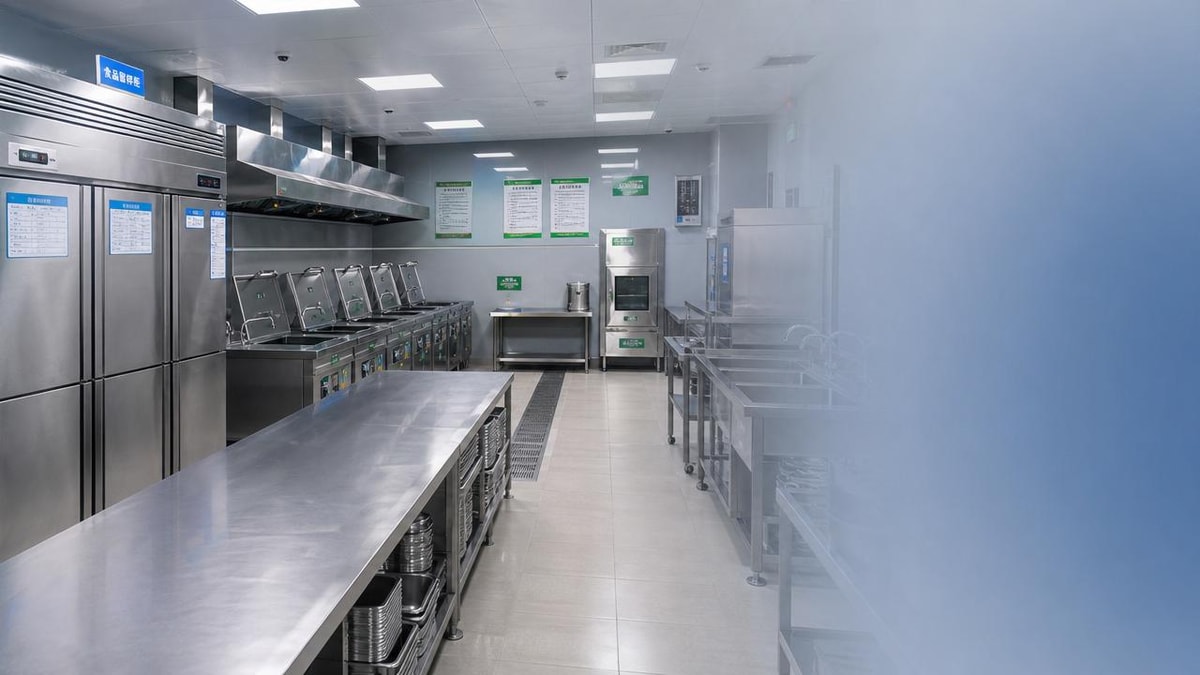
A high-volume kitchen is not judged only by how much food it produces. It is judged by how smoothly people, products, and tools move through limited space. Congested counters, overfilled shelves, and scattered utensils create hidden delays. A cook searching for the right tool, a prep worker clearing space before slicing, or a steward moving around bulky storage all lose seconds that add up across a shift. Space-saving kitchen tools help reduce these interruptions by making work areas more predictable and easier to maintain.
There is also a direct safety and sanitation benefit. Tight kitchens increase the chance of cross-contact, accidental spills, and poor separation between raw and ready-to-serve ingredients. When tools are designed for stackability, quick storage, and controlled placement, cleaning routines become simpler and surfaces stay more usable. This supports food safety programs and helps teams meet inspection and quality standards under pressure.
For many operators, floor area cannot easily be expanded, but throughput still needs to grow. That is why compact prep tools, vertical storage accessories, and multi-use utensils are gaining attention across the foodservice sector. They allow kitchens to improve performance without major construction or disruptive redesign.
Industry overview: where compact tools create measurable value
The role of space-saving kitchen tools changes slightly depending on the operation type, but the core objective remains the same: maximize productive use of limited space. The table below shows how different segments commonly benefit.
These examples show that compact tools are not a niche concern. They support productivity across many foodservice formats, from front-line line cooking to bulk preparation and service support.
Common categories of space-saving kitchen tools
Operators often get the best results when they think in categories rather than isolated products. Different types of space-saving kitchen tools solve different workflow problems.
Multifunction prep tools
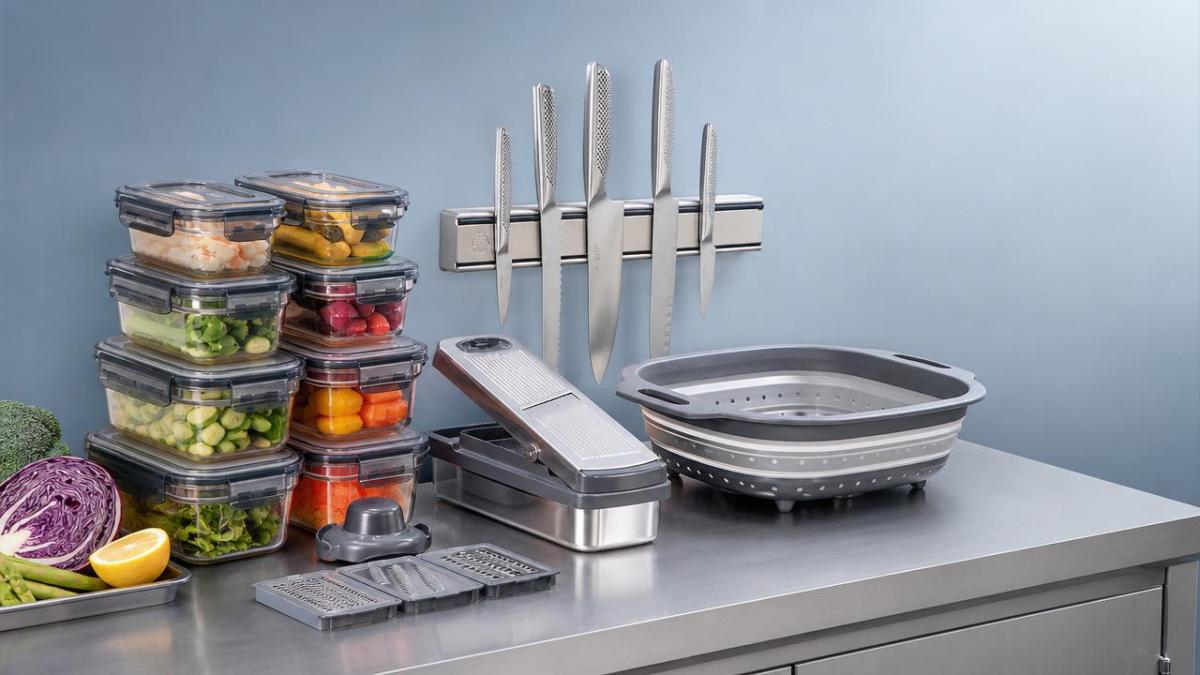
These include tools that perform more than one task, such as combination peel-and-slice units, measuring tools with built-in portion control, or chopping aids that reduce the need for multiple accessories. Their advantage is simple: fewer individual items on the station and fewer tool changes during prep.
Stackable and nesting storage
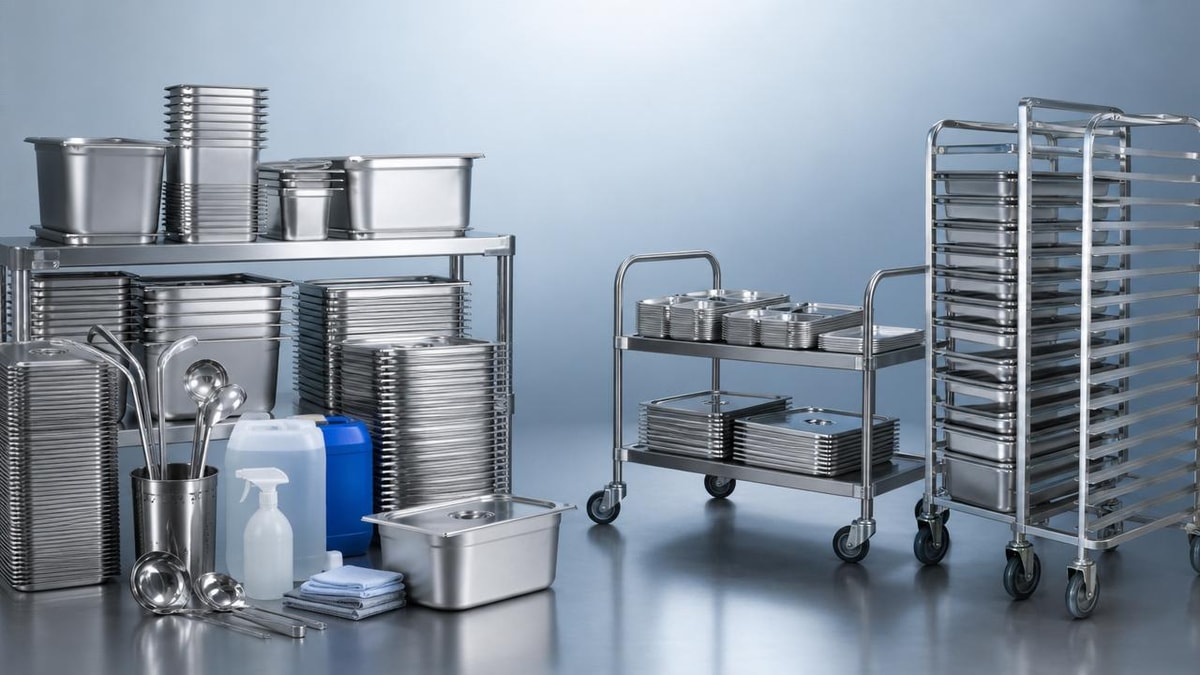
Ingredient bins, food pans, bowls, and containers designed to nest when empty or stack securely when filled help kitchens use vertical space more effectively. This is especially useful in refrigeration, dry storage, and prep holding areas where shelf capacity directly affects organization.
Foldable and collapsible tools
Collapsible draining tools, fold-down racks, and folding utility shelves can be stored when not needed. In kitchens with changing production patterns, these tools allow teams to adapt the workspace throughout the day instead of permanently giving up room to low-frequency items.
Wall-mounted and vertical-access accessories
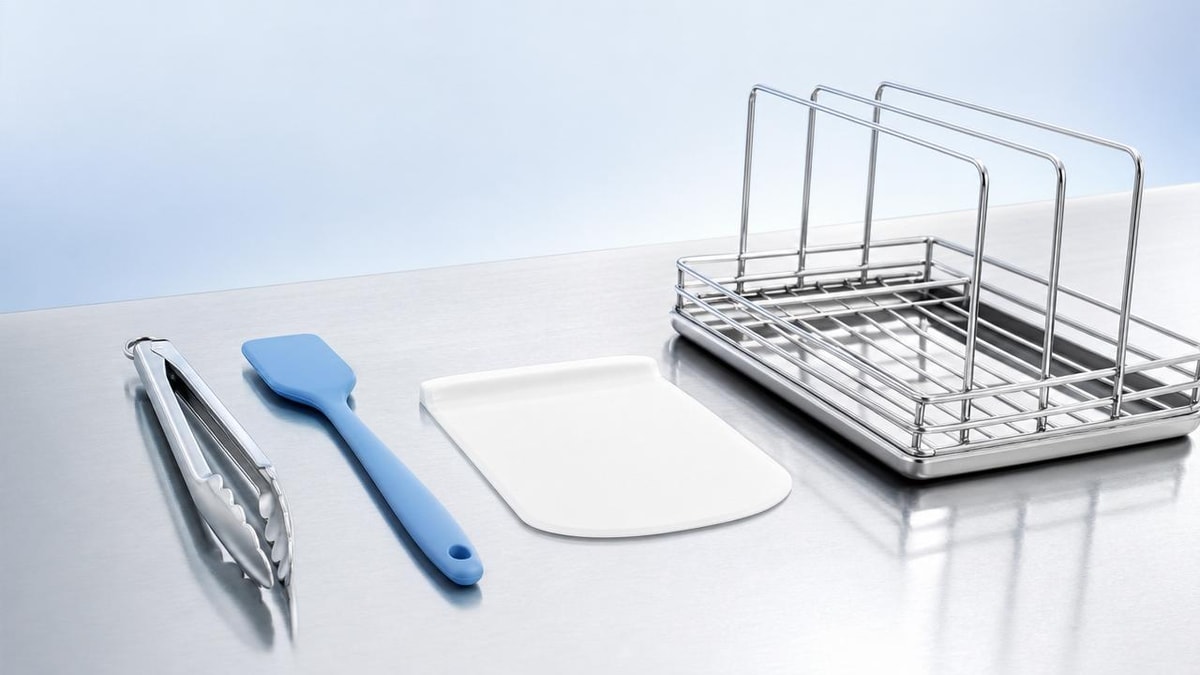
Magnetic knife strips, hanging ladle systems, rail-mounted utensil holders, and vertical cutting board storage free up counter space while improving visibility. When operators can reach tools without digging through drawers or bins, productivity improves and workstations stay cleaner.
Compact portioning and serving tools
Smaller-footprint dispensers, scoops, squeeze bottle systems, and compact scales support consistency without crowding the service line. In high-volume service, portion control tools that fit neatly into station layouts can reduce waste and improve speed at the same time.
Application value for operators and daily users
For the people actually using the kitchen every day, the benefit of space-saving kitchen tools is immediate. First, they reduce physical strain. Reaching around oversized tools or moving items repeatedly to create room adds fatigue over long shifts. A better-organized station lowers unnecessary motion and can support more ergonomic working patterns.
Second, these tools help maintain rhythm. In high-volume kitchens, performance depends on repeatable movement. When the same tool always fits the same place and does the same job efficiently, teams build muscle memory. This is particularly valuable during peak service, training of new staff, and menu periods with high SKU complexity.
Third, compact tools support consistency. A cluttered area tends to create improvisation, and improvisation often leads to variation in prep size, portioning, or storage practice. Well-chosen tools bring structure. That structure supports output quality, food safety discipline, and easier handoff between shifts.
How to evaluate the right tools for a busy kitchen
Not every compact product is useful in a demanding commercial setting. Operators should assess space-saving kitchen tools based on actual workflow, not appearance alone. A tool that saves shelf space but slows cleaning or breaks under heavy use can create more problems than it solves.
- Match the tool to task frequency. High-use items deserve the most ergonomic and accessible placement.
- Check durability under commercial volume, including heat resistance, material strength, and repeated washing performance.
- Prioritize easy sanitation. Smooth surfaces, simple assembly, and minimal dirt traps matter in busy kitchens.
- Measure storage compatibility. Containers and racks should fit existing shelves, carts, prep tables, and refrigeration layouts.
- Consider workflow visibility. Operators work faster when tools are easy to identify and return to place.
- Review multi-function value carefully. One tool replacing two or three is useful only if it performs each function well.
A practical evaluation usually starts with one station: prep, hot line, pastry, dish return, or cold holding. Observe where crowding happens most often, then choose tools that remove the bottleneck rather than broadly replacing everything at once.
Typical implementation areas in high-volume kitchens
The most effective use of space-saving kitchen tools is often station-specific. In prep zones, compact cutting aids, nesting bowls, and measured ingredient bins can create cleaner sequencing. On the cook line, slim utensil holders, low-footprint oil tools, and organized garnish systems help maintain pace. In storage areas, stackable food pans and vertical labels improve inventory handling. In washing areas, collapsible sorting tubs and compact drying solutions help reduce backup.
This station-based view is important because operators experience space constraints differently depending on the task. A butcher station may need fewer but stronger multifunction tools, while a salad station may gain more from modular ingredient holders and clear stackable containers. The principle is the same, but the best configuration varies by output type.
Practical considerations for long-term success
Adopting space-saving kitchen tools works best when supported by basic operating discipline. Teams should label tool locations, standardize return points, and include compact-tool cleaning checks in routine closing tasks. Without these habits, even well-designed products can become misplaced or underused.
Training also matters. Staff should understand why a tool is being introduced, what problem it solves, and how it fits the station layout. This improves acceptance and reduces the tendency to revert to older habits. In operations where menu changes are frequent, managers may also review tool performance quarterly to confirm whether the current mix still supports the production model.
Finally, space efficiency should be balanced with accessibility. Over-compressing a workstation can create new problems if tools become difficult to retrieve quickly. The goal is not simply to fit more items into less space. It is to create a kitchen environment where movement, sanitation, and output remain controlled under pressure.
Conclusion: small tools, meaningful operational impact
In today’s foodservice environment, space-saving kitchen tools play an increasingly important role in supporting high-volume production. They help operators protect workspace, simplify organization, improve safety, and sustain speed in restaurants, hotels, central kitchens, and other demanding operations. As the broader kitchen equipment industry continues advancing toward smarter and more efficient systems, these compact tools remain a practical and immediate way to improve performance on the ground.
For operators and kitchen managers, the best next step is to review one crowded station and identify where compact storage, multifunction tools, or vertical organization could remove friction. Small changes in tool design can produce lasting gains in workflow, consistency, and daily kitchen control.
Popular Tags
Kitchen Industry Research Team
Dedicated to analyzing emerging trends and technological shifts in the global hospitality and foodservice infrastructure sector.
Industry Insights
Join 15,000+ industry professionals. Get the latest market trends and tech news delivered weekly.
No spam. Unsubscribe anytime.
Contact With us
Contact:
Anne Yin (Ceramics Dinnerware/Glassware)
Lucky Zhai(Flatware)