
Restaurant supplies for schools under tighter compliance rules
As compliance standards tighten across foodservice operations, selecting the right restaurant supplies for schools has become a strategic priority for decision-makers. From food safety and energy efficiency to durability and smart kitchen integration, every purchasing choice now affects regulatory readiness, operating costs, and service quality. This article explores how schools can align equipment investments with evolving compliance demands while building safer, more efficient kitchen environments.
Why restaurant supplies for schools now require a compliance-first buying strategy
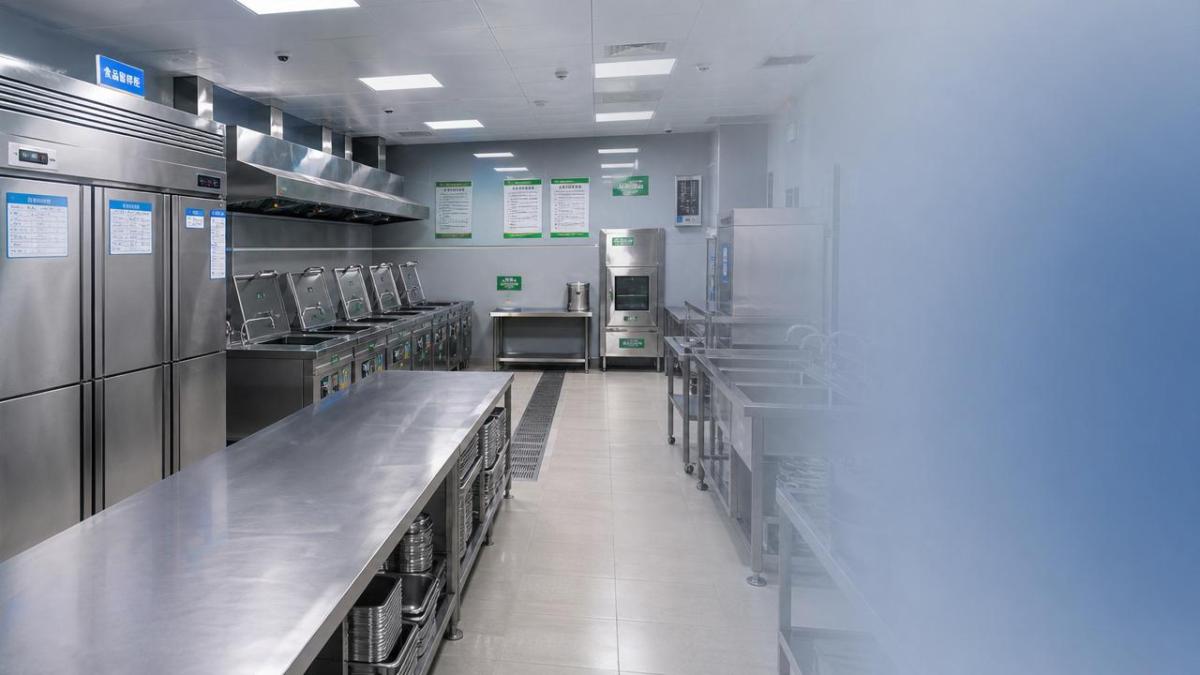
For school operators, buying restaurant supplies for schools is no longer a simple matter of comparing prices and delivery dates. Procurement teams must evaluate sanitation design, material safety, cleanability, electrical safety, energy use, workflow efficiency, and whether the equipment supports documented operating procedures. A lower upfront price can quickly become expensive if the item creates inspection risk, maintenance disruption, or food handling bottlenecks.
This is especially important in educational environments where kitchens serve large meal volumes, often under strict budget controls and limited staffing. Unlike many private foodservice settings, school kitchens must balance public accountability, child nutrition requirements, and institutional procurement standards. That is why restaurant supplies for schools should be assessed as part of a broader kitchen system rather than as isolated products.
- Food contact surfaces must support safe cleaning and reduce contamination risks in high-turnover meal service.
- Equipment should match real production volume, holding times, and menu complexity instead of generic commercial benchmarks.
- Utility demand matters. Power load, ventilation needs, water use, and drainage can affect installation cost and project approval.
- Documentation matters too. Decision-makers increasingly need product specifications, user instructions, and maintenance records that support audits and internal controls.
What changed in the market
The global kitchen equipment industry has moved toward automation, intelligence, and energy efficiency. For schools, this shift creates both pressure and opportunity. Pressure comes from tighter expectations around hygiene, traceability, and operating consistency. Opportunity comes from new generations of cooking, refrigeration, washing, and holding systems that help reduce labor strain while improving performance predictability.
As more suppliers serve institutional kitchens across international markets, buyers can access broader product categories, but they also face more variation in quality, service support, and specification transparency. The strongest sourcing decisions are those built on application fit, compliance logic, and long-term operational value.
Which restaurant supplies for schools matter most in daily operations?
Not every category carries the same operational or compliance weight. Decision-makers should focus first on the items that directly influence temperature control, cross-contamination prevention, workflow safety, and meal throughput. The table below highlights the core restaurant supplies for schools that usually deserve priority review during upgrades or new kitchen projects.
These categories affect the basic control points in school foodservice. If one of them is underspecified, the kitchen may face repeated workarounds, more manual checks, and greater exposure during inspections. In practice, the best restaurant supplies for schools are those that simplify daily compliance rather than adding extra monitoring burdens.
Application scenarios that change the specification
A primary school serving simple lunch menus does not need the same configuration as a central kitchen serving multiple campuses. Specification should reflect service model, menu type, production frequency, and labor skill level.
- On-site final cooking kitchens usually need reliable hot holding, faster cleanup design, and ergonomic prep layouts.
- Satellite service points benefit more from insulated transport, holding cabinets, and compact reheating solutions.
- Central production kitchens need higher-capacity food processing machinery, stronger workflow zoning, and equipment that supports batch consistency.
How to compare equipment options without overlooking hidden risk
When comparing restaurant supplies for schools, many buyers focus on visible specifications such as size, output, or list price. Those factors matter, but hidden risk often sits in serviceability, cleanability, lifecycle cost, and how well the item fits the school’s actual operating discipline. A structured comparison helps procurement teams defend decisions internally and reduce downstream issues.
The comparison below shows a practical framework for shortlisting options in a school kitchen project.
This type of matrix prevents price-only decisions. In many school settings, an advanced option becomes more economical if it cuts utility consumption, lowers repair frequency, or reduces process deviation. The right choice depends on meal volume, staffing pattern, and the school’s tolerance for manual intervention.
Common comparison mistakes
- Buying oversized equipment that consumes unnecessary energy and occupies valuable prep space.
- Assuming all stainless steel components have the same durability or hygienic finish quality.
- Ignoring spare parts availability and technician response times during school terms.
- Choosing digital systems without considering staff training and operational simplicity.
What standards and certifications should buyers review?
Compliance is not a single certificate. For restaurant supplies for schools, decision-makers should examine a mix of product safety, food contact suitability, sanitation design, and local installation requirements. The exact rules vary by market, but the evaluation logic remains consistent: the equipment must be safe to operate, appropriate for foodservice use, and practical to inspect and maintain.
The table below summarizes common compliance review points often used during school kitchen procurement.
Buyers should ask suppliers for specification sheets, installation requirements, cleaning guidance, and maintenance intervals early in the process. This makes it easier to compare restaurant supplies for schools on evidence rather than marketing language. It also helps facilities, foodservice teams, and procurement officers align before purchase orders are placed.
A practical compliance checklist
- Confirm whether the equipment is designed for commercial foodservice rather than light-duty retail or residential use.
- Review product drawings to verify fit, service clearances, and safe workflow in the school kitchen.
- Check cleaning procedures and whether disassembly can be done without specialized labor.
- Verify utility compatibility, including voltage, drainage, water quality, and ventilation conditions.
How should schools balance budget, lifecycle cost, and future upgrades?
Budget pressure is real, but low acquisition cost should not dominate school kitchen planning. Restaurant supplies for schools often stay in use for years under repetitive, high-frequency conditions. A smarter financial approach is to compare total cost of ownership: purchase price, installation, utilities, cleaning labor, routine service, downtime risk, and replacement timing.
Where lifecycle savings usually appear
- Energy-efficient refrigeration and cooking units can reduce monthly operating expense in high-use kitchens.
- Better sanitation design lowers cleaning time and helps avoid avoidable food safety incidents.
- Modular equipment can simplify future replacement or line expansion without redesigning the whole kitchen.
- Smart monitoring features can improve accountability when schools manage multiple sites or central kitchens.
Some schools may choose phased upgrades instead of full replacement. That can work well if the project starts with high-risk categories such as refrigeration, warewashing, hot holding, and prep surfaces. In contrast, cosmetic upgrades or noncritical accessories should usually come later unless they address immediate safety concerns.
When alternatives make sense
A premium specification is not always necessary. If a site has a simple menu, low meal count, and limited operating hours, a robust mid-range solution may offer better value than a highly automated system. The key is to separate features that directly support compliance and throughput from features that mainly improve convenience. For enterprise buyers managing multiple campuses, standardizing selected restaurant supplies for schools can also reduce parts complexity and training costs.
How to implement a safer procurement process from planning to delivery
A successful procurement process connects operational reality with technical review. Many kitchen problems begin before installation, when assumptions about capacity, workflow, or utilities remain untested. Decision-makers can reduce these risks by following a clear implementation sequence.
- Define meal volume, menu mix, service periods, and staffing constraints for each site.
- Identify critical control points such as receiving, cold storage, prep segregation, cooking, holding, and washing.
- Shortlist restaurant supplies for schools based on application fit, material quality, and maintenance practicality.
- Request technical documentation, utility requirements, and lead-time confirmation before final approval.
- Plan operator training, cleaning procedures, and spare parts strategy alongside the equipment purchase.
This process is especially valuable when projects involve international sourcing. Global supply options can improve cost and product access, but they also require closer attention to technical communication, local compliance suitability, and after-sales support readiness.
FAQ: what decision-makers ask before buying restaurant supplies for schools
How do we decide whether to replace or upgrade existing equipment?
Start with operating impact. If the equipment creates repeated temperature inconsistency, sanitation difficulty, excessive repair downtime, or utility inefficiency, replacement may be justified even if the unit still functions. If the issue is capacity mismatch or workflow layout, a partial upgrade or line reconfiguration may solve the problem more economically.
What should we prioritize when budgets are limited?
Prioritize restaurant supplies for schools that directly affect food safety and service continuity: refrigeration, hot holding, warewashing support, handwashing stations, and hygienic prep surfaces. After that, consider energy-intensive equipment with high daily runtime because efficiency gains accumulate faster there.
Are smart kitchen features necessary in school projects?
Not always, but they can be useful where staffing is thin, documentation is important, or multiple sites must be managed consistently. Features such as digital temperature display, alarm logging, and programmable cooking cycles can reduce human error. However, the technology should remain practical for the staff who use it every day.
What causes delays in school kitchen equipment projects?
The most common causes are incomplete utility review, unclear installation conditions, long approval cycles, and late changes to equipment size or layout. Delays also happen when buyers confirm commercial products before checking local power standards, ventilation requirements, or receiving access at the site.
Why work with a supplier that understands both equipment and compliance?
For decision-makers, the best supplier relationship is not just about product availability. It is about reducing uncertainty. In the kitchen equipment industry, strong support means helping buyers match restaurant supplies for schools to meal volume, menu flow, sanitation demands, installation conditions, and future expansion plans. It also means communicating clearly about specification limits, lead times, and documentation needs.
A capable partner can support parameter confirmation, product selection, equipment matching, and phased procurement planning across refrigeration, cooking, food processing, prep, and holding systems. This becomes even more valuable when schools want to improve energy efficiency, adopt smart kitchen functions, or standardize equipment across multiple campuses.
Contact us for practical project support
If you are evaluating restaurant supplies for schools under tighter compliance rules, you can contact us to discuss specification review, product selection, delivery timing, custom configuration, certification-related documentation, sample support where applicable, and quotation planning. We can also help compare alternative equipment paths based on kitchen scale, operating model, and budget priorities so your procurement decision is clearer, faster, and more defensible.
Popular Tags
Kitchen Industry Research Team
Dedicated to analyzing emerging trends and technological shifts in the global hospitality and foodservice infrastructure sector.
Industry Insights
Join 15,000+ industry professionals. Get the latest market trends and tech news delivered weekly.
No spam. Unsubscribe anytime.

Contact With us
Contact:
Anne Yin (Ceramics Dinnerware/Glassware)
Lucky Zhai(Flatware)