
Restaurant kitchen exhaust system mistakes that raise fire risk
A poorly designed or neglected restaurant kitchen exhaust system can do more than reduce air quality—it can sharply increase fire risk, threaten compliance, and endanger staff and property. For quality control and safety managers, understanding the most common exhaust system mistakes is essential to preventing grease buildup, ventilation failure, and costly incidents. This article highlights the critical issues that often go unnoticed and how to address them effectively.
What a restaurant kitchen exhaust system is and why it matters
A restaurant kitchen exhaust system is the network of hoods, grease filters, ducts, exhaust fans, makeup air components, and fire protection interfaces that removes heat, smoke, grease-laden vapor, and cooking byproducts from commercial kitchens. In restaurants, hotels, central kitchens, and food preparation facilities, this system is not just a comfort feature. It is a core safety control that supports fire prevention, indoor air quality, equipment performance, and code compliance.
For quality control personnel and safety managers, the importance of the restaurant kitchen exhaust system is growing as kitchens become more intensive, automated, and energy conscious. Higher production volumes, compact layouts, and diverse cooking methods can increase grease generation and thermal load. If exhaust design, maintenance, or operation is weak, small issues can escalate into major fire events, downtime, failed inspections, insurance disputes, and reputational damage.
In the broader kitchen equipment industry, exhaust and ventilation systems are increasingly viewed as part of integrated kitchen safety. They interact with cooking appliances, control systems, suppression equipment, and energy management tools. That means exhaust-related errors should not be treated as isolated maintenance problems. They should be assessed as system-level risks.
Why fire risk often starts with overlooked basics
Most kitchen exhaust fires do not begin with one dramatic failure. They usually result from a chain of preventable conditions: grease accumulates in filters or ductwork, airflow drops below design intent, cooking smoke spills outside the hood, surfaces overheat, and ignition reaches hidden combustible deposits. In many facilities, this happens gradually, especially when production pressure causes maintenance shortcuts or when equipment changes are made without updating the restaurant kitchen exhaust system.
Safety managers should also recognize that ventilation problems affect more than the exhaust path itself. Poor air balance can change burner performance, raise ambient temperatures, increase staff fatigue, and interfere with suppression effectiveness. When kitchens add high-output fryers, charbroilers, woks, or conveyor ovens, the fire load and grease output may rise faster than the existing system can handle.
Common mistakes that raise fire risk
The most serious mistakes in a restaurant kitchen exhaust system are often procedural rather than accidental. They appear during design, operation, cleaning, inspection, or retrofit. The categories below help safety and quality teams identify where risk is most likely to build.
1. Incorrect hood selection or placement
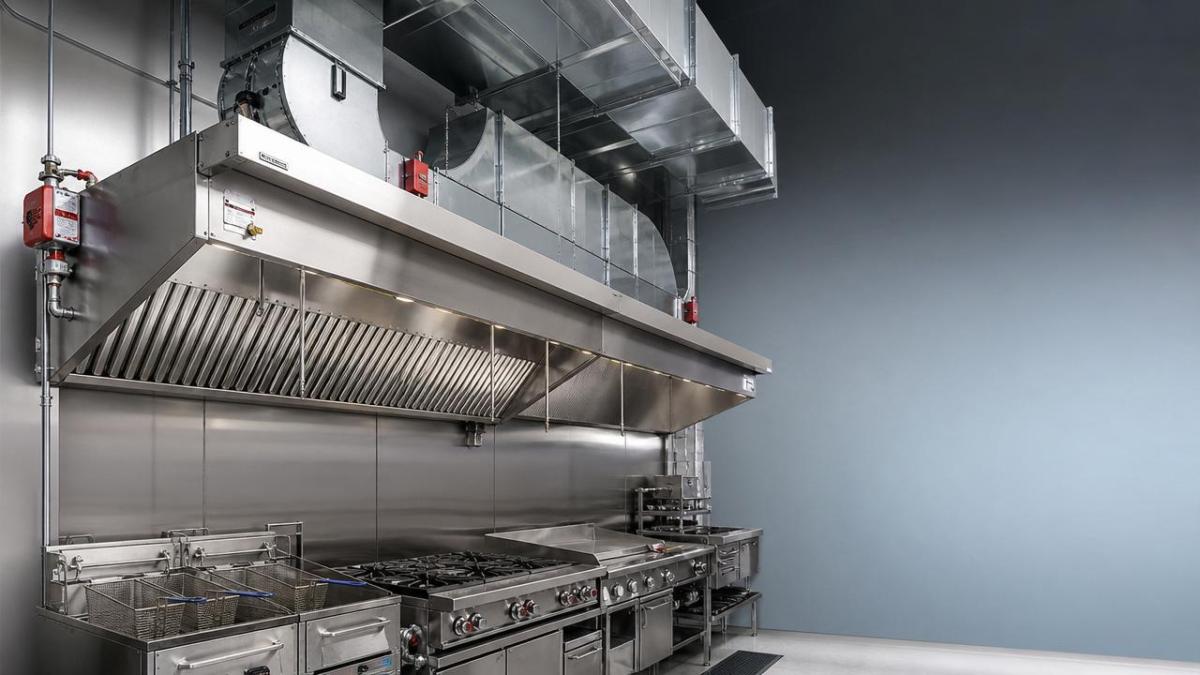
A hood that is too small, mounted too high, or poorly aligned with the cooking line cannot capture grease-laden effluent effectively. This is especially risky over appliances that produce heavy smoke or grease aerosols. Even a well-built restaurant kitchen exhaust system will underperform if the hood geometry does not match the appliance duty. Spillage around the hood edge leads to grease deposits on ceilings, walls, and nearby equipment, creating secondary ignition zones.
2. Inadequate duct design and inaccessible duct runs
Long duct runs with excessive bends, poor slope, rough interior conditions, or inaccessible sections can trap grease and reduce airflow. When cleaning contractors cannot reach key sections, grease accumulates out of sight. This is one of the most dangerous restaurant kitchen exhaust system mistakes because fire can travel through concealed ductwork rapidly once ignition occurs.
3. Weak cleaning frequency and poor verification
Many facilities believe they are cleaning enough because visible hood surfaces look acceptable. In reality, the highest-risk buildup may be inside filters, behind access panels, in fan housings, or at duct transitions. Cleaning intervals should reflect cooking volume and grease output, not just calendar habits. A restaurant kitchen exhaust system serving charbroiling or high-volume frying typically needs more frequent service than a light-duty kitchen. Quality managers should verify scope, records, and post-cleaning condition rather than relying only on invoices.
4. Neglecting grease filters or using the wrong type
Grease filters are the first control point in the exhaust path. Damaged, missing, incorrectly installed, or incompatible filters allow grease to pass deeper into the system. Staff may also reinstall filters backward after cleaning, reducing drainage performance. A restaurant kitchen exhaust system cannot control fire risk effectively when this basic component is compromised.
5. Insufficient makeup air
Exhaust performance depends on balanced replacement air. Without enough makeup air, the kitchen may operate under heavy negative pressure. This can reduce hood capture, pull smoke into occupied zones, disturb burner flames, and make exterior doors hard to open. Safety teams sometimes focus on exhaust fan operation while missing the fact that the full restaurant kitchen exhaust system requires stable air balance to function correctly.
6. Running fans incorrectly or shutting them down too early
During busy shifts, staff may disable controls to reduce noise or save energy, or they may shut down the system immediately after cooking ends. Residual heat and vapor can continue to release grease and smoke after burners are turned off. Operating procedures should define when the restaurant kitchen exhaust system starts, how long it remains active, and who is authorized to change settings.
7. Failure to reassess ventilation after menu or equipment changes
A kitchen may start with light-duty cooking and later add fryers, griddles, or solid-fuel equipment. If the restaurant kitchen exhaust system is not reevaluated, the original airflow and capture design may no longer be suitable. This is common in expanding restaurants, hotel kitchens, and foodservice operations that adapt production without a formal safety review.
Where these mistakes appear across foodservice settings
Although the same principles apply broadly, risk patterns vary by facility type. Understanding those patterns helps safety managers prioritize inspections and controls more effectively.
The business value of getting the system right
A reliable restaurant kitchen exhaust system supports more than code compliance. It protects continuity of operations. Fires, smoke damage, and forced shutdowns can interrupt service, destroy inventory, affect customer trust, and trigger major repair costs. In quality-driven organizations, exhaust system performance also supports cleaner production environments and more stable kitchen conditions.
From an industry perspective, the shift toward smart kitchen equipment and energy-efficient operations makes monitoring even more practical. Sensors, variable controls, maintenance records, and digital inspection workflows can improve visibility. However, technology is only effective when paired with disciplined procedures and clear accountability.
Practical steps for quality control and safety managers
To reduce fire risk, treat the restaurant kitchen exhaust system as a managed safety asset. A practical approach includes the following actions:
- Map all cooking appliances to hood type, duty level, and actual airflow requirements.
- Inspect filters, hood interiors, duct access points, and fan areas on a documented schedule.
- Verify that cleaning contractors service the full system, not only visible surfaces.
- Review makeup air performance and pressure balance whenever comfort or smoke complaints appear.
- Require ventilation reassessment after menu changes, appliance additions, or layout modifications.
- Coordinate exhaust checks with suppression system testing and emergency response planning.
- Train line staff to report smoke spillage, unusual odors, overheating, vibration, or fan noise immediately.
A stronger prevention mindset
The safest facilities do not wait for visible failure. They recognize that the restaurant kitchen exhaust system sits at the intersection of fire prevention, ventilation engineering, hygiene, and operational control. When viewed this way, maintenance becomes part of risk governance rather than a reactive expense. That mindset is especially important in modern foodservice environments where production speed and equipment intensity continue to increase.
If your organization is reviewing kitchen safety performance, start with a structured assessment of the restaurant kitchen exhaust system: design suitability, airflow balance, cleaning effectiveness, equipment compatibility, and staff operating habits. Addressing these basics early can significantly reduce fire exposure, improve inspection readiness, and support safer, more efficient kitchen operations over the long term.
Popular Tags
Kitchen Industry Research Team
Dedicated to analyzing emerging trends and technological shifts in the global hospitality and foodservice infrastructure sector.
Industry Insights
Join 15,000+ industry professionals. Get the latest market trends and tech news delivered weekly.
No spam. Unsubscribe anytime.
Contact With us
Contact:
Anne Yin (Ceramics Dinnerware/Glassware)
Lucky Zhai(Flatware)