
Easy to clean kitchen tools that actually save prep time
In busy foodservice and processing environments, easy to clean kitchen tools do more than cut prep time—they help quality control and safety teams reduce contamination risks, simplify sanitation checks, and support consistent operational standards. As kitchens move toward smarter, more efficient systems, choosing tools that are fast to sanitize and practical to use has become a key step in improving both compliance and productivity.
For quality control personnel and safety managers, the issue is not only how quickly a tool performs during prep, but how reliably it can be cleaned between tasks, shifts, and product changes. In commercial kitchens, central kitchens, hotel operations, and food processing rooms, a poorly designed scraper, knife, tong, scoop, or cutting aid can add 20–60 seconds to each wash cycle. Across dozens or hundreds of uses per day, that delay directly affects labor efficiency, hygiene verification, and line continuity.
This is why easy to clean kitchen tools have become a practical purchasing priority rather than a convenience feature. Smooth surfaces, fewer joints, dishwasher compatibility, corrosion resistance, and tool geometry all influence sanitation outcomes. For B2B buyers, the right selection can reduce manual cleaning steps from 5–6 actions to 2–3, lower visual inspection failures, and support safer handling in high-volume environments.
Why Easy-to-Clean Tools Matter in Modern Kitchen Operations
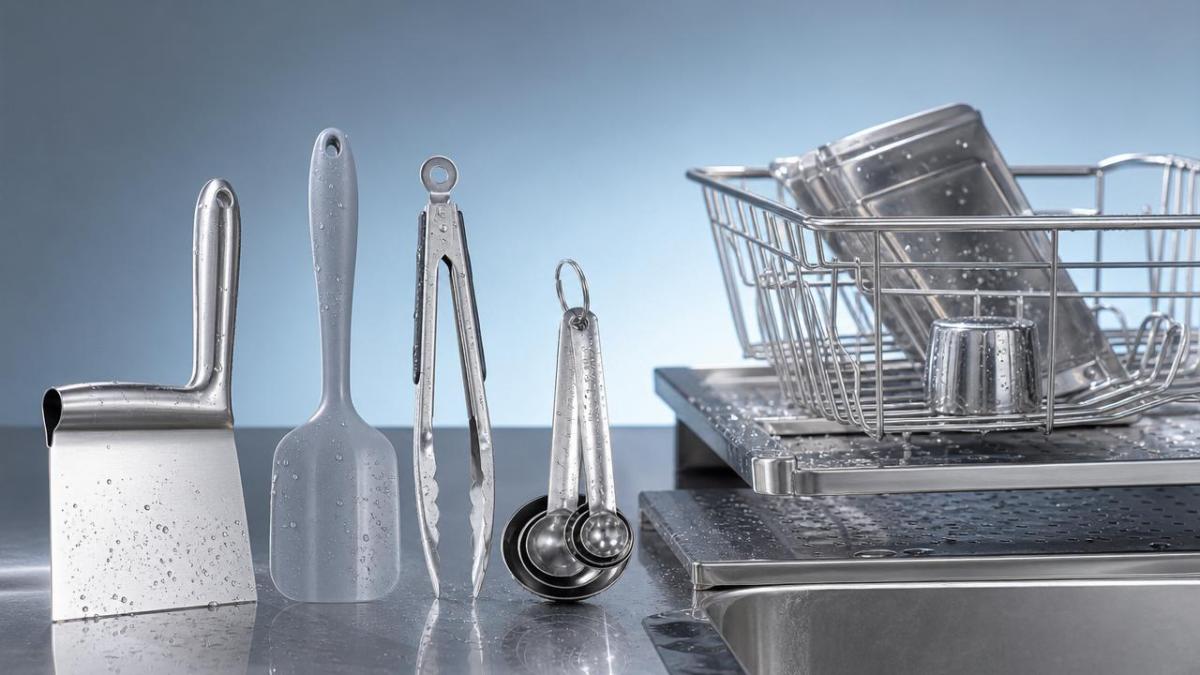
The kitchen equipment industry is rapidly moving toward smarter, more efficient, and more traceable systems. While automation often draws attention, hand tools still shape daily hygiene performance. In prep zones where vegetables, proteins, allergens, and ready-to-eat items may pass through the same room within 1 shift, the cleanability of tools directly affects cross-contact control and sanitation speed.
For safety teams, easy to clean kitchen tools support three core targets: shorter cleaning time, better inspection visibility, and more repeatable hygiene routines. A tool with hidden seams or textured grip cavities may trap moisture or residue after only 2–4 production cycles. By contrast, a seamless or low-joint design is easier to rinse, scrub, sanitize, and verify under standard operating procedures.
The direct link between tool design and contamination control
From a quality assurance perspective, contamination risk often increases at contact points that are hard to access. These include rivets, deep grooves, layered handles, spring coils, and absorbent materials. In environments that require cleaning every 30–120 minutes, such features create inconsistent outcomes, especially during peak service hours when staff may rush sanitation steps.
Simple construction is usually the safer construction. One-piece stainless steel tools, molded food-grade silicone spatulas, and color-coded high-density plastic utensils can often be inspected in under 10 seconds visually. That matters when supervisors must check 40–80 tools across multiple workstations before a line restart.
Where prep-time savings actually come from
Time savings are not limited to cutting or mixing performance. In practice, much of the gain comes from reduced wash time, fewer re-cleaning incidents, and simpler storage after sanitation. A tool that can be fully cleaned in 45 seconds instead of 90 seconds may save only 45 seconds once, but over 100 cleaning events per day that becomes 75 minutes of recovered labor time.
This efficiency becomes more valuable in kitchens operating 2–3 shifts or facilities with allergen segregation requirements. Easy to clean kitchen tools help reduce production interruptions, especially during product changeovers, batch separation, and end-of-day sanitation checks.
Common operational pain points
- Residue trapped in joints, screws, or spring mechanisms
- Handles that degrade after repeated dishwasher cycles above typical hot-wash temperatures
- Tools that require disassembly, adding 2–4 extra sanitation steps
- Surfaces that scratch easily, making visual cleanliness harder to confirm
- Mixed-material tools that dry slowly and stay wet for more than 20–30 minutes
The table below shows how cleanability features influence both sanitation workload and risk management in professional environments.
The key takeaway is that cleanability is a measurable operating factor. It affects labor time, sanitation verification speed, and the reliability of contamination control protocols. For teams that monitor hygiene performance daily, this makes easy to clean kitchen tools part of risk prevention, not just convenience.
How to Evaluate Easy-to-Clean Kitchen Tools for B2B Procurement
Procurement decisions should go beyond price and basic function. For commercial kitchens, restaurant groups, and processing sites, the better question is whether a tool maintains hygiene performance after 3 months, 6 months, and 12 months of repeated use. A low-cost item that becomes scratched, loose, or difficult to sanitize can raise both operational costs and audit pressure.
When safety managers evaluate easy to clean kitchen tools, four criteria usually matter most: construction, material compatibility, cleaning method, and task fit. Each should be reviewed against the real workflow, including wash frequency, contact type, and storage conditions.
1. Construction: reduce joints, gaps, and removable parts
A tool that looks ergonomic is not automatically sanitary. Hinged items, spring-loaded utensils, and multi-part slicers may offer functional benefits, but they also introduce additional cleaning points. If a tool requires disassembly after every raw protein contact or every allergen changeover, labor demand can increase sharply over a 7-day operating cycle.
For many prep tasks, one-piece or low-joint designs offer a stronger balance between usability and hygiene. This is especially true for scrapers, ladles, peelers, and bench tools used in high-turnover stations.
2. Material: choose surfaces that resist wear and moisture retention
Common B2B choices include stainless steel, food-grade silicone, polypropylene, and high-density polyethylene. The right selection depends on temperature exposure, chemical cleaning agents, and contact with acidic or oily foods. Stainless steel often performs well for durability and non-porous cleaning. Silicone can be effective where flexibility and heat resistance are needed, often within a broad range such as 180°C–230°C depending on the formulation.
Materials should also be checked for edge wear and handle breakdown. A handle that softens, splits, or traps water after repeated washing can become a hidden hygiene issue within weeks, not years.
3. Cleaning method compatibility: manual, machine, or hybrid
Not all kitchen environments clean the same way. Some rely on 3-compartment sinks, some on undercounter dishwashers, and some on centralized wash systems. The same tool may perform differently under each method. Before standardizing purchases across locations, buyers should confirm whether the tool can tolerate repeated hot-water cycles, chemical sanitizers, and rapid drying racks.
As a practical benchmark, any frequently used prep tool should be easy to fully clean, inspect, and return to service in under 2–3 minutes total, including drying or drip management. Longer cycles may still be acceptable for specialty tools, but not for high-frequency items used dozens of times per shift.
4. Task fit: buy by use case, not by general category
An easy to clean kitchen tool must fit the prep environment. Tools for pastry, produce, seafood, raw meat, and ready-to-eat assembly should not be evaluated in the same way. For example, a smooth-edged scoop may be ideal for dry ingredients but less practical for sticky batters. A broad scraper may be efficient for bench cleaning but unsuitable for tight vessel corners.
To improve consistency, many organizations group tools into 3 categories: high-frequency contact tools, changeover-sensitive tools, and occasional-use specialty tools. This makes it easier to assign cleaning standards and replacement schedules.
The comparison below can help procurement and quality teams screen products more effectively before pilot testing or volume purchase.
Using a structured checklist prevents procurement from relying only on catalog descriptions. It also helps align purchasing with hygiene targets, cleaning SOPs, and replacement planning.
Best Tool Categories for Faster Prep and Easier Sanitation
Not every kitchen tool delivers the same return in time savings. In most professional settings, the biggest gains come from replacing frequently handled items that touch multiple food types every day. If a site wants quick improvement, it is often better to standardize 10 high-traffic tools than to upgrade 50 low-use items at once.
High-priority categories to review
- Scrapers and spatulas used in batter, sauce, and vessel cleaning
- Tongs and serving utensils used across hot and cold stations
- Peelers, slicers, and hand prep aids used in produce processing
- Measuring scoops and ingredient transfer tools in dry storage zones
- Bench knives, dough cutters, and workstation cleaning tools
- Color-coded knives and boards where allergen or raw-product segregation is required
Why these categories create measurable results
These tools are used frequently, cleaned frequently, and inspected frequently. That means every design weakness is repeated many times. Replacing a hard-to-clean tong with a low-joint model may save 15–30 seconds per sanitation event. Replacing a riveted scraper with a seamless silicone version may remove an entire brushing step. Over a 30-day period, these small gains become easier to justify in labor planning.
The same logic applies to audit readiness. Tools that are visibly clean and easier to verify reduce supervisory burden during internal inspections, shift handovers, and corrective action reviews.
Typical signs a tool should be replaced
- Visible cracks, chips, or rough edges after 60–90 days of heavy use
- Persistent staining that interferes with visual cleanliness checks
- Loose handles or warped heads after repeated hot washing
- Repeated sanitation failures or staff complaints about cleaning difficulty
- Drying delays that leave surfaces wet beyond the normal storage cycle
In facilities with multiple prep zones, standardizing easy to clean kitchen tools by station can also improve training. New staff need fewer instructions when tool design, cleaning expectations, and storage methods are consistent across the site.
Implementation, Monitoring, and Long-Term Control
Even the best product choice delivers limited value without a practical rollout plan. For quality control and safety teams, implementation should include supplier review, pilot testing, SOP alignment, and replacement tracking. In most operations, a 2–4 week pilot is enough to evaluate actual wash time, damage rate, user acceptance, and inspection consistency.
A practical 5-step rollout process
- Identify 5–10 frequently cleaned tools with the highest sanitation burden.
- Test alternative designs in 1 or 2 workstations under normal shift conditions.
- Measure cleaning time, visible residue incidents, and user feedback for 14–28 days.
- Update cleaning instructions, color-coding rules, and storage locations if needed.
- Expand standardization by site, zone, or application category.
What to monitor after purchase
Post-purchase control should focus on simple but meaningful indicators. These may include average cleaning time per tool, number of rewash events per week, percentage of tools passing first inspection, and average replacement interval. Even if the numbers are tracked manually at first, 3 months of records can reveal which product types truly reduce sanitation workload.
In more advanced kitchen systems, digital task logs and sanitation verification apps can be connected to station-level checklists. This supports the broader industry shift toward intelligent kitchen management and helps convert tool selection into measurable process improvement.
Common mistakes to avoid
- Choosing based only on purchase price without considering wash labor
- Buying the same tool for all stations despite different contamination risks
- Ignoring how dishwasher heat or chemical exposure affects material life
- Keeping damaged tools in service past safe inspection thresholds
- Failing to train staff on proper cleaning and drying sequence
FAQ for quality and safety decision-makers
Are easy to clean kitchen tools mainly for large facilities?
No. They are useful in restaurant kitchens, hotel banquet operations, central kitchens, and food processing rooms of many sizes. The value usually increases with cleaning frequency, not just facility scale.
Should all tools be dishwasher-safe?
Not necessarily. However, high-frequency tools should be compatible with the actual sanitation process in place, whether that is machine wash, manual wash, or hybrid cleaning.
How often should these tools be replaced?
There is no single rule. Replacement depends on wear, scratching, thermal exposure, and hygiene performance. Many sites review frequent-use tools every 30–90 days and remove any item that no longer passes visual and functional checks.
Easy to clean kitchen tools are a practical investment for operations that care about prep speed, sanitation consistency, and audit confidence. For quality control personnel and safety managers, the real value lies in fewer contamination points, simpler cleaning routines, faster verification, and stronger alignment with modern kitchen efficiency goals.
If you are reviewing kitchen tools for restaurants, hotels, central kitchens, or food processing environments, now is the right time to assess cleanability alongside durability and workflow fit. Contact us to discuss product details, compare tool options, or get a customized solution based on your sanitation process, operational volume, and compliance priorities.
Popular Tags
Kitchen Industry Research Team
Dedicated to analyzing emerging trends and technological shifts in the global hospitality and foodservice infrastructure sector.
Industry Insights
Join 15,000+ industry professionals. Get the latest market trends and tech news delivered weekly.
No spam. Unsubscribe anytime.
Contact With us
Contact:
Anne Yin (Ceramics Dinnerware/Glassware)
Lucky Zhai(Flatware)