
Restaurant Kitchen Equipment Layout Ideas for High-Volume Service
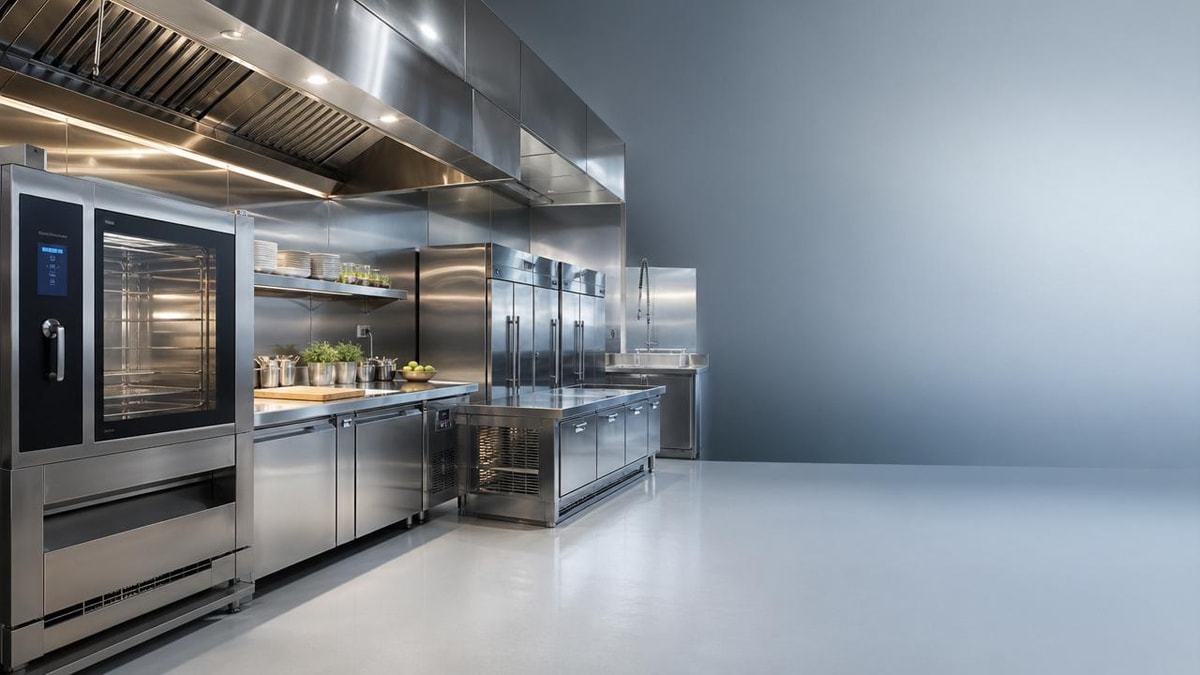
For technical evaluators planning high-output foodservice operations, an effective restaurant kitchen equipment layout is critical to workflow speed, food safety, labor efficiency, and utility performance. This article explores practical layout ideas for high-volume service, helping you assess equipment placement, process flow, zoning, and scalability to support consistent production and smarter investment decisions.
When people search for restaurant kitchen equipment layout ideas for high-volume service, they are rarely looking for decoration tips or generic floor plans. They usually need a layout framework that can handle peak demand without creating bottlenecks, safety risks, sanitation failures, or excessive utility costs.
For technical evaluators, the real question is not simply where to place equipment. It is how to design a layout that supports throughput, maintains product consistency, simplifies maintenance access, and remains adaptable as menu mix, labor models, and production volumes change.
A strong layout for high-volume service typically prioritizes one-way product flow, clear zoning, reduced cross-traffic, balanced station capacity, and reliable support infrastructure. If these fundamentals are missing, even premium equipment will underperform.
What technical evaluators should assess first in a high-volume kitchen layout
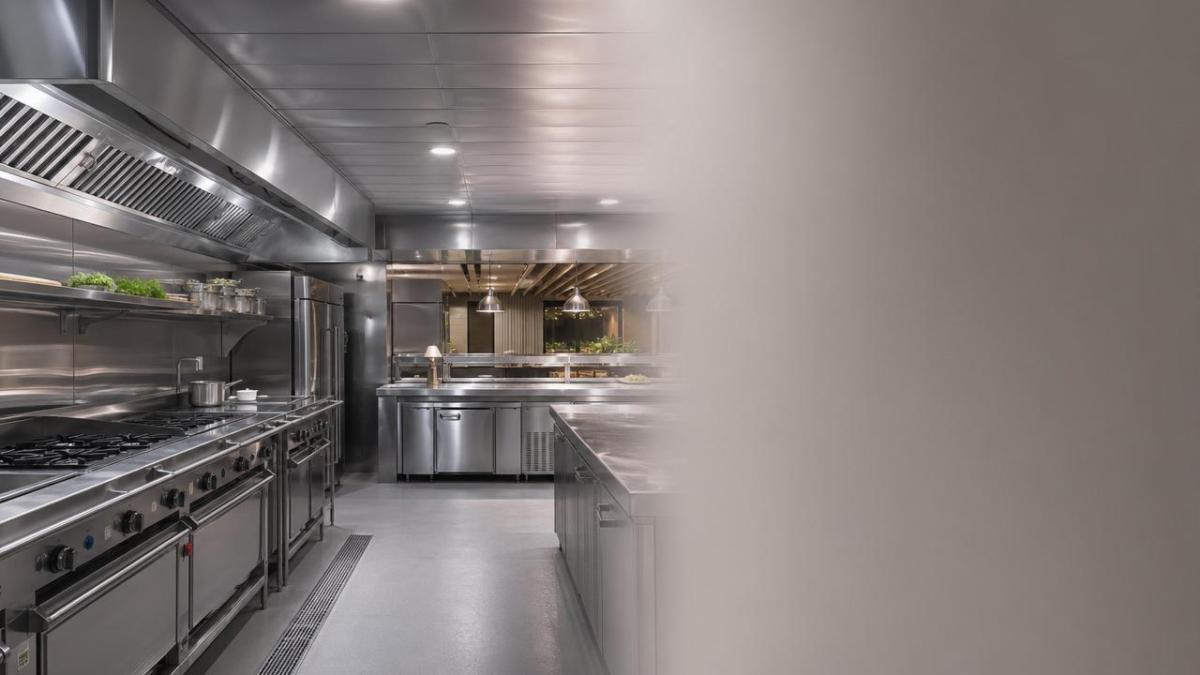
The first step is to evaluate the kitchen as a production system rather than a collection of appliances. In high-volume environments, the layout must support predictable movement of food, staff, tools, waste, and cleaning activity across every shift.
Start by mapping the full operational sequence: receiving, cold and dry storage, prep, cooking, holding, plating, service, warewashing, and waste removal. The best restaurant kitchen equipment layout reduces backtracking between these stages and prevents interference between raw product handling and finished food movement.
Technical evaluators should also compare expected meal output against station capacity. A layout may look efficient on paper but fail during peak service if the cooking line, pass area, refrigeration access, or dish return path cannot support simultaneous activity.
Another early checkpoint is utility readiness. Gas, electric, water, drainage, ventilation, grease management, and data integration all influence where equipment can perform safely and efficiently. Layout decisions that ignore utility logic often increase installation cost and reduce long-term serviceability.
Why workflow matters more than equipment count
In high-volume kitchens, productivity losses usually come from poor flow, not from having too few machines. Adding more fryers, ovens, prep tables, or refrigerators does not automatically improve output if staff must cross paths constantly or wait for access to shared surfaces and holding areas.
A practical layout should minimize unnecessary motion. Staff should be able to move from one task to the next with short, direct travel paths. Refrigerated ingredients should be close to prep and line stations. Cooking equipment should be positioned to support the actual menu sequence, not just fit available wall space.
Flow efficiency also depends on how many people can work in parallel without conflict. In a high-output service model, separate circulation lanes for production staff, expediters, and dish return teams often improve consistency far more than simply expanding the equipment list.
From an evaluation standpoint, the key metric is not maximum installed capacity. It is usable capacity under real service conditions, including staff density, door swing clearances, landing space, and replenishment frequency.
Core zoning ideas for a high-volume restaurant kitchen equipment layout
Zoning is one of the most important concepts for technical review. A kitchen serving large order volumes must be divided into functional areas that support task specialization while preserving clean, safe, and efficient movement.
The receiving and storage zone should allow quick unloading, inspection, and transfer to dry, chilled, or frozen storage. If this area is too small or disconnected from inventory organization, products pile up, temperature control suffers, and replenishment becomes inefficient throughout the day.
The prep zone should be separated according to menu risk and volume. Raw meat, seafood, vegetable prep, and ready-to-eat assembly may require distinct benches, sinks, and cold storage access. Evaluators should confirm that prep capacity matches actual batch sizes and does not force overflow into circulation areas.
The hot line should be organized around cooking sequence and order rhythm. Frying, grilling, sautéing, steaming, combi cooking, and finishing stations should be placed according to ticket flow and menu frequency. Equipment with shared ingredients or shared operators should be grouped carefully to reduce handoffs.
The plating and pass zone is often underestimated. In high-volume service, this area must support assembly, final checks, heat retention, and fast dispatch. If the pass is undersized, the entire line slows down even when upstream cooking equipment is adequate.
Warewashing and waste zones should remain operationally connected but physically controlled. Dirty return traffic must not cut through clean prep or finished food areas. A poor sanitation layout can erase gains made elsewhere in the kitchen.
Layout patterns that work well for high-output operations
Several layout models are commonly used in high-volume facilities, but the right choice depends on menu complexity, service style, staffing structure, and space geometry. Evaluators should focus on fit-for-purpose performance rather than following a standard template.
The assembly-line layout works well for operations with repetitive menu formats, such as quick-service, institutional dining, or limited-menu concepts. It supports linear movement from prep to cook to finish to service and is often effective where speed and consistency matter more than culinary flexibility.
An island layout can be effective when the cooking suite is the production center and support stations surround it. This model can shorten travel distances, but only if circulation width, hood design, fire safety access, and replenishment routes are carefully engineered.
The zone-based layout is often a strong choice for mixed-menu, high-volume restaurants. It allows teams to operate in dedicated prep, cooking, bakery, cold assembly, or finishing areas while maintaining throughput. This layout can be highly scalable when each zone has clear boundaries and support storage.
A galley layout may work in narrow footprints, but it requires disciplined separation of opposite-side tasks to avoid congestion. For high-volume service, it is viable only when aisle widths, landing areas, and staff assignments are tightly controlled.
In technical evaluation, the best pattern is the one that preserves flow during peak periods, allows maintenance access, and supports future menu or equipment changes with minimal disruption.
How to place major equipment for speed, safety, and service access
Equipment placement should be based on operational relationship, not just dimensions. Refrigeration should be near the point of use, but not positioned where frequent door opening disrupts aisle movement. Prep tables need immediate access to sinks, smallwares, waste disposal, and ingredient storage.
Cooking batteries should be aligned according to production frequency. For example, if frying and griddle work dominate the menu, these stations should sit closest to finishing and holding. Less frequently used equipment can be placed slightly outside the primary path without harming throughput.
Landing space is critical. Ovens, combi units, tilt pans, kettles, and blast chillers all need adjacent surface area for pans, racks, or transfer carts. Without it, staff create temporary holding points in aisles, increasing both delay and accident risk.
Maintenance and cleaning clearance should be treated as non-negotiable. Technical evaluators should verify that service panels, filters, drains, shutoffs, and ventilation components remain accessible without dismantling adjacent stations. A layout that saves a few inches at installation can create years of downtime and labor inefficiency.
Heat-producing equipment should also be reviewed in relation to hood coverage, make-up air balance, and staff comfort. High-volume service places sustained thermal load on the kitchen, and poor environmental control can reduce both performance and equipment lifespan.
Common bottlenecks that weaken high-volume kitchen performance
One of the most common issues is overconcentration of activity in the cook line. When too many menu categories depend on one narrow line, order surges create queueing even if other stations remain underused. Evaluators should identify whether production can be redistributed through secondary equipment or parallel stations.
Another frequent weakness is insufficient cold storage near active production. If cooks or prep staff must repeatedly walk to remote walk-ins for high-turn ingredients, labor time and ticket times increase quickly. Point-of-use refrigeration often delivers strong operational value in high-volume settings.
Dish return congestion is another hidden constraint. If soiled items move through the same routes as plated food or replenishment carts, flow disruption becomes constant during rush periods. This is especially important in hotels, banquet kitchens, and large casual dining operations.
Undersized staging areas also cause delays. Bulk deliveries, prepped ingredients, hot holding trays, packaging materials, and outbound orders all need temporary space. Without planned staging, every aisle becomes a storage zone during peak demand.
Finally, many kitchens suffer because the layout does not match the menu’s real production mix. A line designed around general assumptions may fail when actual sales heavily favor fried items, wok dishes, bakery output, or rapid assembly meals. Technical evaluation should always be tied to menu engineering data.
How to evaluate scalability and future-readiness
High-volume operations rarely remain static. Menu changes, labor shortages, delivery growth, and energy policy shifts can all affect layout suitability. A technically sound restaurant kitchen equipment layout should accommodate these changes without requiring a full rebuild.
Scalability begins with modular thinking. Select equipment and table systems that can be reconfigured, replaced, or expanded in sections. This is especially useful for central kitchens, multi-brand operations, and restaurants planning phased growth.
Utility planning should include reserve capacity where possible. Additional electrical circuits, gas drops, water points, drainage options, and data connections can reduce future retrofit costs. Even if not used immediately, these provisions improve long-term flexibility.
Evaluators should also consider automation readiness. Smart cooking systems, remote monitoring, digital HACCP logging, production tracking, and energy management tools are becoming more common. Layouts should leave room for control interfaces, cable routing, and operator interaction without cluttering critical work areas.
Future-readiness also includes sanitation and compliance resilience. Layouts that support easy cleaning, clear material separation, and documented process control will adapt more easily to stricter food safety expectations and audit requirements.
Practical checklist for selecting the right layout concept
Before approving a layout, technical evaluators should confirm several practical points. First, verify that food flow is as close to one-directional as possible from receiving to service. Second, check whether peak-hour staff can move without crossing each other excessively.
Third, compare each major equipment group with projected production volume rather than nominal capacity. Fourth, confirm that prep, holding, and plating areas are large enough for actual order patterns. Fifth, review utility coordination and ventilation performance together, not as separate design items.
Sixth, inspect service clearance, cleaning access, and replacement feasibility for major assets. Seventh, test the layout against worst-case operating scenarios such as delivery surges, menu promotions, or reduced staffing. Eighth, ensure there is enough flexibility for future technology upgrades or station rebalancing.
This checklist helps move layout review from a purely spatial exercise to an operational and lifecycle decision, which is exactly what high-volume environments require.
Conclusion: the best layout is the one that protects throughput under pressure
For high-output foodservice operations, the most effective restaurant kitchen equipment layout is not the one with the most equipment or the most visually impressive plan. It is the one that maintains safe, consistent, and efficient production during the busiest service periods.
Technical evaluators should focus on flow logic, zoning discipline, station balance, service access, and future adaptability. These factors have greater long-term impact than isolated equipment specifications alone. A well-planned layout improves labor efficiency, supports food safety, reduces downtime, and strengthens return on equipment investment.
In short, if the kitchen can sustain peak demand with minimal cross-traffic, clear process separation, accessible utilities, and room for future change, the layout is doing its job. That is the standard worth using when assessing any high-volume restaurant kitchen design.
Popular Tags
Kitchen Industry Research Team
Dedicated to analyzing emerging trends and technological shifts in the global hospitality and foodservice infrastructure sector.
Industry Insights
Join 15,000+ industry professionals. Get the latest market trends and tech news delivered weekly.
No spam. Unsubscribe anytime.
Contact With us
Contact:
Anne Yin (Ceramics Dinnerware/Glassware)
Lucky Zhai(Flatware)