
Restaurant Kitchen Efficiency Starts With Smarter Equipment Choices
Restaurant kitchen efficiency is no longer driven by labor alone—it starts with smarter equipment choices. For business decision-makers, investing in intelligent, energy-efficient, and high-performance kitchen systems can reduce operating costs, improve food safety, and support consistent output. As foodservice demands rise, selecting the right equipment becomes a strategic step toward building a more productive and competitive kitchen.
Why restaurant kitchen efficiency is being redefined now
A clear shift is taking place across commercial foodservice. Restaurant operators are facing higher labor costs, tighter food safety expectations, stronger pressure to control utility spending, and growing demand for speed without sacrificing consistency. In that environment, restaurant kitchen efficiency is no longer only about staff performance or kitchen layout. It is increasingly shaped by equipment decisions made at the investment stage.
This change matters because equipment now influences nearly every operational outcome: prep time, energy use, output stability, cleaning effort, maintenance planning, and even menu flexibility. For enterprise decision-makers, smarter equipment choices are becoming less of a facilities issue and more of a business strategy issue. Kitchens that once relied on manual workarounds are now expected to run with measurable precision, predictable throughput, and stronger compliance support.
The broader kitchen equipment industry is evolving in the same direction. Automation, smart controls, connected systems, and energy-efficient designs are moving from premium options to mainstream evaluation criteria. This trend is visible not only in large hotel groups or chain restaurants, but also in central kitchens, institutional dining, and food processing environments where uptime and standardization directly affect profitability.
The strongest trend signals behind smarter equipment investment
Several market signals explain why restaurant kitchen efficiency is becoming more closely tied to equipment strategy than before. First, labor volatility has changed the economics of kitchen operations. When turnover is high or training time is limited, businesses need equipment that simplifies tasks, reduces operator dependency, and improves repeatability.
Second, food safety and traceability standards continue to shape purchasing behavior. Decision-makers are under pressure to reduce risk, improve sanitation routines, and support documented operating processes. Equipment with programmable controls, temperature consistency, and easy-clean construction helps align daily execution with compliance goals.
Third, energy cost management has become a board-level concern in many operations. High-efficiency ovens, induction systems, heat recovery functions, and intelligent standby modes are now reviewed not just for sustainability messaging, but for direct operating cost impact. Restaurant kitchen efficiency increasingly includes utility efficiency as a core metric.
Finally, the rise of multi-format foodservice models is pushing kitchens to do more with less space and less complexity. Delivery, dine-in, takeaway, semi-prepared foods, and central production all demand flexible equipment platforms that can support changing menus and variable volume.
These signals show that restaurant kitchen efficiency is no longer assessed only by production speed. It is now a combined measure of labor resilience, cost control, consistency, compliance, and adaptability.
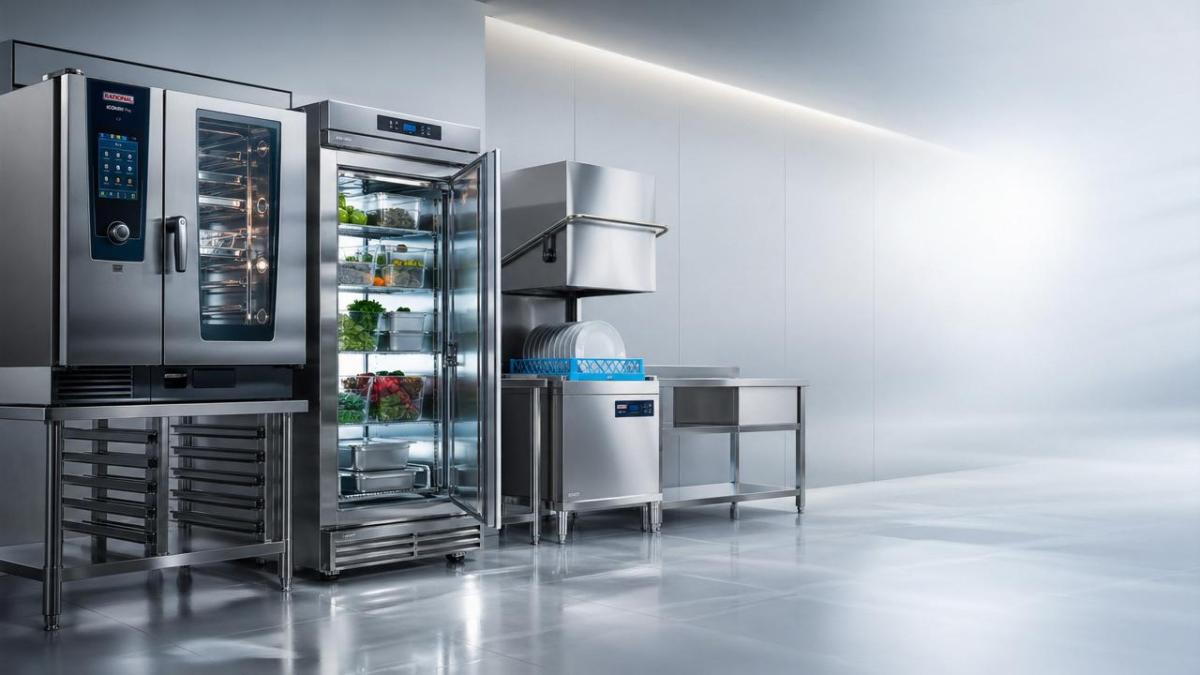
Smarter equipment choices are shifting from cost centers to performance assets
One of the most important industry changes is the way buyers evaluate kitchen equipment. In the past, many purchasing decisions were driven by upfront price, replacement urgency, or brand familiarity. Today, a growing number of operators are looking beyond acquisition cost and asking how equipment affects the full operating model.
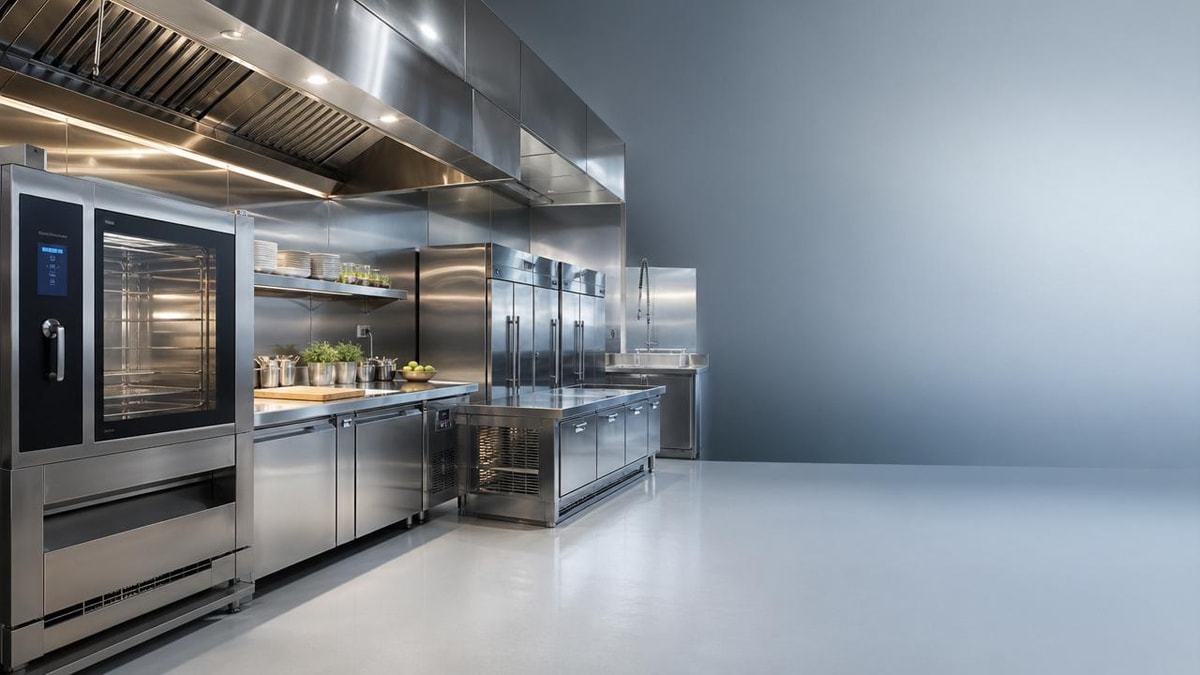
For example, a combi oven with programmable cooking profiles may reduce training demands, shorten cooking cycles, improve batch consistency, and cut food waste. A high-efficiency refrigeration system may protect product quality while lowering power consumption and improving monitoring. An automated dishwashing solution may support sanitation goals and reduce peak-hour labor dependency. In each case, restaurant kitchen efficiency improves because the equipment supports repeatable execution under real-world pressure.
This is also why connected kitchen technologies are gaining relevance. Remote diagnostics, usage tracking, preventive maintenance alerts, and digital controls provide managers with visibility that manual processes cannot easily deliver. The result is not simply better machinery, but better operational decision-making. For enterprises managing multiple sites, this shift can support standardization across locations and reduce hidden variation in performance.
Which business areas feel the impact most
The effects of equipment upgrades are not limited to the kitchen line. Smarter decisions influence multiple business functions, and this is why executive involvement in equipment strategy is becoming more common. Restaurant kitchen efficiency now touches procurement, operations, finance, quality assurance, and brand experience.
For chain operators, the impact is especially significant because equipment consistency can directly support menu consistency. For hotels and institutional kitchens, the focus may be on capacity management and sanitation. For food processing or central kitchen environments, the conversation often centers on automation, batch control, and integration with broader production systems. Across these use cases, restaurant kitchen efficiency becomes a measurable cross-functional outcome rather than a narrow kitchen metric.
What decision-makers should watch before the next procurement cycle
Not every technology trend deserves immediate adoption, but several evaluation points are becoming essential. First, decision-makers should review where current bottlenecks actually occur. Some kitchens are limited by cooking speed, while others lose efficiency through cleaning downtime, poor holding performance, or frequent maintenance interruptions. Better equipment choices begin with operational diagnosis, not catalog comparison.
Second, assess the training burden associated with existing workflows. If too much performance depends on a few experienced staff members, the kitchen may be operationally fragile. Equipment that reduces manual variability can strengthen restaurant kitchen efficiency even if it does not dramatically increase nominal output.
Third, evaluate energy and utility data where possible. Many businesses underestimate the cumulative savings created by efficient cooking, refrigeration, ventilation, and warewashing systems. In a market where margin protection matters, resource-efficient equipment can generate long-term value that is easy to overlook during price-driven sourcing.
Fourth, review serviceability and supplier support. Advanced equipment only improves restaurant kitchen efficiency if it remains dependable in daily use. Spare parts availability, technician access, digital support tools, and preventive maintenance programs should all be considered before purchase.
How the next phase of kitchen modernization is likely to evolve
Looking ahead, the direction of the market suggests a deeper move toward integrated kitchen systems rather than isolated equipment upgrades. Businesses are beginning to connect cooking, cold storage, preparation, cleaning, and monitoring decisions into one operational framework. That means restaurant kitchen efficiency will increasingly be shaped by interoperability, data visibility, and process design.
Another likely development is the continued rise of right-sized automation. Not every kitchen needs fully automated production, but many can benefit from partial automation in repetitive, high-risk, or labor-intensive tasks. This middle path is especially relevant for operators seeking practical returns without overengineering their kitchens.
Sustainability will also remain a major influence. As regulatory expectations and customer awareness continue to grow, businesses will face stronger pressure to reduce waste, lower energy use, and support more responsible operating practices. Equipment selection will play a visible role in demonstrating that commitment while also improving internal efficiency.
Practical guidance for turning trend signals into action
For enterprise leaders, the most useful response is not to chase every innovation but to build a structured review process. Start by identifying the highest-cost inefficiencies in current operations. Then compare equipment options against business outcomes such as labor stability, throughput, food safety performance, maintenance reliability, and energy consumption. This approach makes restaurant kitchen efficiency easier to evaluate in financial and operational terms.
It is also wise to pilot changes in selected sites or production zones before scaling across the organization. Pilot deployments help validate assumptions, reveal integration challenges, and generate real operating data. They also create internal alignment between operations teams, procurement teams, and finance leaders.
When reviewing suppliers, buyers should ask not only what the equipment does, but how it performs over time, how quickly problems are resolved, and how well it fits future growth plans. Restaurant kitchen efficiency improves most when the equipment strategy is tied to a realistic operating roadmap rather than a one-time upgrade decision.
Key questions to confirm before making the next equipment decision
If a business wants to understand how current trends will affect its own kitchen strategy, several questions deserve close attention. Where are the recurring delays in production or cleaning? Which tasks create the greatest dependence on highly skilled labor? Which equipment categories are driving avoidable utility costs or quality variation? Can better controls, automation, or monitoring improve consistency across shifts or locations? And does the current supplier ecosystem support fast service and long-term scalability?
These questions bring the conversation back to the central issue: restaurant kitchen efficiency is increasingly built through smarter equipment choices, not just harder work. In a market defined by cost pressure, operational complexity, and rising expectations, businesses that treat equipment as a strategic asset will be better positioned to improve output, protect margins, and adapt to the next phase of foodservice change.
Popular Tags
Kitchen Industry Research Team
Dedicated to analyzing emerging trends and technological shifts in the global hospitality and foodservice infrastructure sector.
Industry Insights
Join 15,000+ industry professionals. Get the latest market trends and tech news delivered weekly.
No spam. Unsubscribe anytime.
Contact With us
Contact:
Anne Yin (Ceramics Dinnerware/Glassware)
Lucky Zhai(Flatware)