
Kitchen design for small spaces without creating workflow conflicts
Kitchen design for small spaces is no longer just about fitting equipment into limited square footage. For project managers and engineering leaders, the real challenge is creating an efficient, compliant layout that supports smooth movement, reduces bottlenecks, and improves daily output. A well-planned small kitchen can balance workflow, safety, and energy efficiency without compromising operational performance.
Why scenario differences matter in kitchen design for small spaces
For project-based decision makers, kitchen design for small spaces should never start with equipment lists alone. The same floor area can perform very differently depending on menu complexity, peak-hour volume, staffing patterns, ventilation limits, utility access, and hygiene rules. A compact hotel breakfast kitchen, a cloud kitchen, a café back-of-house, and a small institutional prep room may all measure similarly, yet their workflow risks are completely different.
This is why small-kitchen planning must be scenario-led. If the operating model is not clear, layout decisions often create workflow conflicts later: staff crossing paths during prep and plating, dirty and clean processes mixing, receiving areas blocking cooking lines, or refrigeration doors opening into active circulation routes. In modern kitchen equipment planning, efficiency is not only about speed. It is also about safer movement, easier supervision, lower energy waste, and a layout that supports future upgrades.
For engineering teams, the goal is practical fit. For project managers, the goal is risk control across design, installation, compliance, and long-term operation. That is why kitchen design for small spaces works best when every decision is tested against a real use case rather than an idealized drawing.
Typical business scenarios where compact kitchens face workflow conflicts
In the kitchen equipment industry, compact layouts appear across many sectors. However, the pressure points differ by application. Recognizing the scenario early helps teams define zoning, select smart equipment, and avoid expensive redesign.
Quick-service restaurants and takeaway-focused operations
These kitchens need fast assembly, short ticket times, and clear handoff points. Workflow conflict usually comes from overlapping prep, fry, pack, and delivery pickup activities. In this setting, kitchen design for small spaces must prioritize linear production, hot holding access, and minimal staff crossover. Equipment with a small footprint and multi-function capability can reduce congestion.
Hotels, cafés, and mixed-service hospitality sites
Hospitality kitchens often support breakfast, room service, light dining, and events from the same compact area. The conflict is not just physical space but shifting demand throughout the day. Here, flexible stations, undercounter refrigeration, and modular kitchen equipment help adapt between service modes without repeated movement of staff or tools.
Cloud kitchens and delivery-only brands
Delivery kitchens depend on throughput and consistency. They often work well in compact footprints, but only if order flow is separated from cooking flow. If drivers, packers, and cooks share the same narrow path, output drops quickly. Kitchen design for small spaces in this scenario should include dedicated packing, staging, and dispatch logic from the beginning.
Food processing support rooms and central prep units
Small prep areas inside larger foodservice or processing systems must maintain sanitation and repeatability. The main risk is contamination from poor zoning or unstable material flow. Compact layouts here should emphasize one-way movement from receiving to washing, cutting, cooking, cooling, and storage where applicable.
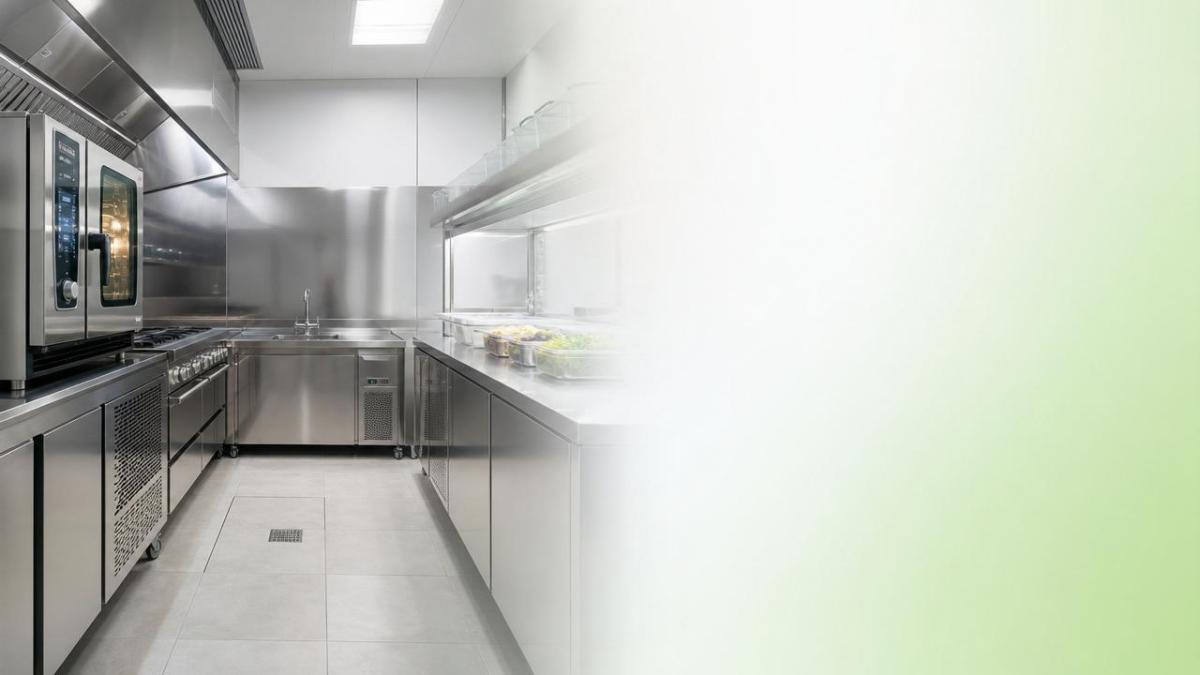
A scenario comparison table for project planning
Before finalizing drawings, compare the intended operating model against likely workflow pressure points. The table below helps project teams evaluate where kitchen design for small spaces should focus first.
How needs change by scenario, team size, and production style
A common mistake in kitchen design for small spaces is assuming that a good compact layout is universal. In reality, three variables change almost everything: who uses the kitchen, what output is expected, and how standardized the menu or process is.
Low-skill, high-volume teams
Where staffing turnover is high, layouts must be intuitive. Straight movement paths, visible storage, and minimal station overlap matter more than design sophistication. Automated or semi-automated kitchen equipment can reduce training time and stabilize output.
Small expert teams with varied menus
In chef-led or specialty operations, workers can handle tighter coordination, but they need adaptable work surfaces and fast access to ingredients. The challenge is preserving creativity without creating constant backtracking. Here, kitchen design for small spaces should support task clustering: prep tools, cold storage, and cooking functions grouped by menu family.
Shift-based institutional or corporate kitchens
These projects often emphasize safety, maintenance access, and predictable service windows. Workflow conflicts usually emerge during cleaning, restocking, and tray assembly rather than cooking alone. Engineering leaders should review service circulation in addition to production circulation.
Practical layout strategies that reduce workflow conflict
Across industries, several design principles consistently improve kitchen design for small spaces. They are especially valuable when equipment density is high and future operational changes are likely.
Build the layout around process sequence
Start with receiving, storage, prep, cooking, finishing, service, and cleaning in actual order. If staff must move backward to complete a task, the risk of conflict rises. Even a small correction in station order can improve throughput more than adding new equipment.
Separate people flow from product flow where possible
Compact kitchens fail when everyone uses the same narrow route. Distinguish movement for ingredients, plated food, waste, and personnel. In delivery-heavy scenarios, pickup activity should not interrupt core cooking operations.
Use vertical and undercounter capacity wisely
Kitchen design for small spaces benefits from stacked or undercounter solutions, but only if access remains easy. Poorly placed storage saves floor area while increasing motion waste. Frequently used items should sit within the shortest reach zones of each station.
Choose multi-function, energy-efficient equipment
Combi ovens, smart holding units, induction systems, and compact prep machinery can replace multiple single-purpose machines. This matters not only for footprint reduction but also for ventilation load, maintenance planning, and utility coordination. In today’s kitchen equipment industry, energy-efficient and intelligent systems can support both sustainability goals and operational flexibility.
Common misjudgments in compact kitchen projects
Many small-kitchen problems are not caused by lack of space alone, but by incorrect assumptions during planning. Project managers should watch for these frequent errors.
- Designing for average demand instead of peak-hour behavior.
- Selecting equipment based on catalog dimensions without door swing, cleaning space, or operator clearance.
- Ignoring packaging, waste handling, and temporary staging in delivery or takeaway scenarios.
- Assuming one team can safely share a prep surface for raw and ready-to-serve products.
- Overfilling the room with equipment while underestimating ventilation, power, drainage, and service access.
These issues are especially important in kitchen design for small spaces because there is little tolerance for correction after commissioning. A single badly placed workstation can affect safety audits, output timing, and staff fatigue for years.
How to judge whether a small-space layout is truly fit for your scenario
A strong layout is not the one that looks clean on paper. It is the one that performs reliably under real operating conditions. Before approval, project teams should test the design against several questions:
- Can two or three critical roles work at the same time without crossing paths repeatedly?
- Is there a clear sequence from ingredient entry to food output and from dirty return to washing?
- Will the layout still function during peak delivery, breakfast rush, or event-driven spikes?
- Does the selected kitchen equipment support future menu changes or only current needs?
- Are maintenance, sanitation, and replacement access realistic in the installed condition?
For engineering leaders, this review should include MEP coordination, heat load, extraction performance, and cleaning workflow. For project managers, the same review should connect layout choice to budget, installation complexity, timeline risk, and operational return.
FAQ on kitchen design for small spaces
Which scenario benefits most from compact, modular kitchen systems?
Cloud kitchens, cafés, hotel service kitchens, and quick-service outlets often gain the most. These settings need flexible capacity, efficient output, and fast installation, making modular kitchen design for small spaces especially effective.
Is more equipment always better in a small kitchen?
No. Excess equipment often creates dead zones, service barriers, and energy waste. In compact projects, fewer but smarter units usually outperform crowded layouts, particularly when equipment is multi-functional and digitally manageable.
When should a project team be cautious?
Be cautious when the menu is highly complex, labor is unstable, sanitation zoning is strict, or the site has severe utility and ventilation limitations. In these cases, kitchen design for small spaces needs more detailed simulation before final approval.
Turning scenario insight into a better project decision
The best kitchen design for small spaces is not defined by how much equipment fits into a room. It is defined by how well the layout matches the business scenario, prevents workflow conflicts, and supports consistent performance over time. For project managers and engineering decision makers, that means evaluating each compact kitchen through the lens of real demand, staffing logic, compliance, and lifecycle efficiency.
If you are planning a restaurant, hospitality, food processing, or mixed-use kitchen project, start by mapping the exact operating scenario before choosing equipment or fixing the floor plan. A scenario-based review will help confirm circulation paths, utility requirements, sanitation separation, and the right mix of smart, energy-efficient kitchen equipment. That approach reduces redesign risk and leads to a compact kitchen that works in practice, not just in drawings.
Popular Tags
Kitchen Industry Research Team
Dedicated to analyzing emerging trends and technological shifts in the global hospitality and foodservice infrastructure sector.
Industry Insights
Join 15,000+ industry professionals. Get the latest market trends and tech news delivered weekly.
No spam. Unsubscribe anytime.

Contact With us
Contact:
Anne Yin (Ceramics Dinnerware/Glassware)
Lucky Zhai(Flatware)