
Kitchen design for food processing starts with flow
Kitchen design for food processing begins with a clear, measurable flow that supports hygiene, efficiency, and product consistency. For technical evaluators, the right layout is not only about equipment placement but also about reducing cross-contamination risks, optimizing labor, and improving operational control. A well-planned processing kitchen creates the foundation for safer production, smarter automation, and long-term performance.
Why flow has become the central design signal
Across the food processing and kitchen equipment sectors, one clear change is shaping investment decisions: layout is now judged less by how much equipment fits into a room and more by how reliably materials, people, tools, waste, and cleaning activities move through that space. This shift has made kitchen design for food processing a strategic topic rather than a basic facility task. Technical teams are being asked to evaluate not just capacity, but flow integrity, sanitation zoning, traceability support, and readiness for automation.
Several industry signals explain this change. Food safety expectations are rising across global supply chains. Processors face stronger audit pressure, tighter documentation needs, and more customer scrutiny over contamination controls. At the same time, labor costs and labor availability are pushing operators to simplify movement, shorten handling paths, and reduce manual transfer points. In parallel, equipment is becoming smarter and more connected, which means poor flow design can now limit the value of automation investments.
For technical evaluators, this means kitchen design for food processing should be assessed as an operating system. The layout must support stable throughput during daily use, predictable cleaning during changeovers, and scalable control as production expands. A room that looks efficient on paper may still create hidden risk if raw materials, work-in-progress, staff circulation, and finished goods cross paths too often.
The market is moving from static layouts to flow-based processing kitchens
Traditional processing kitchens were often organized around available floor area and isolated machine selection. Today, decision makers increasingly start with process mapping. They ask where ingredients enter, where inspection happens, where preparation transitions to thermal processing, where cooling begins, and how packaging exits without reintroducing risk. This approach reflects a wider market movement toward integrated kitchen systems and digitally managed operations.
This shift matters because kitchen design for food processing now directly affects return on equipment investment. A high-performance cutter, mixer, oven, conveyor, or packaging line cannot deliver expected output if upstream staging is inconsistent or if downstream bottlenecks force stop-start production. In other words, flow is no longer a secondary detail. It is a performance multiplier.
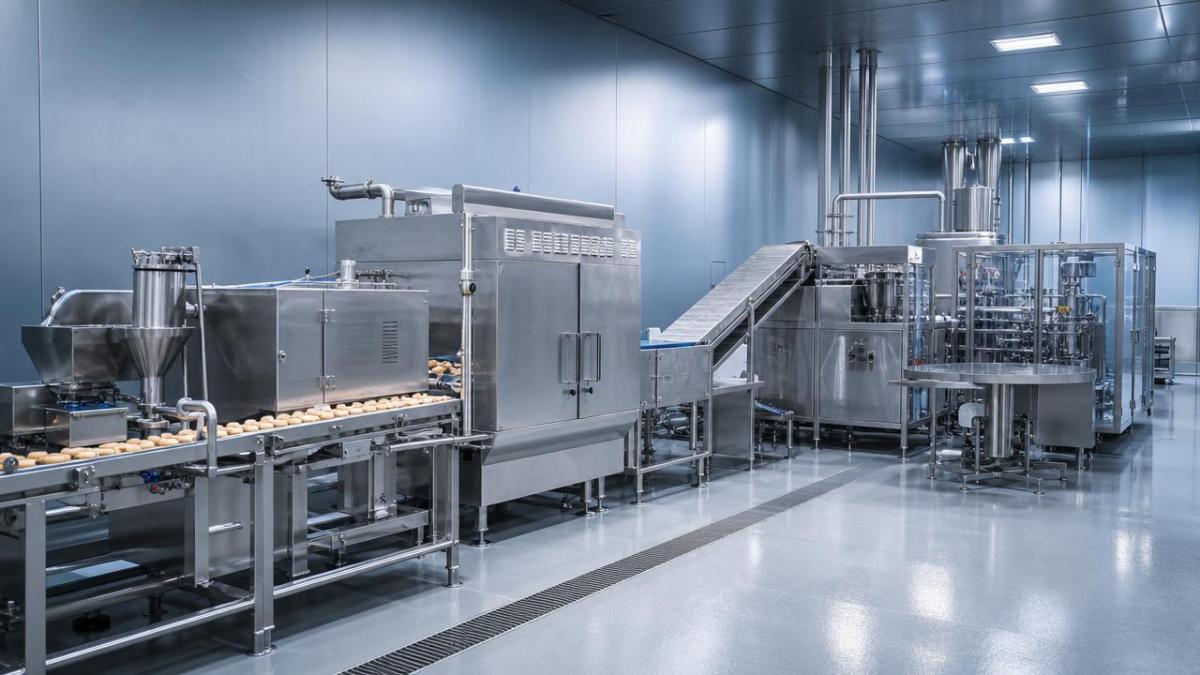
The table shows why kitchen design for food processing is increasingly reviewed as a connected system. Flow quality influences sanitation, labor productivity, and automation compatibility at the same time.
What is driving the change in kitchen design for food processing
The first driver is stricter food safety management. Whether a facility serves retail brands, foodservice operators, or export markets, layout decisions are being examined through a risk lens. Evaluators must consider how air movement, waste removal, handwashing access, allergen segregation, and cleaning routes interact with production flow. A layout that allows unnecessary backtracking or mixed traffic can weaken hygiene control even when equipment quality is high.
The second driver is the push for measurable efficiency. Rising energy costs, uneven staffing, and higher expectations for output consistency are forcing operators to reduce idle time. In many facilities, the biggest productivity losses come not from machine speed, but from waiting, carrying, staging delays, and poorly sequenced operations. As a result, kitchen design for food processing is being used as a tool to remove hidden inefficiencies before companies add more equipment.
The third driver is the adoption of smart kitchen technologies and automated food processing systems. Sensors, programmable controls, digital batching, automated transfer, and data-driven maintenance all depend on a layout that is orderly and scalable. If the physical flow is inconsistent, digital control becomes harder to standardize. Smart systems work best when ingredients, process steps, and operator roles are clearly structured.
The fourth driver is sustainability. Energy-efficient kitchen solutions are no longer limited to selecting better appliances. Operators are also looking at how flow affects hot and cold zone stability, utility routing, water use, heat recovery opportunities, and cleaning cycles. Better flow can reduce product exposure time, shorten transport distances, and limit repeated reheating or recooling.
Where the impact is strongest for technical evaluators
Not every stakeholder experiences these changes in the same way. For technical evaluators, the impact is strongest where facility design meets performance accountability. The evaluation task has expanded from checking machine specifications to verifying whether the total process can run safely under real production conditions.
This broader impact explains why kitchen design for food processing is becoming a multidisciplinary review area. Evaluators must consider whether a proposed layout will still work when product mix changes, output rises, or digital control becomes more detailed.
The design signals that now matter more than before
One major signal is directional flow. Raw receiving, storage, preparation, processing, cooling, packaging, dispatch, and waste handling should move in a logical sequence with limited reversal. The more often staff or materials move backward, the higher the chance of delay, confusion, and contamination risk.
Another signal is zoning clarity. In modern kitchen design for food processing, zones are no longer abstract labels on a drawing. They must be visible in how people enter spaces, how tools are assigned, how cleaning occurs, and how products transition between steps. This is especially important for ready-to-eat foods, allergen control, and mixed product lines.
A third signal is cleanability without disruption. Evaluators should ask whether drains, wall interfaces, equipment spacing, access panels, and utility connections support fast and reliable sanitation. If cleaning requires dismantling too many elements or blocks neighboring operations, flow quality drops and downtime grows.
The fourth signal is flexibility. Many processors now need layouts that can handle seasonal changes, new SKUs, semi-automated steps, or phased capacity growth. A rigid layout may perform well for a single product today but create expensive limits tomorrow. Good kitchen design for food processing balances disciplined flow with room for controlled adaptation.
How businesses should judge opportunities and risks
Companies should resist the temptation to treat layout improvement as only a construction issue. In the current market, flow-led design can unlock value in multiple ways: fewer contamination incidents, shorter production cycles, lower labor intensity, stronger audit readiness, and better use of smart equipment. However, the risks of weak design are also growing. Poorly sequenced rooms can make automation harder, increase sanitation burdens, and reduce the practical capacity of expensive machinery.
For that reason, technical evaluators should compare design options using operational scenarios rather than static drawings alone. A layout should be tested against peak demand, product changeover, cleaning windows, maintenance access, emergency stoppages, and temporary staffing variation. This kind of review helps reveal whether kitchen design for food processing is truly resilient or only visually organized.
Practical checkpoints for evaluation
Use these checkpoints when reviewing a new build, retrofit, or equipment integration plan:
- Can raw materials, finished products, staff, waste, and cleaning tools move without unnecessary crossing?
- Do high-risk and low-risk activities have meaningful separation beyond simple floor markings?
- Will the layout support future automation, data capture, and process monitoring?
- Are utility points placed to avoid blocking maintenance or sanitation access?
- Can changeovers be completed without creating congestion or hygiene compromise?
- Does the design reduce walking, waiting, and manual handling in measurable ways?
What to watch next in kitchen design for food processing
The next phase of development will likely center on deeper integration. Commercial kitchen equipment, food processing machinery, and digital management tools are increasingly designed to work together rather than as isolated purchases. This means flow design will become even more important because data visibility and automation performance depend on predictable movement patterns.
Another direction to watch is the rise of modular thinking. As food businesses seek faster project timelines and flexible expansion, they are showing more interest in layouts that can be upgraded in stages. Technical evaluators should therefore examine whether a current design can accept future conveyors, smart controls, robotic handling, or additional hygiene barriers without major reconstruction.
Sustainability pressure will also continue to influence kitchen design for food processing. Energy-efficient kitchen solutions will increasingly be judged not only by equipment ratings but by how the whole process minimizes wasted movement, unnecessary thermal exposure, excess water use, and avoidable sanitation effort. In this context, efficient flow is both an operational and environmental advantage.
Final judgment and action focus
The strongest industry signal is clear: kitchen design for food processing now starts with flow because flow determines how well safety, efficiency, automation, and scalability can work together. For technical evaluators, the key task is not to approve a layout that merely fits equipment, but to judge whether the design can support disciplined movement under real operating pressure.
If a business wants to understand how this trend affects its own operations, it should focus on a few core questions. Where do current material or staff paths create avoidable risk? Which handling steps add time without adding value? Which future automation plans depend on cleaner zoning and better sequencing? And which design changes would improve both food safety control and long-term equipment performance?
Answering those questions will provide a more useful basis for investment than equipment comparison alone. In today’s market, the most competitive processing kitchens are not simply better equipped. They are better structured around flow.
Popular Tags
Kitchen Industry Research Team
Dedicated to analyzing emerging trends and technological shifts in the global hospitality and foodservice infrastructure sector.
Industry Insights
Join 15,000+ industry professionals. Get the latest market trends and tech news delivered weekly.
No spam. Unsubscribe anytime.
Contact With us
Contact:
Anne Yin (Ceramics Dinnerware/Glassware)
Lucky Zhai(Flatware)