
Food slicer machine problems that usually start with blade choice
Many food slicer machine failures that appear to be motor, safety, or maintenance issues actually begin with the wrong blade choice. For after-sales maintenance teams, understanding how blade type, edge condition, and product compatibility affect slicing performance is essential to faster diagnostics, fewer repeat repairs, and better equipment reliability.
Why blade choice matters more than many service teams expect
A food slicer machine is often judged by visible symptoms: slow feed, uneven slices, overheating, vibration, excess noise, product tearing, or frequent tripping of safety protections. In many service calls, these symptoms are first linked to electrical faults, drive wear, poor lubrication, or operator error. Yet in practical maintenance work, the root cause often begins at the blade. The wrong blade profile, the wrong edge condition, or a blade that does not match the food type can change cutting resistance, product flow, and operator force. Once that happens, the entire machine starts behaving as if deeper mechanical or electrical defects are present.
For after-sales maintenance personnel, this topic deserves close attention because blade selection directly affects diagnostic accuracy. A technician who recognizes blade-related failure patterns can reduce unnecessary part replacement, shorten downtime, and improve customer trust. In the broader kitchen equipment industry, where reliability, food safety, and efficiency are increasingly important across restaurants, hotels, food processing plants, and central kitchens, this knowledge supports better service quality and better lifecycle value from installed equipment.
Understanding the blade as a system component, not a simple consumable
In many sites, the blade is treated as a basic wear part: replace it when dull, sharpen it when possible, and continue operation. That view is incomplete. In a food slicer machine, the blade influences cutting pressure, slice consistency, feed stability, sanitation performance, and even operator behavior. A poor blade choice can force users to push harder, overload the carriage, generate more friction heat, and create deposits on the edge. Over time, this increases stress on bearings, motors, belts, gears, and safety assemblies.
Blade choice includes several variables: edge type, diameter, thickness, material grade, surface finish, hardness, and whether the blade is intended for meat, cheese, bread, cooked products, frozen products, or mixed-duty use. A smooth edge may work well for cooked meat but perform badly on crusted bread. A serrated option may cut certain products more cleanly but can complicate sanitation or sharpening. A blade that is technically compatible with the machine may still be operationally wrong for the user’s product mix.
Why the industry is paying closer attention to slicing performance
The kitchen equipment sector is moving toward higher output, tighter hygiene control, and lower operating waste. In commercial kitchens and food processing environments, slicing quality is no longer a minor issue. Uneven portions affect food cost control. Torn surfaces reduce product presentation. Smearing and residue buildup raise cleaning frequency. Rework increases labor time. If a food slicer machine is repeatedly serviced without addressing the blade-product match, the result is a costly cycle of complaints, temporary fixes, and reduced equipment confidence.
This is especially relevant as equipment becomes more integrated into automated and semi-automated workflows. When one slicing station slows down or produces inconsistent output, upstream and downstream processes are affected. For service teams, understanding blade choice is therefore not only a repair issue but also an operational efficiency issue.
Typical blade-related problems that imitate larger machine faults
A food slicer machine with the wrong blade often shows symptoms that mislead both operators and technicians. Recognizing these patterns can improve first-visit resolution.
- Uneven slice thickness that appears to be caused by thickness control drift, but is actually linked to edge wear or incorrect blade geometry.
- Motor strain or overheating caused by excessive cutting resistance from a dull or unsuitable blade.
- Product sticking to the blade, often mistaken for poor cleaning practice, when the real issue is surface finish or incorrect application.
- Vibration and noise that look like bearing trouble, but are intensified by a warped, poorly mounted, or imbalanced blade.
- Operator complaints about safety because extra force is needed, increasing the chance of slip events and unsafe handling.
- Frequent sharpening intervals that suggest hard use, while the actual cause is blade selection for the wrong food texture.
When these symptoms appear, maintenance teams should avoid starting with the assumption that the drive system is at fault. A structured blade inspection often reveals the underlying issue faster.
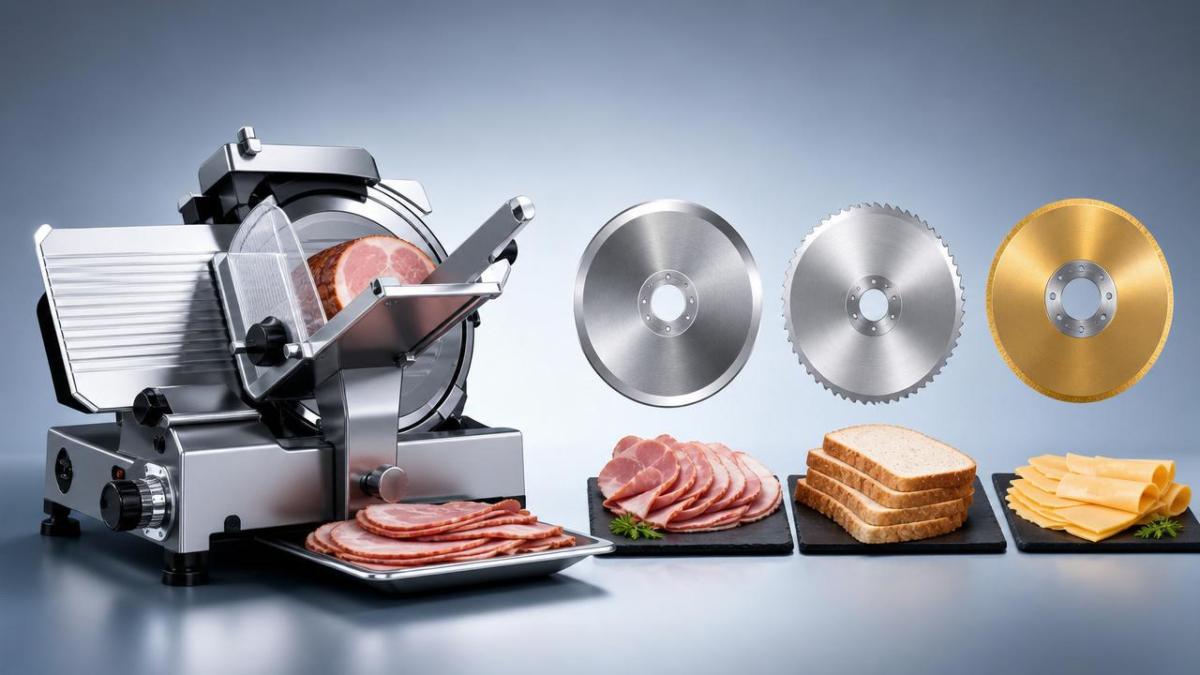
Common blade categories and where each one fits
The table below gives a practical overview for after-sales teams diagnosing a food slicer machine in field conditions. It is not a brand-specific rule, but it helps frame service decisions.
Application value for after-sales maintenance teams
For service personnel, blade knowledge creates value in several ways. First, it improves diagnosis. A technician who checks blade suitability early can separate true component failure from performance loss caused by cutting mismatch. Second, it reduces repeat visits. If the machine is repaired but the wrong blade remains in service, the same complaint often returns. Third, it supports spare-parts planning. Instead of stocking only general replacement blades, service teams can align inventory with real customer applications such as deli slicing, bakery slicing, cheese handling, or mixed kitchen duty.
There is also a customer education benefit. Many end users do not realize that a food slicer machine requires blade selection based on product type, throughput, and cleaning practice. When after-sales teams explain this clearly, they are not only fixing equipment but also improving operational habits. That can lead to lower wear rates, fewer emergency calls, and stronger long-term service relationships.
Key inspection points when blade choice is suspected
A practical inspection routine helps maintenance teams work consistently across different brands and sites. When a food slicer machine arrives with quality or performance complaints, the following checks should be part of the standard assessment:
- Confirm the actual product being sliced, not only the product listed in the manual.
- Identify the installed blade type and compare it with the intended application.
- Check edge condition for dullness, micro-chipping, uneven sharpening, and burr formation.
- Inspect blade flatness, mounting security, and rotation stability.
- Look for heat marks, residue buildup, or unusual friction signs on the blade surface.
- Review cleaning chemicals and sharpening methods, since both can shorten blade life or alter edge performance.
- Observe operator technique to see whether excessive push force is compensating for poor cutting action.
These checks help build a complete fault picture. In many cases, the machine itself is mechanically sound, but blade mismatch has triggered a chain of secondary issues.
Typical operating environments and what they demand from a food slicer machine
Different commercial environments place different demands on blade selection. This matters because a food slicer machine that performs well in one setting may struggle in another if the blade is not matched correctly.
Practical recommendations to prevent repeat failures
A preventive approach is more effective than waiting for performance complaints. After-sales teams can improve food slicer machine reliability by building blade awareness into routine service. Start by documenting the customer’s real product mix and operating intensity. Then confirm whether the installed blade matches that profile. Where possible, include blade type verification in maintenance checklists, not only blade condition. A correct but dull blade and a sharp but unsuitable blade can both create service issues, but they require different solutions.
It is also useful to track repeat calls by symptom. If several sites report drag, tearing, or overheating on the same equipment model, the problem may not be the machine design alone. It may reflect a pattern of incorrect blade substitution in the field. Standardizing service guidance, approved blade options, and operator instruction can significantly reduce this problem.
FAQ for field technicians and service coordinators
Can a sharp blade still be the wrong blade?
Yes. A sharp blade may still perform poorly if its edge style or surface characteristics do not suit the product. In a food slicer machine, sharpness alone does not guarantee low resistance or clean results.
Should blade inspection happen before motor testing?
In many slicing complaints, yes. Basic electrical safety checks still come first, but blade suitability should be reviewed early, especially when the machine runs but cuts badly or strains under load.
How often should customers review blade choice?
Any time product mix changes, production volume increases, or cleaning methods are modified. A food slicer machine used for one task today may be handling very different products a few months later.
A more reliable service approach starts at the blade
In modern kitchen equipment service, reliable diagnosis depends on understanding how components interact with real operating conditions. The food slicer machine is a clear example. What looks like a motor problem, a safety problem, or a maintenance failure may begin with an unsuitable blade. For after-sales maintenance teams, treating blade choice as a core diagnostic factor leads to better repair decisions, fewer repeated faults, improved food safety performance, and stronger customer outcomes.
If your service process still treats the blade as a minor consumable, it is worth updating inspection standards, technician training, and customer guidance. In many cases, the fastest path to better slicer reliability is not deeper disassembly. It is asking a simpler question first: is this food slicer machine using the right blade for the job?
Popular Tags
Kitchen Industry Research Team
Dedicated to analyzing emerging trends and technological shifts in the global hospitality and foodservice infrastructure sector.
Industry Insights
Join 15,000+ industry professionals. Get the latest market trends and tech news delivered weekly.
No spam. Unsubscribe anytime.



Contact With us
Contact:
Anne Yin (Ceramics Dinnerware/Glassware)
Lucky Zhai(Flatware)