
Commercial Steamer sizing errors that hurt kitchen output
Choosing the right Commercial Steamer size is more than a purchasing detail—it directly affects throughput, food quality, labor efficiency, and energy use. For technical evaluators, sizing errors can create bottlenecks, uneven production, and avoidable operating costs. This article outlines the most common capacity miscalculations and how to match steamer specifications with real kitchen demand.
Why Commercial Steamer sizing is often misjudged in real projects
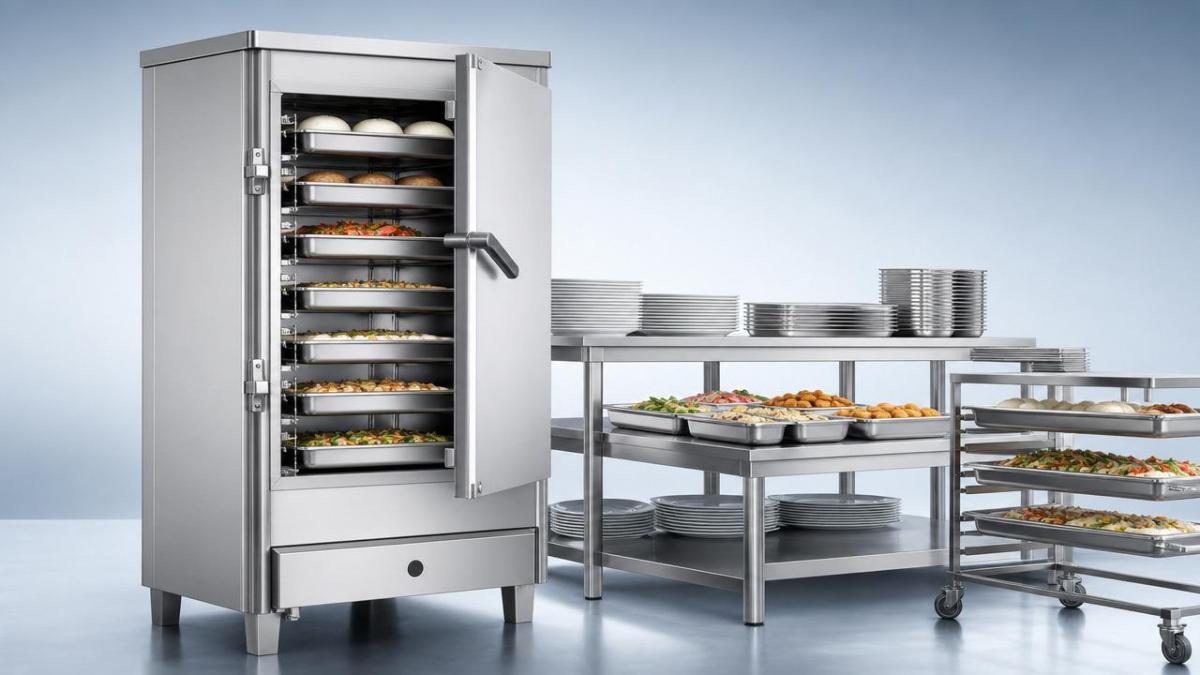
A Commercial Steamer is rarely evaluated in isolation. In restaurants, hotels, central kitchens, and food processing environments, it must fit the production rhythm of the whole line. Technical evaluators often receive nominal capacity data from suppliers, yet real output depends on batch timing, product mix, pan configuration, loading discipline, water recovery, and operator workflow.
The kitchen equipment sector is moving toward automation, digital monitoring, and energy-efficient systems. That trend makes sizing even more important. An undersized unit can disrupt integrated kitchen processes, while an oversized unit may waste power, floor space, ventilation capacity, and capital budget. In both cases, the kitchen loses operational balance.
Many sizing mistakes happen because buyers compare cabinet dimensions or pan counts instead of production demand. A 6-pan or 10-pan Commercial Steamer may look sufficient on paper, but if menu peaks require mixed loads, staggered finishing times, or repeated door openings, the practical output can fall well below expectations.
- Nameplate capacity is treated as usable capacity without accounting for recovery time between loads.
- Peak-hour demand is averaged across the day, which hides service bottlenecks.
- Different food categories are grouped together even when they require different steam times, tray depths, and loading densities.
- Installation constraints such as drainage, incoming water quality, power supply, and hood design are reviewed too late.
Where output losses begin: the most common Commercial Steamer sizing errors
The table below summarizes the sizing errors that most often reduce kitchen output. For technical assessment teams, this kind of comparison is useful because it connects a specification mistake to an operational symptom and a corrective action.
A key lesson is that Commercial Steamer sizing is a process question, not only a machine question. If the kitchen runs mixed menus, plated service, banqueting, prep steaming, and rethermalization in the same shift, then static capacity figures are not enough for reliable procurement decisions.
Error 1: confusing theoretical capacity with usable capacity
Manufacturers may state the number of pans or trays a unit accepts, but not every slot can be productively used in every menu cycle. Dense proteins, delicate vegetables, rice, dumplings, and bakery items each behave differently under steam. Overloading to chase theoretical output often results in longer cycles, uneven texture, and repeat cooking.
Error 2: ignoring service peaks and menu concentration
A hotel breakfast service may produce large volume in a narrow window. A hospital kitchen may have strict dispatch deadlines. A central kitchen may process one item continuously for two hours, then switch products. In all these cases, average daily volume hides the true stress point. The right Commercial Steamer must satisfy the most critical production interval, not only the total daily count.
Error 3: underestimating product diversity
When one steamer handles vegetables, seafood, starches, and prepared meals, the challenge is not only total volume. It is sequencing. If one long-cycle item blocks cabinet space needed for two short-cycle items, the kitchen loses effective output. Technical evaluators should review product family, target core temperature, moisture retention requirements, and acceptable hold time.
How to calculate the right Commercial Steamer size for actual demand
A practical sizing method starts with output per peak interval, then works backward to batch count and cabinet utilization. This is more reliable than selecting by dimensions or price tier alone. The goal is to identify how much usable steamed product must leave the station during the busiest window.
- Define the production window: 15, 30, or 60 minutes depending on service style.
- Separate menu items by cycle time, tray depth, and loading density rather than combining all products into one total weight figure.
- Estimate door-opening frequency, unload time, reload time, and recovery time between batches.
- Apply a realistic utilization factor instead of assuming every pan position is always full and always productive.
- Check if one larger unit or two smaller units better support menu flexibility and downtime risk control.
For technical evaluators, the most useful output unit is often not “number of pans,” but portions per 30 minutes, kilograms per hour by product type, or trays completed within dispatch time. That approach aligns the Commercial Steamer selection with kitchen KPIs such as on-time service, labor minutes per batch, and utility cost per meal.
A simple assessment framework
If the kitchen needs 240 vegetable portions in 30 minutes, and one tray yields 40 portions with a 10-minute cycle plus 3 minutes handling and recovery, one tray lane completes about two batches in 26 minutes. That means each effective tray position produces roughly 80 portions in the target window. Then the evaluator can estimate how many productive tray positions are required after allowing for mixed-load inefficiency.
Which sizing approach fits restaurants, hotels, central kitchens, and food processing sites?
Commercial Steamer demand patterns vary widely by application. The table below helps technical teams compare scenarios and avoid using the same sizing logic across very different operations.
This comparison shows why technical evaluators should tie Commercial Steamer size to operating pattern, not only to business type. Two kitchens with similar daily meals can require very different steamer capacities if one serves in bursts and the other runs in continuous batches.
When two smaller units outperform one large unit
In many projects, redundancy matters as much as gross capacity. Two smaller steamers can improve menu separation, reduce waiting time for mixed cycles, support maintenance continuity, and create better workflow zoning. This arrangement may also reduce the operational penalty when one unit is being cleaned or serviced.
However, a split configuration is not automatically better. It may require more connections, more floor space, more operator movement, and a different hood layout. The decision should be based on throughput pattern, not preference alone.
What technical evaluators should check beyond cabinet capacity
A Commercial Steamer that appears correctly sized can still underperform if support conditions are weak. In the broader kitchen equipment industry, integrated system thinking is becoming standard because energy efficiency, digital control, and sanitation targets are now linked to procurement quality.
- Steam generation method: boiler-based and boilerless designs may differ in warm-up behavior, maintenance, and response during repeated cycles.
- Water quality management: hard water can affect scaling, heat transfer, and maintenance frequency, which changes real output over time.
- Drainage and condensate handling: poor drainage planning can interrupt operation or complicate installation.
- Utility compatibility: electrical load, gas supply where applicable, and ventilation coordination must be confirmed early.
- Control features: programmable cycles, monitoring, and kitchen management connectivity can improve repeatability and reduce operator variance.
Compliance and specification discipline
For cross-border sourcing or multi-site projects, technical evaluators should also review applicable electrical safety, food-contact material suitability, and local installation rules. Specific requirements vary by market, but the principle remains the same: a correctly sized Commercial Steamer still needs compliant construction, traceable documentation, and serviceable parts planning to perform reliably in the field.
Cost impact of Commercial Steamer sizing mistakes
Sizing errors create cost in more ways than the purchase price difference between models. Technical evaluators should quantify the operational effect, especially when procurement teams focus too narrowly on initial budget.
This cost view is especially relevant in modern kitchen projects where intelligent equipment and energy management are increasingly important. A mis-sized unit can undermine the value of otherwise well-designed digital or automated kitchen systems.
FAQ: practical questions technical evaluators ask about Commercial Steamer selection
How do I know whether pan count is enough for sizing?
Pan count is only a starting point. You need to test it against product depth, cook time, reload time, and menu mix. If the operation runs different products with different finish times, the cabinet rarely achieves full theoretical productivity. Use portions per peak interval or kilograms per hour by product category for a more realistic evaluation.
Is a larger Commercial Steamer always safer for future growth?
Not always. A larger unit may add unused capacity, higher energy demand, and more complicated installation without solving workflow issues. If growth is uncertain, some kitchens are better served by a modular approach, such as adding a second unit later or selecting a configuration that scales with menu segmentation.
What should be checked before requesting a quotation?
Prepare peak-hour output targets, key menu categories, tray or pan standards, utility conditions, water quality information, installation constraints, and expected cleaning frequency. Also ask how the Commercial Steamer performs under repeated door opening and whether there are recommended utilization assumptions for mixed loads.
How does a Commercial Steamer fit into smart kitchen planning?
In advanced kitchen environments, the steamer should support repeatable programming, production monitoring, and compatibility with broader kitchen workflows. Even without full automation, digital controls and clear cycle management can reduce variability, improve traceability, and help technical teams align output with labor planning and food safety routines.
Why choose us for Commercial Steamer sizing support
Selecting a Commercial Steamer should not depend on generic catalog claims. It should be based on kitchen demand, process timing, installation conditions, and lifecycle efficiency. Our approach is designed for technical evaluators who need structured support rather than broad sales language.
- We help confirm sizing inputs such as portions per peak window, batch rhythm, tray format, and mixed-menu load assumptions.
- We can discuss product selection options based on application type, from restaurants and hotels to central kitchens and food processing facilities.
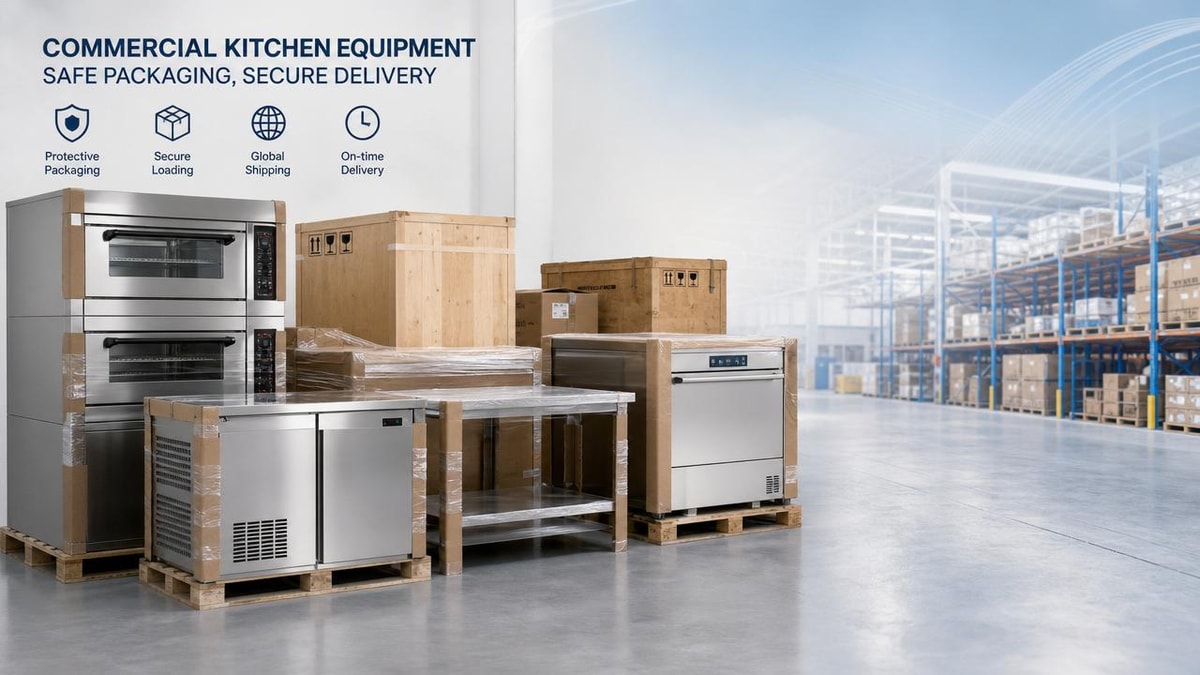
- We support conversations around delivery timing, installation conditions, and project coordination with other kitchen equipment.
- We can review practical topics such as utility matching, water treatment considerations, certification expectations, and customization boundaries.
- If needed, we can also arrange quotation discussion, sample-level specification confirmation, and comparison of alternative configurations.
If you are evaluating Commercial Steamer options and want a more accurate sizing basis, contact us with your target output, menu structure, service window, and site conditions. That makes it possible to move from rough capacity assumptions to a practical equipment selection plan with clearer cost, delivery, and compliance visibility.
Popular Tags
Kitchen Industry Research Team
Dedicated to analyzing emerging trends and technological shifts in the global hospitality and foodservice infrastructure sector.
Industry Insights
Join 15,000+ industry professionals. Get the latest market trends and tech news delivered weekly.
No spam. Unsubscribe anytime.
Contact With us
Contact:
Anne Yin (Ceramics Dinnerware/Glassware)
Lucky Zhai(Flatware)