
Restaurant kitchen equipment wholesale or direct factory buying?
Choosing between restaurant kitchen equipment wholesale and direct factory purchasing can significantly affect cost, quality, lead time, and long-term operational efficiency. For business decision-makers in foodservice, understanding these two sourcing models is essential to building a reliable, scalable, and cost-effective kitchen supply strategy in an increasingly competitive global market.
Why this sourcing decision matters more now than it did a few years ago
The decision between restaurant kitchen equipment wholesale and direct factory buying is no longer just a pricing question. It now sits at the center of broader industry changes affecting restaurants, hotel groups, central kitchens, cloud kitchens, and food processing operations. Procurement leaders are facing tighter project timelines, stronger food safety expectations, higher energy costs, and greater pressure to standardize kitchen performance across multiple sites. As a result, sourcing strategy has become a business resilience issue, not simply a purchasing task.
Several market signals explain this shift. Commercial kitchens are adopting more energy-efficient equipment, more digital monitoring tools, and more specialized production lines. Buyers also want shorter replacement cycles for some product categories and longer service life for capital-intensive systems. At the same time, international sourcing remains attractive, but it is also more complex because logistics, compliance, customization, and after-sales support differ widely by supplier model.
In this environment, restaurant kitchen equipment wholesale can offer convenience, bundled product access, and local coordination, while direct factory purchasing can offer customization, price transparency, and closer control over specifications. The right choice depends on business stage, project type, internal procurement capability, and risk tolerance.
The strongest trend signals reshaping restaurant equipment sourcing
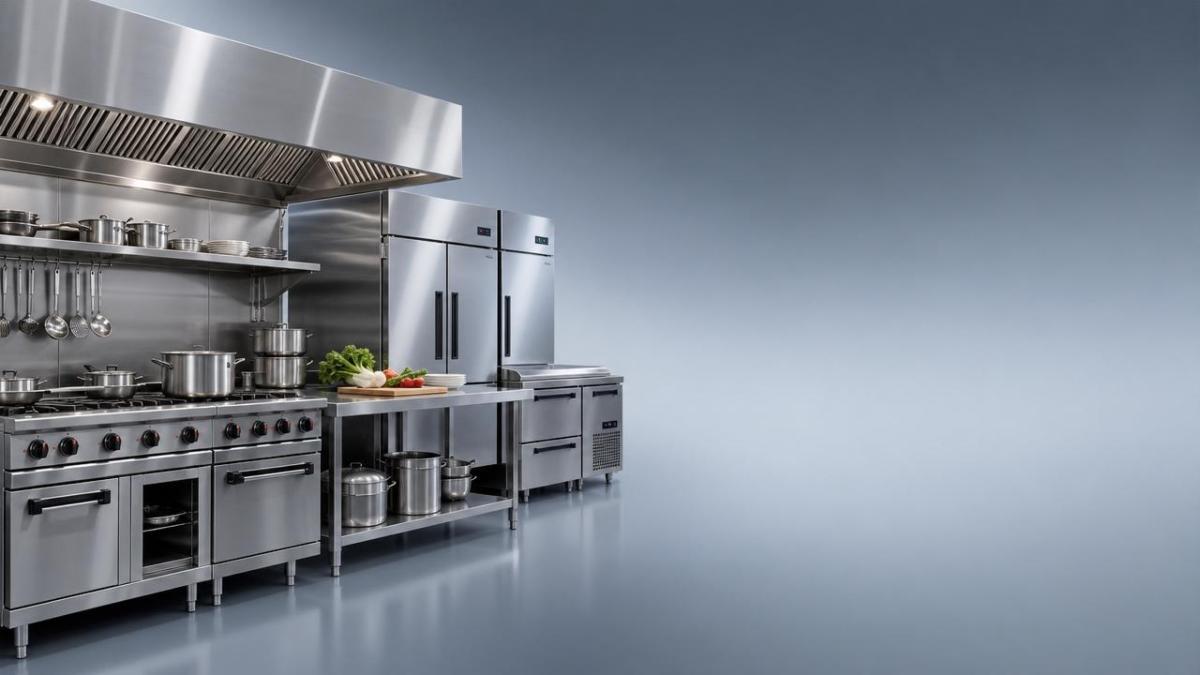
Today’s sourcing landscape is being reshaped by operational, technical, and commercial trends. Business decision-makers should view restaurant kitchen equipment wholesale and factory-direct buying through this wider lens rather than as isolated purchasing channels.
These changes mean sourcing decisions should be evaluated against operational outcomes: uptime, installation success, maintenance access, compliance alignment, and total cost of ownership. A lower initial quote may look attractive, but if it creates delays, spare parts issues, or spec mismatches, the long-term cost can be much higher.
What is driving the shift toward more strategic procurement?
The first driver is cost structure visibility. Decision-makers increasingly want to know where value is created across the supply chain. With restaurant kitchen equipment wholesale, the buyer often gains curated product selection, local communication, consolidated logistics, and service coordination. With direct factory buying, the buyer may gain a better understanding of raw manufacturing capability, engineering control, and price composition. In a more cost-conscious market, this transparency matters.
The second driver is customization demand. Modern foodservice formats are diversifying. Quick-service chains, premium dining brands, bakery operations, ghost kitchens, and institutional catering all need different workflow designs. Factory-direct sourcing tends to be stronger when kitchen layouts require custom stainless steel fabrication, non-standard dimensions, integrated lines, or brand-specific production features. Wholesale channels are often stronger when the need is broad category coverage and fast fulfillment.
The third driver is quality assurance. Not all buyers have the technical team needed to evaluate steel grades, compressor brands, burner performance, insulation quality, or control system reliability. In such cases, restaurant kitchen equipment wholesale may provide a filtering function, especially when the wholesaler has proven supplier relationships. However, experienced procurement teams may prefer factory-direct evaluation because it allows deeper factory audits, production checks, and engineering conversations.
The fourth driver is international expansion. As restaurant and hospitality brands expand across borders, procurement becomes more standardized and more data-driven. Buyers are no longer selecting equipment only for one kitchen. They are thinking about rollout compatibility, regional compliance, training requirements, and spare parts availability across multiple markets.
How restaurant kitchen equipment wholesale compares with direct factory buying in today’s market
For business leaders, the better question is not which model is universally superior, but which model fits the current business objective. The comparison below reflects how these options function under present market conditions.
This comparison shows why neither path should be treated as a fixed rule. For example, a regional restaurant group opening five outlets quickly may benefit more from restaurant kitchen equipment wholesale. A large hospitality operator building a central kitchen with custom fabrication and line integration may gain more from direct factory engagement.
Who feels the impact most across the business?
The sourcing model affects more than procurement teams. It influences finance, operations, engineering, maintenance, and brand expansion strategy.
- Procurement leaders: need to balance unit price, supplier concentration risk, and sourcing efficiency.
- Operations managers: care about installation timing, workflow fit, and uptime after launch.
- Finance teams: increasingly compare capital spending with lifecycle savings from energy-efficient equipment.
- Technical and maintenance teams: need consistent spare parts, service access, and documentation quality.
- Expansion teams: depend on repeatable equipment standards when entering new locations.
In practical terms, restaurant kitchen equipment wholesale often reduces internal coordination pressure because one supplier can help consolidate categories. Direct factory purchasing may create more work upfront, but can reduce technical mismatch and improve long-term standardization when managed well.
What signals should decision-makers monitor before choosing a sourcing model?
A useful sourcing decision starts with reading the right signals. Rather than focusing only on price quotes, companies should track indicators that reveal whether wholesale or factory-direct sourcing is a better fit.
- How standardized are your future kitchen formats?
- Do you need custom fabrication, special sizing, or integrated workflows?
- Is local installation support critical to opening speed?
- Can your team conduct supplier audits and technical reviews?
- How important are spare parts and warranty response in your region?
- Are you buying one project at a time, or creating a scalable procurement framework?
If the answer points toward complexity, scale, and technical control, direct factory buying becomes more attractive. If the answer points toward speed, coordination simplicity, and mixed-category convenience, restaurant kitchen equipment wholesale may deliver greater business value.
Why hybrid sourcing is emerging as a practical middle path
One of the clearest market shifts is the rise of hybrid procurement. Instead of choosing only one path, many businesses now combine restaurant kitchen equipment wholesale with selective direct factory buying. This reflects a more mature sourcing strategy shaped by category importance.
For example, a buyer may source standard shelving, sinks, prep tables, and common refrigeration items through a wholesaler, while purchasing custom cooking lines, central kitchen systems, or branded fabrication directly from a factory. This model allows companies to preserve speed where standardization exists and gain control where technical precision matters most.
Hybrid sourcing is particularly useful when companies are growing fast but do not yet want to build a full global sourcing department. It also supports risk diversification by reducing dependency on a single channel. In a volatile supply environment, this flexibility can be a competitive advantage.
How to judge long-term value instead of short-term savings
A common mistake is comparing restaurant kitchen equipment wholesale and factory-direct quotes only at purchase price level. Strategic buyers should evaluate total value across the equipment lifecycle. That includes freight coordination, import handling, site readiness, installation support, commissioning, operator training, maintenance, spare parts, energy use, and replacement planning.
In many cases, the cheaper option at order stage becomes the more expensive option after opening. Delayed components can disrupt launch dates. Improperly matched equipment can reduce kitchen efficiency. Weak documentation can slow maintenance response. For chain operators and institutional buyers, these issues multiply across locations.
That is why enterprise buyers should use a weighted evaluation model. Price matters, but so do compliance confidence, supplier responsiveness, engineering communication, and scalability. The best sourcing decision supports operational continuity, not just procurement savings.
Practical next-step judgment for enterprise buyers
If your business is reviewing restaurant kitchen equipment wholesale versus direct factory buying, start by segmenting your equipment list into three groups: standard items, specification-sensitive items, and business-critical systems. Then match the sourcing channel to the risk profile of each group.
Next, evaluate internal capability. If your team lacks technical sourcing resources, a strong wholesale partner may reduce execution risk. If your organization has engineering depth and scale purchasing plans, factory-direct relationships can become a strategic asset. Finally, treat supplier selection as an ongoing framework rather than a one-time transaction.
For companies seeking a future-ready supply strategy, the key questions are clear: Which equipment categories require direct control? Which can be sourced efficiently through restaurant kitchen equipment wholesale? Where do lead time, customization, and after-sales support create the greatest operational impact? Answering those questions will help decision-makers build a sourcing model that is cost-aware, resilient, and aligned with long-term foodservice growth.
Popular Tags
Kitchen Industry Research Team
Dedicated to analyzing emerging trends and technological shifts in the global hospitality and foodservice infrastructure sector.
Industry Insights
Join 15,000+ industry professionals. Get the latest market trends and tech news delivered weekly.
No spam. Unsubscribe anytime.

Contact With us
Contact:
Anne Yin (Ceramics Dinnerware/Glassware)
Lucky Zhai(Flatware)