
Can glass storage containers for food improve shelf life
For quality control and food safety managers, choosing the right glass storage container for food can directly influence freshness, contamination control, and product shelf life. Compared with plastic alternatives, glass offers a non-reactive, easy-to-inspect, and durable solution that supports higher storage standards. This article explores whether glass containers truly help extend shelf life and what factors matter most in practical food storage management.
Do glass storage containers for food actually improve shelf life?
Yes, a well-designed glass storage container for food can help improve shelf life, but not because glass magically preserves products on its own. Shelf life depends on several linked factors: oxygen exposure, moisture control, temperature stability, microbial contamination, odor transfer, and chemical compatibility with the stored food. Glass performs well because it is non-porous, chemically stable, and less likely to absorb smells, oils, pigments, or residues from previous use.
For quality control teams, this matters most when managing ready-to-eat items, sauces, dairy-based ingredients, cut produce, fermented foods, and allergen-sensitive products. In these cases, a glass storage container for food can reduce the risk of flavor carryover and make visual inspection easier. Staff can quickly identify residue, cracks in seals, condensation, or color changes in the product without opening the container unnecessarily.
However, glass only supports shelf life when the closure system is effective. If the lid does not create a reliable seal, oxygen and moisture exchange will still shorten freshness. In other words, the container body may be excellent, but the gasket, lid fit, and handling process ultimately determine whether stored food remains protected.
Why is glass often preferred over plastic in food safety management?
Food safety managers often prefer glass because it offers predictability. Unlike some plastic materials, glass does not stain easily, does not retain strong odors, and does not react with acidic or oily foods under normal storage conditions. This makes a glass storage container for food especially useful in environments where product purity, batch separation, and traceability are important.
Another advantage is cleaning verification. In HACCP-oriented operations, sanitation is not just about washing; it is about proving that washing was effective. Transparent glass allows staff to inspect interior surfaces for residue, film buildup, spice particles, or biofilm indicators. This visual clarity supports standard operating procedures and helps reduce the chance that contamination survives between uses.
Plastic still has strengths, including lower weight and better impact resistance, but it may scratch more easily over time. Those micro-scratches can become difficult-to-clean zones. In contrast, a quality glass storage container for food tends to maintain a smoother surface for longer, which supports repeatable sanitation and more reliable use in both commercial and residential settings.
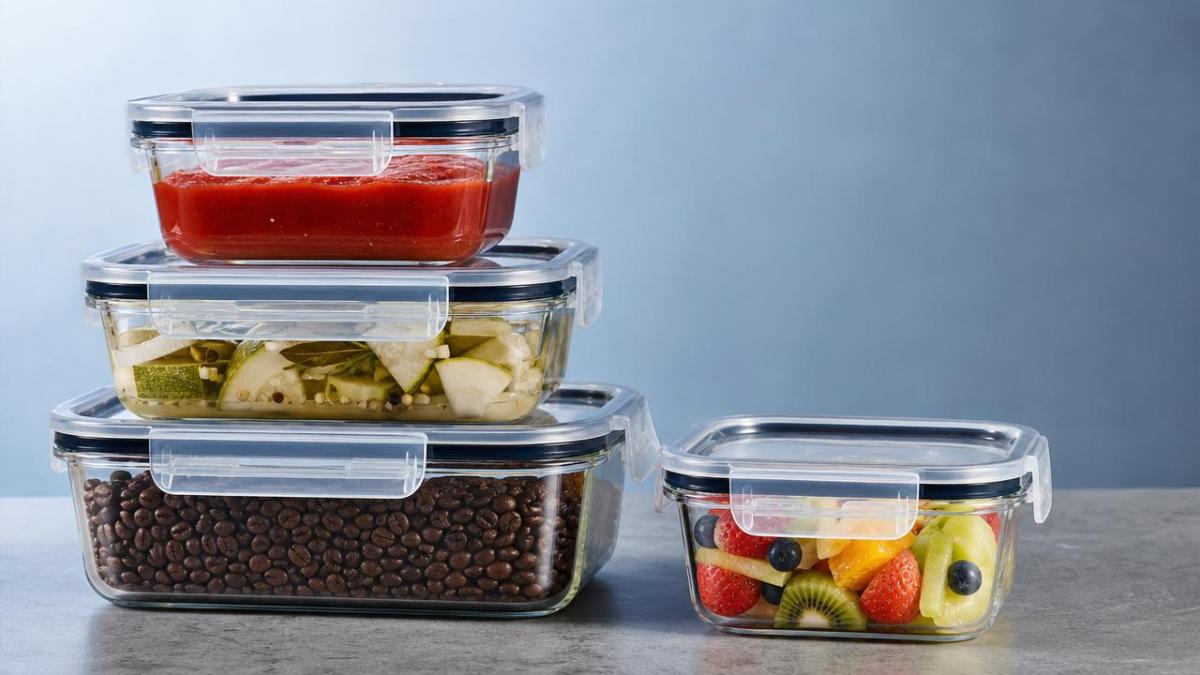
Which foods benefit most from a glass storage container for food?
Not every product sees the same benefit, so it helps to prioritize use cases. Foods that are acidic, aromatic, pigment-rich, moisture-sensitive, or prone to oxidation often benefit the most. Tomato sauces, pickled vegetables, fruit purees, spice blends, coffee beans, tea leaves, leftovers, meal-prep items, and refrigerated ready meals are common examples.
For quality control personnel in catering, hotel kitchens, or food processing support areas, glass is also useful when cross-contact prevention matters. If the same storage fleet is used for dairy, seafood, sauces, and allergen-containing ingredients, material neutrality becomes valuable. A glass storage container for food reduces the chance that strong smells or oily residues remain after cleaning and affect the next product batch.
That said, extremely fragile handling environments may require a mixed strategy. In high-speed production zones, or in settings where breakage risk is unacceptable, food-grade stainless steel or selected plastics may remain more practical. Shelf life improvement should always be weighed alongside breakage control, worker safety, and workflow efficiency.
What should buyers and safety managers check before selecting containers?
When evaluating a glass storage container for food, do not focus only on appearance. Procurement decisions should consider material quality, lid construction, seal durability, temperature tolerance, cleaning compatibility, and intended food category. A premium-looking container with a weak seal may perform worse than a simpler design built for repeated sanitation cycles.
Key selection points include:
- Whether the glass is tempered or borosilicate for better thermal and handling performance
- Whether the lid includes a food-safe gasket that maintains airtight sealing after repeated use
- Whether the container shape supports stacking, labeling, and storage rotation
- Whether the opening is wide enough for effective cleaning and inspection
- Whether the product is suitable for refrigeration, freezing, or reheating, if required by workflow
- Whether supplier documentation covers food-contact compliance and quality consistency
For commercial users, supplier reliability is just as important as product specifications. Consistent dimensions, replacement lid availability, and traceable production standards can prevent long-term operational issues. A glass storage container for food should fit your storage system, not just your shelf.
Quick evaluation table for storage decisions
What common mistakes reduce the shelf-life benefit of glass containers?
One common mistake is assuming that any glass storage container for food is automatically airtight. Many decorative or low-cost containers are better suited for dry storage than for perishable food protection. If the seal is weak, oxidation and moisture exchange continue, and expected shelf life gains may never materialize.
A second mistake is poor handling after washing. Even excellent containers become contamination risks if they are stacked while damp, stored uncovered in dusty areas, or touched on food-contact surfaces by ungloved hands. Sanitation control must include drying, protected storage, and disciplined reassembly of lids and gaskets.
Another issue is using damaged components. Chips on the rim, worn seals, and cracked lids compromise protection. Quality teams should treat storage containers as controlled food-contact tools, not as permanent assets that remain in use indefinitely. Inspection frequency should match usage intensity.
Finally, temperature abuse can cancel out material advantages. A glass storage container for food cannot compensate for delayed refrigeration, overloaded coolers, or inconsistent cold-chain practice. Container performance supports shelf life, but time and temperature control remain fundamental.
How can businesses use glass containers more effectively in kitchens and storage areas?
The best results come from integrating the container into a broader storage management system. This means assigning specific container sizes to product categories, using clear labeling rules, and aligning storage methods with FIFO or FEFO principles. A glass storage container for food becomes more valuable when it supports standardization across receiving, prep, storage, and service stages.
For example, central kitchens and hotel operations can designate glass containers for high-risk or high-value products such as sauces, prepared garnishes, test samples, and allergen-segregated ingredients. The visibility of the contents simplifies inventory checks and reduces unnecessary lid opening. Less handling often means less contamination risk and better retention of aroma and moisture balance.
Training also matters. Staff should know which foods belong in glass, how to avoid breakage near prep lines, how to inspect lid seals, and when a container must be retired. These small controls can turn a simple packaging choice into a measurable quality improvement.
Are glass containers always the best option for extending shelf life?
No. A glass storage container for food is often a strong option, but not always the best one in every scenario. For vacuum-packed foods, modified atmosphere applications, freezer-heavy logistics, or transport-focused foodservice models, other materials may deliver better impact resistance, lighter weight, or specialized barrier performance. The right choice depends on the food type, process flow, sanitation requirements, and breakage tolerance.
Still, glass remains highly competitive when the goal is cleanability, material neutrality, visual inspection, odor control, and repeated use. In many kitchens and food handling environments, those operational advantages translate into better storage discipline, which indirectly improves shelf life just as much as the material barrier itself.
What are the most practical FAQ answers for quality control teams?
Below is a condensed FAQ-style summary that many buyers and safety managers use during evaluation:
- Does a glass storage container for food extend shelf life by itself? No. It supports shelf life when paired with a good seal, correct temperature, and hygienic handling.
- Is glass safer than plastic? It is often more chemically stable and easier to inspect, but safety depends on product quality and proper use.
- Which foods benefit most? Acidic, aromatic, oily, pigment-rich, and ready-to-eat foods usually benefit the most.
- What is the biggest purchasing mistake? Ignoring lid and gasket performance while focusing only on the glass body.
- What should be checked during routine inspection? Rim damage, seal wear, cleanliness, labeling compatibility, and storage suitability.
What should you confirm before procurement, implementation, or supplier discussions?
If your team is evaluating a glass storage container for food for operational use, start with practical questions rather than general marketing claims. Confirm the target food categories, expected storage duration, washing process, breakage risk, temperature range, and sealing requirements. Then ask the supplier for food-contact compliance details, replacement part availability, consistency across batches, and any data related to repeated-use durability.
For quality control and food safety managers, the best decision usually comes from matching container design to actual workflow. If the container improves sanitation visibility, reduces odor carryover, maintains sealing integrity, and fits your storage system, it can absolutely contribute to longer shelf life and better control. If you need to move forward with sourcing, testing, or comparing options, the first points to discuss are seal reliability, cleaning performance, glass grade, handling safety, and whether the supplier can support stable long-term supply.
Popular Tags
Kitchen Industry Research Team
Dedicated to analyzing emerging trends and technological shifts in the global hospitality and foodservice infrastructure sector.
Industry Insights
Join 15,000+ industry professionals. Get the latest market trends and tech news delivered weekly.
No spam. Unsubscribe anytime.
Contact With us
Contact:
Anne Yin (Ceramics Dinnerware/Glassware)
Lucky Zhai(Flatware)